Artwork
Untitled
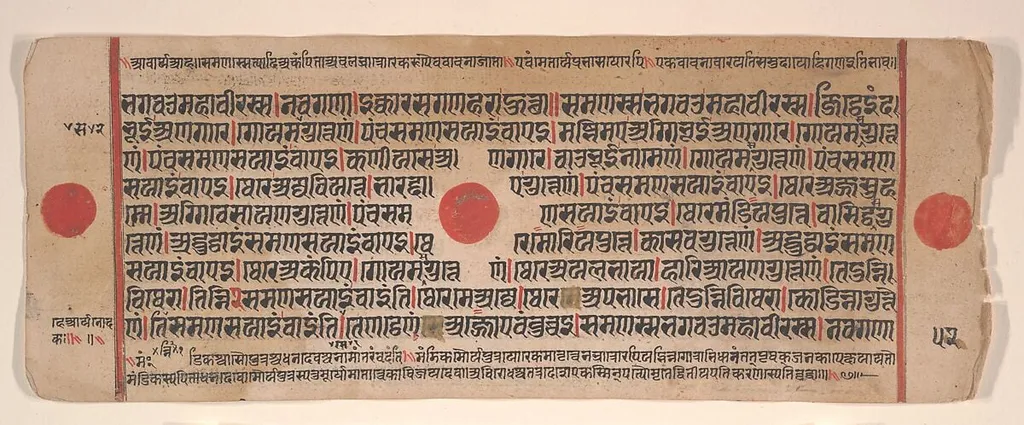
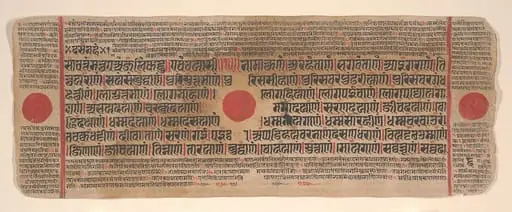
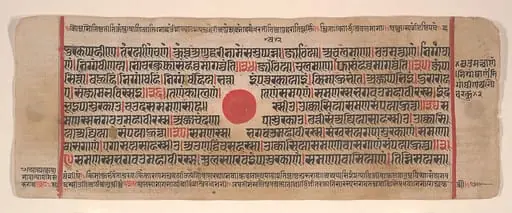
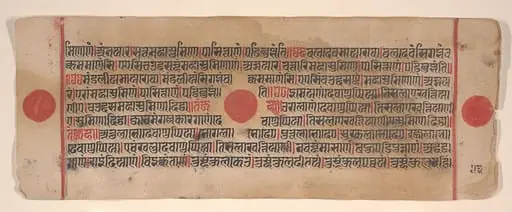
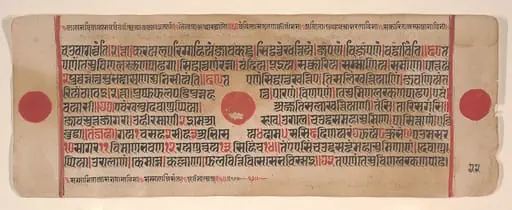
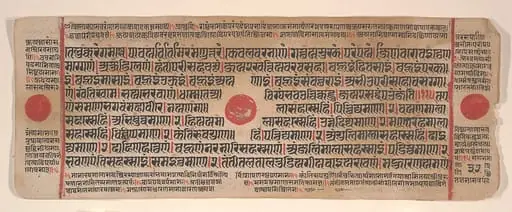
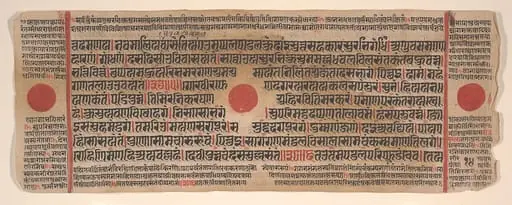
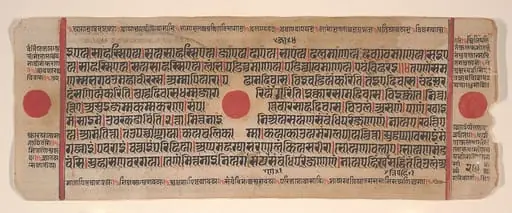
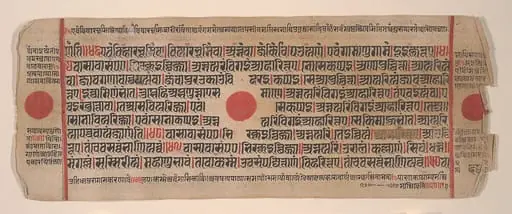
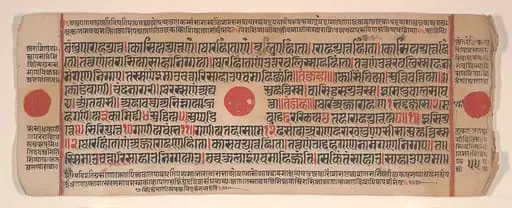
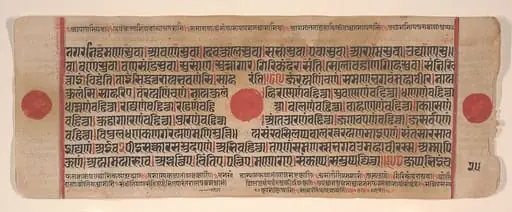
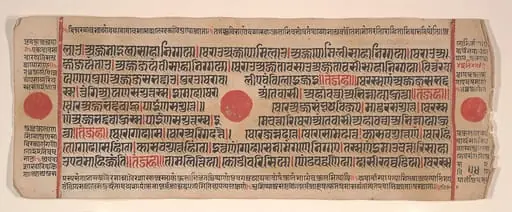
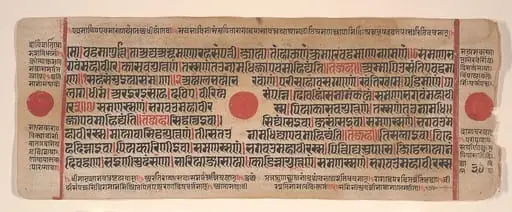
Untitled is a watercolor painting by the Indian Miniature artist Bhadrabahu. It dates from 1449 and is held in the collection of the Metropolitan Museum of Art.
- Accession no.
- 57.51.38.55
- Credit line
- Bequest of Cora Timken Burnett, 1956
About this work
Subject & Meaning
The subject depicted is explicitly identified as Jainism, serving as a visual representation of the faith's iconography and spiritual themes.
Created in 1449 by the artist Bhadrabahu, this work is a religious painting executed in ink, opaque watercolor, and gold on paper. The subject depicted is explicitly identified as Jainism, serving as a visual representation of the faith's iconography and spiritual themes. Originating in India, the piece functions within the genre of religious art, utilizing its materials and composition to convey specific doctrinal meanings associated with the Jain tradition.
The inclusion of gold suggests a reverence appropriate for sacred imagery, while the medium of paper indicates a format likely intended for devotional study or manuscript illumination. As an artifact held by the Metropolitan Museum of Art, the work stands as a documented example of fifteenth-century Indian religious expression, where the visual elements directly symbolize core tenets of Jain belief.
Technique & Style
The work is executed in ink, opaque watercolor, and gold on paper, a combination typical of refined Jain manuscript illumination. Measuring 11.4 × 28.9 cm, the small-scale format suggests it functioned as a page or folio, likely from a religious text given its Jain subject matter. The application of gold alongside opaque watercolor indicates a luxurious, devotional purpose, with the metallic leaf or paint reserved for sacred or auspicious elements.
The ink underdrawing would have provided precise linear definition, while opaque watercolor allowed for saturated, flat areas of color characteristic of Indian miniature painting of the period. The paper support reflects the established papermaking traditions of fifteenth-century India.
History & Provenance
Created in 1449 in India, this religious painting titled Untitled was executed by the artist Bhadrabahu. The work, which depicts themes related to Jainism, was produced using ink, opaque watercolor, and gold on paper. Historical records indicate the piece entered the collection of the Metropolitan Museum of Art, where it is cataloged under the accession number 57.51.38.55.
While the specific circumstances of its commission and the detailed chain of ownership prior to its museum acquisition are not explicitly detailed in the available documentation, its inception date and place of creation are firmly established as early 15th-century India.
The painting is held in the collection of the Metropolitan Museum of Art. Its accession number is 57.51.38.55, as recorded in the Wikidata entry that links the work to the museum's holdings. No exhibition history is documented in the available sources.
Context
The work Untitled by Bhadrabahu, dated 1449, is an Indian Jain religious painting executed in ink, opaque watercolor and gold on paper. Its depiction of Jainism aligns with the religious art genre documented for the piece. Held in the Metropolitan Museum of Art, the work measures 11.4 × 28.9 cm and exemplifies the stylistic conventions of 15th‑century Indian manuscript painting.
Scholarship on the painting emphasizes its role within the broader corpus of Jain devotional imagery, highlighting the integration of gold leaf and gold‑on‑paper techniques characteristic of the period. As such, it occupies a significant position in the history of Indian art, illustrating the intersection of religious narrative and visual splendor in medieval manuscript production.
Overview
Artist Bhadrabahu created this untitled painting in 1449, using ink, opaque watercolor, and gold on paper. The work depicts a religious subject central to Jainism, featuring a holy figure seated beneath a tree. Its small scale and vibrant palette are characteristic of manuscript illustrations from the period, offering a glimpse into devotional art practices.
Artist & collection