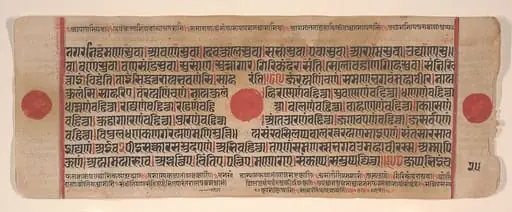
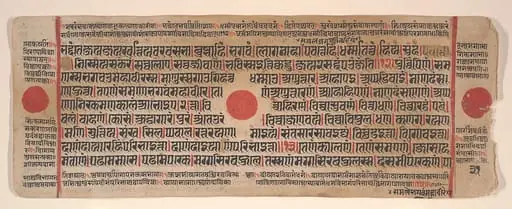
Artwork
Untitled
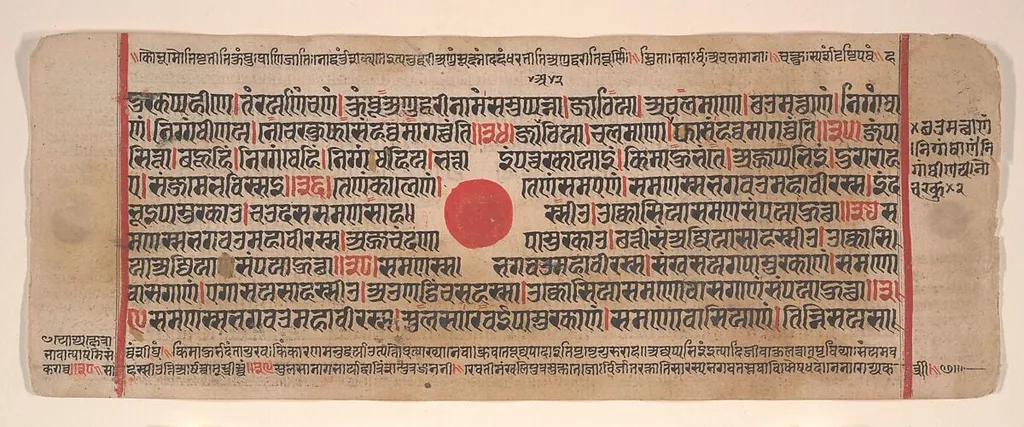
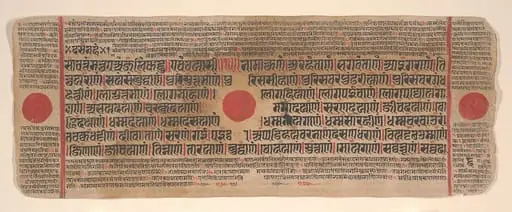
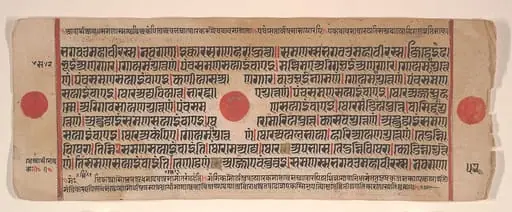
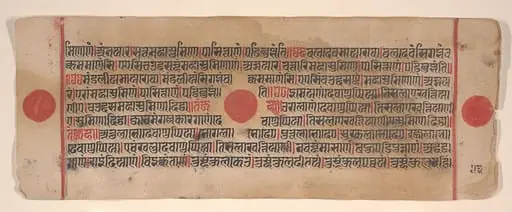
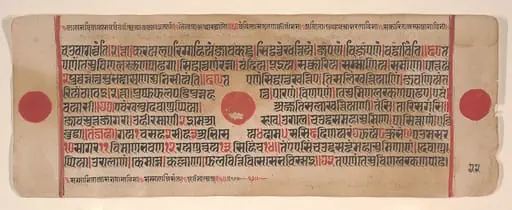
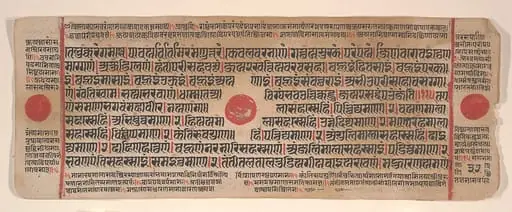
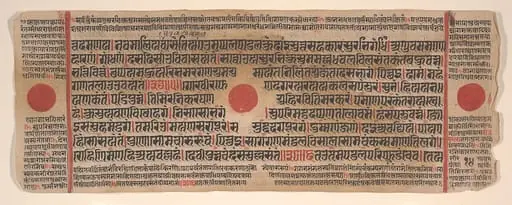
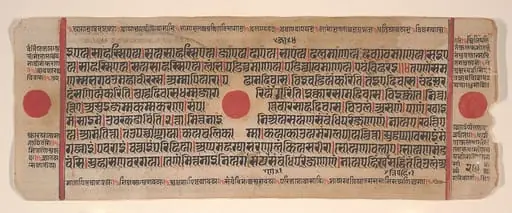
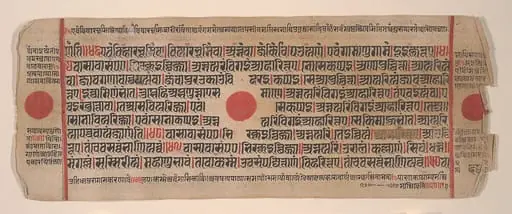
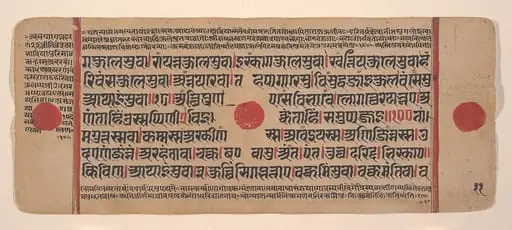
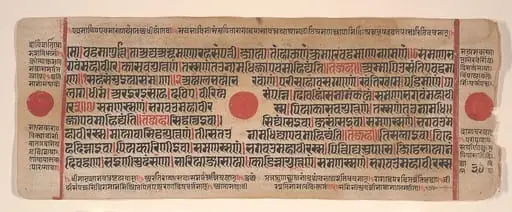
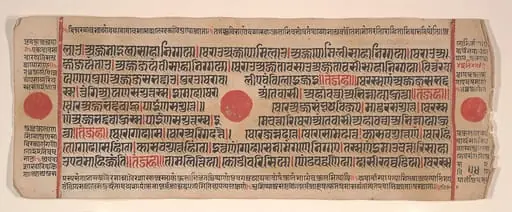
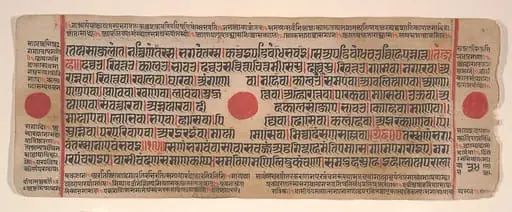
Untitled is a watercolor painting by the Indian Miniature artist Bhadrabahu. It dates from 1449 and is held in the collection of the Metropolitan Museum of Art.
- Accession no.
- 57.51.38.44
- Credit line
- Bequest of Cora Timken Burnett, 1956
About this work
Subject & Meaning
The piece explicitly depicts themes and figures associated with Jainism, serving as a visual representation of this Indian spiritual tradition.
Created in 1449 by the artist Bhadrabahu, this work is a religious painting executed in ink, opaque watercolor, and gold on paper. The piece explicitly depicts themes and figures associated with Jainism, serving as a visual representation of this Indian spiritual tradition. While the specific narrative scene or individual iconographic elements are not detailed in the available records, the work's classification as religious art and its direct depiction of Jainism indicate its function as a devotional object or illustrative manuscript page.
The use of gold alongside watercolor and ink suggests a ceremonial or high-status context typical of South Asian religious manuscripts from this period, intended to convey sacred meaning through its material and subject matter.
Technique & Style
This Jain religious painting by Bhadrabahu was executed in 1449 using ink, opaque watercolor, and gold on paper. The work measures 11.4 cm in height by 28.9 cm in width, indicating a small-scale, horizontally oriented format typical of manuscript illumination or portable devotional imagery. The application of gold alongside opaque watercolor suggests a rich, luminous surface quality, with the gold likely reserved for sacred or hierarchical elements within the composition.
The ink underdrawing would have provided precise linear definition, while opaque watercolor allowed for flat, saturated areas of color characteristic of Indian miniature painting traditions. The paper support and combination of media align with fifteenth-century Jain artistic practices in India.
History & Provenance
The artwork, identified as Untitled, was created in 1449 by the artist Bhadrabahu in India. Executed as a religious painting depicting Jainism, the piece is rendered in ink, opaque watercolor, and gold on paper. It measures 11.4 cm in height and 28.9 cm in width.
The work is currently held in the collection of the Metropolitan Museum of Art, where it is cataloged under the accession number 57.51.38.44. While the specific commission details and the immediate chain of ownership prior to its museum acquisition are not detailed in the available records, the work's inception is firmly dated to the mid-15th century. Its current status as part of the Metropolitan Museum of Art's holdings establishes its modern provenance.
Overview
Bhadrabahu's "Untitled" from 1449 is a religious painting rendered in ink, opaque watercolor, and gold on paper. This work illustrates principles of Jainism, depicting a serene scene central to its spiritual narratives. The composition features a monk seated beneath a tree, accompanied by deer, with celestial gold elements suggesting divine presence.
Context
This "Untitled" painting originates from Gujarat, a region in India historically significant for its rich tradition of Jain art. Created in 1449, it exemplifies the style of Jain manuscript illustration from that period. Such works were typically produced to accompany and visually narrate sacred stories and philosophical texts, serving as devotional aids and educational tools within Jain communities.
Artist & collection