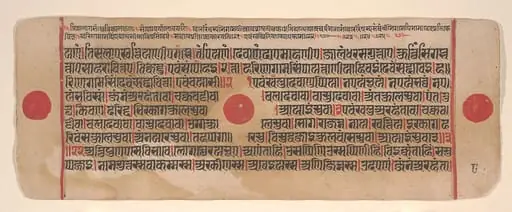
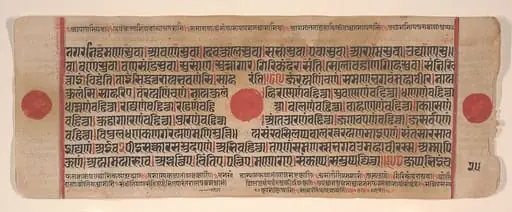
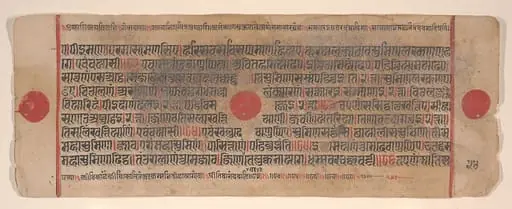
Artwork
Untitled
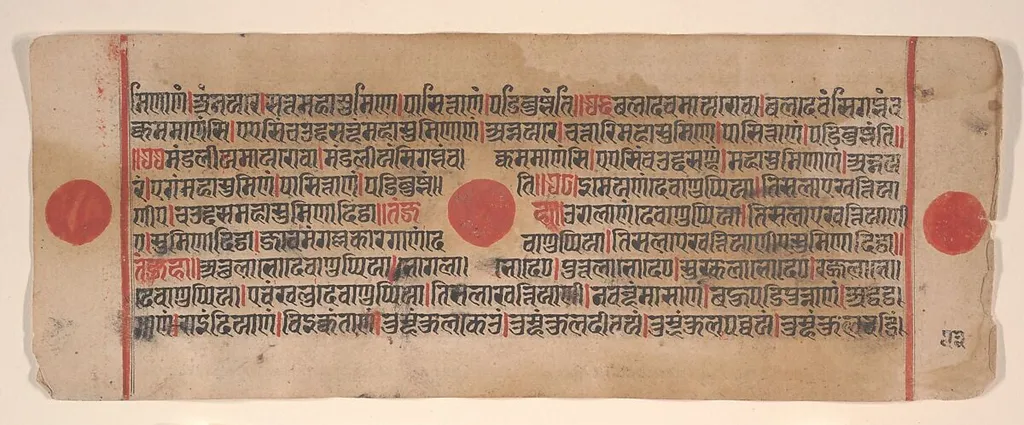
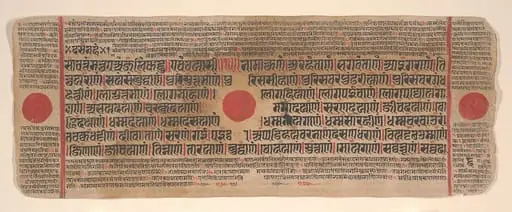
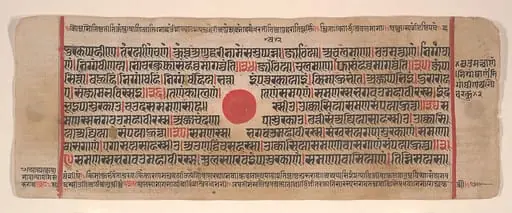
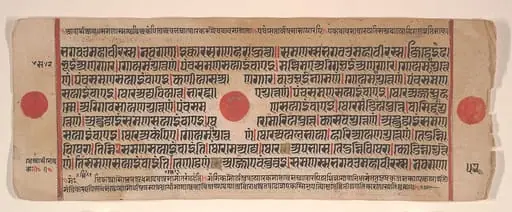
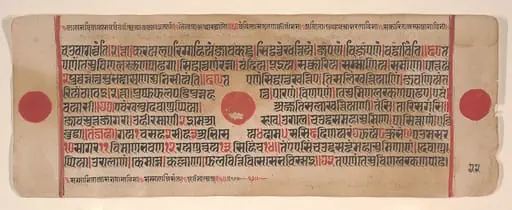
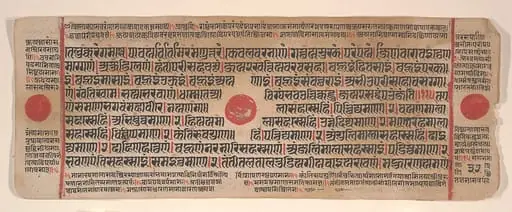
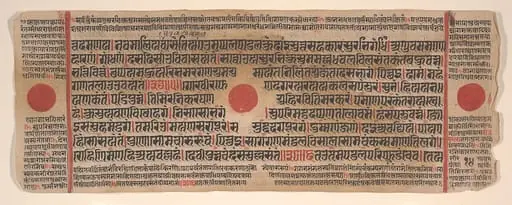
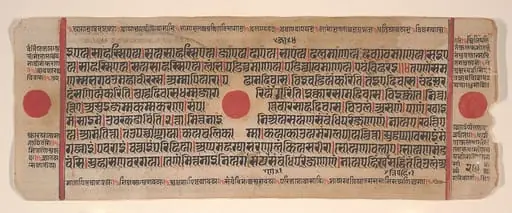
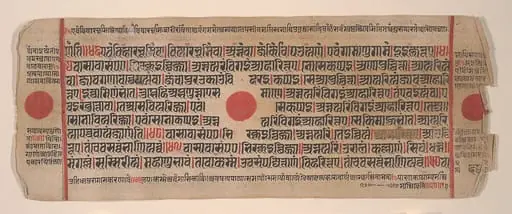
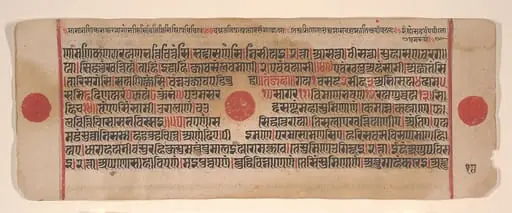
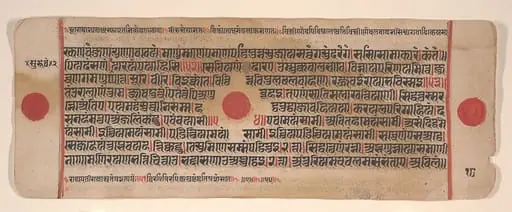
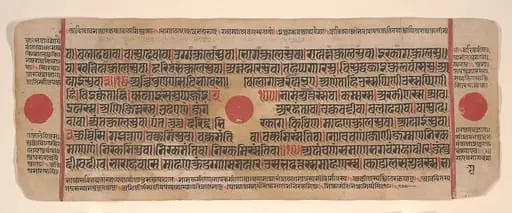
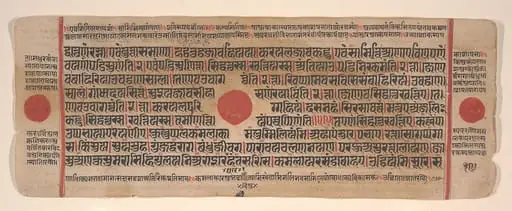
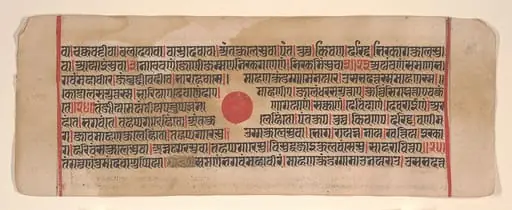
Untitled is a watercolor painting by the Indian Miniature artist Bhadrabahu. It dates from 1449 and is held in the collection of the Metropolitan Museum of Art.
- Accession no.
- 57.51.38.33
- Credit line
- Bequest of Cora Timken Burnett, 1956
About this work
Subject & Meaning
The painting, dated 1449 and executed in ink, opaque watercolor, and gold on paper, belongs to the religious genre of Jain art produced in India.
The painting, dated 1449 and executed in ink, opaque watercolor, and gold on paper, belongs to the religious genre of Jain art produced in India. Its subject is identified with Jainism, indicating that the depicted figure or scene conveys core Jain theological concepts such as asceticism and spiritual liberation. The use of gold highlights sacred motifs, while the compositional style aligns with traditional Jain manuscript illumination, reinforcing the work's devotional purpose.
As part of the Metropolitan Museum of Art's collection, the piece exemplifies how visual symbolism in fifteenth-century Indian religious painting communicates doctrinal narratives central to Jain practice.
Technique & Style
The work is painted in ink and opaque watercolors heightened with gold on paper, a combination typical of fifteenth-century Indian Jain manuscript illumination. The support is a single sheet of paper in a horizontal format measuring approximately 11.4 cm in height by 28.9 cm in width. Handling is precise, with fine ink outlines enclosing flat, evenly applied color fields and gold used to heighten sacred details.
Stylistic features include hieratic figuration, attenuated proportions, and the angular profiles, linear clarity, and restrained palette characteristic of western Indian Jain painting.
History & Provenance
Titled Untitled, this religious painting was created in 1449 in India and depicts a Jain subject. Executed in ink, opaque watercolor, and gold on paper, it is attributed to an anonymous artist and held in the collection of the Metropolitan Museum of Art under accession number 57.51.38.33. The folio measures 11.4 by 28.9 centimeters.
No commission details or chain of ownership prior to the museum's acquisition are recorded in the available sources, and no exhibition history is documented.
Legacy
The 1449 ink, opaque watercolor and gold painting attributed to Bhadrabahu, housed in the Metropolitan Museum of Art, is cited as a key example of early Jain manuscript illumination. Its religious subject matter and technical execution are documented in the museum's collection record, establishing its significance within the corpus of Indian religious art. Scholars reference the piece when discussing the development of Jain visual culture and the transmission of manuscript traditions in medieval India.
The work's presence in a major public collection has helped sustain interest in Bhadrabahu's legacy and the broader historical context of Jain artistic production.
Overview
Untitled is a religious painting created in 1449 by the artist Bhadrabahu. Rendered with ink, opaque watercolor, and gold on paper, this work originates from 15th-century Gujarat. It serves as an illustrative example of Jainism, a spiritual tradition that emphasizes non-violence and meticulous conduct in all aspects of life, including artistic creation.
Context
This work is representative of Jain painting traditions prevalent in 15th-century Gujarat, a region known for its rich artistic output, particularly in religious manuscripts and devotional art. The stylistic choices and the careful handling of materials are deeply intertwined with Jain beliefs, where the avoidance of even minute harm influenced artistic methods, making the creation of such works an act of devotion in itself.
Artist & collection