Artwork
The Death of General Warren
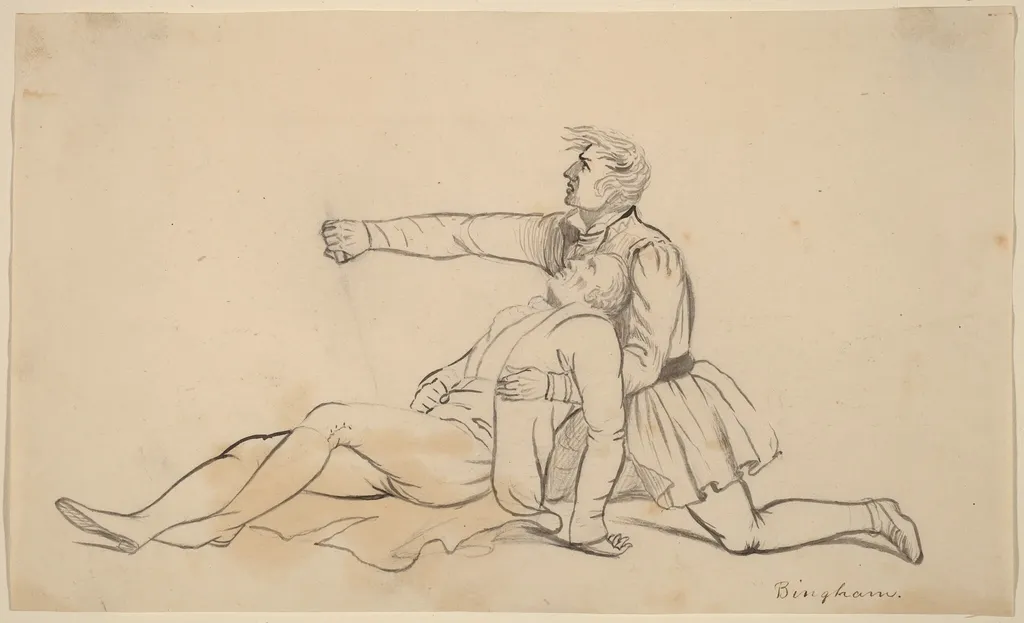
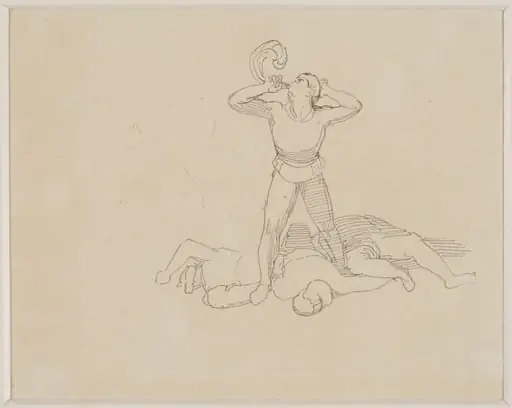
The Death of General Warren is a graphite drawing by the Romanticist artist George Caleb Bingham. It dates from 1845 and is held in the collection of the National Gallery of Art.
- Inscription
- Inscribed:by unknown hand, lower right in brown ink: Bingham
About this work
Overview
George Caleb Bingham’s drawing The Death of General Warren was executed in 1845 using pen and ink applied over a graphite base. The work measures as a sketch rather than a finished composition, capturing a fleeting, dramatic moment in a compact format. Bingham’s signature appears in the lower right, confirming authorship.
Subject & Meaning
The image depicts a soldier in a formal uniform kneeling beside a fallen comrade whose head is tipped back and arm outstretched. The arrangement suggests a scene of battlefield loss, emphasizing the immediacy of death and the solemn duty of the surviving figure. The composition conveys a sense of grief and urgency without explicit narrative detail.
Technique & Style
Bingham employs rapid, loose pen lines that trace the figures’ contours, allowing the underlying graphite sketch to inform the drawing’s structure. Minimal shading creates a stark contrast, focusing attention on gesture and movement rather than surface texture. This economical approach heightens the emotional impact while maintaining a clear, readable form.
History & Provenance
Created in the mid‑1840s, the drawing reflects Bingham’s interest in contemporary American events and military subjects. The work has remained attributed to Bingham through his signed inscription and stylistic consistency with his other drawings from the period. It is catalogued among his early graphic studies, illustrating his developing narrative style.
Own this work as a print
Artist & collection

Artist
George Caleb Bingham (March 20, 1811 – July 7, 1879) is recognized as one of the most important American artists of the 19th century.

 Fallait pas me tutoyer, j'suis dans...
 Untitled
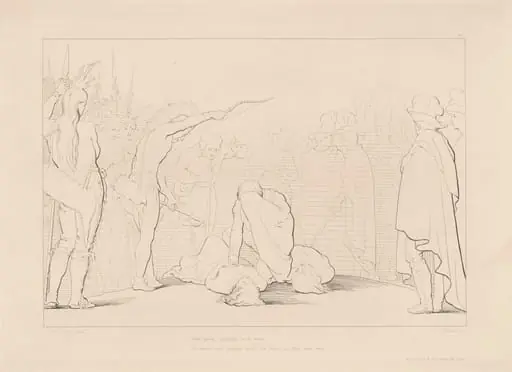 Mute, Gazing, Agonizing...
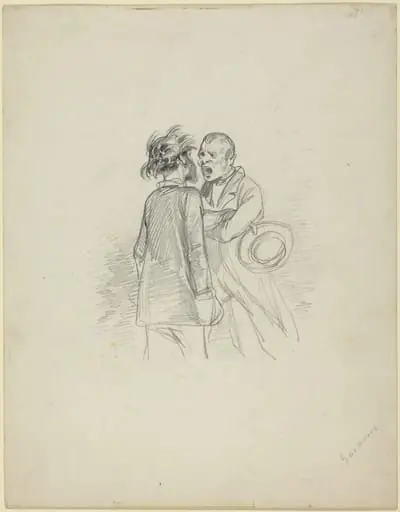 Two Men Arguing
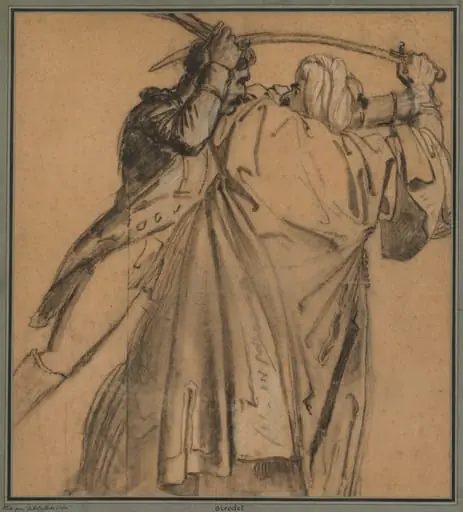 Two Arabs, for "The Revolt of Cairo"
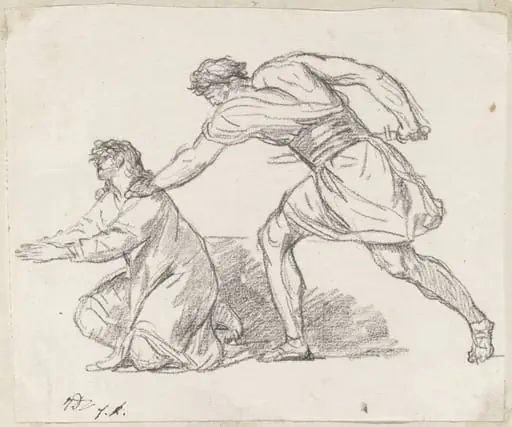 Warrior Seizing a Kneeling Figure
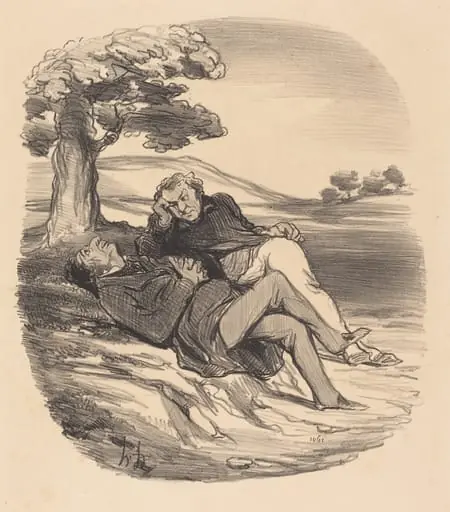 Doux loisir d'un quincailler retiré di commerce...
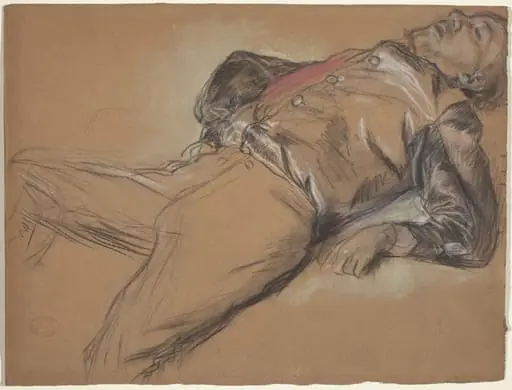 Fallen Jockey (study for "Scene from the Steeplechase: The Fallen Jockey")
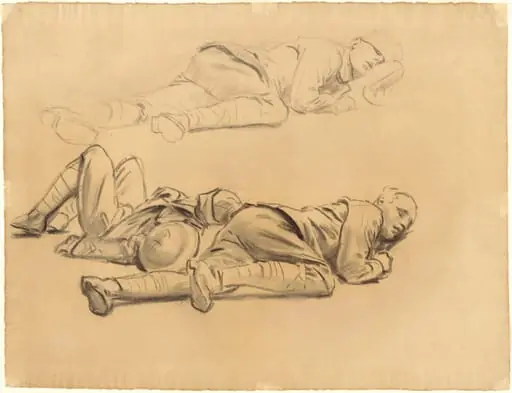 Studies for "Gassed"
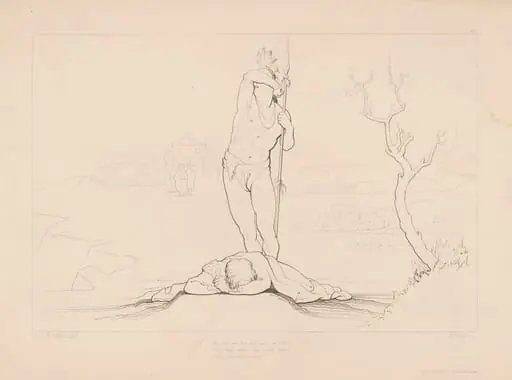 He Bids Me Dry the Last...
![Study for "Militia Training" [recto], by James Goodwyn Clonney](https://artifactworldgallery.com/img/james-goodwyn-clonney--study-for-militia-training-recto--a77cf113ce2ae25d-w320.webp) Study for "Militia Training" [recto]
Study for "Militia Training" [recto]- The Death of Lausus