Artwork
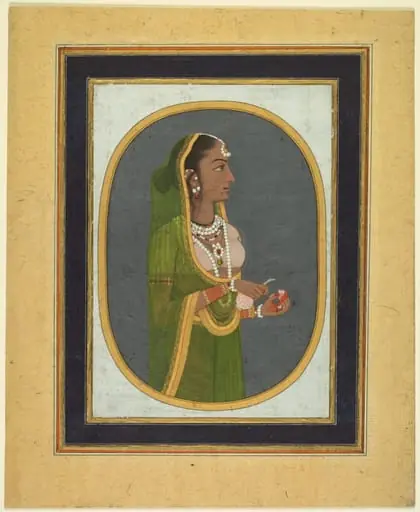
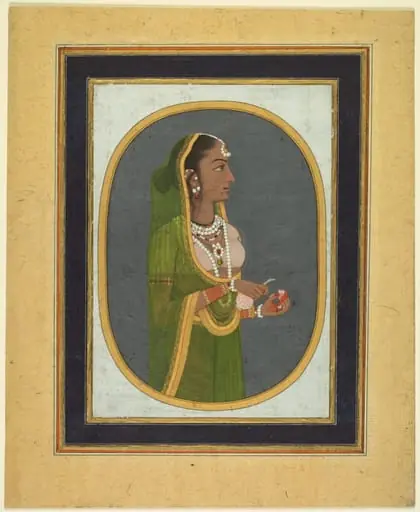
Nur Jahan holding a portrait of Emperor Jahangir
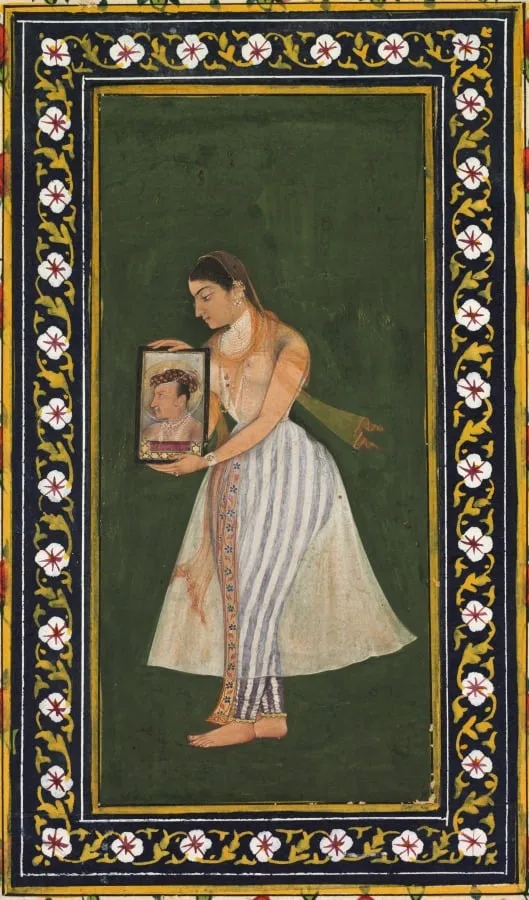
Nur Jahan holding a portrait of Emperor Jahangir is an unspecified painting by the Baroque artist Bishandas. It dates from 1627 and is held in the collection of the Cleveland Museum of Art.
- Accession no.
- 2013.325
- Credit line
- Gift in honor of Madeline Neves Clapp; Gift of Mrs. Henry White Cannon by exchange; Bequest of Louise T. Cooper; Leonard C. Hanna Jr. Fund; From the Catherine and Ralph Benkaim Collection
About this work
Overview
He is shown with a grey beard, seated behind a decorative screen that signifies imperial authority.
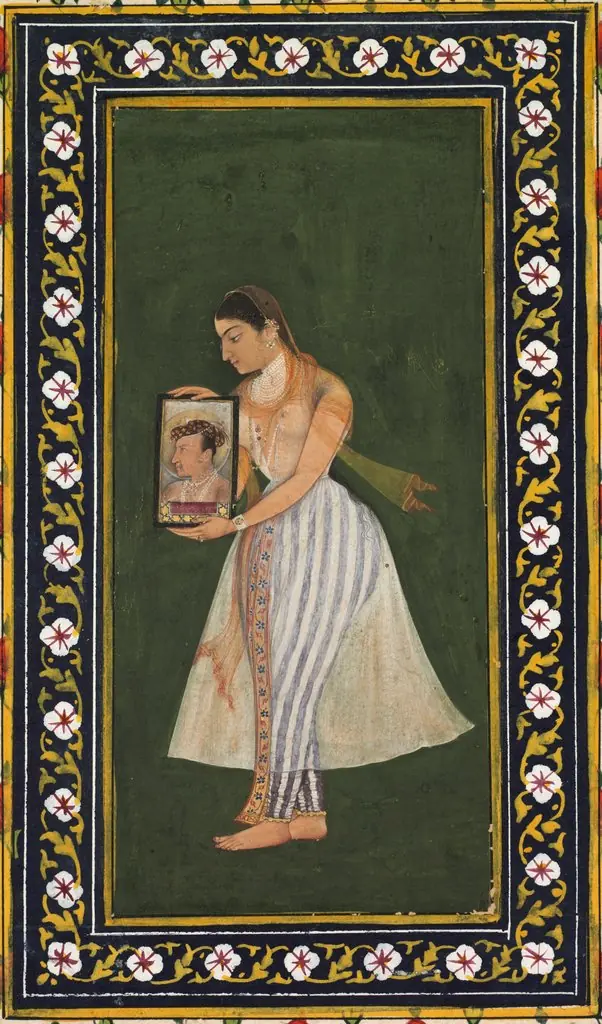
The painting portrays a richly dressed woman, identified as Nur Jahan, the chief consort of Mughal emperor Jahangir, clasping a small portrait of the aging emperor. He is shown with a grey beard, seated behind a decorative screen that signifies imperial authority. The composition reverses the typical Mughal motif of a ruler presenting an ancestor’s likeness, instead placing the empress in the active role of displaying the sovereign’s image.
Subject & Meaning
Nur Jahan, who effectively managed state affairs during Jahangir’s reign, is depicted in an idealized youthful form, despite being near fifty at the time of the emperor’s death. By holding his portrait, the work suggests her ambition to sustain political influence after his passing, echoing earlier imperial portraits where successors affirmed legitimacy through ancestral images.
Technique & Style
Executed in the Mughal court painting tradition, the piece combines fine brushwork with vivid pigments to render sumptuous textiles and the intricate patterned screen behind the emperor. The figures are rendered with a delicate realism, while the background’s ornamental motifs reinforce the regal setting, reflecting the synthesis of Persian influences and Indian decorative sensibilities characteristic of early‑17th‑century Mughal art.
History & Provenance
The work likely dates to the later years of Jahangir’s rule (c. 1620s) and may have been modeled after an earlier portrait of the emperor holding a likeness of his deceased father, a visual claim to dynastic continuity. Its precise ownership trail is unclear, but it has been associated with collections of Mughal court paintings that entered European and Indian museums during the 19th‑century art market.
Context
In Mughal visual culture, portraiture served political purposes, affirming lineage and authority. This painting subverts that convention by placing the empress as the presenter, highlighting Nur Jahan’s unprecedented role in governance. The image thus offers insight into the gender dynamics and power negotiations within the imperial household during a period when the emperor’s health was in decline.
Artist & collection
Artist
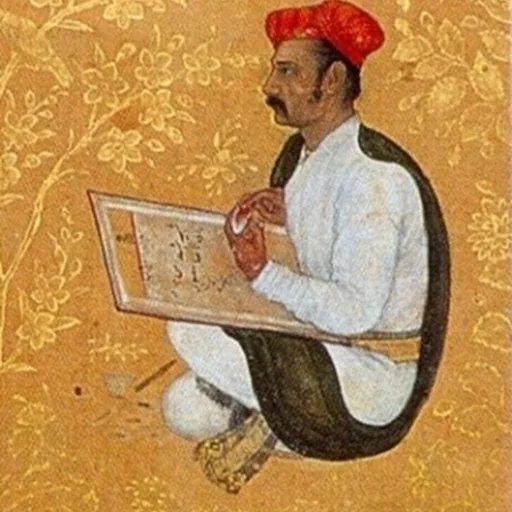
Bishandas, also Bishan Das or Bishn Das, was an Indian painter during the Mughal era.

 A European Woman Pouring Wine into a Cup
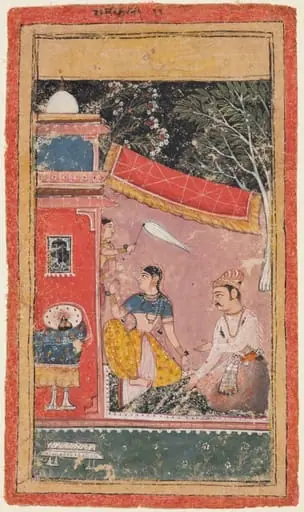 Lovers on a Terrace: Ramakali Ragini of Hindol, from a Bundi Ragamala
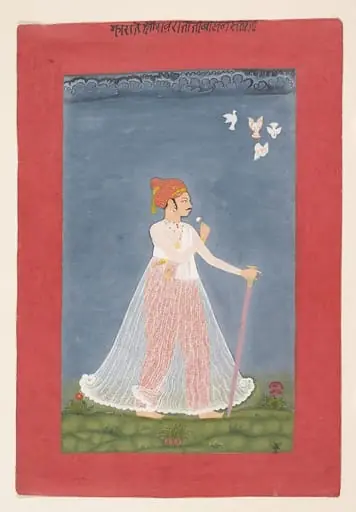 Untitled
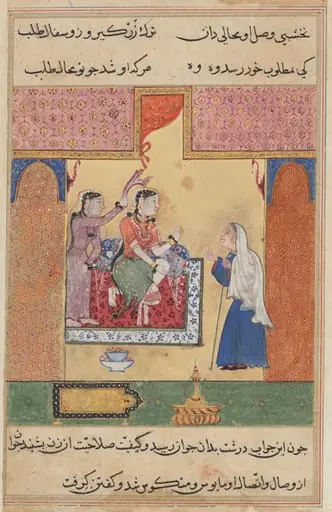 The old procuress conveys the young man’s message of love to Mansur’s wife, from a Tuti-nama (Tales of a Parrot: Seventeenth Night
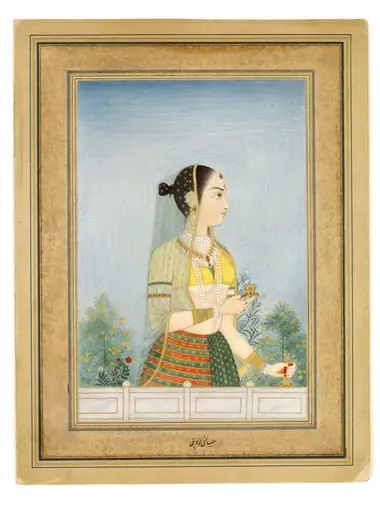 Rani Golapati
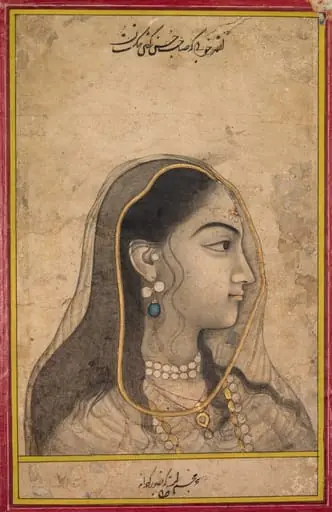 Head of a Beauty
 Court Lady Pouring Wine (recto)
 Court Lady Pouring Wine (recto); Calligraphy of Lyrical Quatrains (verso)