Artwork
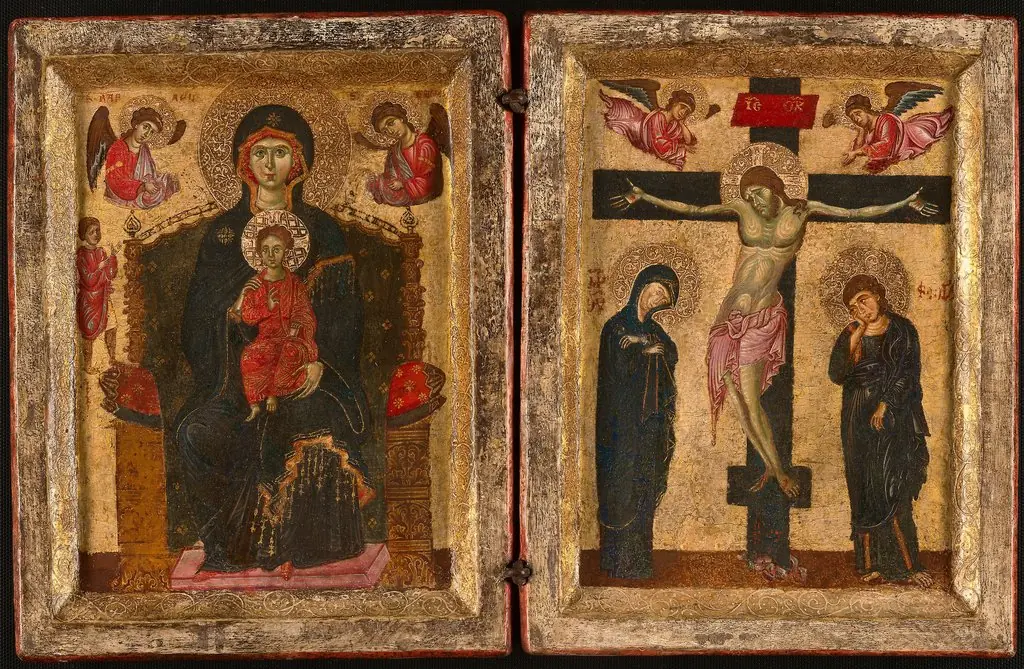
Diptych of crucifixion and Madonna and Child
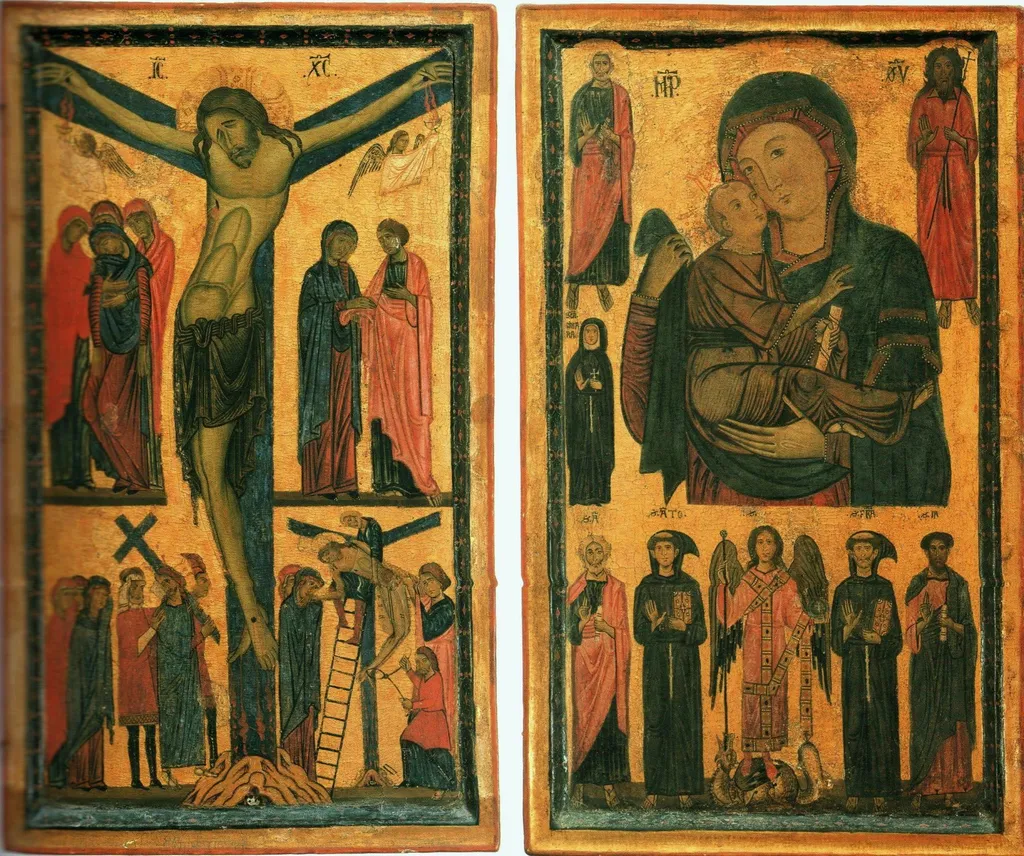
Diptych of crucifixion and Madonna and Child is a tempera painting by the Byzantine icon painting artist Bonaventura Berlinghieri. It dates from 1250 and is held in the collection of the Uffizi Gallery.
About this work
Overview
The Diptych of crucifixion and Madonna and Child is a tempera painting on wood created around 1250 by Bonaventura Berlinghieri, an Italian painter from Lucca. It is a hinged diptych, comprising two panels that together form a cohesive work.
Subject & Meaning
The diptych juxtaposes a crucifixion scene with an image of the Madonna and Child, reflecting the religious iconography characteristic of Byzantine-influenced Italian art in the 13th century. The two scenes are presented in a formal, symmetrical arrangement.
Technique & Style
The painting is executed in the Italo-Byzantine style, also known as maniera greca. The figures are depicted in a stiff, formal manner, typical of medieval art, against a warm, golden background that conveys a sense of intimacy.
History & Provenance
The diptych is now held in the Uffizi Gallery. It is an example of the work of the Berlinghieri family, who were known for their use of the Italo-Byzantine style.
Own this work as a print
Artist & collection
Artist
Bonaventura Berlinghieri (fl. 1228–1274) was an Italian painter from Lucca, Italy, of the Gothic period. He was son of painter Berlinghiero Berlinghieri and brother of Barone and Marco Berlinghieri. His work is reported…

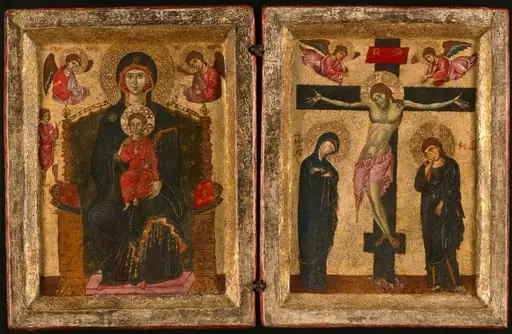 Diptych of the Virgin and Child Enthroned and the Crucifixion
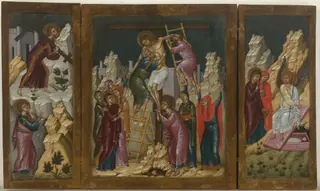 Tryptyk bizantyński ze Zdjęciem z krzyża w części środkowej i scenami pasyjnymi na skrzydłach bocznych
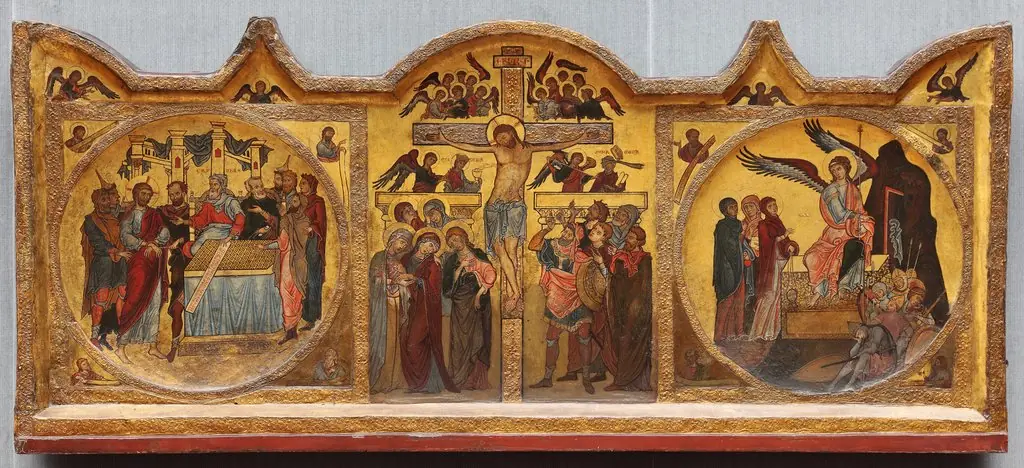 Crucifixion retable from Soest
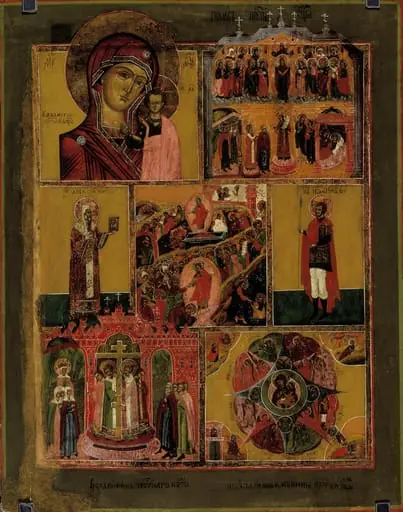 Pääsiäinen ja kirkkovuoden juhlia, venäläinen ikoni
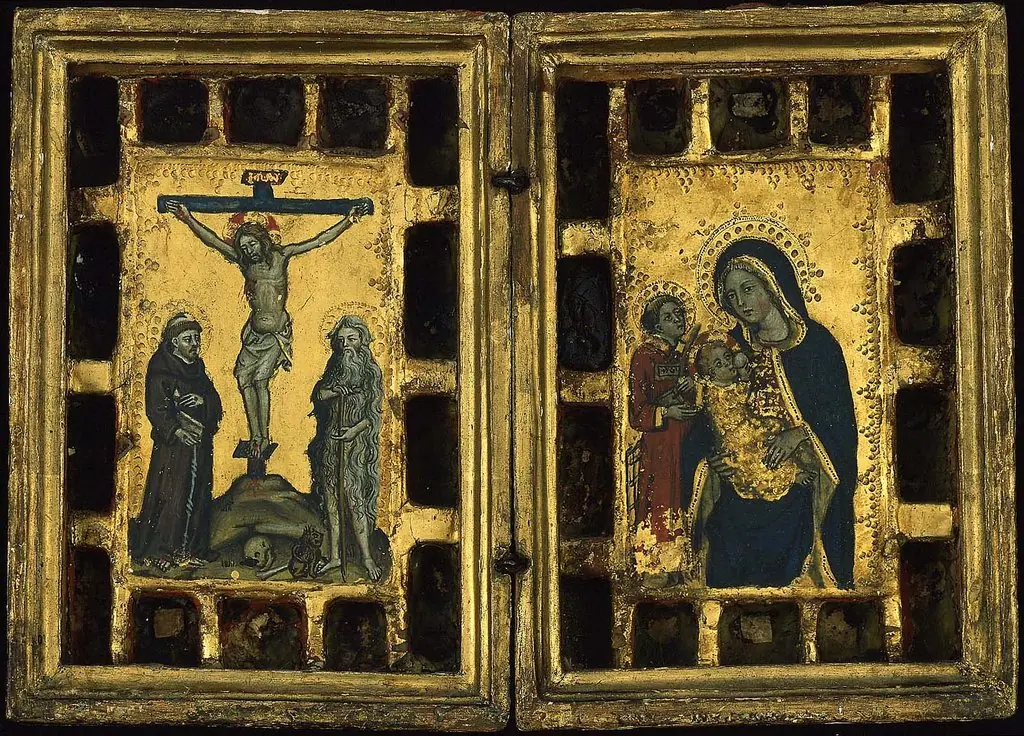 Christ on the Cross with Saints Francis and Onophrius; The Virgin and Child with Saint Lawrence
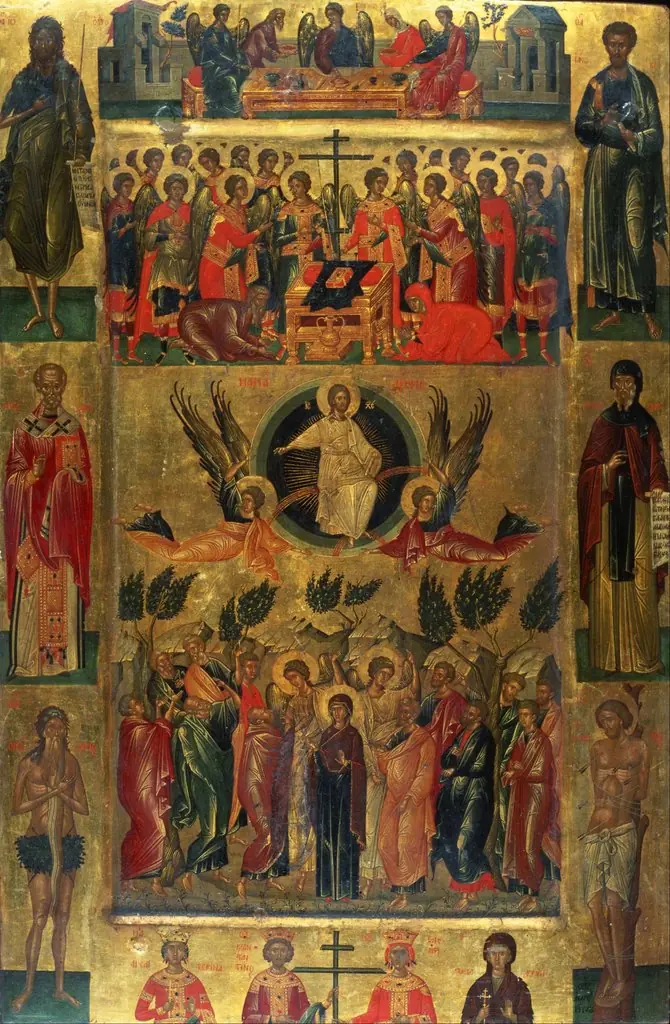 Ascension of Christ with the Hetoimasia
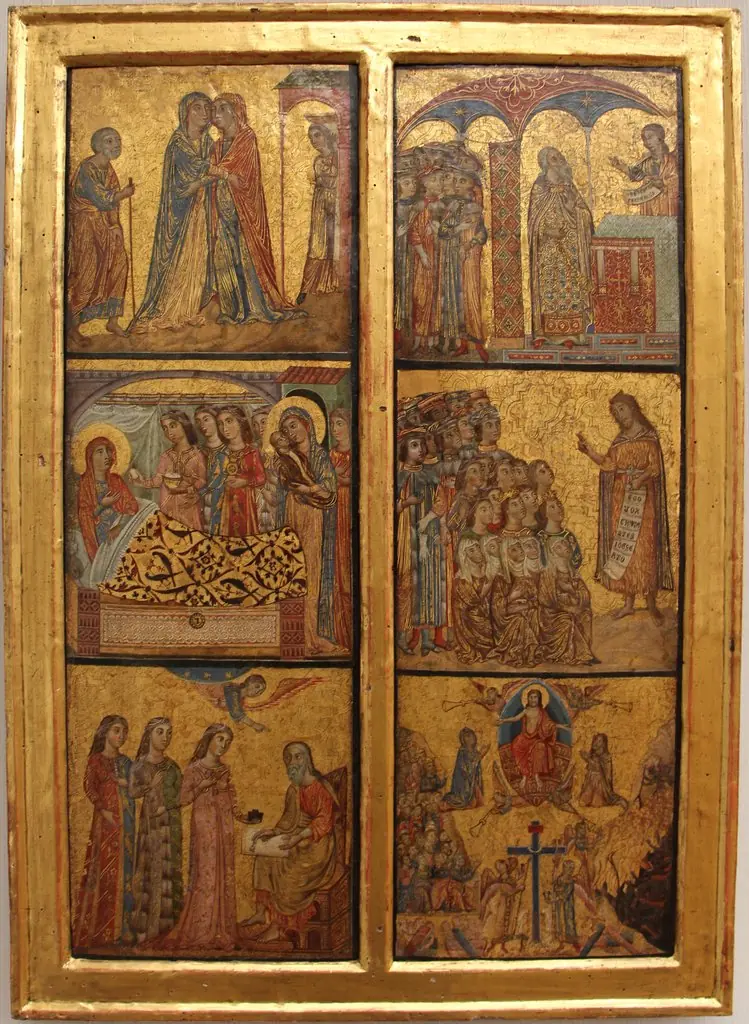 Triptych: Six Scenes from the Life of John the Baptist (Two Wings)
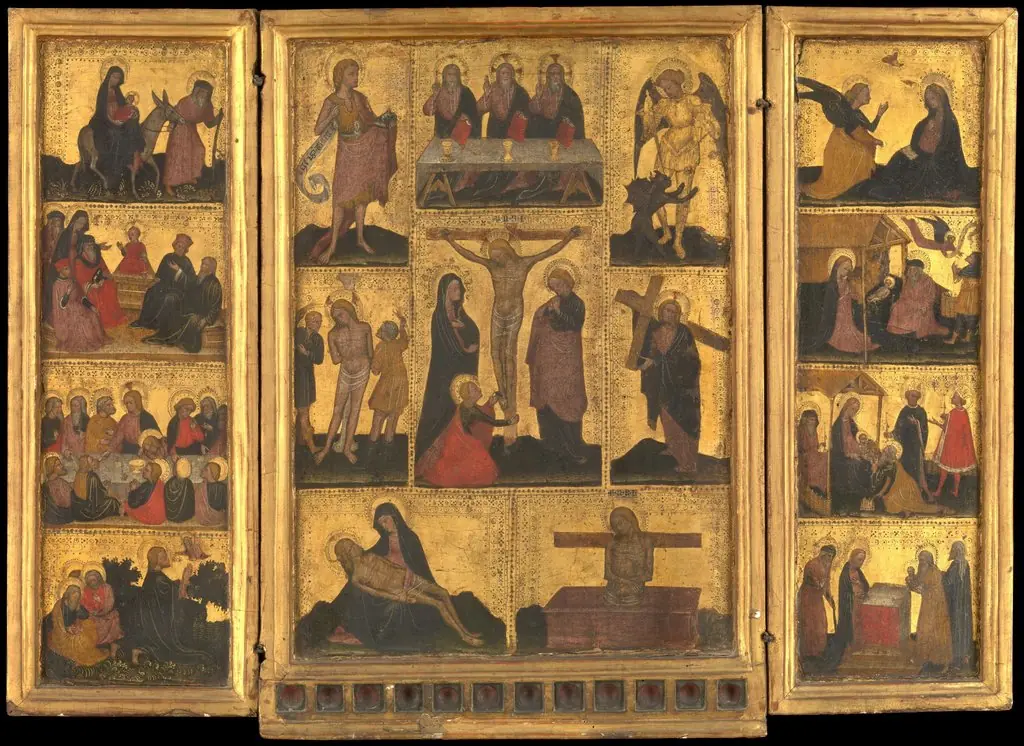 The Life of Christ
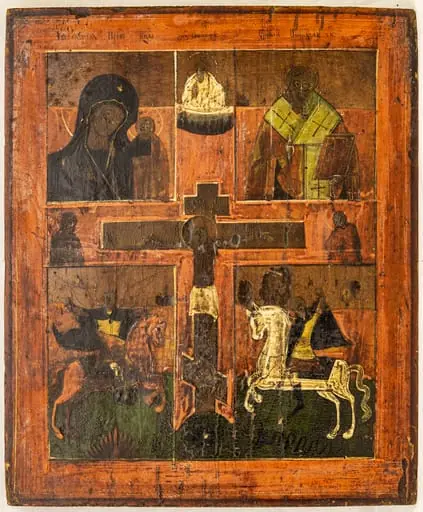 Icoană în patru registre, în centru Iisus Crucificat