Artwork
Crucifixion retable from Soest
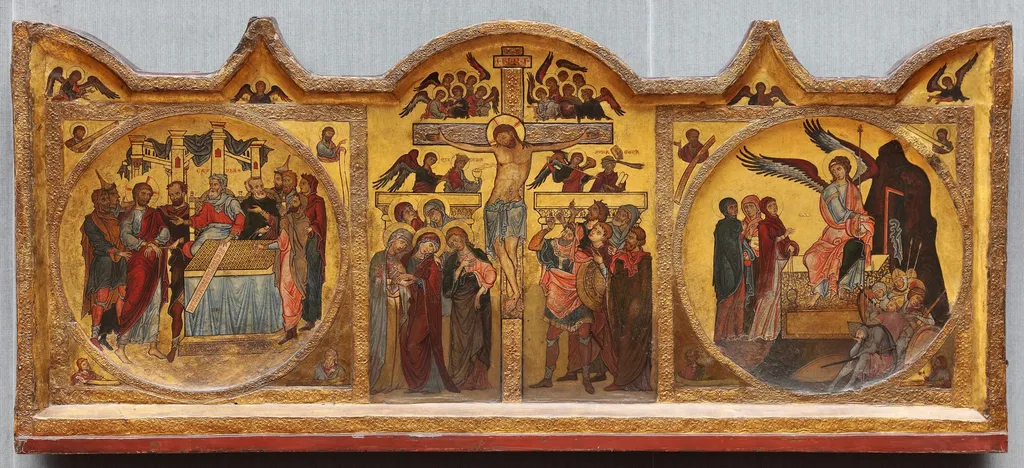
Crucifixion retable from Soest is an unspecified painting. It dates from 1240 and is held in the collection of the Gemäldegalerie Berlin. The work is a three‑panel retable executed on parchment and embellished with gold leaf.
About this work
Subject & Meaning
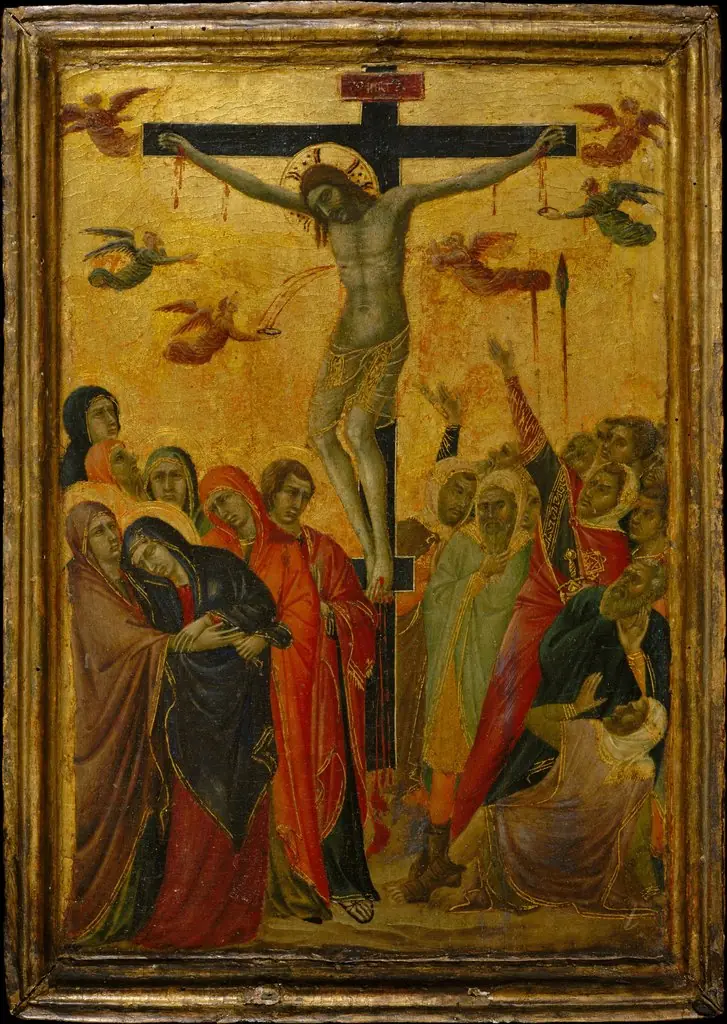
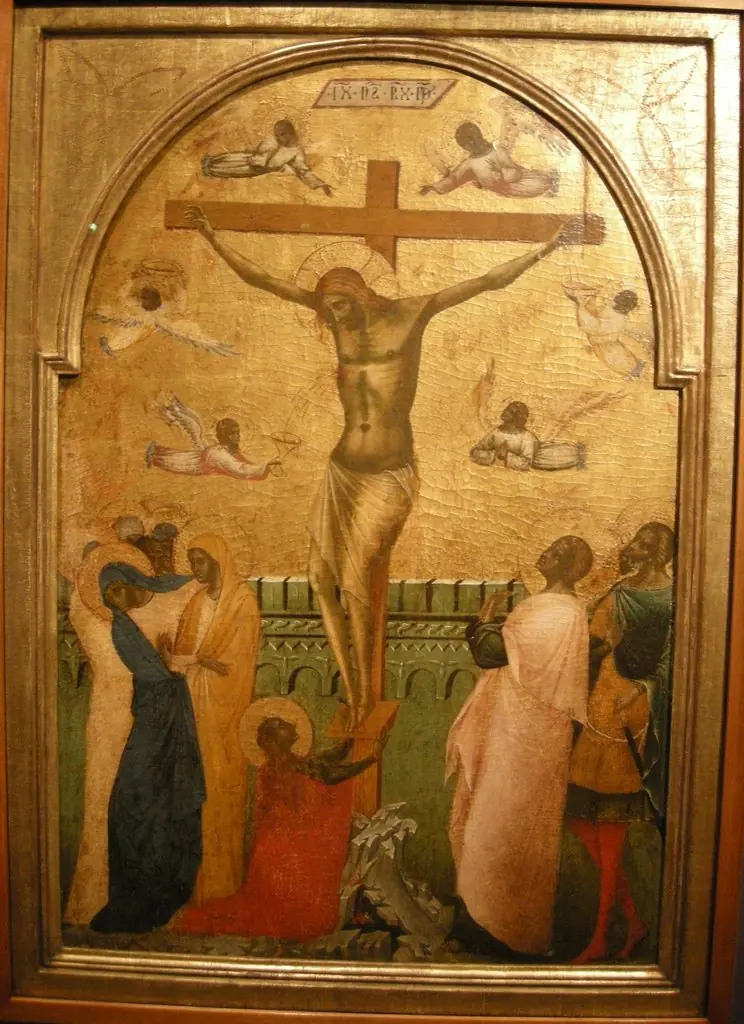
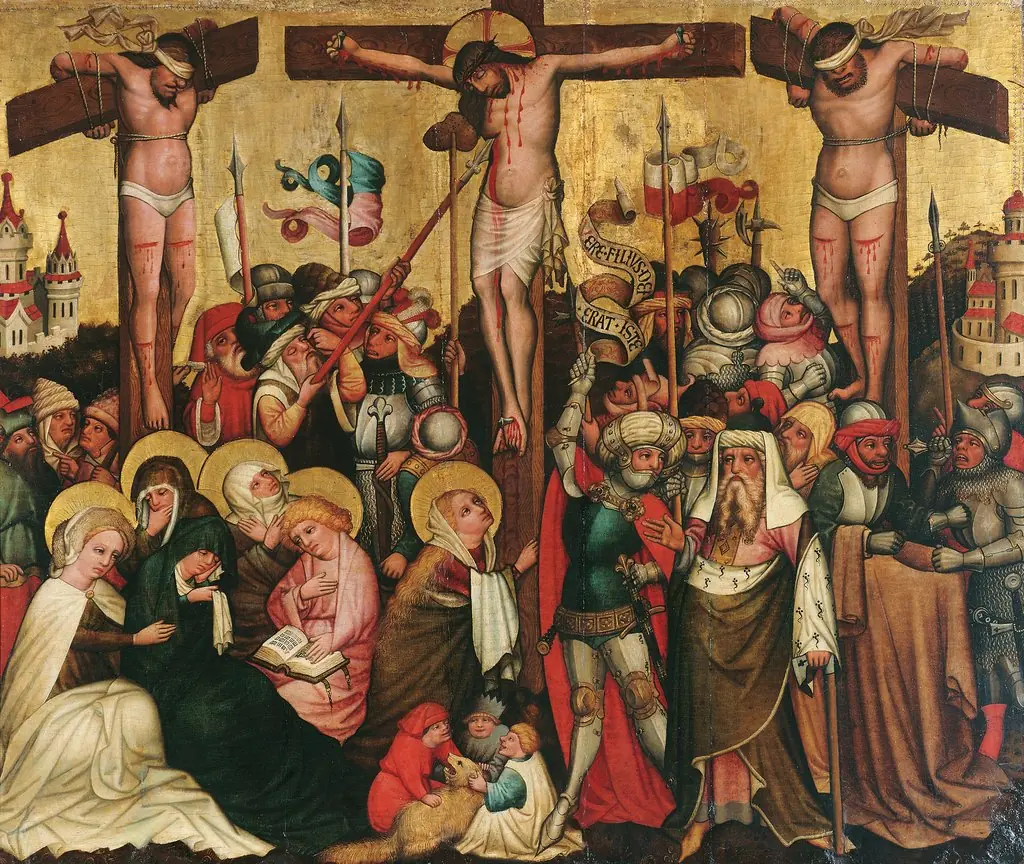
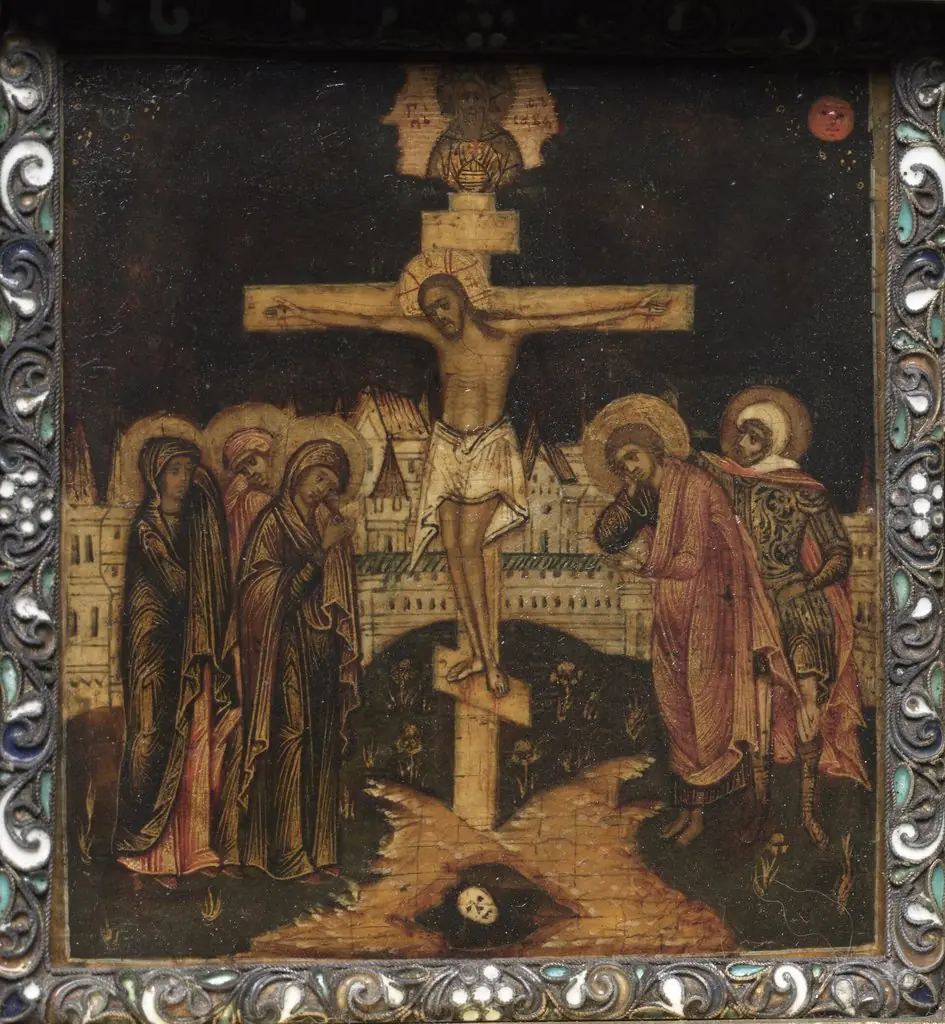
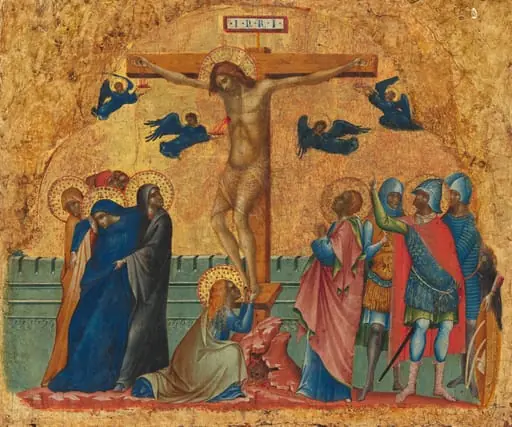
The retable depicts the crucifixion of Jesus alongside related narrative moments: the Sanhedrin trial of Jesus, the presence of the Three Marys, an empty tomb, Caiaphas, and the Resurrection, forming a comprehensive devotional cycle centered on Christ's Passion and victory over death. This iconographic program functions as a visual sermon, inviting meditation on theological themes of sacrifice, judgment, mourning, and redemption within the Gothic religious tradition of 13th-century Westphalia.
The work's meaning is rooted in its function as a liturgical object within the Gemäldegalerie Berlin's collection, where its display in Hall I alongside other German religious paintings of the 13th–16th century underscores its role in ecclesiastical context. Its creation in Westphalia and use of parchment and oak panel reflect regional artistic practices, while the inclusion of specific figures like Caiaphas and the Resurrection scene emphasizes both the human and divine dimensions of the narrative.
Technique & Style
The Crucifixion retable from Soest is executed on an oak panel support, with parchment serving as the painting medium layered across the wooden ground.
The Crucifixion retable from Soest is executed on an oak panel support, with parchment serving as the painting medium layered across the wooden ground. The work is classified as a painting and belongs to the Gothic movement, consistent with its 1240 date of inception and its origin in Westphalia. Its broad horizontal format, measuring 85 cm in height and 195.5 cm in width, accommodates an extended narrative program depicting multiple episodes including the Crucifixion of Jesus, the Sanhedrin trial, the Three Marys, the empty tomb, Caiaphas, and the Resurrection of Jesus.
History & Provenance
The Crucifixion retable from Soest was created around 1240 in Westphalia as an anonymous work of Gothic religious painting. Originally associated with the Wiesenkirche in Soest, the piece is executed on an oak panel with parchment elements and measures 85 cm in height by 195.5 cm in width. It depicts the crucifixion of Jesus alongside related scenes such as the Sanhedrin trial, the presence of the Three Marys, and the Resurrection.
The work is currently held in the collection of the Gemäldegalerie Berlin, where it is displayed in Hall I among German paintings from the 13th to the 16th century.
Overview
The work is a three‑panel retable executed on parchment and embellished with gold leaf. Each panel presents a distinct biblical episode: a gathering of clothed figures around a table, the crucifixion of Christ with attendant mourners and angels, and a kneeling woman before a resurrected figure accompanied by an angelic banner. The composition is framed by pointed arches reminiscent of Gothic windows.
Artist & collection