Artwork
Tête de Flore (Head of Flora)
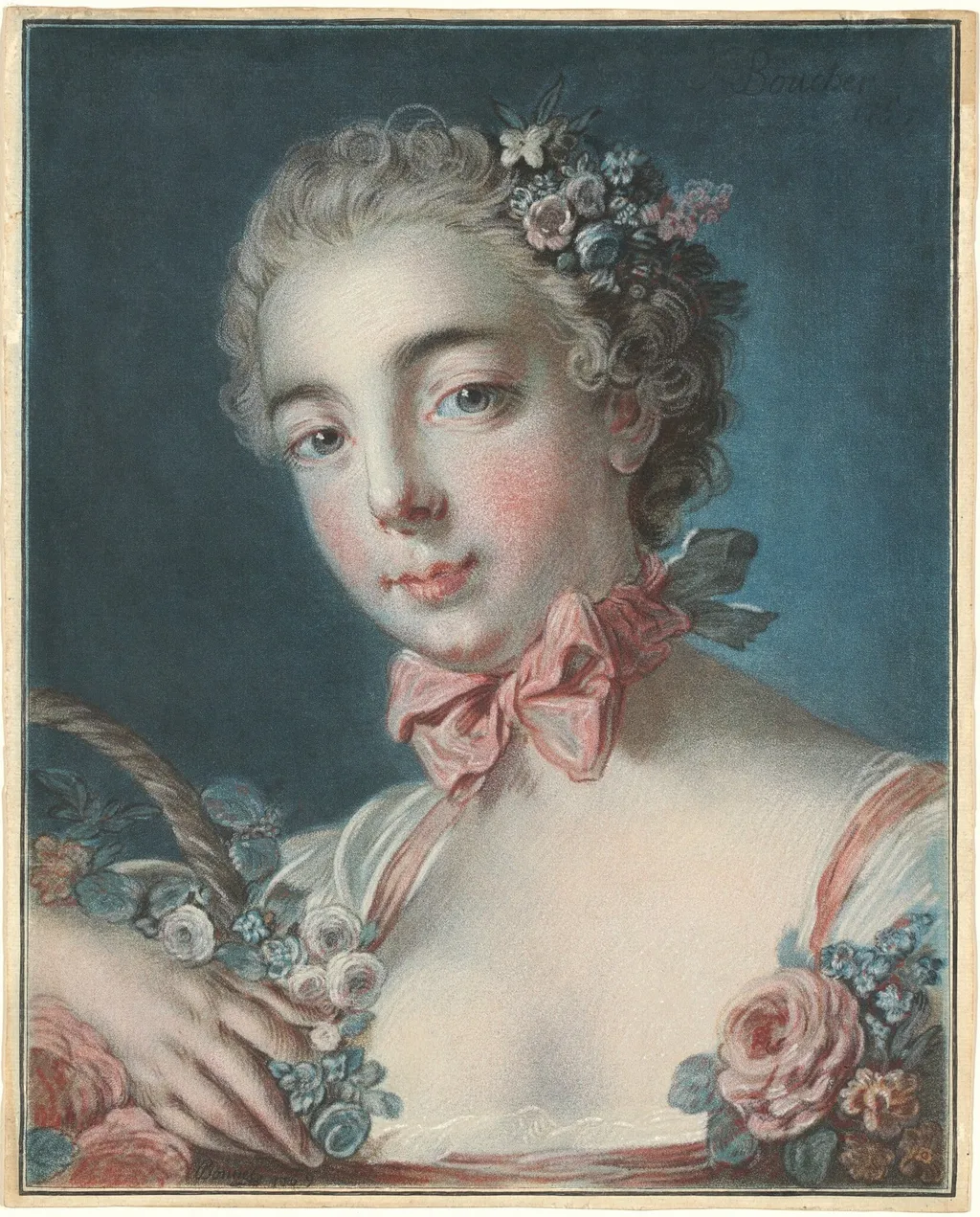
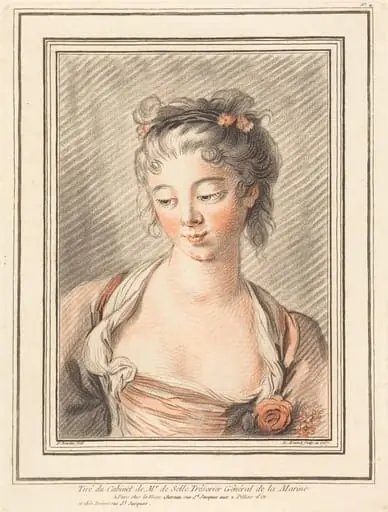
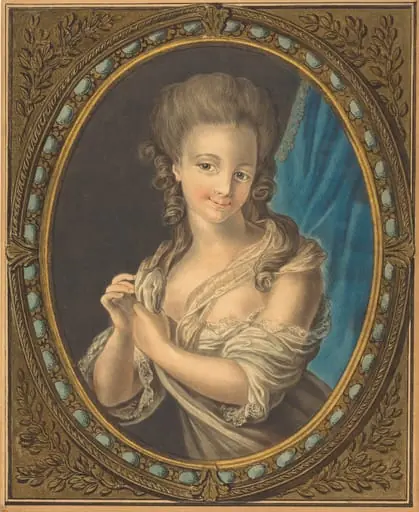
Tête de Flore (Head of Flora) is a pastel print by the Romanticist artist Louis-Marin Bonnet. It dates from 1769 and is held in the collection of the National Gallery of Art.
- Inscription
- Inscribed:in plate, at lower left: Bonnet 1769
About this work
Overview
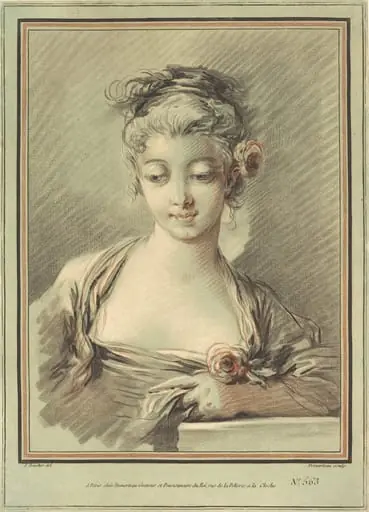
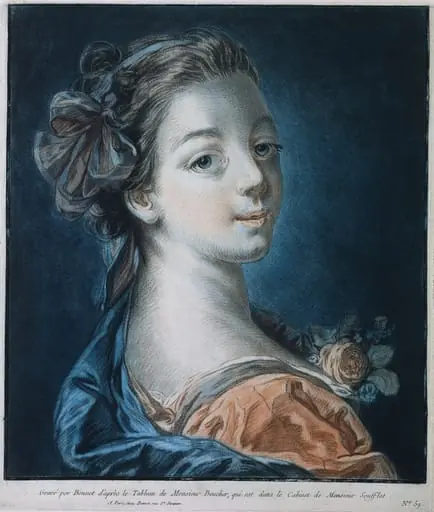
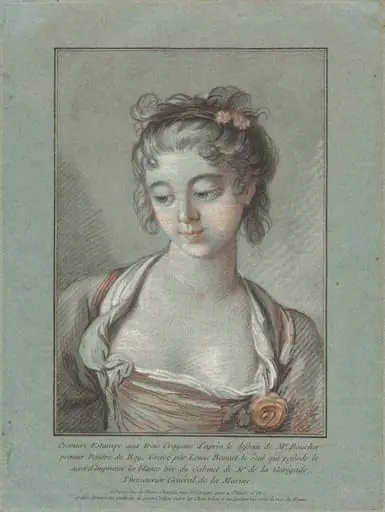
The work depicts a bust-length portrait of a woman, identified as Flora, the Roman goddess of spring, whose head is turned slightly to the side.
Created in 1769, Tête de Flore is a pastel manner print by the French artist Louis-Marin Bonnet. The work depicts a bust-length portrait of a woman, identified as Flora, the Roman goddess of spring, whose head is turned slightly to the side. Her hair is elaborately curled and adorned with flowers, complemented by a pink bow at the neck and a pale, flowing dress.
Bonnet executed the piece using a complex multi-block printing technique, layering colors including red, green, yellow, blue-green, light blue, bright blue, black, tan, brown, white, and pink to simulate the soft, blended texture of hand-applied pastels. The composition features a dark background that contrasts with the subject's glowing skin, while the edges of her clothing dissolve into abstract swirls of color, a characteristic effect of the medium. This work exemplifies Bonnet's pioneering role in developing the pastel manner print, a process that allowed for the mass reproduction of pastel-like images during the mid-18th century.
The piece reflects the Rococo aesthetic's emphasis on lightness, color, and decorative elegance, capturing the idealized beauty typical of French portraiture from the period.
Subject & Meaning
The figure is identified as Flora, the Roman goddess of flowers, suggested by the floral ornaments in her hair and the overall delicate, naturalistic tone. The composition emphasizes femininity and the fleeting beauty of spring, using the soft pastel palette to evoke a sense of tenderness and transience associated with the deity’s domain.
Technique & Style
Bonnet employed pastel sticks, a medium that allows for smooth gradations and subtle color blends. The artist built up the portrait with layered pigments, achieving a velvety texture on the skin and a muted, atmospheric backdrop. The use of multiple hues, reds, greens, blues, and pinks, creates a harmonious, almost iridescent effect that blurs the boundary between figure and setting.
History & Provenance
Created in 1769, the print reflects the late‑Baroque taste for decorative portraiture in France. While specific ownership records are scarce, the work is catalogued among Bonnet’s surviving pastel prints, indicating its circulation among collectors of the period and its preservation in museum collections dedicated to 18th‑century French art.
Own this work as a print
Artist & collection