Artwork
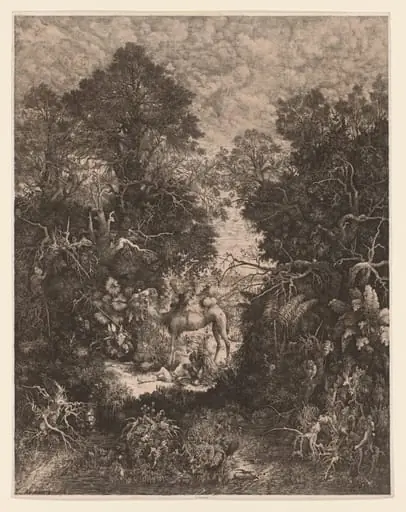
The Good Samaritan
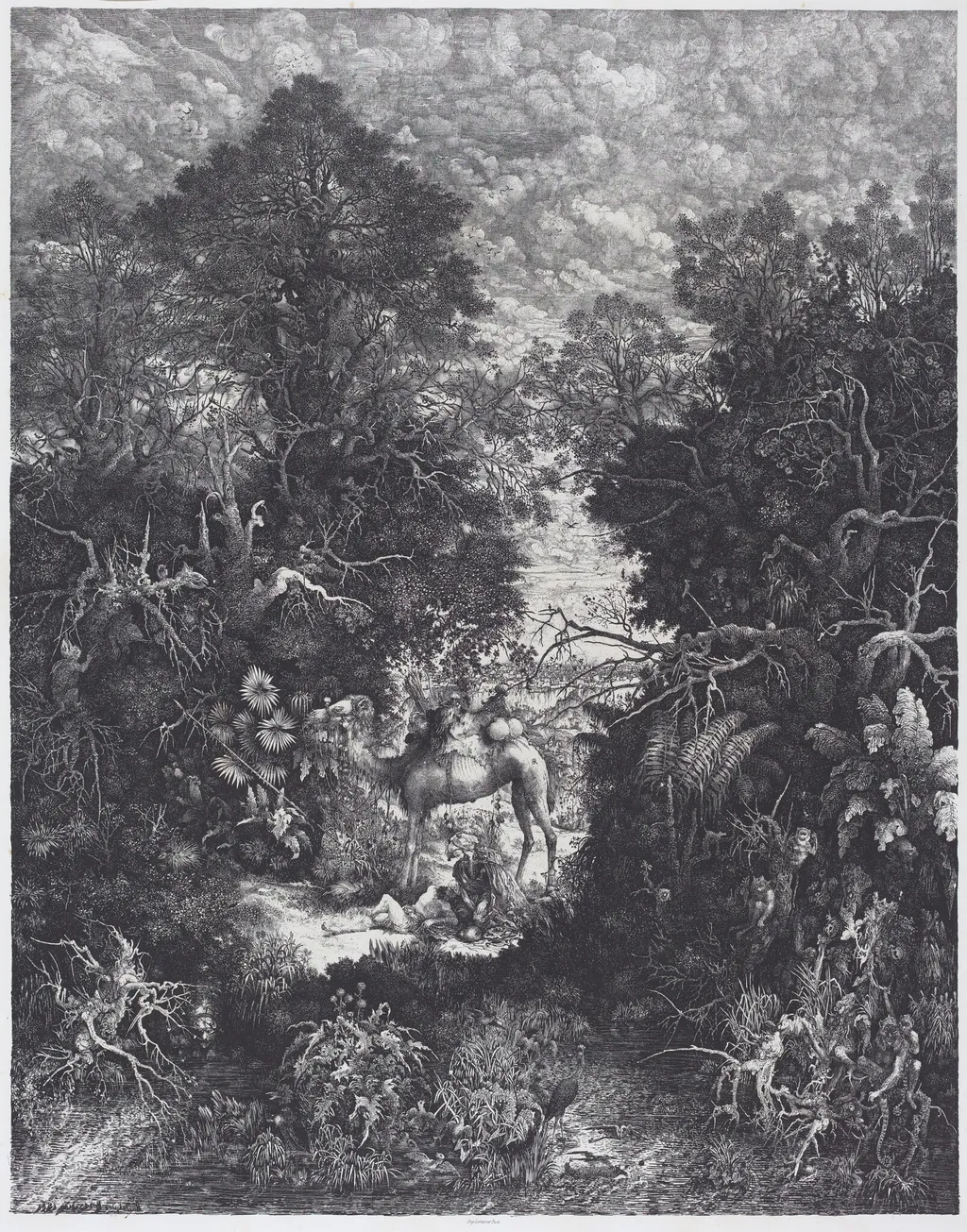
The Good Samaritan is an ink print by the Impressionist artist Rodolphe Bresdin. It dates from 1861 and is held in the collection of the National Gallery of Art.
- Inscription
- Inscribed:lower center in stone: Imp. Lemercier, Paris; lower left in image: Rodolphe Bresdin 1861 [in reverse]; in image on camel's rump: RB
About this work
Overview
The image conveys a subdued, tense atmosphere through its careful arrangement of natural elements and human drama.
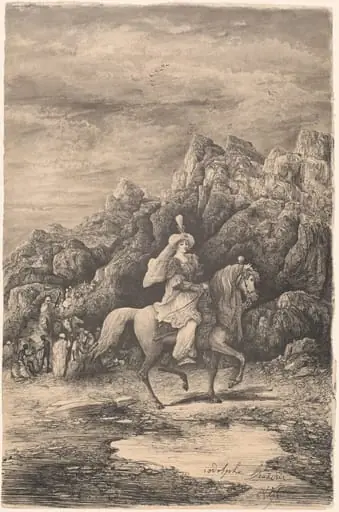
Created in 1861, this lithographic print depicts the biblical parable of the Good Samaritan. Rendered in black ink on wove paper, the composition centers on a kneeling figure attending to an injured traveler beside a narrow road, surrounded by dense foliage and a distant, cloud‑filled sky. The image conveys a subdued, tense atmosphere through its careful arrangement of natural elements and human drama.
Subject & Meaning
The work visualizes the moment of compassion from the New Testament story, emphasizing the act of aid rendered by the Samaritan to the wounded man. By placing the figures amid an overgrown landscape, the artist underscores the isolation of the scene and the moral significance of kindness emerging from an otherwise indifferent environment.
Technique & Style
Executed as a lithograph, the piece showcases the artist’s mastery of line and tonal variation. Fine, hand‑drawn strokes render leaves, stones, and birds, while broader, rougher lines define the figures and terrain. The contrast between delicate detailing and more gestural shading creates a sense of depth and vitality within the monochrome medium.
History & Provenance
The French draughtsman Rodolphe Bresdin, born in 1822, produced this print during a turbulent phase marked by financial hardship and personal instability. Though associated with the bohemian circles of mid‑19th‑century Paris, including literary figures such as Baudelaire and Hugo, the work remained relatively obscure at the time of its creation.
Context
Bresdin’s reputation rested on intricate, fantastical drawings, and this lithograph reflects his penchant for densely populated scenes filled with minute natural details. The choice of a biblical narrative aligns with contemporary interests in moral subjects, while the technical execution demonstrates the artist’s engagement with the lithographic process, which was gaining popularity among Parisian printmakers.
Own this work as a print
Artist & collection

 Rest on the Flight into Egypt with a Saddled Donkey
 The Good Samaritan
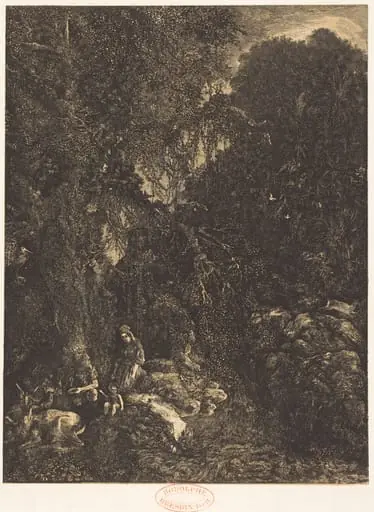 The Holy Family with the Does
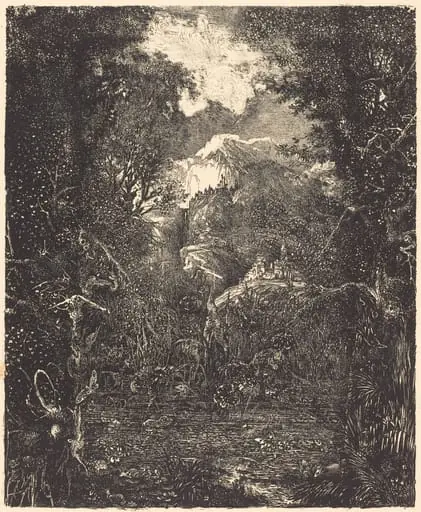 The Towns Behind the Marsh
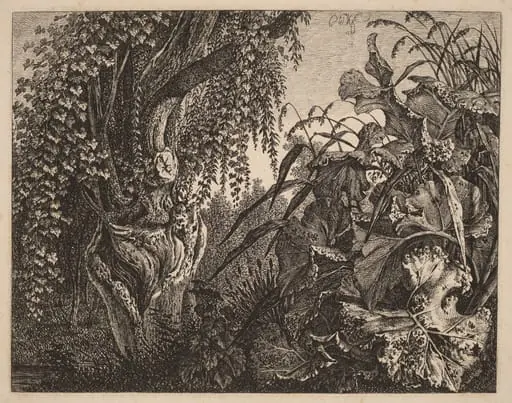 A Thicket; a Gnarled Willow Tree at Left, a Thicket of Vegetation at Right
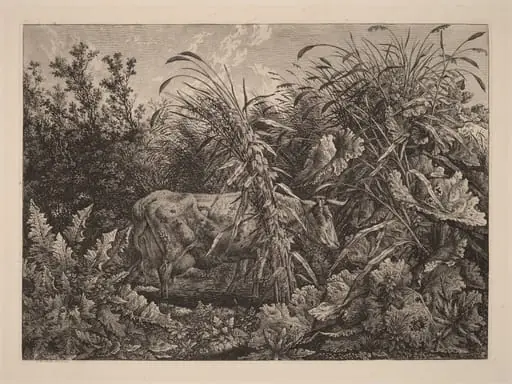 The Cow in the Swamp
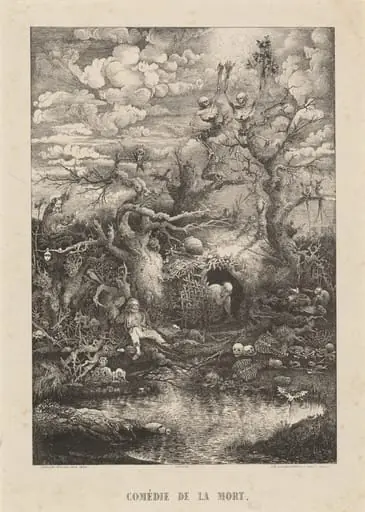 The Comedy of Death
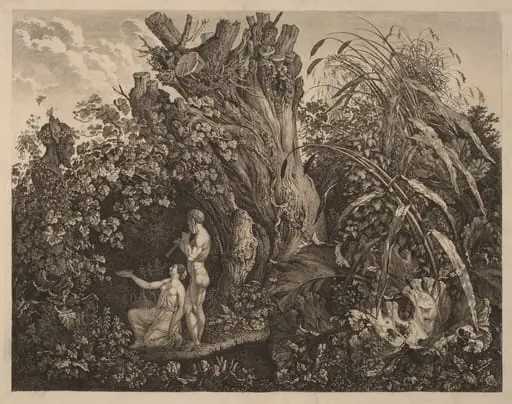 An Offering to Pan
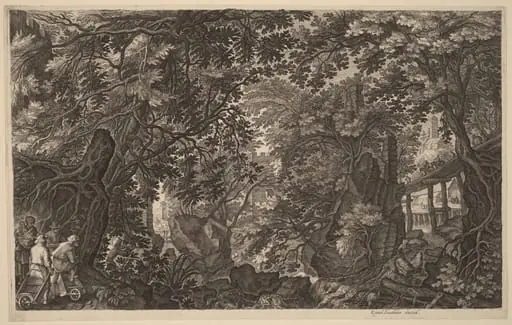 River Landscape with a Duck Hunter
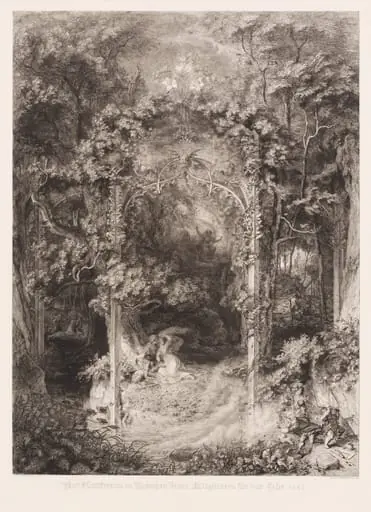 Das Waldfräulein (The Lady of the Forest)
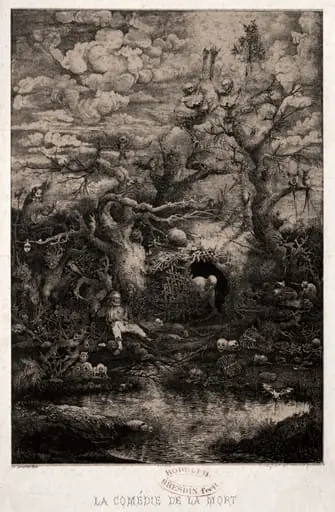 The Comedy of Death
- The Good Samaritan (Le Bon Samaritain)