Artwork
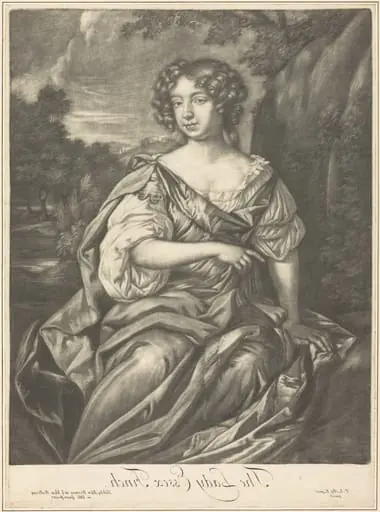
The Lady Essex Finch
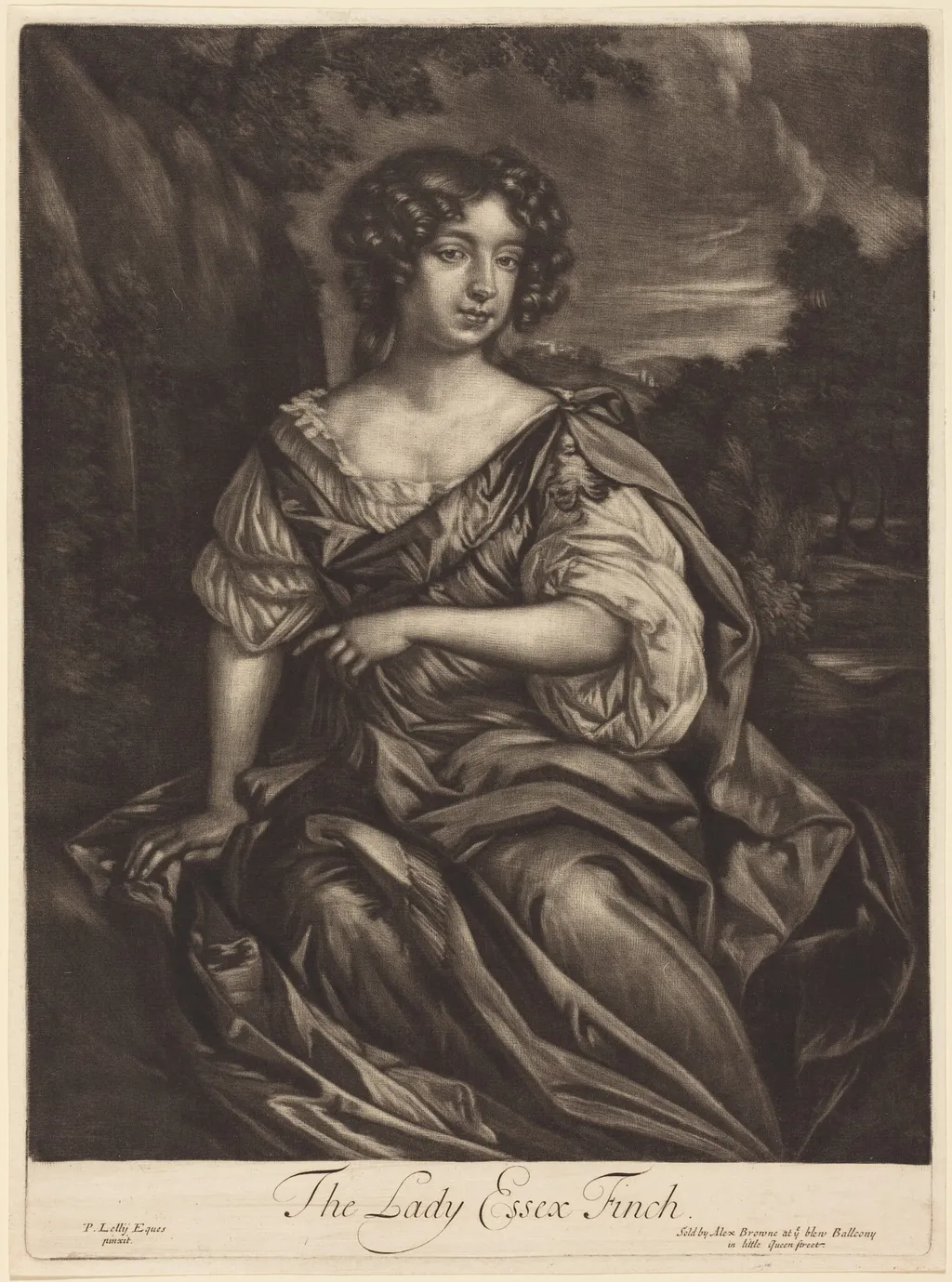
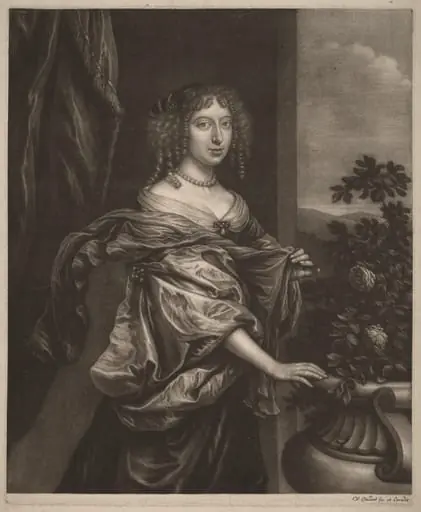
The Lady Essex Finch is an ink print by the Baroque artist Alexander Browne. It dates from 1680 and is held in the collection of the National Gallery of Art.
- Inscription
- Inscribed:lower center in plate: The Lady Essex Fince; lower left in plate: P. Lellij Eques / pinxit.; lower right in plate: Sold by Alex Browne at ye blew Ballcony / in little Queen Street
About this work
Overview
The Lady Essex Finch is a mezzotint print created by Alexander Browne around 1680, depicting a seated portrait of a woman in a draped dress with a distinctive bow at the neckline and neatly pulled-back hair, set against a dark, blurred background that emphasizes her face and posture.
Subject & Meaning
The subject of the portrait is identified as Lady Essex Finch. Her relaxed yet dignified pose, with one arm resting on her knee, conveys a sense of calm elegance. The focus on her face and the simple, yet effective, composition suggest a emphasis on her personality and status.
Technique & Style
Executed in mezzotint on laid paper, the print utilizes chiaroscuro to achieve deep, soft shadows, particularly on the subject's face and clothing, which creates a three-dimensional effect and adds depth to the image. The dark background further enhances this dramatic lighting.
History & Provenance
Created circa 1680 by Alexander Browne, the print was sold by the artist in London. The title The Lady Essex Finch is prominently displayed at the bottom of the work.
Context
As a mezzotint from the late 17th century, this work reflects the period's interest in expressive, high-contrast printing techniques. The portrayal of a noble subject also aligns with the contemporary practice of creating portraits for the aristocracy.
Legacy
While specific details on the work's direct influence or widespread recognition are not provided, The Lady Essex Finch remains a notable example of late 17th-century mezzotint technique and aristocratic portraiture of its time.
Own this work as a print
Artist & collection