Artwork
La Traversée (The Passage)
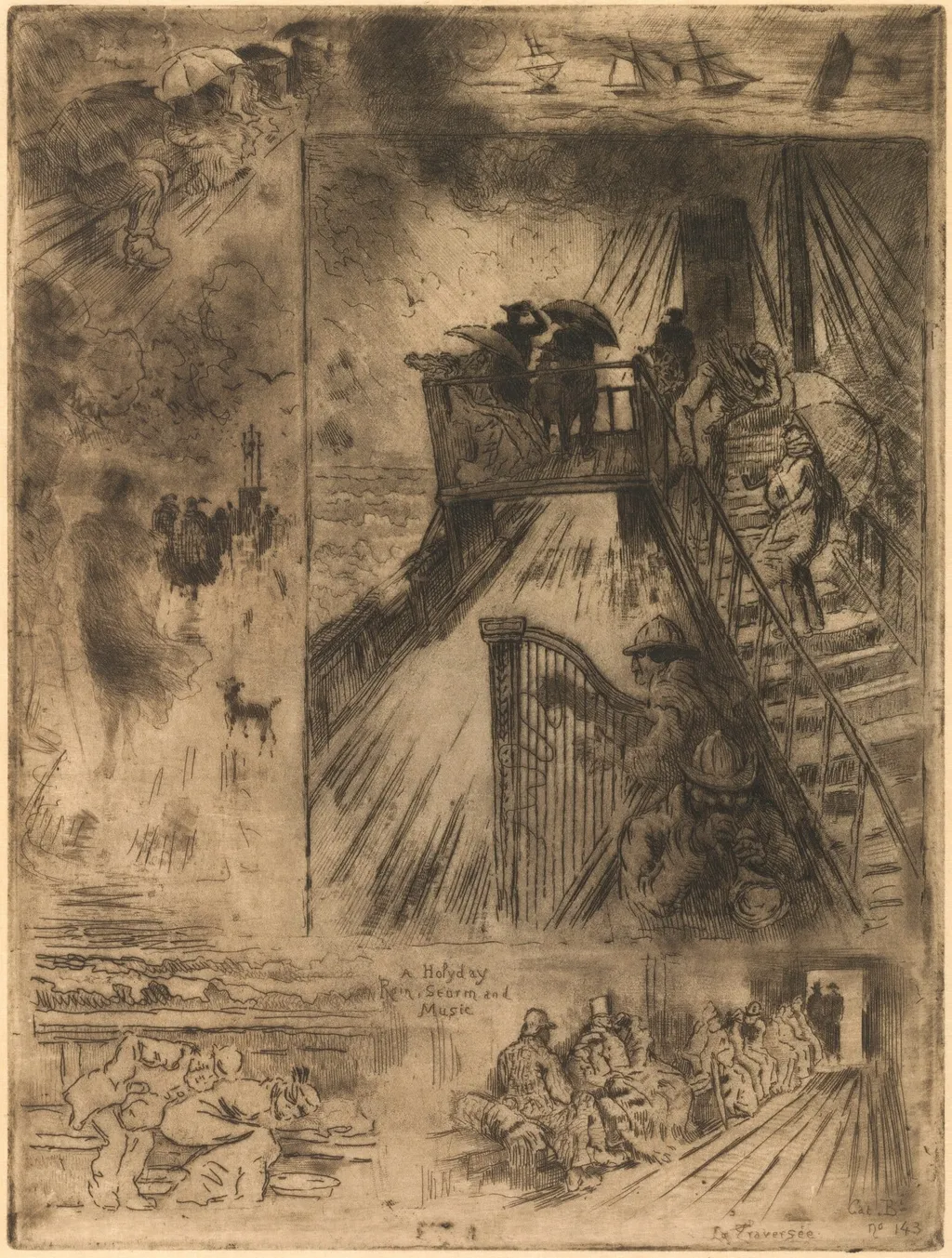
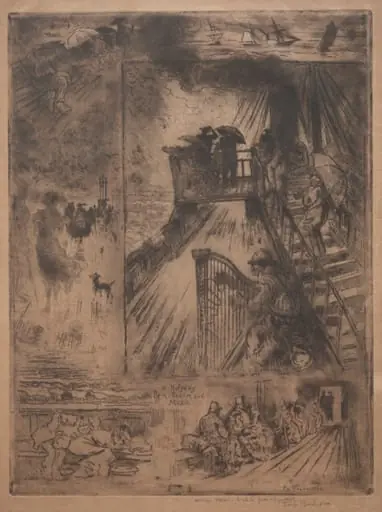
La Traversée (The Passage) is an ink print by the Impressionist artist Félix-Hilaire Buhot. It dates from 1882 and is held in the collection of the National Gallery of Art.
About this work
Overview
The composition is dominated by thick, vertical lines representing rain that obscure the background architecture, creating a sense of dampness and gloom.
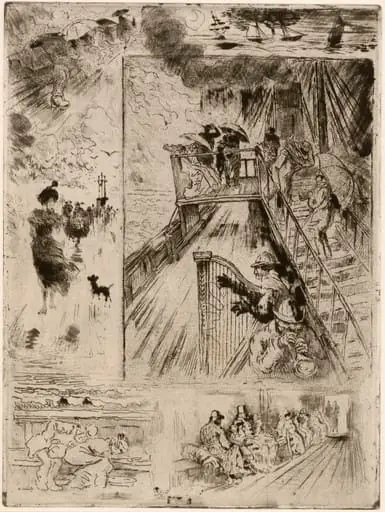
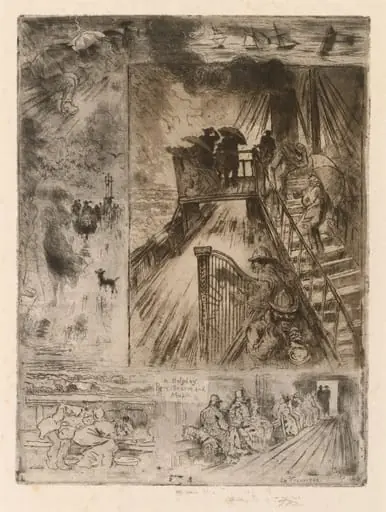
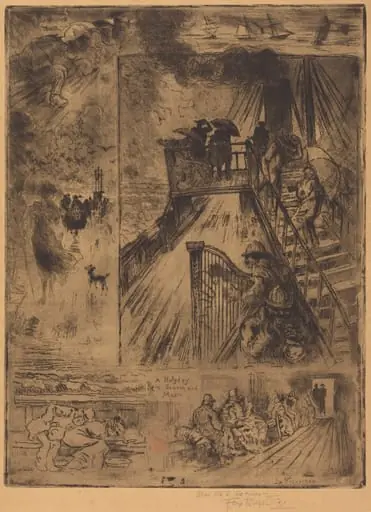
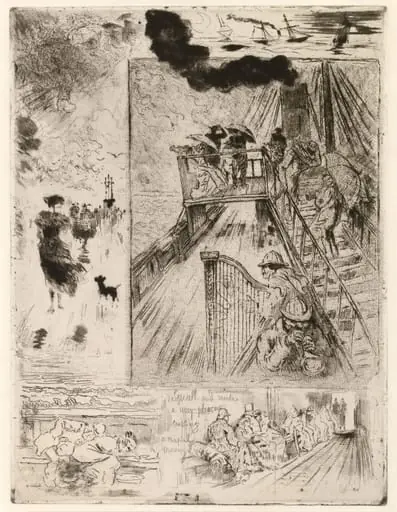
La Traversée (The Passage), created by Félix-Hilaire Buhot in 1882, is a complex print executed in etching, drypoint, roulette, and soft-ground etching on Japanese laid paper. The work depicts a bustling Parisian street scene during a heavy downpour, capturing the transient atmosphere of the city with remarkable immediacy. The composition is dominated by thick, vertical lines representing rain that obscure the background architecture, creating a sense of dampness and gloom.
In the foreground, figures huddle under umbrellas, while horse-drawn carriages navigate the wet pavement. A notable detail includes a horse struggling near a gate, adding a dynamic tension to the scene, alongside a dog trotting past seated pedestrians. Buhot utilized his signature experimental techniques, particularly the soft-ground etching and roulette, to render the texture of the wet cobblestones and the diffused light of the rainy day.
This piece exemplifies Buhot's mastery of the etching medium during the late 19th century, reflecting his interest in modern life and his innovative approach to atmospheric effects. It stands as a significant example of his contribution to the revival of etching in France, bridging the gap between traditional printmaking and the Impressionist interest in capturing fleeting moments.
Subject & Meaning
The composition depicts a crowded thoroughfare under a downpour: pedestrians clutch umbrellas, horse‑drawn carriages navigate slick cobbles, a dog ambles along the pavement, and a horse struggles near a gate. The title, The Passage, underscores the transient act of moving through inclement weather, emphasizing the collective experience of urban life in motion.
Technique & Style
Buhot employed a mixture of intaglio processes, etching for broad tonal fields, drypoint for fine, velvety lines, roulette for textured patterns, and soft‑ground for delicate surface effects. These methods intersect to produce varied line quality and depth, allowing the rain, wet stone, and architectural details to emerge with a tactile, gritty realism.
History & Provenance
Created in the early 1880s, La Traversée reflects Buhot’s interest in modern cityscapes during a period of rapid industrialization in France. The print has been held in several public collections, though specific acquisition records are limited, indicating its circulation among collectors of 19th‑century French prints.
Context
The work belongs to a broader 19th‑century tradition of depicting contemporary urban life, paralleling the interests of artists such as Gustave Caillebotte and Charles Baudelaire’s literary portrayals of the modern city. Buhot’s focus on weather and movement aligns with the era’s fascination with the fleeting moments of everyday existence.
Own this work as a print
Artist & collection

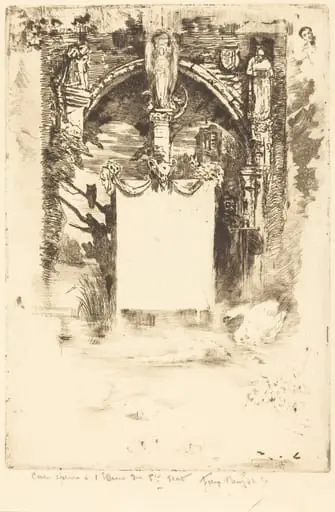 Ex-Libris pour "L'Ensorcelée" (Bookplate for "L'Ensorcelée")
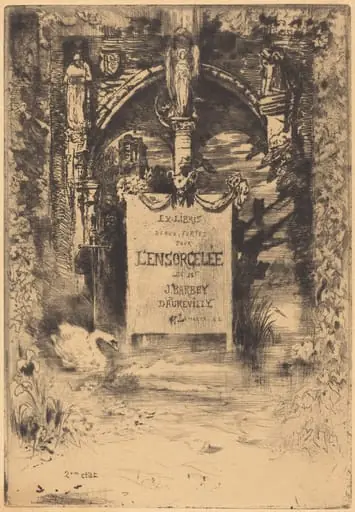 Ex-Libris pour "L'Ensorcelée" (Bookplate for "L'Ensorcelée")
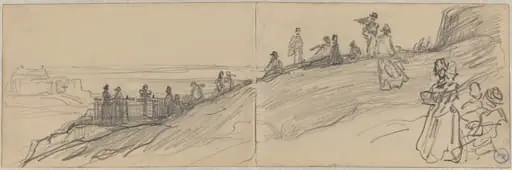 Figures on Top of a Hill, Overlooking the Sea
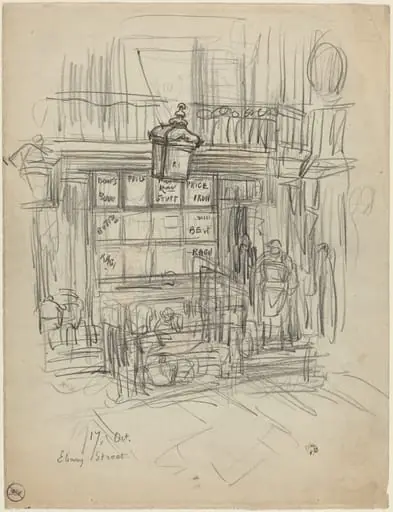 Ebury Street
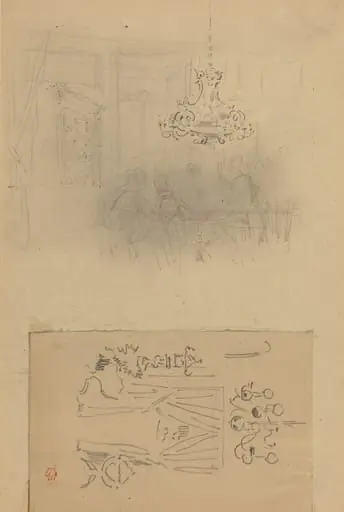 A Gathering in an Interior; A Curtained Doorway
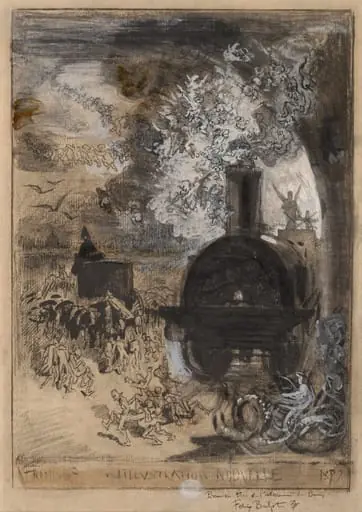 Frontispiece for L'Illustration Nouvelle: The Burial of the Burin
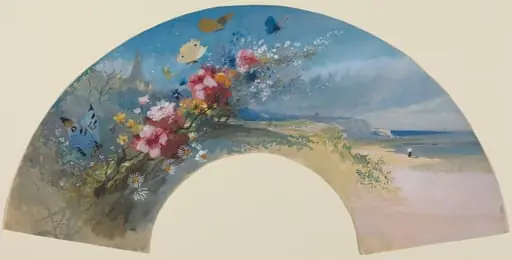 Fan with Wildflowers and Butterflies against the Norman Coast
![Gillingham Pier, London [verso], by Félix-Hilaire Buhot](https://artifactworldgallery.com/img/felix-hilaire-buhot--gillingham-pier-london-verso--641e03dd7de8217b-w320.webp) Gillingham Pier, London [verso]
Gillingham Pier, London [verso]