Artwork
Têtes de Bretons
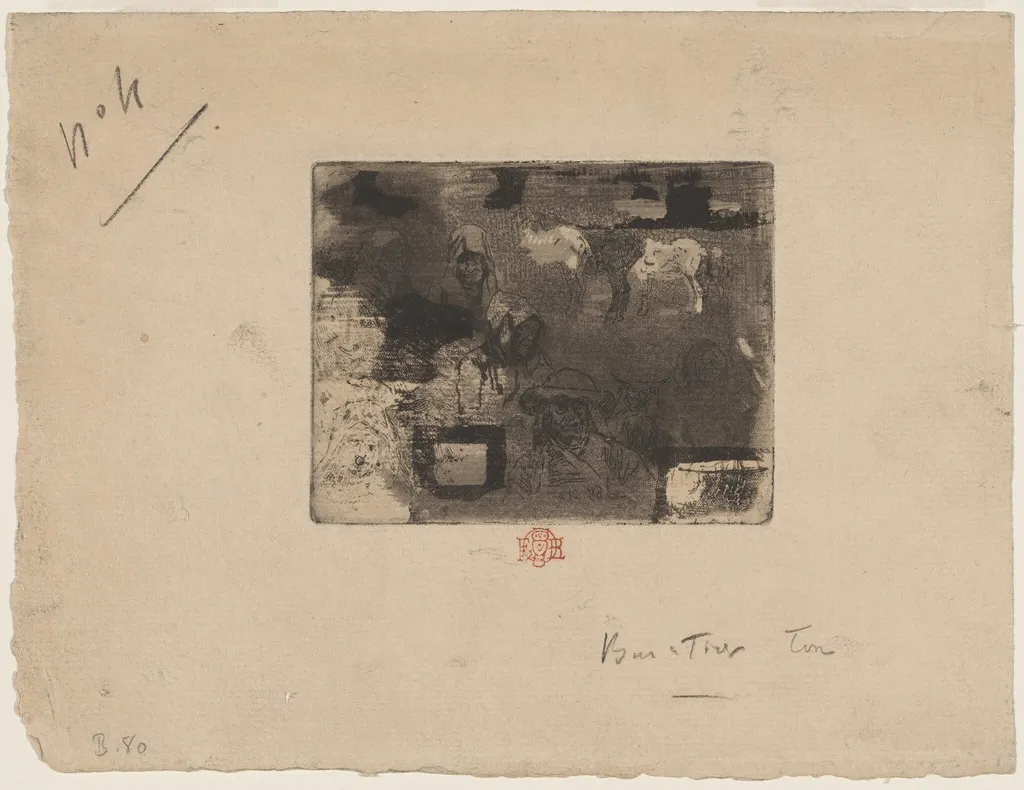
Têtes de Bretons is an ink print by the Romanticist artist Félix-Hilaire Buhot. It dates from 1872 and is held in the collection of the National Gallery of Art.
About this work
Overview
The artist utilizes heavy shading and varied line work to evoke the somber, atmospheric quality of the room and the rough appearance of the subjects.
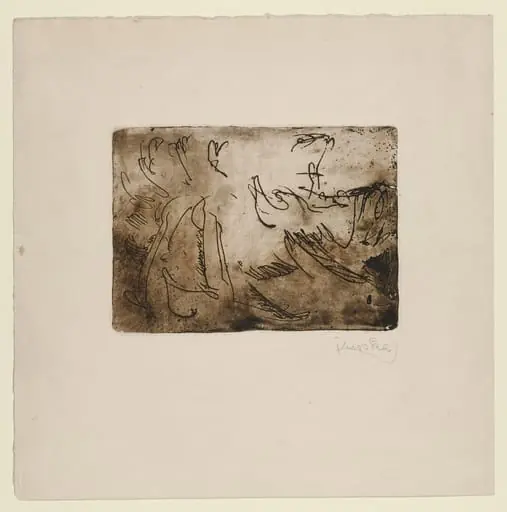
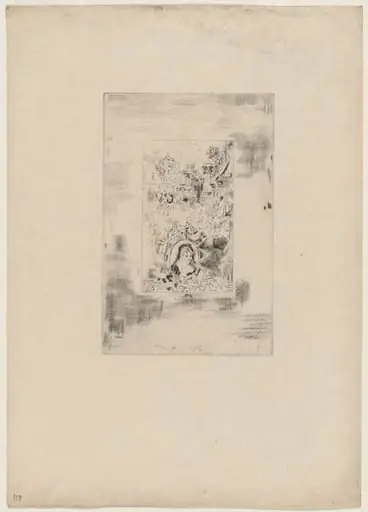
Félix-Hilaire Buhot's 1872 etching, Têtes de Bretons, depicts a dimly lit interior scene featuring three figures in a rustic Breton setting. The composition centers on a table where two men are seated; one is hunched forward in a posture of exhaustion or contemplation, while the other leans back, creating a dynamic contrast in their body language. A third figure stands nearby, observing the scene.
Buhot employs a combination of etching, aquatint, roulette, and soft-ground techniques to render the dark, textured walls and the faint light filtering through a small window. The artist utilizes heavy shading and varied line work to evoke the somber, atmospheric quality of the room and the rough appearance of the subjects. Created early in Buhot's career, this work reflects his interest in capturing the everyday life and character of the Breton people, a recurring theme in his oeuvre.
The print is executed on antique laid paper, a choice that enhances the work's tactile and aged aesthetic. This piece demonstrates Buhot's mastery of experimental printmaking techniques to achieve painterly effects and emotional depth, establishing his reputation as a significant innovator in French printmaking during the late 19th century.
Subject & Meaning
The scene depicts a modestly furnished room where three Breton individuals occupy a table. One figure is bent forward, another reclines, while a third stands nearby, suggesting a casual, perhaps convivial, interaction. The limited lighting from a small window creates a subdued atmosphere, emphasizing the everyday character of the gathering rather than any overt narrative.
Technique & Style
Buhot employed a mixture of sharp, incised lines and delicate tonal washes achieved through aquatint and roulette, producing a contrast between crisp outlines and soft shadows. The soft‑ground application yields a grainy, sketch‑like texture that conveys immediacy, as if the image were rendered quickly, possibly outside a formal studio setting. The overall effect balances atmospheric mood with minimal detail.
History & Provenance
Created in the early 1870s, Têtes de Bretons reflects Buhot’s interest in printmaking innovations of the period. The work remains catalogued as a single print, its provenance traced through museum collections and private holdings that have documented its condition, including the paper’s aged appearance and marginal annotations left by the artist during its production.
Own this work as a print
Artist & collection

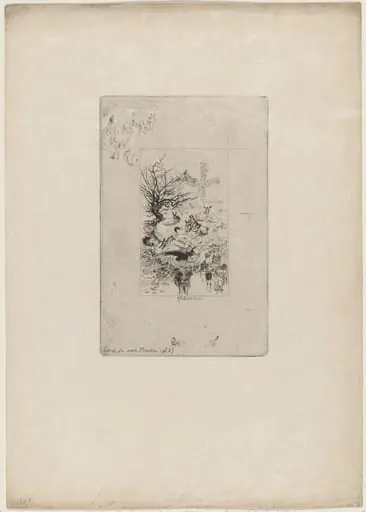
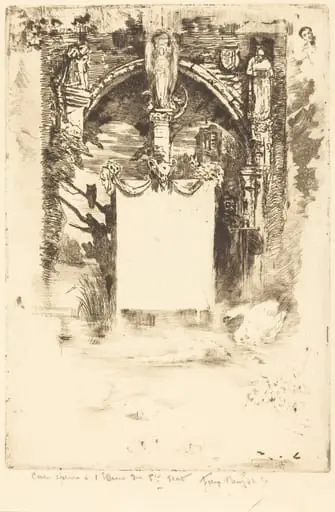 Ex-Libris pour "L'Ensorcelée" (Bookplate for "L'Ensorcelée")
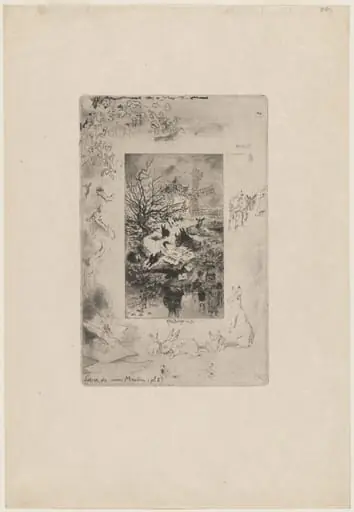
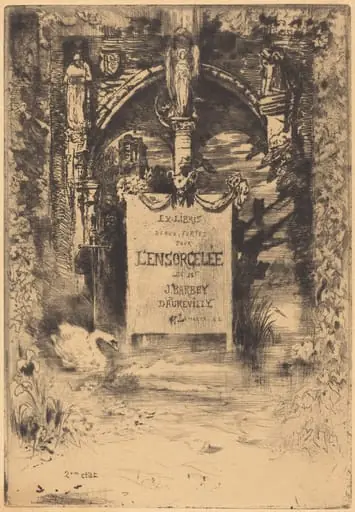 Ex-Libris pour "L'Ensorcelée" (Bookplate for "L'Ensorcelée")
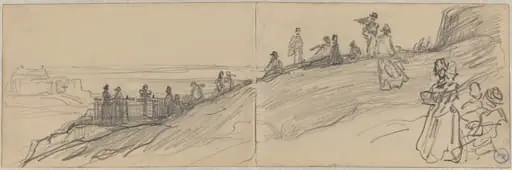 Figures on Top of a Hill, Overlooking the Sea
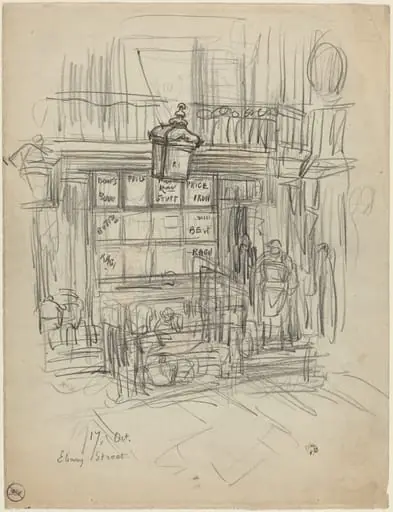 Ebury Street
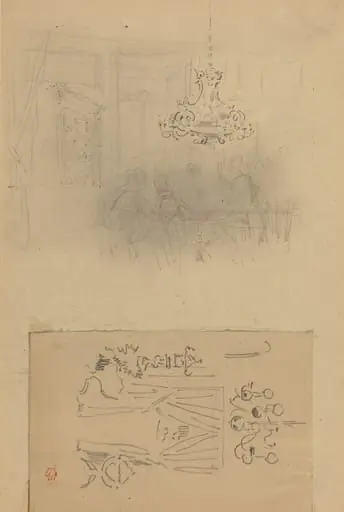 A Gathering in an Interior; A Curtained Doorway
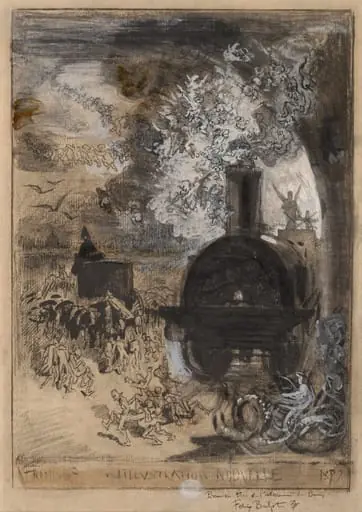 Frontispiece for L'Illustration Nouvelle: The Burial of the Burin
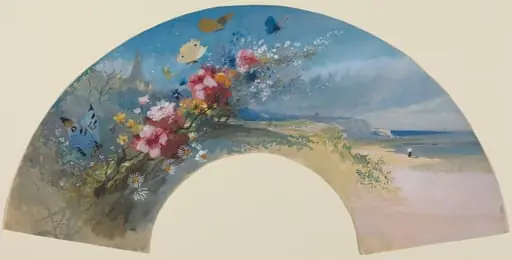 Fan with Wildflowers and Butterflies against the Norman Coast
![Gillingham Pier, London [verso], by Félix-Hilaire Buhot](https://artifactworldgallery.com/img/felix-hilaire-buhot--gillingham-pier-london-verso--641e03dd7de8217b-w320.webp) Gillingham Pier, London [verso]
Gillingham Pier, London [verso]