Artwork
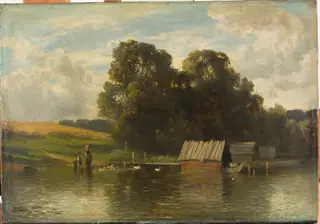
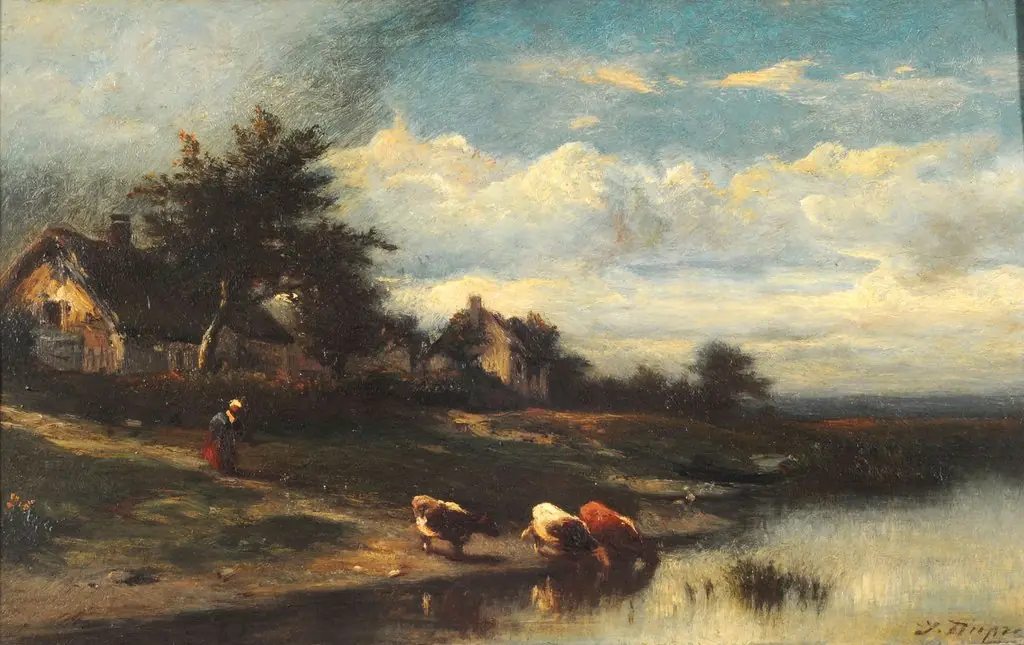
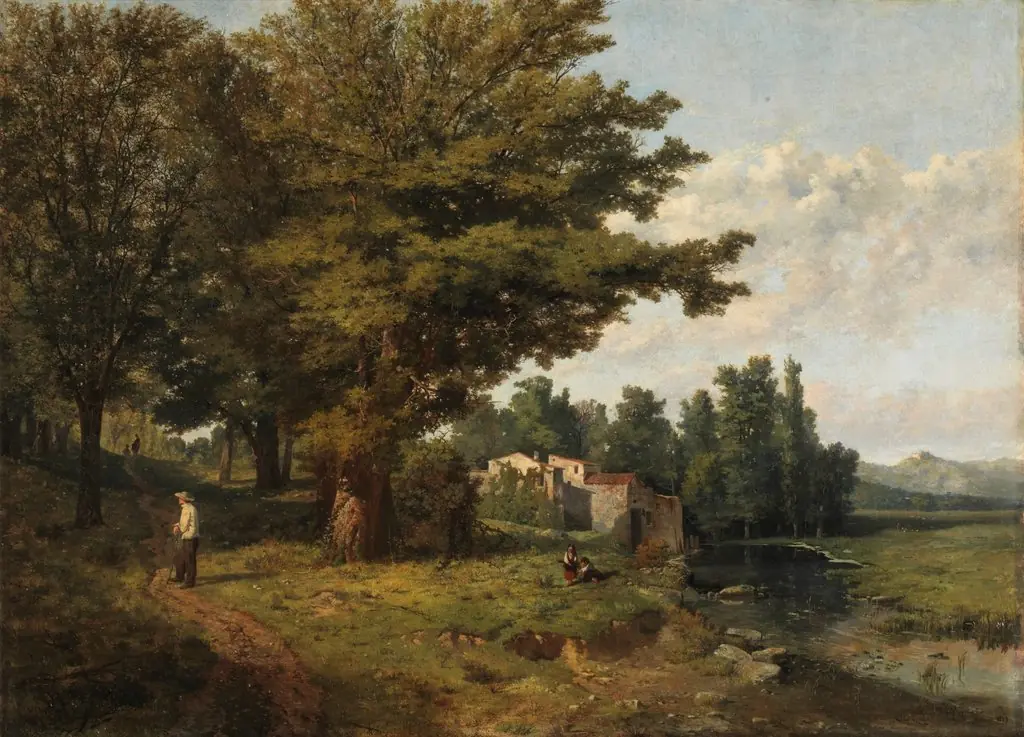
Cottage by the River with Washerwomen
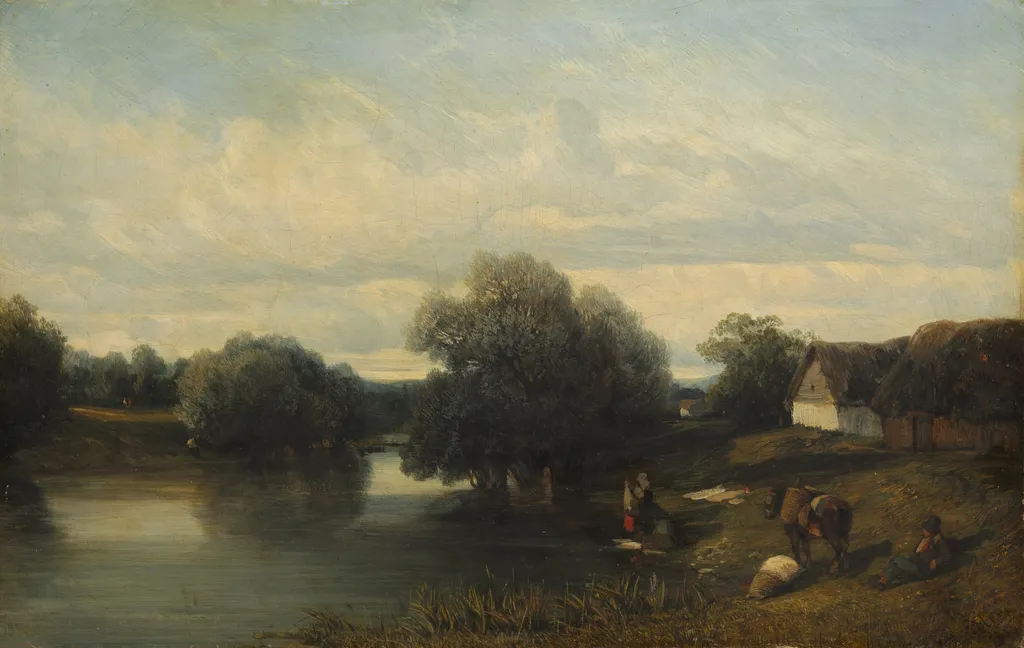
Cottage by the River with Washerwomen is an oil painting by the Realist artist Camille Flers. It dates from 1835 and is held in the collection of the Cleveland Museum of Art.
About this work
Technique & Style
The work is executed in oil paint on a woven fabric support. Measurements record a height of 29.8 cm and a width of 46.1 cm, confirming its classification as a painting created in France. The handling and condition details are not specified in the sources.
History & Provenance
Cottage by the River with Washerwomen is held in the collection of the Cleveland Museum of Art in Cleveland, Ohio.
The painting was created in France in 1835 by Camille Flers, who signed and dated it as recorded in his catalog. It entered the collection of the Cleveland Museum of Art, where it remains on display.
The work measures 29.8 cm in height and 46.1 cm in width, painted in oil on woven fabric.
The painting was cataloged in 1980 as accession number 1980.259 within the museum's collection.
Cottage by the River with Washerwomen is held in the collection of the Cleveland Museum of Art in Cleveland, Ohio. The work entered the museum's inventory under accession number 1980.259. Painted in 1835, this oil on canvas depicts a French landscape scene. The provided sources do not list any specific exhibitions where the painting has been displayed.
The inventory record confirms the artwork's physical dimensions and medium, aligning with the museum's cataloging of the piece as a mid-19th-century French painting.
Overview
Camille Flers, a Paris‑born painter active in the early nineteenth century, completed the oil work Cottage by the River with Washerwomen in 1835. The canvas captures a tranquil riverside setting where a modest thatched cottage, a few figures, and a passing horse and rider share the same gentle light. The composition is characteristic of Flers’s focus on everyday rural life.
Subject & Meaning
The scene depicts women engaged in laundry work beside a slow‑moving river, a common chore in agrarian communities. A standing figure holds a length of cloth while another rests on the grass, suggesting a pause in labor. The presence of the horse and rider adds a hint of movement, contrasting the stillness of the water and emphasizing the rhythm of daily routines.
Context
Flers trained under Joseph François Pâris and later instructed the Cabat brothers, situating him within a lineage of French academic landscape painters. Working during the realist period, he turned away from idealized scenery toward accurate, emotive depictions of ordinary labor and countryside, aligning his work with contemporary interests in social observation and naturalism.
Own this work as a print
Artist & collection
Artist
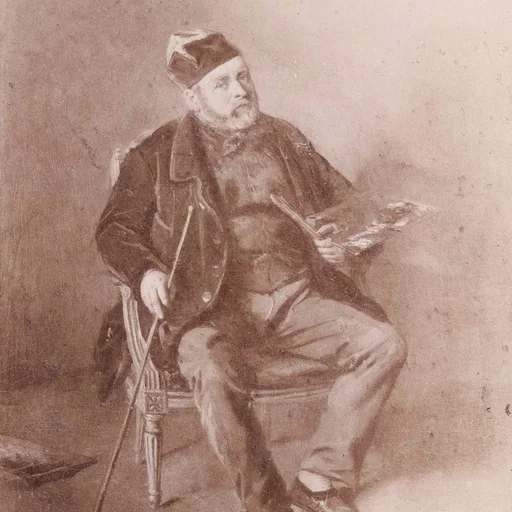
Camille Flers (born in Paris in 1802) was a painter of landscapes and a scholar who studied Joseph François Pâris.