Artwork
Chrysanthemums in a Chinese Vase
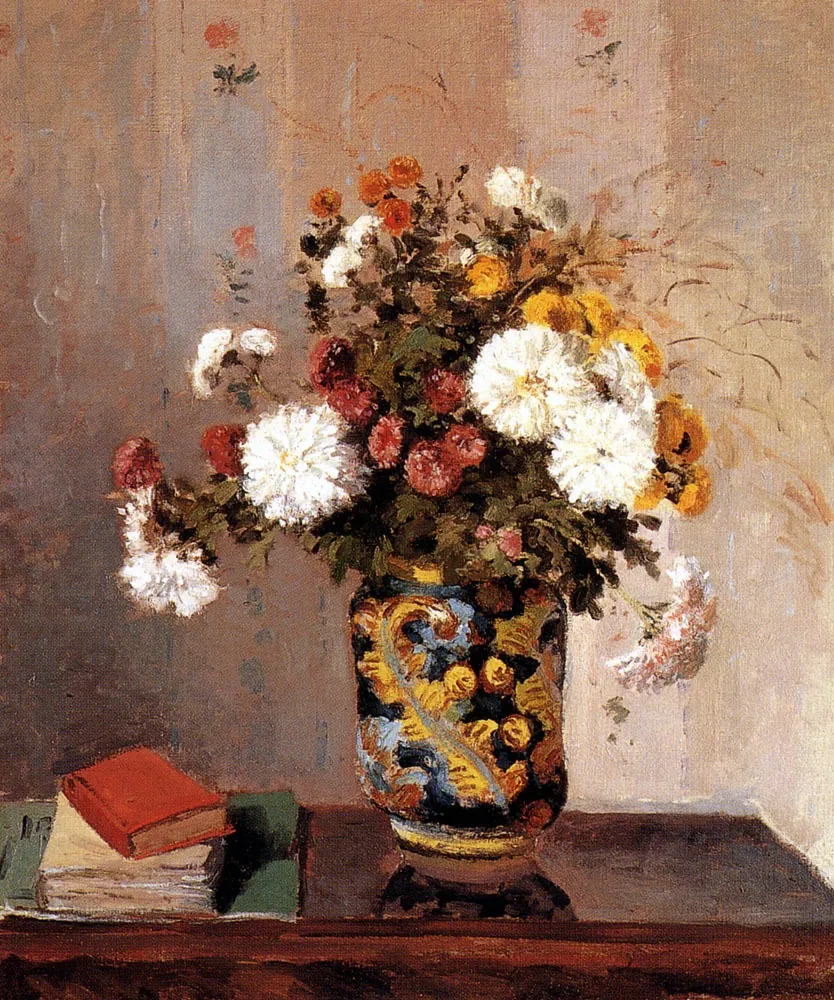
Chrysanthemums in a Chinese Vase is an oil painting by the Impressionist artist Camille Pissarro. It dates from 1873 and is held in the collection of the National Gallery of Ireland.
About this work
Subject & Meaning
Together these elements convey a quiet contemplation of beauty and the fleeting nature of seasonal bloom.
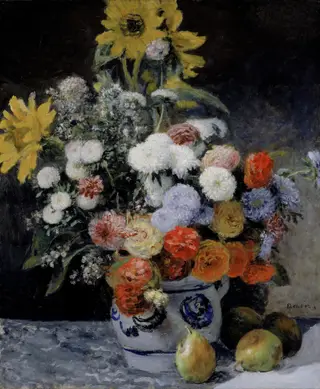
The painting shows a delicate arrangement of white chrysanthemums placed in a blue‑and‑white Chinese porcelain vase, accompanied by an open book and a wooden table surface. The flowers symbolize autumnal transience and scholarly refinement, while the Chinese vase references the 19th‑century European fascination with East Asian decorative arts. Together these elements convey a quiet contemplation of beauty and the fleeting nature of seasonal bloom.
Technique & Style
Executed in 1873, this still life is an oil painting on canvas. The work measures 60 cm in height and 50.5 cm in width. Stylistically, the composition features a Chinese vase filled with chrysanthemums arranged alongside a book on a table surface.
The piece is classified as a painting within the still life genre, utilizing oil paint as its primary medium to depict the floral subject matter and accompanying objects.
History & Provenance
Painted in 1873, this oil on canvas depicts a still life of chrysanthemums arranged in a Chinese vase upon a table alongside a book. The work belongs to the oeuvre of Camille Pissarro and is presently held by the National Gallery of Ireland, where it remains on view.
The painting entered the museum's collection through a direct acquisition, reflecting its recognized significance within Impressionist still‑life scholarship.
Chrysanthemums in a Chinese Vase is held by the National Gallery of Ireland, according to the painting's Wikidata record, which lists the institution as both its collection and its location.
No accession number, acquisition date, or further provenance details are recorded in the available sources, and no exhibition history is documented.
Context
Painted in 1873, this still life exemplifies Pissarro's engagement with domestic subjects during his mature period in France. Art historians note its restrained composition and nuanced handling of light as reflective of Impressionist preoccupations with everyday objects, situating the work within broader discussions of 19th-century French genre painting. Its inclusion in the National Gallery of Ireland's collection since acquisition highlights its recognized significance within transnational art historical narratives.
Scholarly attention has focused on the painting's technical execution and symbolic resonance, particularly the depiction of chrysanthemums, a motif associated with autumn and transience in East Asian art. Comparative analyses with contemporaries like Monet underscore Pissarro's unique synthesis of naturalist observation and compositional rigor, reinforcing his role as a pivotal figure bridging traditional and modernist approaches to still life.
The work's provenance and exhibition history, including displays at major institutions, underscore its enduring relevance in art historical scholarship.
Legacy
The painting's enduring reputation rests on its embodiment of Impressionist still-life innovation, particularly in its rendering of botanical subjects within domestic settings. Its composition influenced subsequent artists' approaches to floral arrangements in European painting, especially through its depiction of Chinese porcelain within Western decorative contexts. The work's inclusion in the National Gallery of Ireland's permanent collection since the mid-20th century cemented its status as a key example of Pissarro's experimentation beyond figure painting, ensuring its continued scholarly attention and public display.
Overview
Chrysanthemums in a Chinese Vase, painted by Camille Pissarro in 1873, is an oil on canvas still life that exemplifies the Impressionist emphasis on mundane subjects and light effects. The composition features a vibrant, ornate vase filled with chrysanthemums, accompanied by a stack of books on a dark table against a muted beige wall.
Artist & collection