Artwork
Haymaking
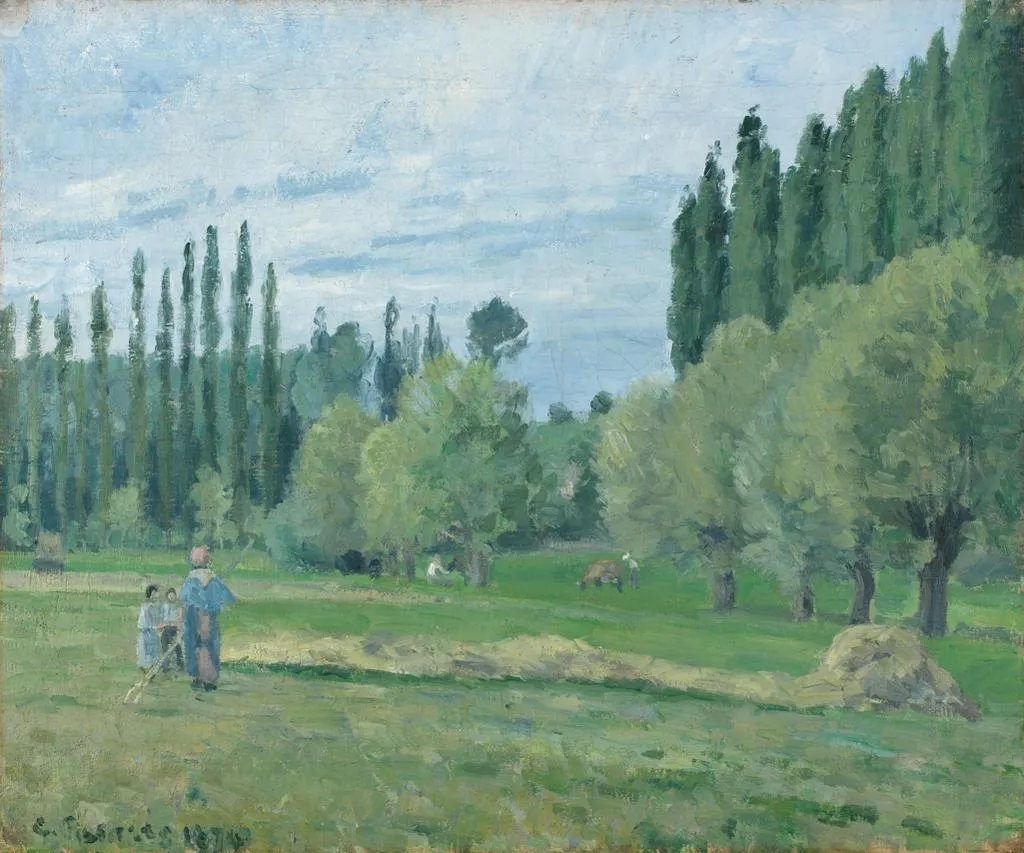
Haymaking is an oil painting by the Impressionist artist Camille Pissarro. It dates from 1874 and is held in the collection of the Fitzwilliam Museum.
About this work
Overview
It belongs to the Fitzwilliam Museum’s collection and exemplifies the movement’s shift toward everyday subjects rendered with immediacy and natural light.
Painted in 1874, Haymaking is an oil on canvas work by Camille Pissarro, a central figure in the Impressionist movement. The piece captures a quiet rural labor scene, reflecting Pissarro’s sustained interest in peasant life and the rhythms of agricultural work. It belongs to the Fitzwilliam Museum’s collection and exemplifies the movement’s shift toward everyday subjects rendered with immediacy and natural light.
Subject & Meaning
The painting portrays three figures, two adults and a child, engaged in the seasonal task of gathering hay. Their postures suggest fatigue and routine, emphasizing the physicality of rural labor without idealization. The absence of dramatic narrative or symbolic elements grounds the scene in realism, aligning with Pissarro’s belief in depicting ordinary life with dignity and attention to its unvarnished truth.
Technique & Style
Pissarro employed loose, broken brushwork to convey the texture of grass, foliage, and sky. Colors are muted, earthy greens, soft blues, and pale yellows, applied in rapid strokes that suggest movement and atmosphere rather than precise detail. The trees at the edges are rendered with energetic dabs of pigment, while the figures are simplified forms, integrated into the landscape rather than isolated as focal points.
History & Provenance
Created during the height of Impressionism, Haymaking was painted the same year as the first independent Impressionist exhibition. Pissarro, who participated in all eight exhibitions, used this work to assert the legitimacy of plein air painting and rural themes. The painting entered the Fitzwilliam Museum’s collection in the early 20th century, where it remains part of its core Impressionist holdings.
Context
In 19th-century France, agricultural labor was a common subject among realist and Impressionist painters seeking to move beyond historical or mythological themes. Pissarro’s depiction aligns with contemporaries like Millet and Cézanne, who portrayed peasants not as symbols but as participants in the natural world. The painting reflects a broader cultural shift toward valuing the visual truth of daily existence.
Legacy
Though less celebrated than some of his contemporaries’ works, Haymaking exemplifies Pissarro’s consistent commitment to observing and recording rural life with empathy and technical innovation. His approach influenced later generations of artists, particularly those interested in the relationship between labor, land, and light. The painting endures as a quiet testament to the dignity of seasonal work.
Artist & collection


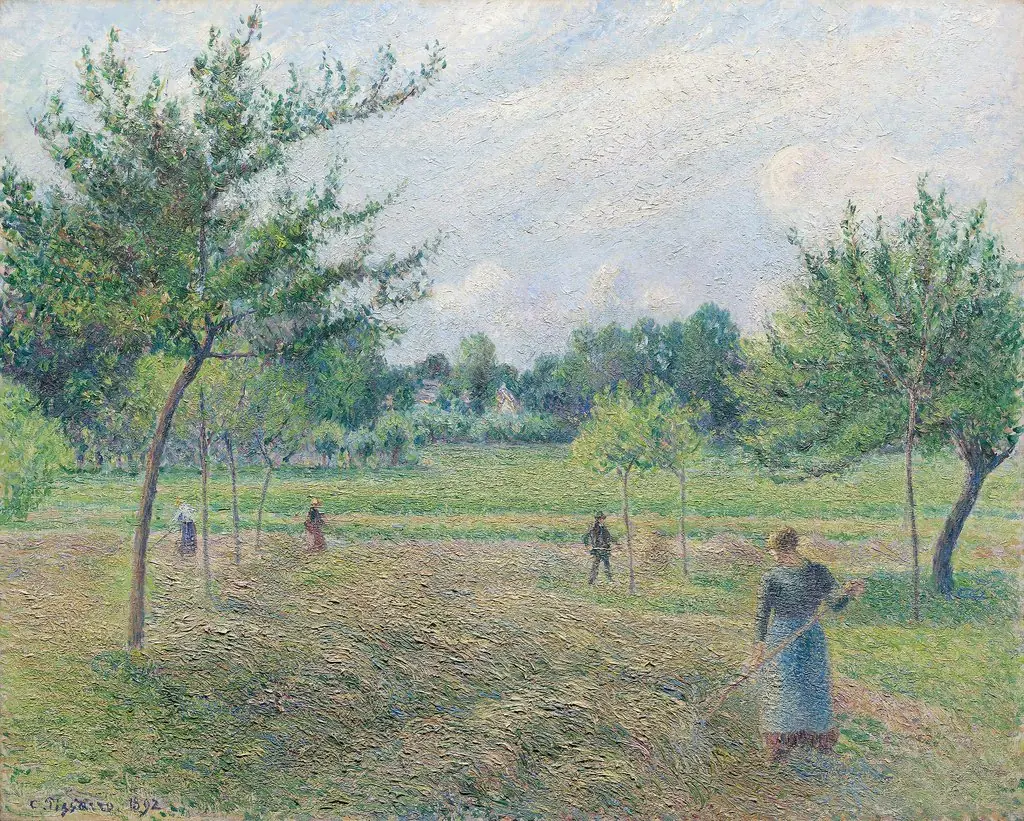
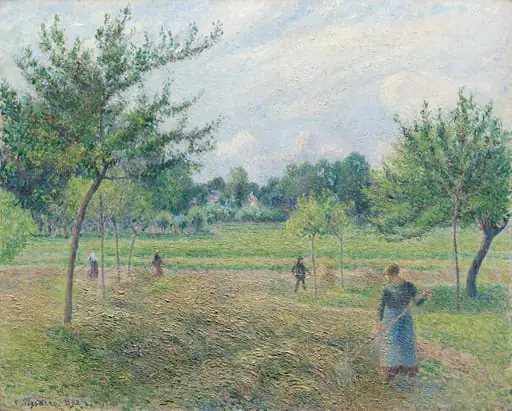 Haymaking at Éragny
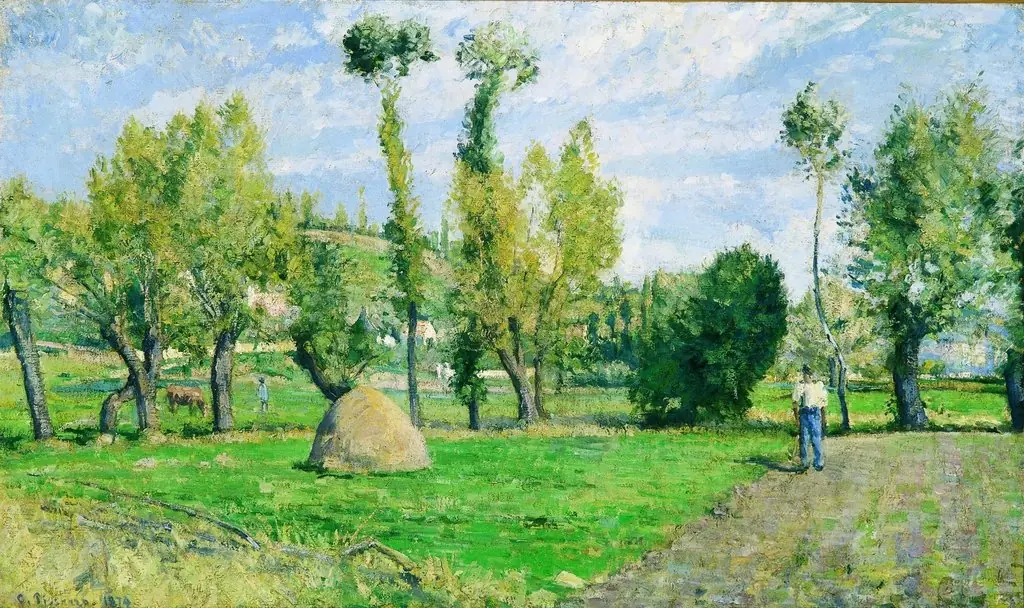 Meadows at Le Valhermeil, Auvers-sur-Oise
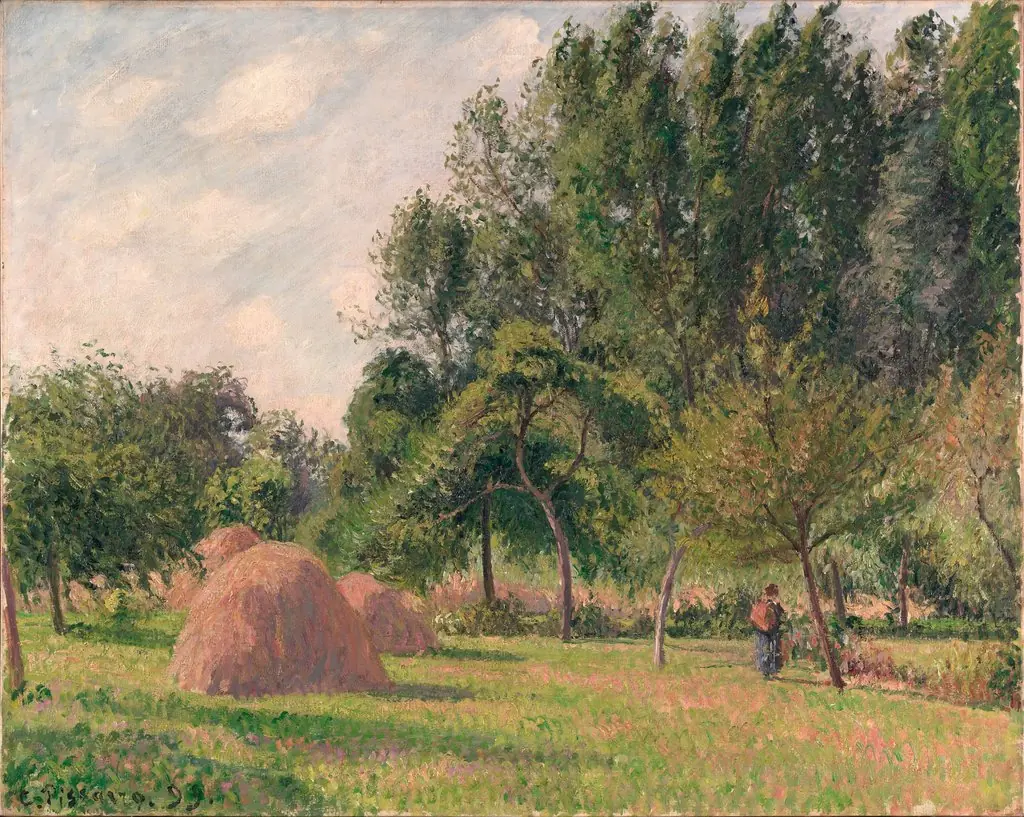 Haystacks, Morning, Éragny
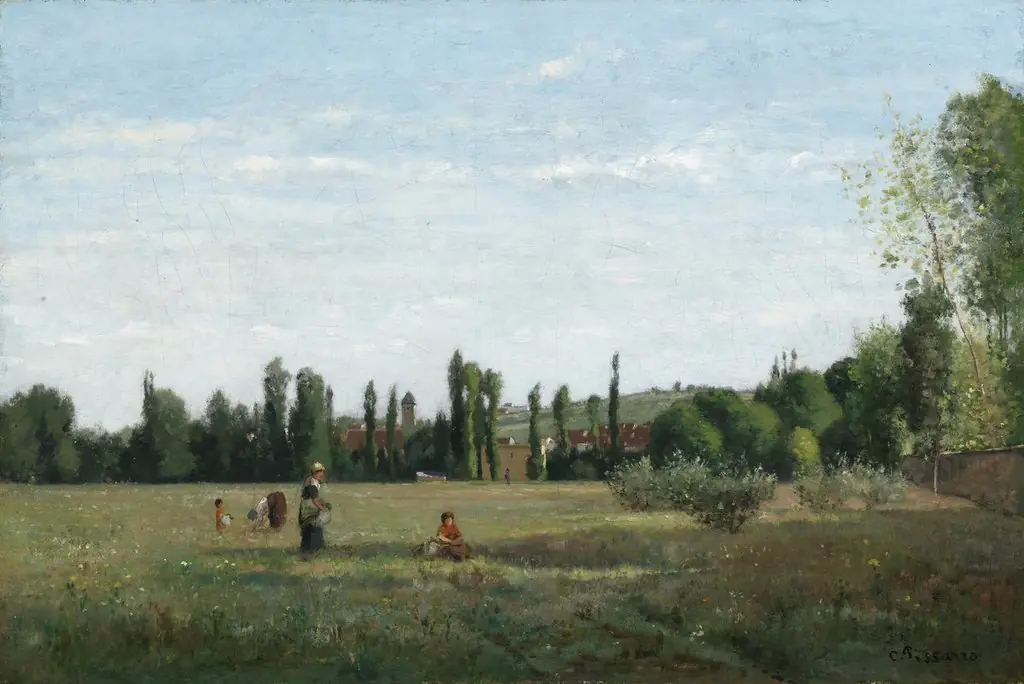 La Varenne Saint Hilaire
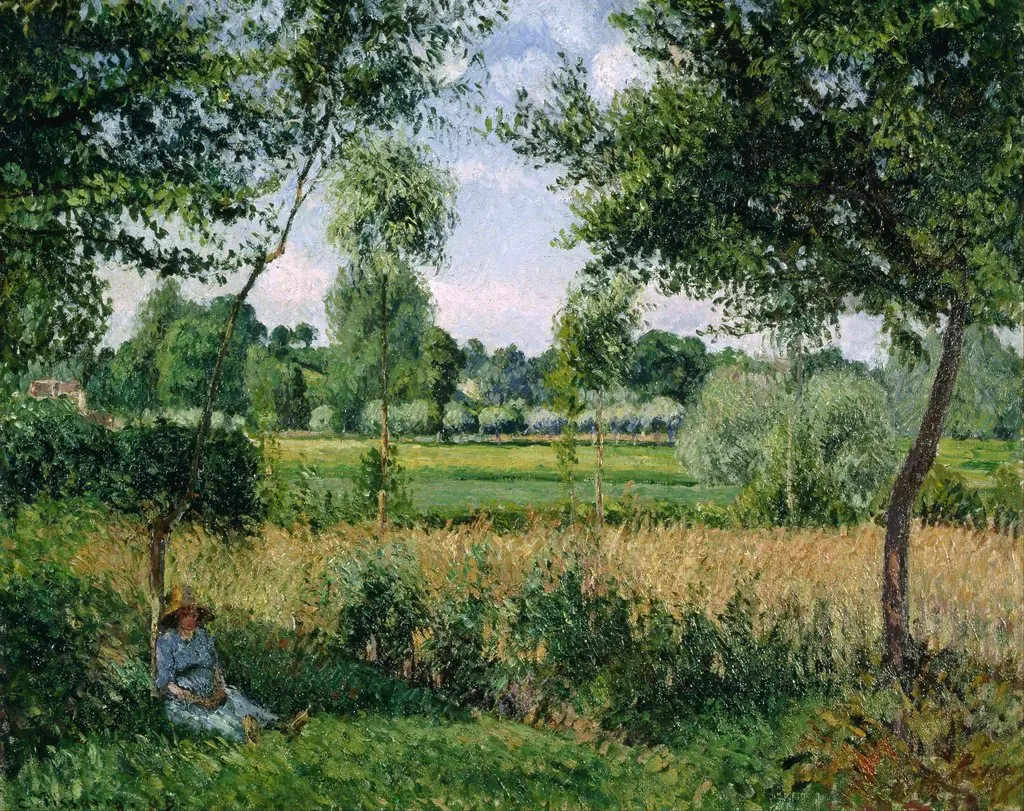 Peasant Woman Resting at the Foot of a Tree, Effect of Sunshine, Éragny
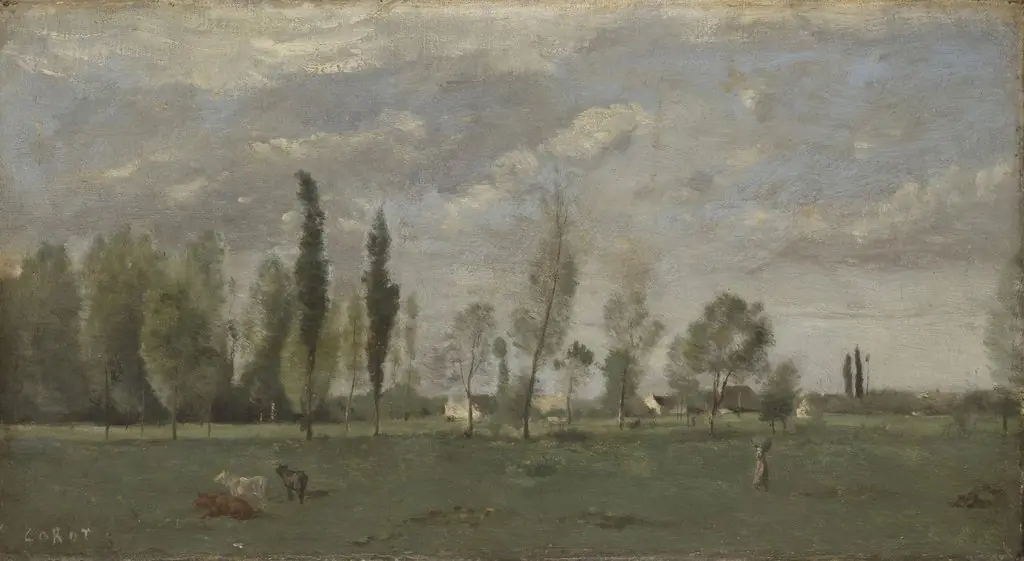 Fields of Saint-Ouen
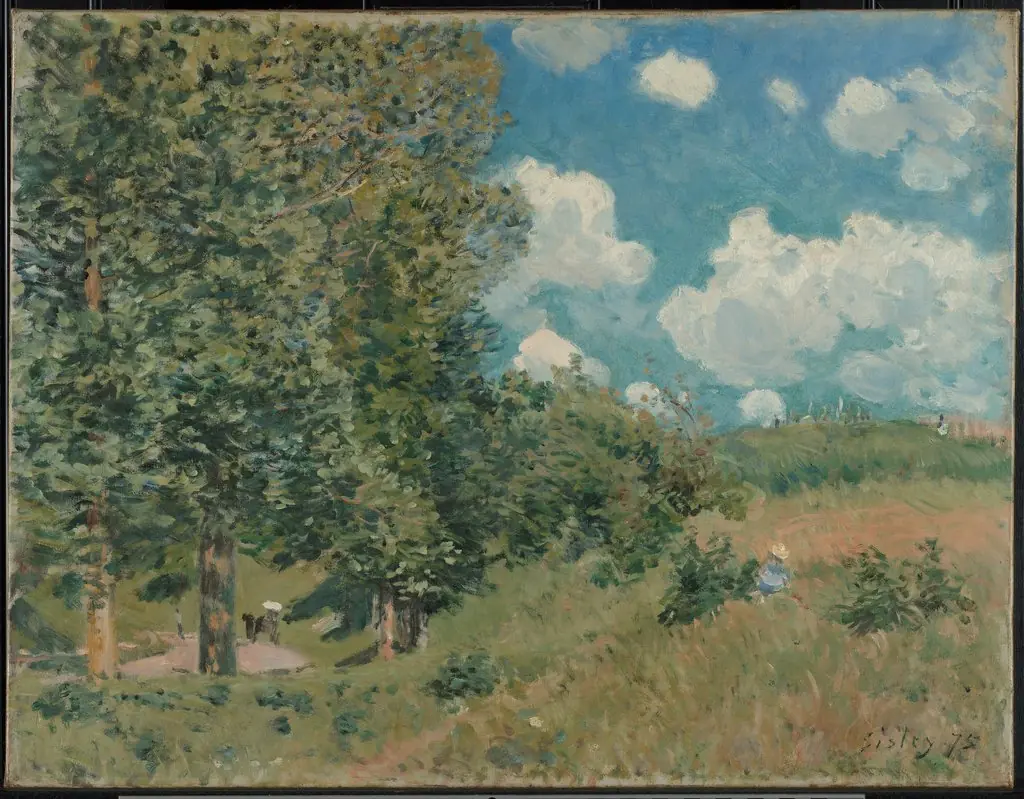 The Road from Versailles to Saint-Germain
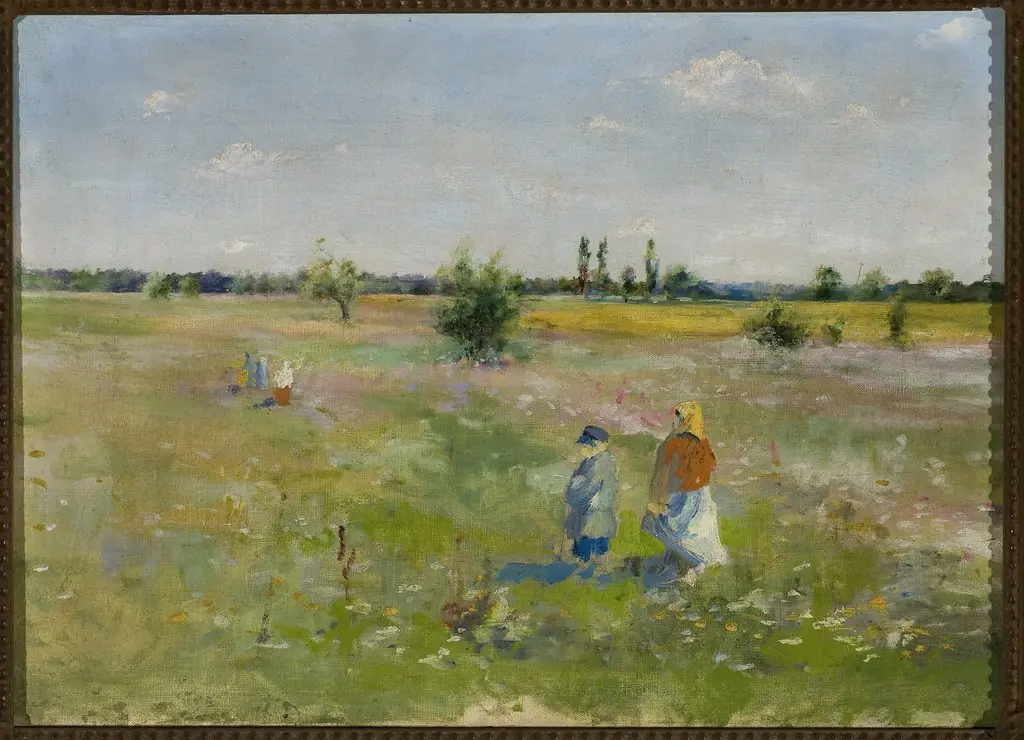 In the meadow
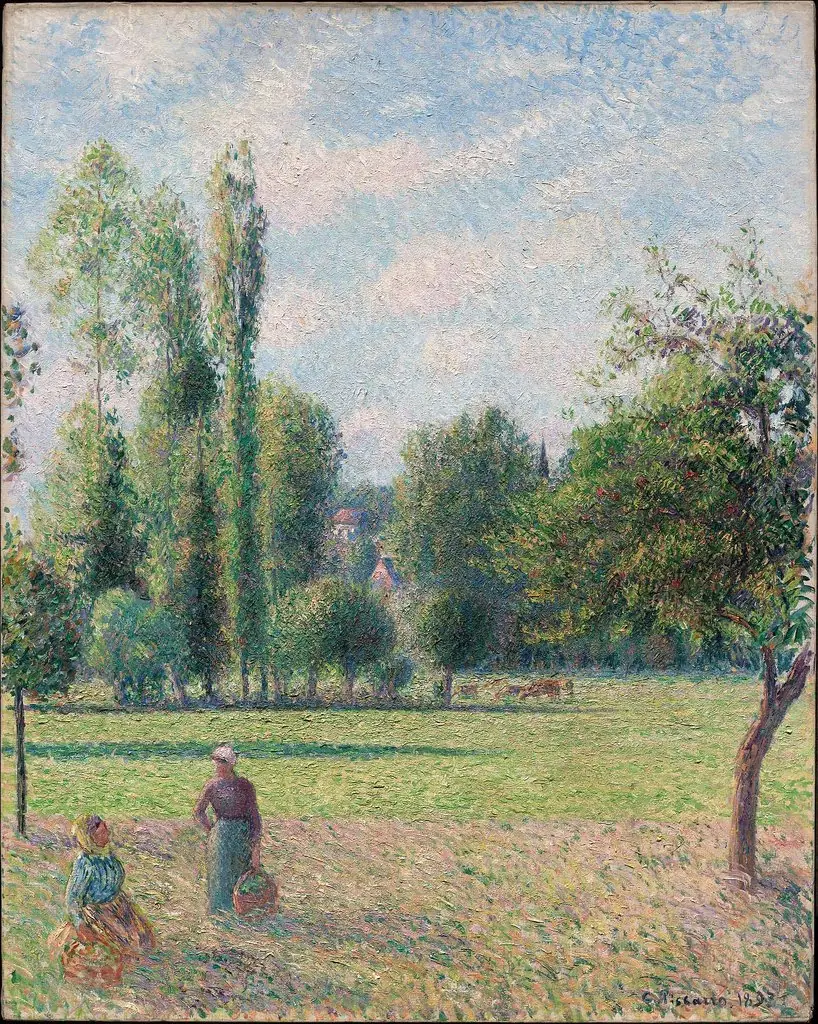 Two Peasant Women in a Meadow (Le Pré)
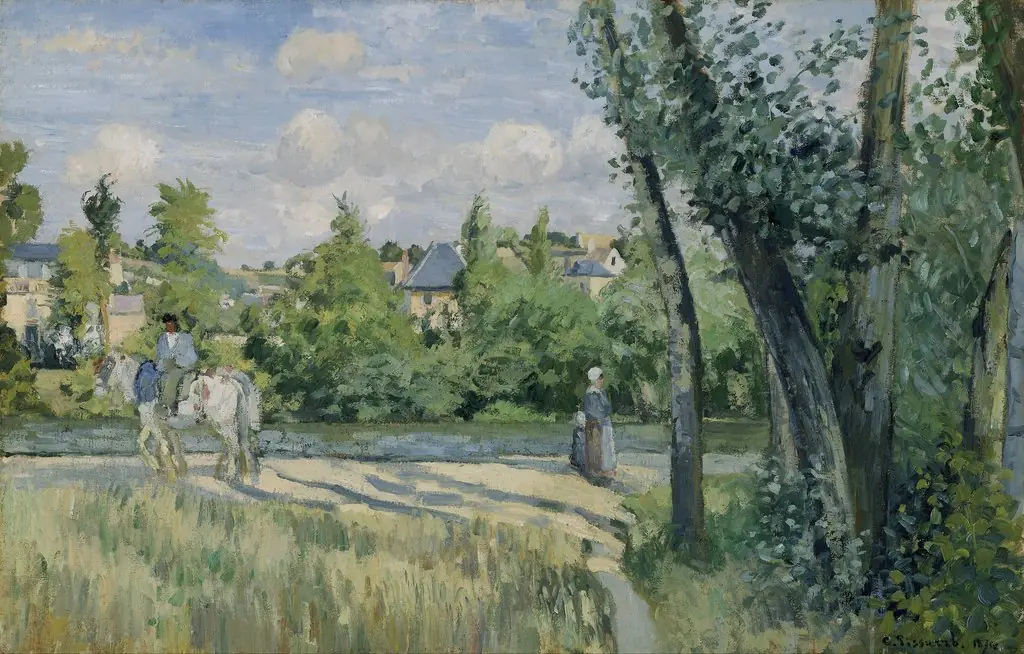 Sunlight on the Road, Pontoise
- Haymaking at Éragny