Artwork
Snow at Louveciennes
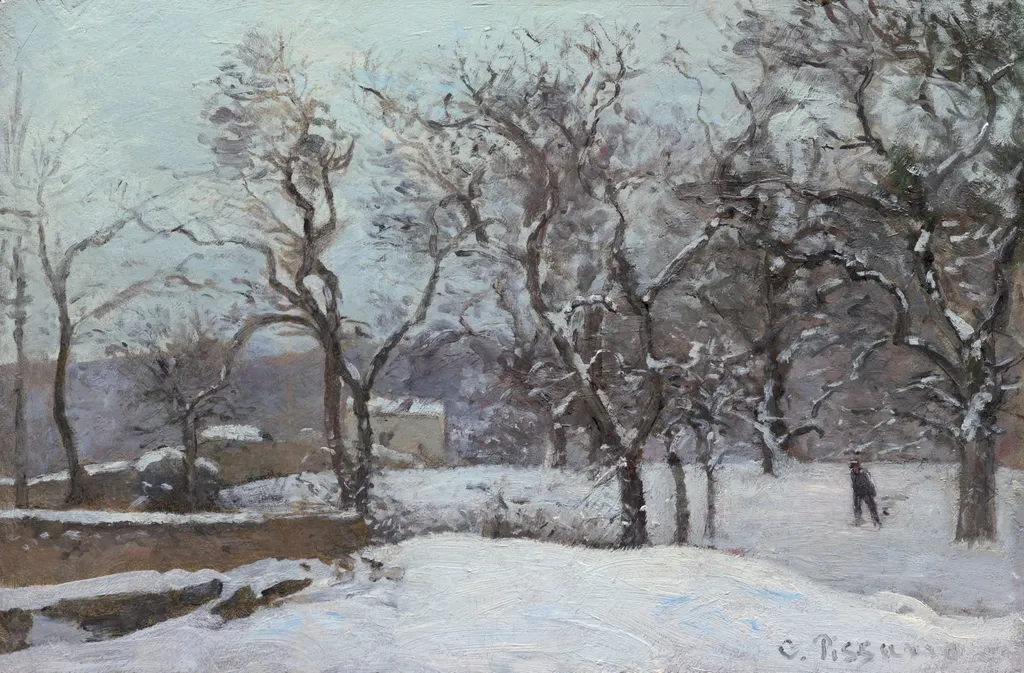
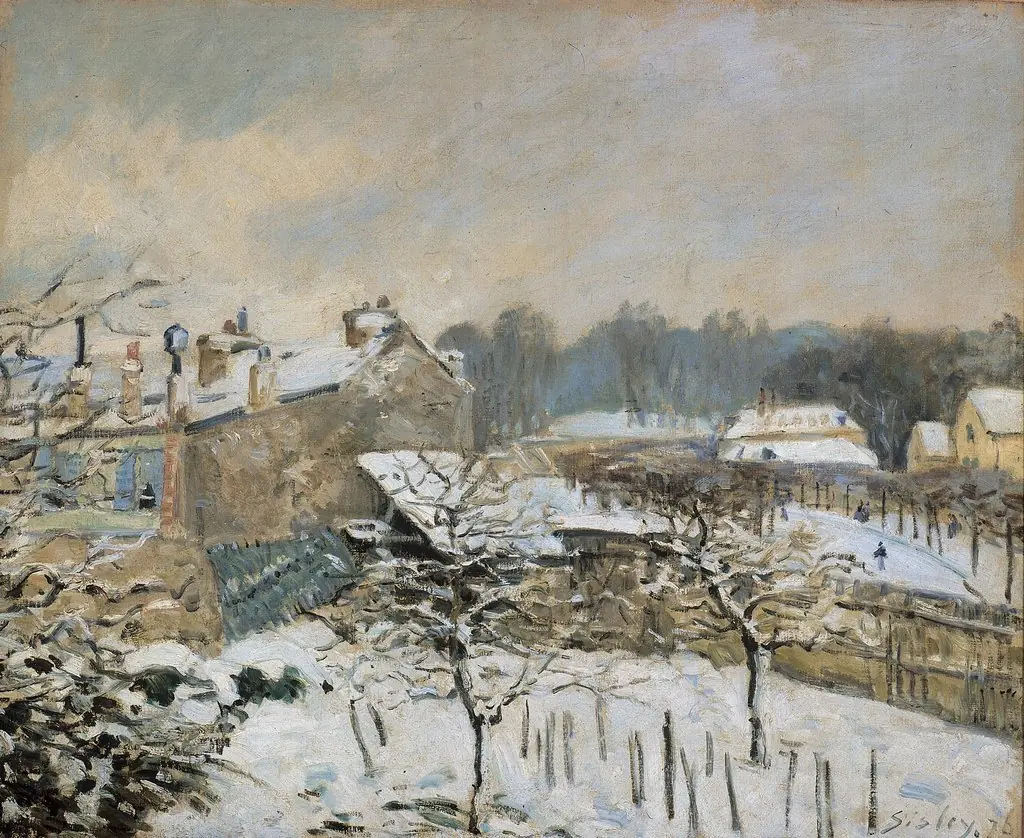
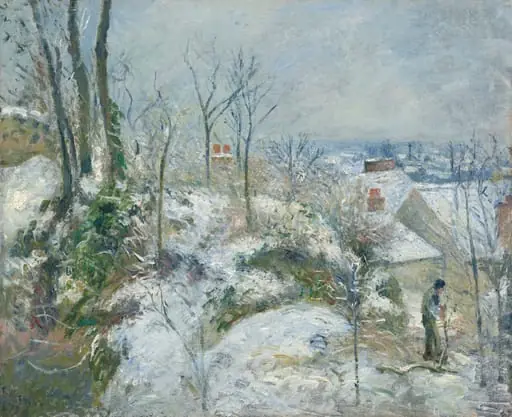
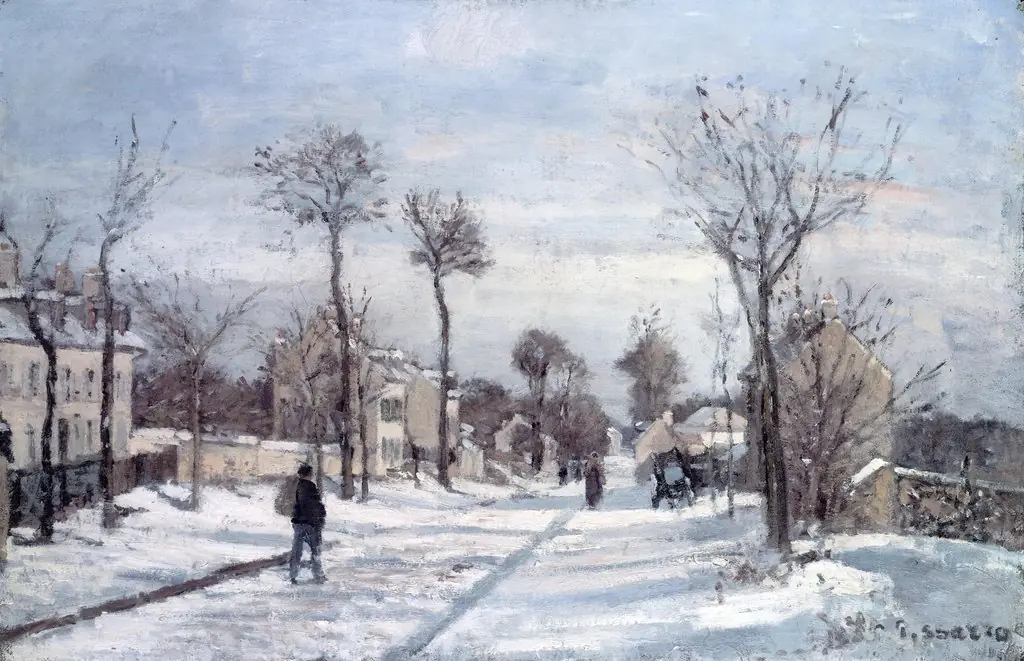
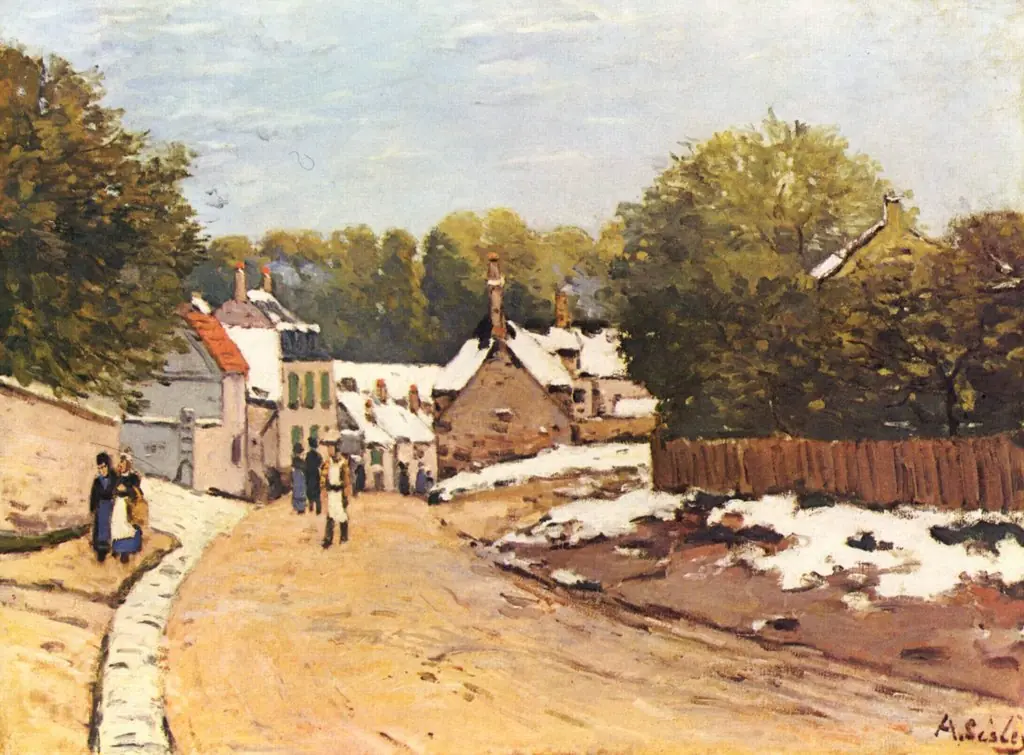
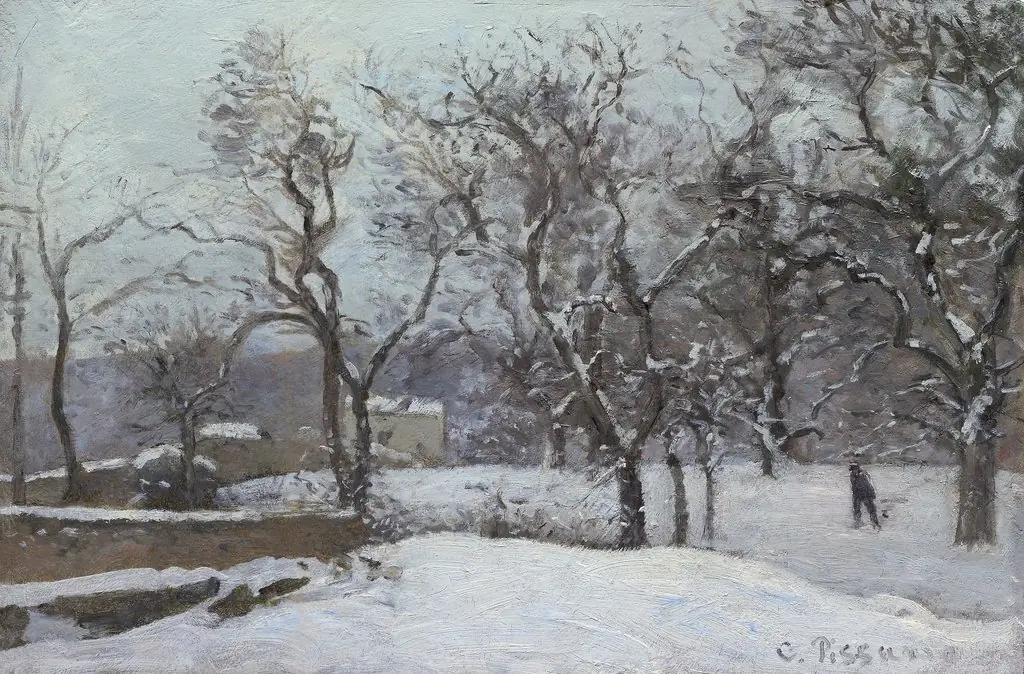
Snow at Louveciennes is an oil painting by the Impressionist artist Camille Pissarro. It dates from 1870 and is held in the collection of the Art Institute of Chicago. Painted in oil on a small wooden panel, this work captures a quiet winter landscape in Louveciennes, a village just west of Paris.
- Accession no.
- 45838
- Credit line
- Mr. and Mrs. Lewis Larned Coburn Memorial Endowment
About this work
Overview
Camille Pissarro rendered the scene with restrained tones, white, gray, brown, and muted blue, to convey the stillness of freshly fallen snow.
Painted in oil on a small wooden panel, this work captures a quiet winter landscape in Louveciennes, a village just west of Paris. Camille Pissarro rendered the scene with restrained tones, white, gray, brown, and muted blue, to convey the stillness of freshly fallen snow. The composition suggests an immediate, on-site observation, reflecting the artist’s commitment to painting directly from nature.
Subject & Meaning
The scene depicts a quiet hamlet under a heavy snowfall, with bare trees and modest dwellings softened by winter’s blanket. A single figure, barely visible, leaves faint footprints along a path, introducing a subtle human presence without disrupting the scene’s solitude. The absence of movement or activity emphasizes a meditative stillness, evoking the quiet rhythm of rural winter life.
Technique & Style
Pissarro employed a narrow range of colors to suggest the subtle variations of light and shadow under overcast skies. Brushwork is loose yet deliberate, capturing the texture of snow-laden branches and the damp earth beneath. The interplay of cool grays and warm earth tones creates depth without dramatic contrast, aligning with the Impressionist focus on atmospheric conditions over idealized form.
History & Provenance
Created during Pissarro’s years in Louveciennes, a period when he lived and worked alongside other emerging Impressionists, the painting reflects his dedication to recording seasonal changes in the French countryside. It was likely completed in the early 1870s, shortly before the first Impressionist exhibition. The panel’s small scale suggests it was intended for private contemplation rather than public display.
Context
This work emerged during a time when artists were moving away from studio-based historical subjects toward everyday rural life. Pissarro’s choice to depict snow, a subject rarely treated with such restraint, aligned with broader shifts in French painting toward naturalism and direct observation. His focus on transient weather conditions placed him at the center of the Impressionist movement’s evolving aesthetic.
Legacy
The painting exemplifies Pissarro’s role in redefining landscape painting through sensitivity to light and season. Its quiet intensity influenced later artists interested in mood over narrative. Though modest in scale, it remains a key example of how Impressionism transformed ordinary moments into enduring visual poetry through disciplined observation and restrained color.
Own this work as a print
Artist & collection