Artwork
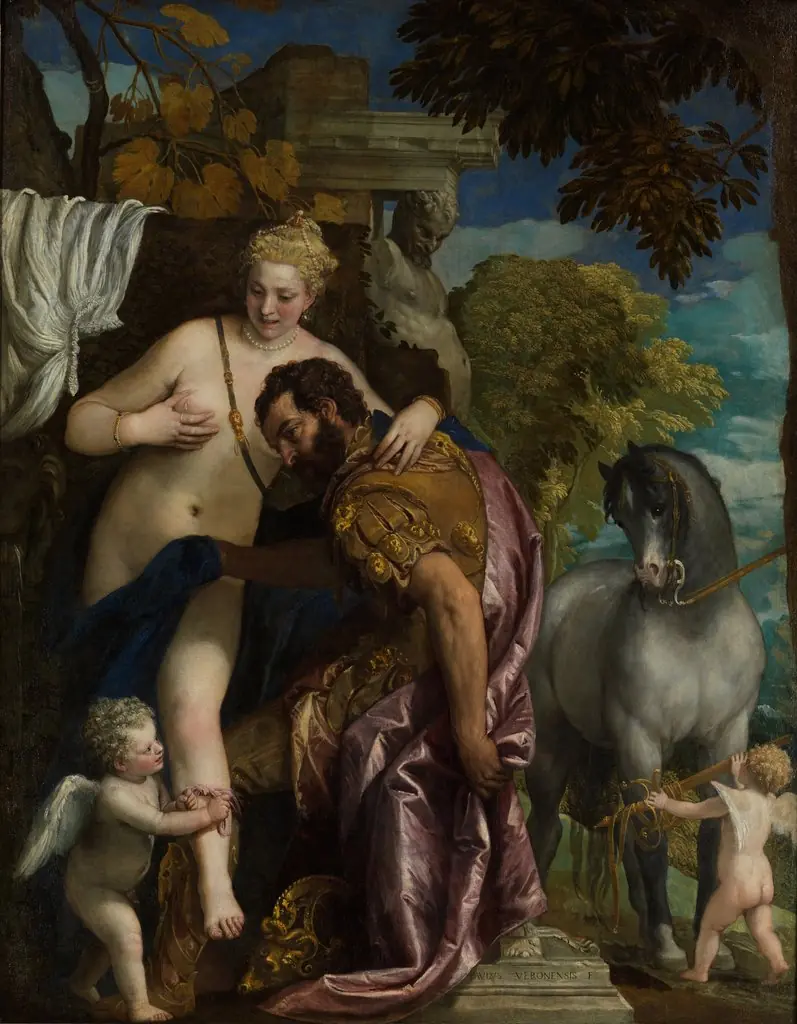
Een jonge vrouw die een krijgsman afleidt terwijl een van haar kinderen hem berooft
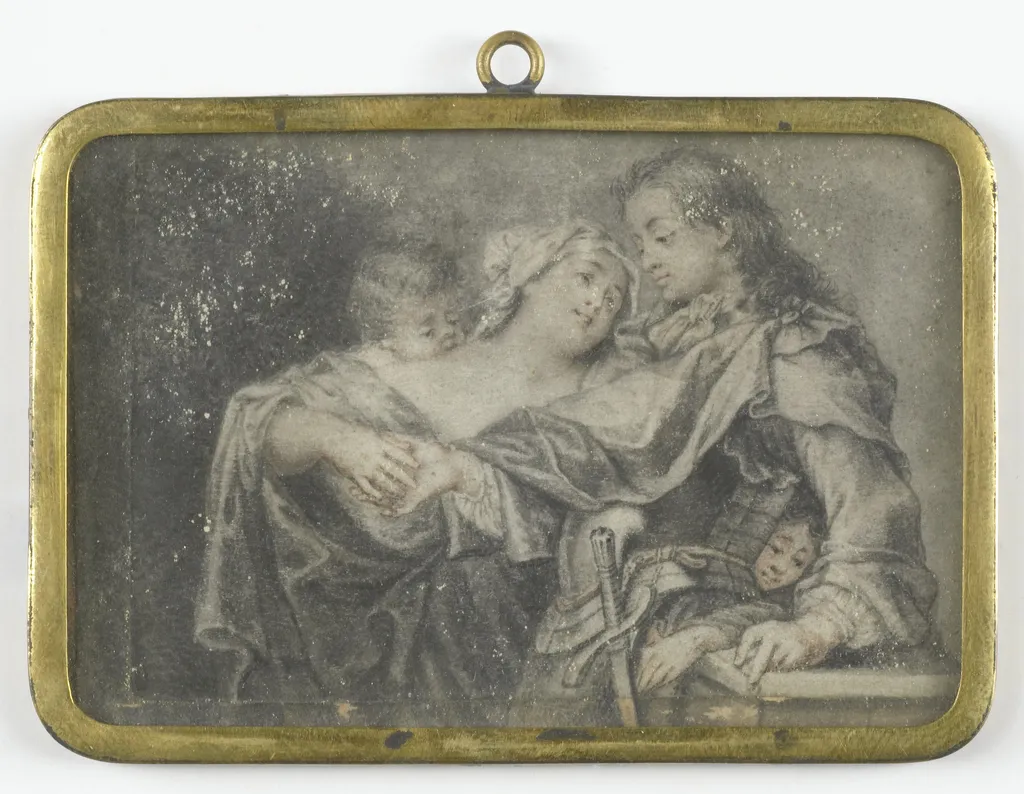
Een jonge vrouw die een krijgsman afleidt terwijl een van haar kinderen hem berooft is an unspecified painting by Carl Gustav Klingstedt. It dates from 1702 and is held in the collection of the Rijksmuseum.
About this work
Subject & Meaning
The scene depicts a woman distracting a soldier while one of her children steals from him, an episode drawn from classical or early modern narrative traditions rather than a single canonical text. The woman’s gesture and the child’s action focus attention on the tension between maternal care and wartime plunder, framing the composition as an allegory of vulnerability amid conflict. The small scale and refined technique underscore its function as a miniature, likely intended for private contemplation of moral contrasts such as protection versus predation.
Technique & Style
Executed in miniature on parchment in 1702, the work employs a refined tempera or oil technique typical of early eighteenth-century French cabinet miniatures.
Executed in miniature on parchment in 1702, the work employs a refined tempera or oil technique typical of early eighteenth-century French cabinet miniatures. The handling is delicate, with smoothly blended flesh tones and crisp detailing of costume and accessories, suggesting a sable brush and thin glazes. The composition’s theatrical staging, with a young woman diverting a warrior while one of her children plunders his armor, relies on strong chiaroscuro and sharply angled drapery folds to heighten drama.
The parchment support measures 5.2 cm in height by 7.2 cm in width, creating an intimate format suited to private viewing.
Formal qualities include a controlled palette of muted earths and silvery highlights, understated yet effective in directing attention to the narrative’s moral tension. The refined execution and small scale align the piece with elite collecting practices of the period.
History & Provenance
Carl Gustav Klingstedt created this miniature painting on parchment in 1702. The work was produced in France during the early eighteenth century. It depicts a narrative scene involving a woman, a soldier, and a child. The painting is currently held in the collection of the Rijksmuseum.
The work is held by the Rijksmuseum, Amsterdam, where it is recorded as inventory number SK-A-3970. It entered the museum’s holdings in 1939 through the collection of F. J. G. Dutilh.
It was included in the exhibition “Meesterwerken uit de verzameling Dutilh” held at the Rijksmuseum in 1939.
Overview
Created in 1702 by Carl Gustav Klingstedt, this small work on parchment portrays a domestic scene in which a young woman appears to distract a soldier while one of her children reaches toward him. The composition is modest in size, framed in gold, and is part of the Rijksmuseum’s collection.
Context
Klingstedt, known for his miniature portraits and genre scenes, often incorporated narrative intrigue into intimate settings. This piece reflects early‑18th‑century Dutch interest in everyday drama, where ordinary figures are placed in morally ambiguous situations, echoing broader themes of deception and social stratification.
Own this work as a print
Artist & collection
Artist

- The Virgin and Child with Angels
 Trompe l'oeil af et indrammet kobberstik af Maria med Barnet
 The Infant Christ asleep, adored by two angels
 Den heliga familjen
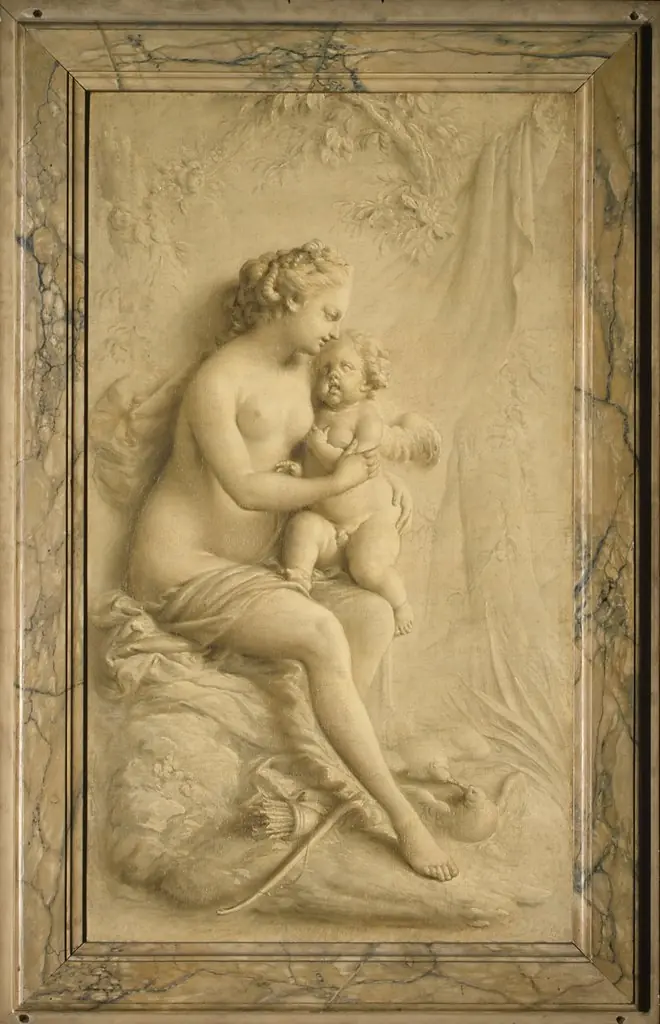 Venus and Cupid
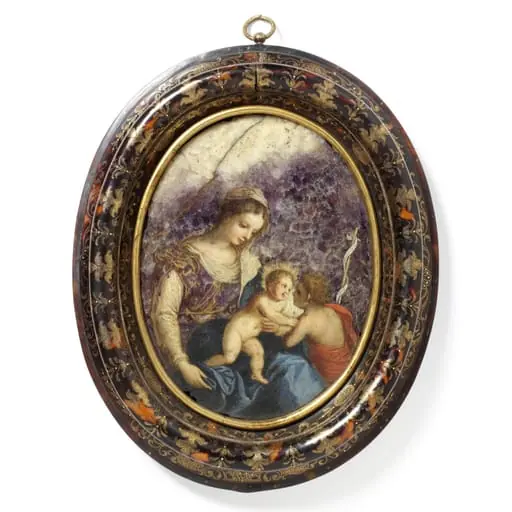 Virgin and Child
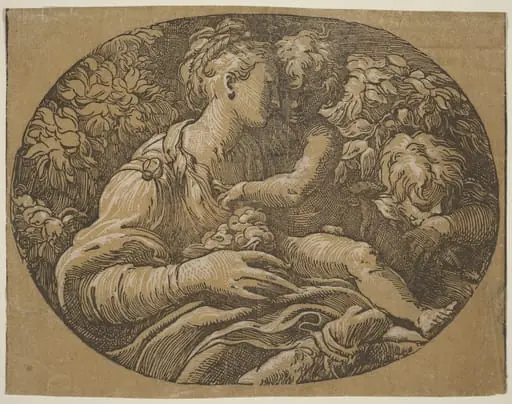 The Virgin with the Rose
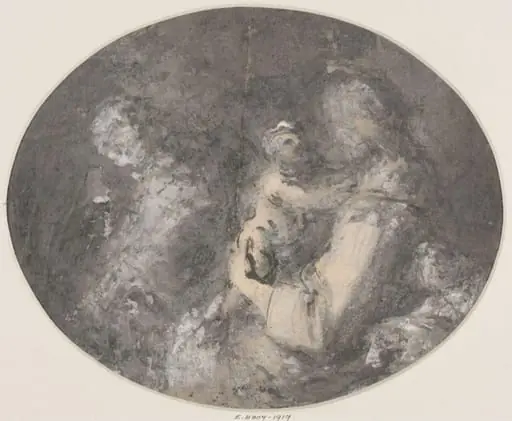 The Holy Family
 Virgin and Child
 Visitation
 Holy Family with St. Margaret
 La famille du fermier