Artwork
Bridal Veil, Yosemite
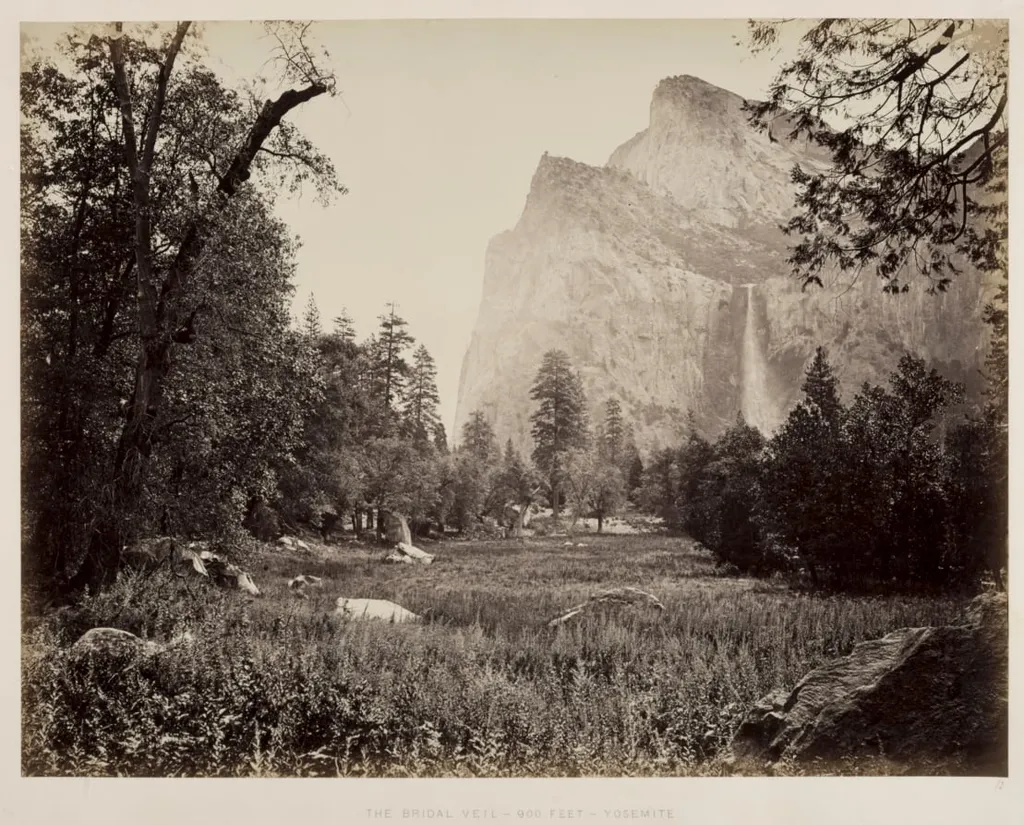
Bridal Veil, Yosemite is a photography by the Impressionist artist Carleton E. Watkins. It dates from 1866 and is held in the collection of the Cleveland Museum of Art.
- Accession no.
- 1992.12
- Credit line
- Andrew R. and Martha Holden Jennings Fund
About this work
Early cameras couldn’t hold scenes this big, so he built a special one just for views like this.
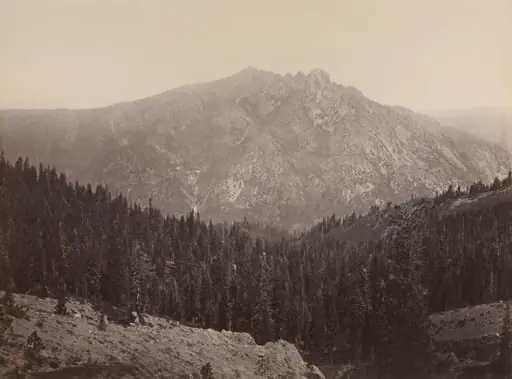
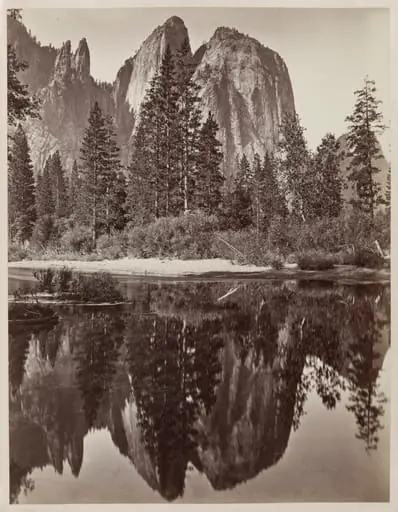
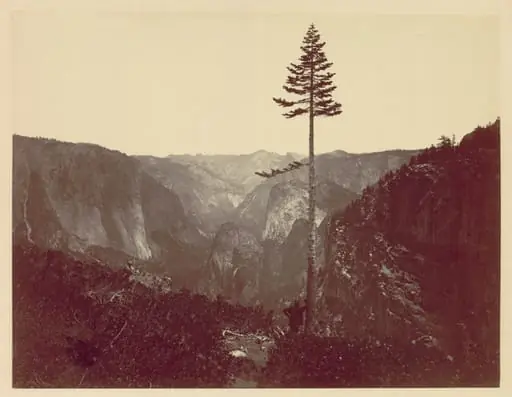
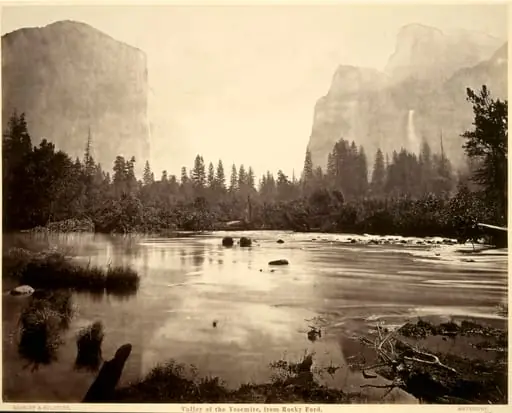
You see a towering waterfall framed by jagged cliffs and dark trees. The mist looks almost touchable, hanging in the air like wet breath.
Watkins made this photo huge, almost five feet wide, so you feel small standing in front of it. Early cameras couldn’t hold scenes this big, so he built a special one just for views like this. The size pulls you in, like stepping into the valley yourself.
Look up more work by Carleton E. Watkins (American, 1829–1916) to see how he shaped how we picture the American West.
Overview
“Bridal Veil, Yosemite” is a large-format photograph taken by Carleton E. Watkins in the late 19th century. The image captures a powerful waterfall descending through rugged cliffs, surrounded by dark coniferous trees, with a veil of mist suspended in the air. Measuring nearly five feet across, the print’s monumental size invites viewers to experience the scene’s scale directly, emphasizing the vastness of the Yosemite landscape.
Subject & Meaning
The composition centers on the waterfall, often called Bridal Veil, whose cascading water and lingering spray evoke a sense of natural grandeur and delicate beauty. The surrounding cliffs and forest frame the water, creating a contrast between solid rock and fleeting mist, suggesting the interplay of permanence and transience that characterizes the American wilderness.
Technique & Style
Watkins employed a custom-built camera capable of exposing a sheet of glass nearly five feet wide, a rarity in an era when most photographs were small album prints. He used the wet-plate collodion process, allowing fine detail and tonal range to render the texture of rock, foliage, and mist with remarkable clarity. The resulting “mammoth” print amplifies depth and immersion.
History & Provenance
Created in the 1860s–1870s, the photograph was part of Watkins’ series of large-scale images intended to promote the scenic value of the American West. Originally produced as a single, hand-mounted print, it circulated among collectors and institutions, eventually entering museum collections that document early photographic documentation of national parks.
Legacy
Watkins’ monumental approach to landscape photography set a precedent for visualizing expansive natural spaces, influencing later photographers and the public’s perception of the West. By enlarging the image to near‑life size, he offered an early immersive experience that prefigured modern large-format and panoramic photography, shaping how Yosemite and similar vistas are visualized.
Artist & collection