Artwork
Island of the Dead
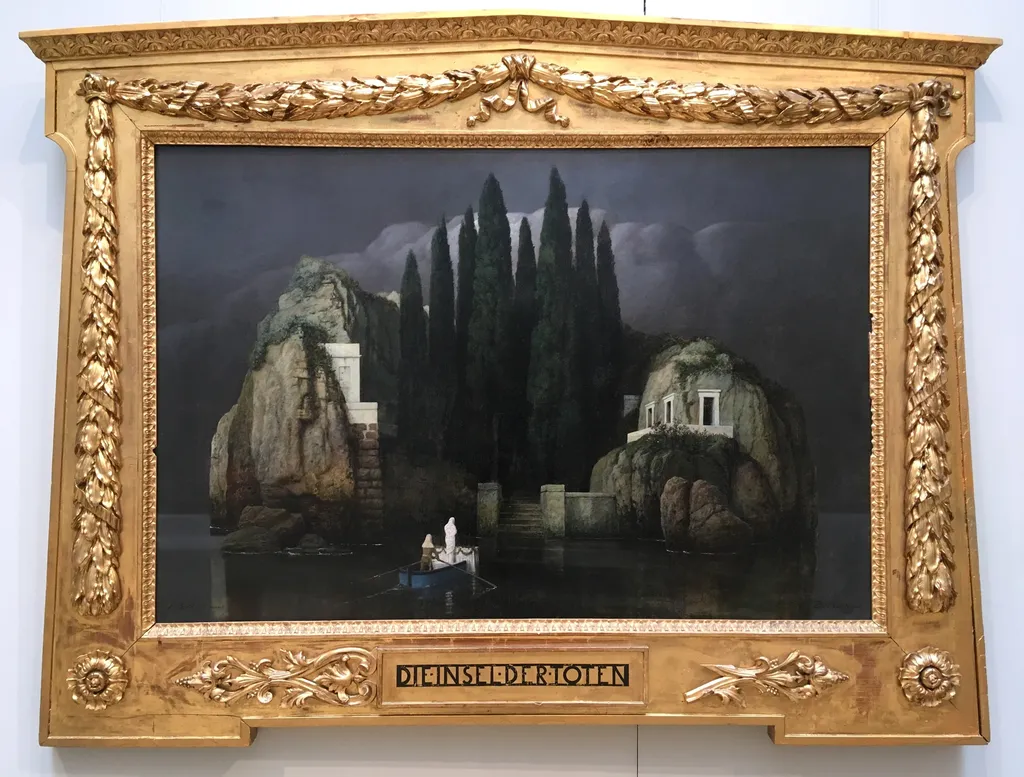
Island of the Dead is an unspecified painting by the Symbolist artist Arnold Böcklin. It dates from 1901 and is held in the collection of the Hermitage Museum.
About this work
Overview
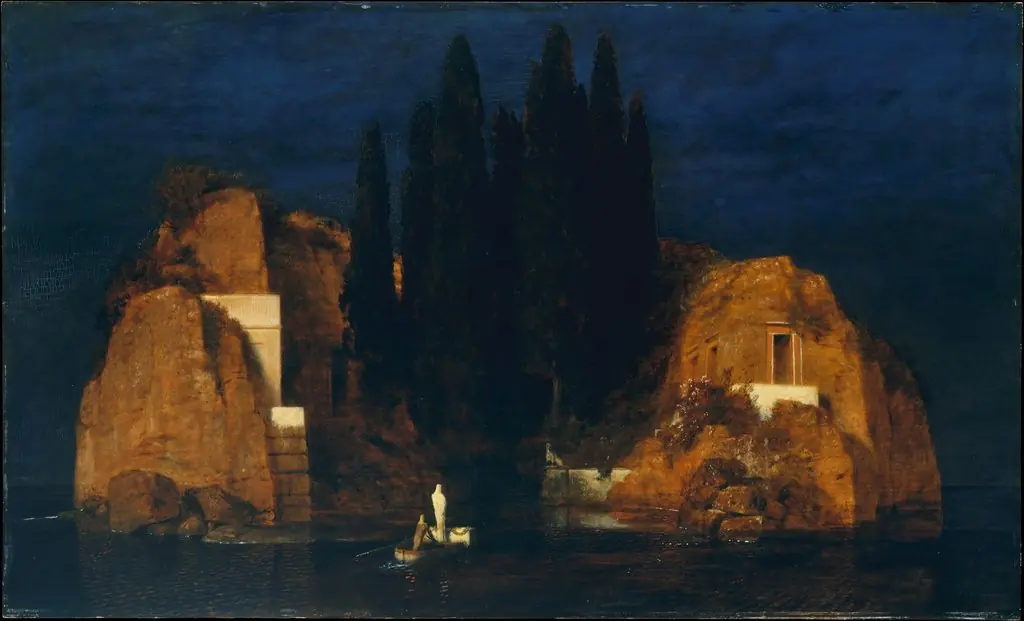
Arnold Böcklin’s 1901 work Island of the Dead is a Symbolist oil canvas now housed in the State Hermitage Museum. The composition shows a solitary boat bearing a pale figure gliding across dark water toward a stark, rocky island crowned by a white structure, while skeletal trees loom under a heavy, clouded sky.
Subject & Meaning
The scene suggests a passage between life and an imagined after‑world, the lone voyager appearing as a ferryman or pilgrim. The barren island, illuminated only by the building’s light, functions as a visual metaphor for death, inviting contemplation of mortality and the unknown beyond.
Technique & Style
Böcklin employs a pronounced chiaroscuro, juxtaposing deep greens, browns and midnight tones with stark whites to heighten spatial depth. The contrast between illuminated forms and enveloping shadow creates a dramatic atmosphere, while the smooth handling of the water and foliage enhances the painting’s dreamlike, allegorical quality.
History & Provenance
The artist produced five variants of this composition, each exploring subtle shifts in light and mood. The version now in the Hermitage entered the museum’s collection in the early twentieth century, reflecting the work’s popularity among late‑Romantic and Symbolist circles and its influence on subsequent depictions of the afterlife.
Own this work as a print
Artist & collection
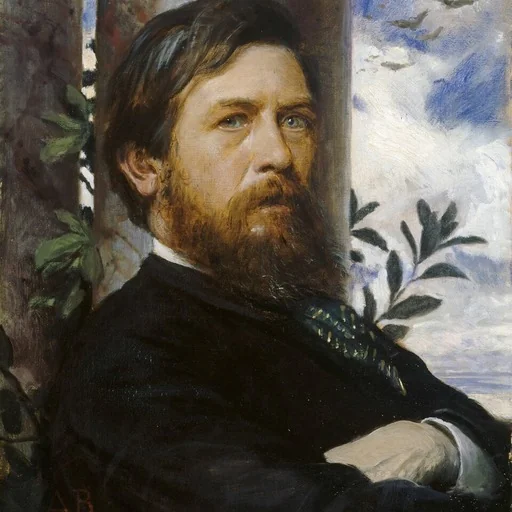
Artist
Arnold Böcklin was a Swiss Symbolist painter. His five versions of the Isle of the Dead inspired works by several late Romantic composers.