Artwork
Odysseus and Polyphemus
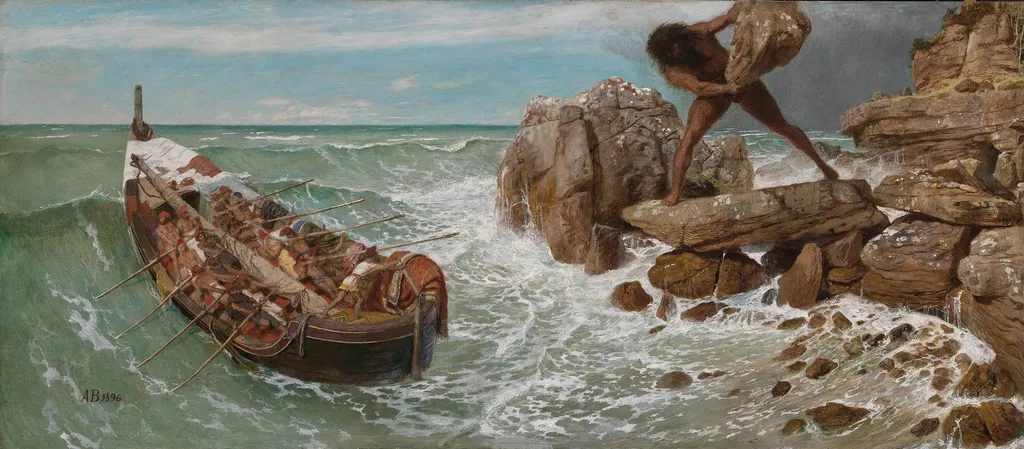
Odysseus and Polyphemus is an oil painting by the Symbolist artist Arnold Böcklin. It dates from 1898 and is held in the collection of the Museum of Fine Arts Boston.
About this work
Odysseus and Polyphemus is a painting by Swiss artist Arnold Böcklin. He created it in 1896 using tempera.
The work has been in the Museum of Fine Arts, Boston, since 2012. It shows the mythic encounter from Homer’s Odyssey. Böcklin was known for his imaginative scenes. This piece reflects his interest in classical stories.
You might also explore Museum of Fine Arts Boston.
Subject & Meaning
Arnold Böcklin’s painting depicts the climactic moment in Homer’s Odyssey when Odysseus escapes the cave of the Cyclops Polyphemus.
Arnold Böcklin’s painting depicts the climactic moment in Homer’s Odyssey when Odysseus escapes the cave of the Cyclops Polyphemus. The scene shows Polyphemus, a blind giant, poised to hurl a massive rock at Odysseus’s departing ship, while Odysseus stands defiantly at the stern, taunting him. The composition visualizes the aftermath of Odysseus’s earlier blinding of Polyphemus, achieved by driving a stake into his eye during a drunken stupor, and the subsequent escape by hiding beneath the Cyclops’s sheep.
Böcklin emphasizes the raw, physical confrontation between human cunning and brute force, aligning with his tendency to render mythological subjects in earthy, naturalistic terms. The rocky coastal setting underscores the primal struggle, grounding the supernatural tale in a tangible landscape.
History & Provenance
Arnold Böcklin created the painting Odysseus and Polyphemus in 1896. The work was executed using oil and tempera on a panel support, measuring 66 cm in height and 150 cm in width. While the specific commission details and the chain of private ownership prior to its museum acquisition are not documented in the available sources, the painting entered the collection of the Museum of Fine Arts, Boston, in 2012. This acquisition established the work's current public provenance within the institution's holdings of mythological art.
Odysseus and Polyphemus is held in the collection of the Museum of Fine Arts, Boston. The institution acquired the painting in 2012, where it has remained part of the permanent holdings since that date. While the work dates to 1896, its presence in the Boston museum marks its primary documented location in the modern era.
Context
Arnold Böcklin's 1896 painting Odysseus and Polyphemus illustrates a dramatic moment from Homer's Odyssey in which the Greek hero taunts the blinded Cyclops Polyphemus as his crew escapes from the giant's cave. Böcklin emphasizes the physical realism of the mythological encounter, portraying the naturalistic landscape and the tactile details of the scene, reflecting his background as a landscape painter and his interest in more grounded interpretations of myth. The work is part of the collection at the Museum of Fine Arts Boston and has been exhibited in contexts highlighting Böcklin's mythological subjects and his influence on Symbolist art.
Scholarship on the painting often situates it within Böcklin's broader oeuvre of mythological scenes that blend Symbolist imagination with naturalistic detail, noting its role in shaping late 19th-century reinterpretations of classical narratives. Its inclusion in major museum collections and exhibitions underscores its significance in the study of mythological painting and its impact on modern art movements.
Overview
Arnold Böcklin, a Swiss painter celebrated for his inventive approach to classical subjects, produced this 1896 tempera depicting a pivotal episode from Homer's Odyssey. The work entered the collection of the Museum of Fine Arts, Boston, in 2012, where it remains today.
Technique & Style
Böcklin executed the composition in tempera, a medium associated with precision and luminous color. His approach to classical themes typically merged meticulous technique with imaginative interpretation, transforming familiar myths into visually distinctive scenes that transcended straightforward illustration.
Artist & collection
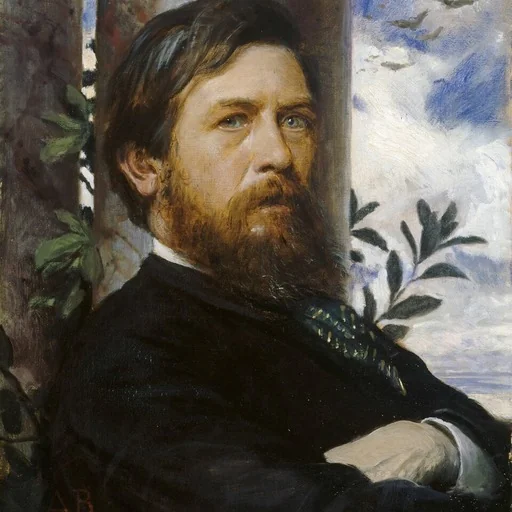
Artist
Arnold Böcklin was a Swiss Symbolist painter. His five versions of the Isle of the Dead inspired works by several late Romantic composers.