Artwork
Himabhai Vakhtchand Nagar Seth
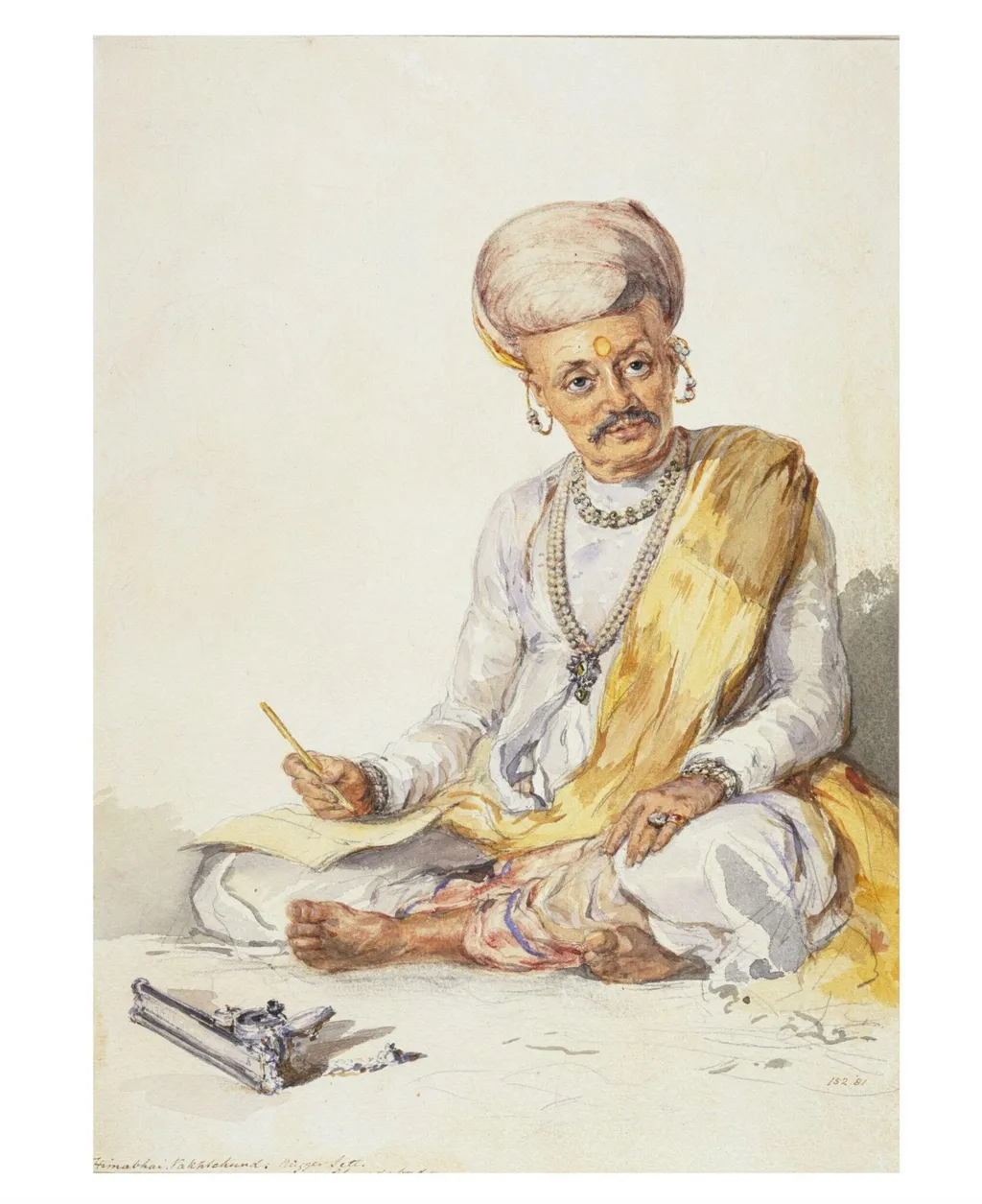
Himabhai Vakhtchand Nagar Seth is a paint painting by the Impressionist artist William Carpenter. It dates from 1851 and is held in the collection of the Victoria and Albert Museum.
About this work
There, he often dressed in local clothes and painted portraits of Indian rulers.
William Carpenter painted a portrait of Himabhai Vakhtchand Nagar Seth in 1851. He was an English artist who traveled to India in the 1850s. There, he often dressed in local clothes and painted portraits of Indian rulers.
This painting was made during his time in Bombay. He also visited Sri Lanka, Kashmir, Punjab, Afghanistan, and Rajasthan.
Check out the Victoria and Albert Museum for more of his work.
Overview
William Carpenter, an English artist and son of a noted portraitist, arrived in Bombay in early 1850 seeking artistic opportunity. He spent several years traveling across South Asia, documenting local elites and daily life through portraiture and landscape. This 1851 painting of Himabhai Vakhtchand Nagar Seth was created during his initial phase in western India, before his later journeys to Kashmir, Punjab, and Rajasthan.
Subject & Meaning
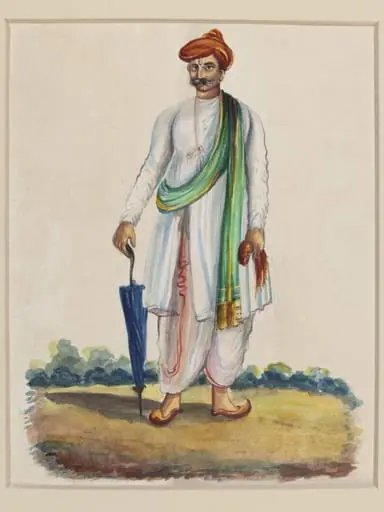
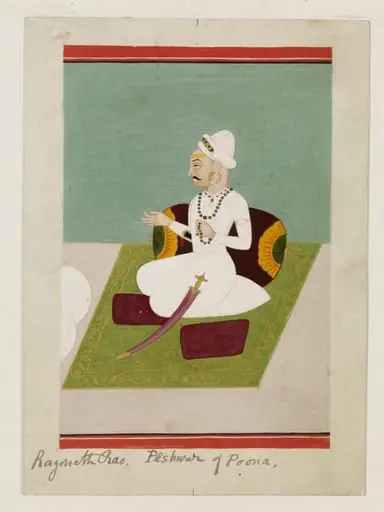
The portrait depicts Himabhai Vakhtchand Nagar Seth, a local ruler of Ahmedabad, seated with composed dignity. Carpenter rendered him in traditional attire, emphasizing status through subtle details of dress and posture rather than overt symbolism. The image reflects Carpenter’s interest in portraying Indian aristocracy with observational accuracy, avoiding romanticized tropes common among colonial artists of the era.
Technique & Style
Carpenter employed a precise, detailed approach rooted in British academic portraiture, adapted to Indian subjects and settings. His brushwork is controlled, with careful attention to fabric textures, facial features, and ambient light. The composition is formal yet intimate, balancing European conventions with the visual language of Indian courtly portraiture, suggesting a deliberate effort at cultural translation.
History & Provenance
Painted in 1851 during Carpenter’s early years in India, the work originated in Bombay and likely remained in the region until his return to England in 1856. After relocating to Boston and later London, Carpenter retained his Indian works. The painting’s documented path to the Victoria and Albert Museum reflects its recognition as a significant record of mid-19th-century Indian elite portraiture by a foreign artist.
Context
Carpenter’s presence in India coincided with the East India Company’s administrative expansion and growing European interest in Indian culture. Unlike many contemporaries, he adopted local dress and engaged directly with communities, resulting in portraits that prioritize authenticity over exoticism. His travels across diverse regions provided a rare comparative perspective on regional identities under colonial influence.
Legacy
Carpenter’s Indian portraits, including this one, remain valuable for their unembellished depiction of regional rulers and customs during a period of political transition. Though not widely celebrated in his lifetime, his body of work offers a nuanced visual archive of Indian society in the 1850s, distinct from the more stylized or propagandistic imagery produced by other British artists of the era.
Own this work as a print
Artist & collection
Artist
William Carpenter (1818–1899) was an English watercolour artist. He travelled for six or seven years in the 1850s painting scenes of India, its people and its life. The Victoria and Albert Museum bought over 280 of his…

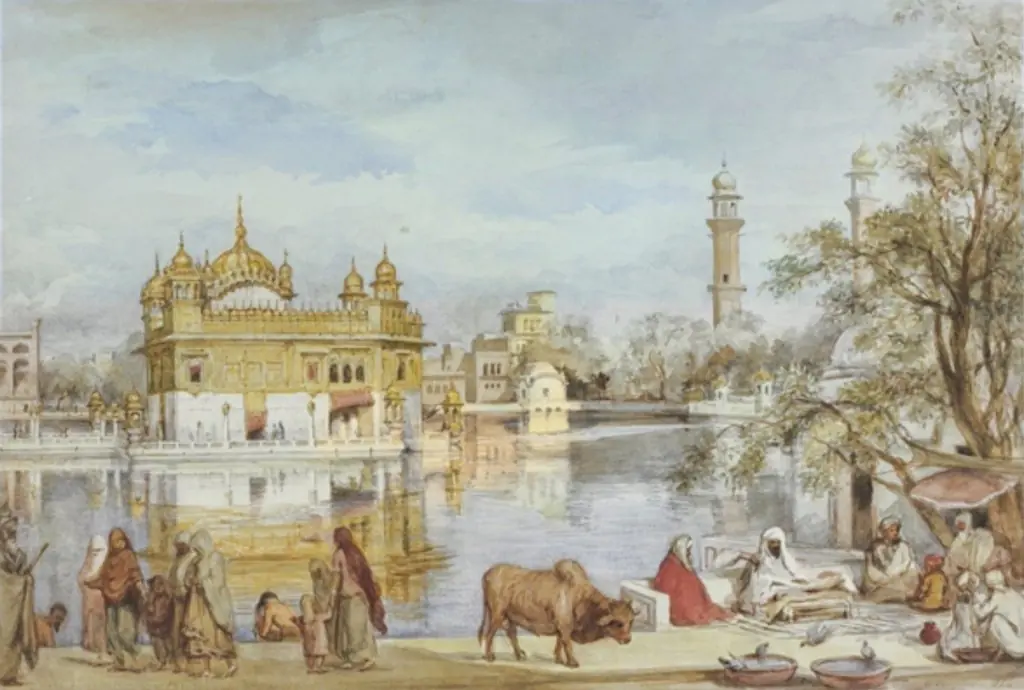 The Golden Temple, Amritsar
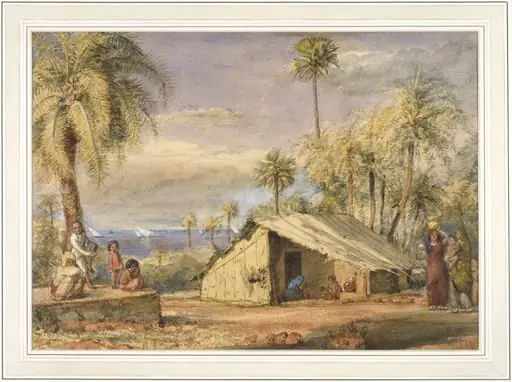 Toddywallah's hut in a grove of date palms near Breach Candy, Bombay
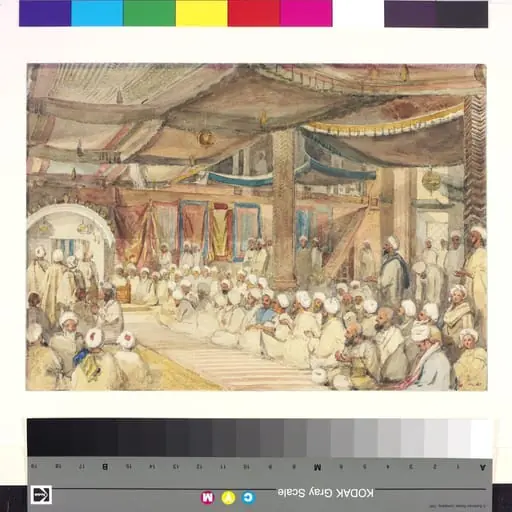 Interior of Shah Hamadan's Masjid during a religious ceremony
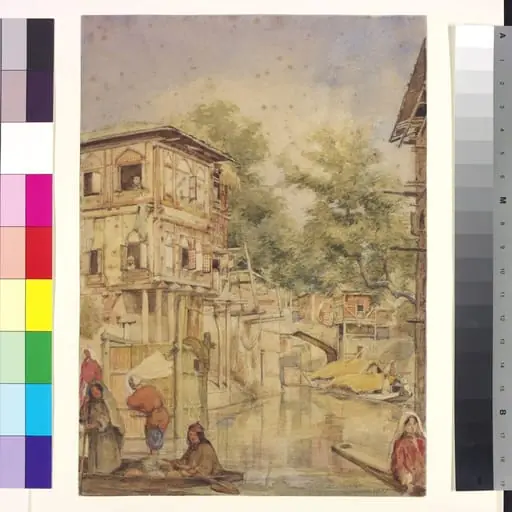 On the Mar Canal at Srinagar, Kashmir
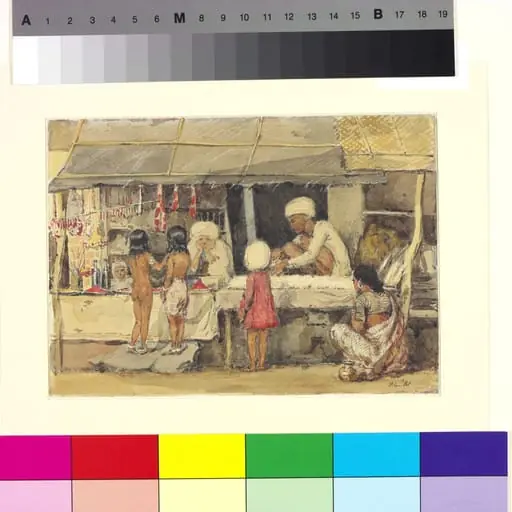 Shops for colours and flowers used at festivals, Sadr bazaar, Pune
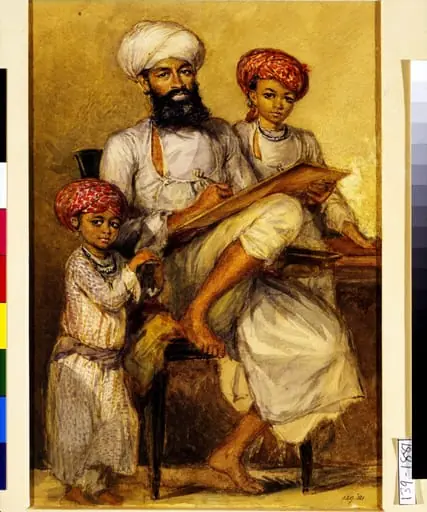 Portrait of Tara Chand, the court painter
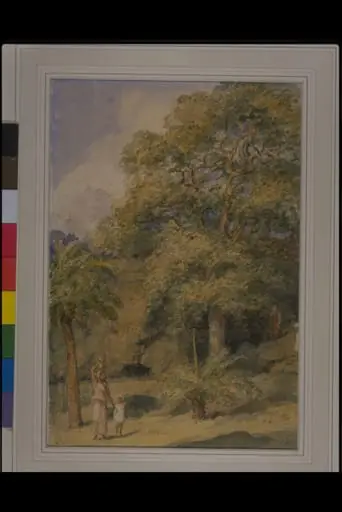 Study of a tamarind tree and date palms near Sir William Yardley's house at Breach Candy, Bombay
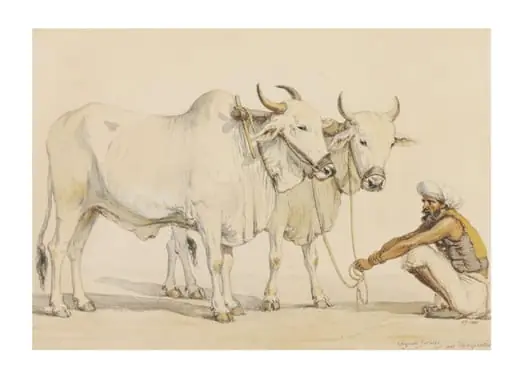 Two harnessed bullocks from Gujarat with their keeper