Artwork
Gosain Narottam Das
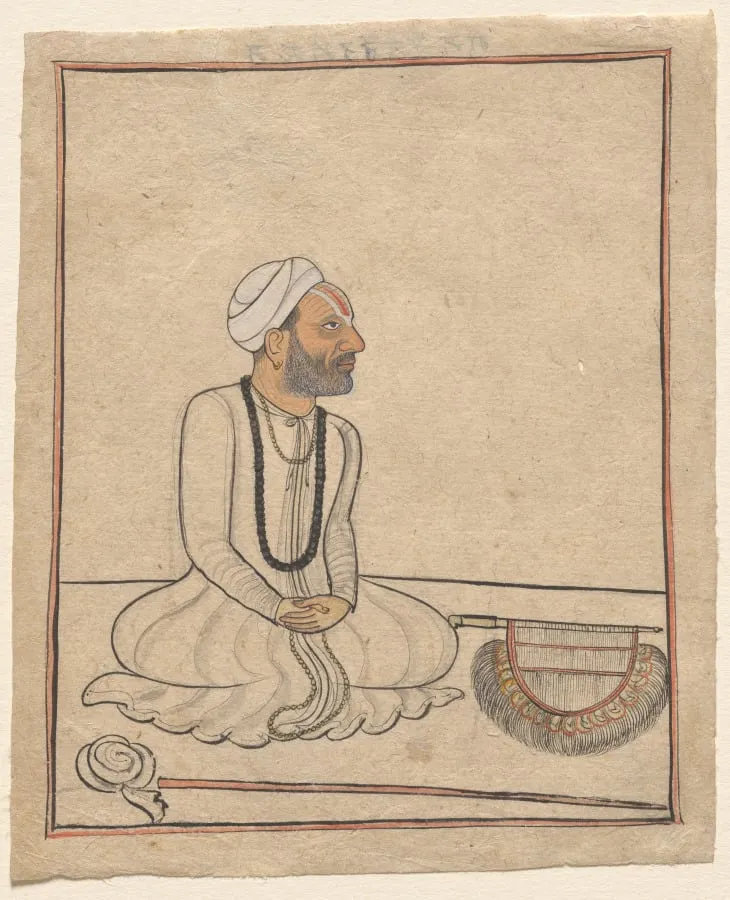
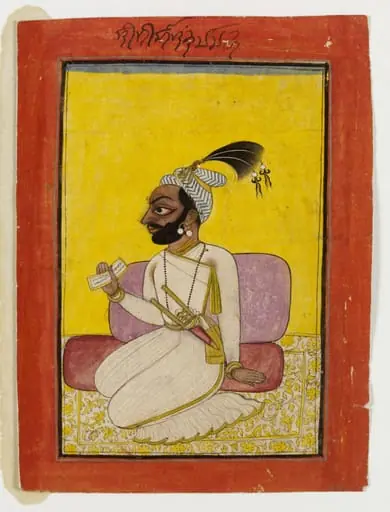
Gosain Narottam Das is an unspecified painting by the Baroque artist Unknown. It dates from 1725 and is held in the collection of the Cleveland Museum of Art. This painting portrays a solitary figure in contemplative repose, rendered with quiet precision.
- Accession no.
- 2018.102
- Credit line
- Purchase and partial gift from the Catherine and Ralph Benkaim Collection; Severance and Greta Millikin Purchase Fund
About this work
Overview
Though stylistic elements suggest a connection to Baroque traditions, the work’s origins lie in a distinct regional tradition of Indian devotional portraiture.
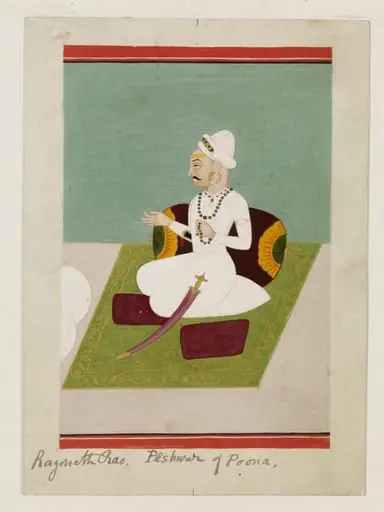
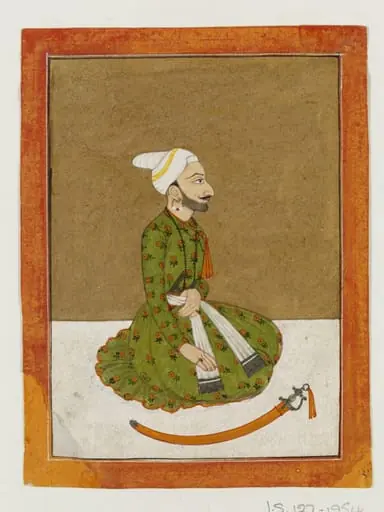
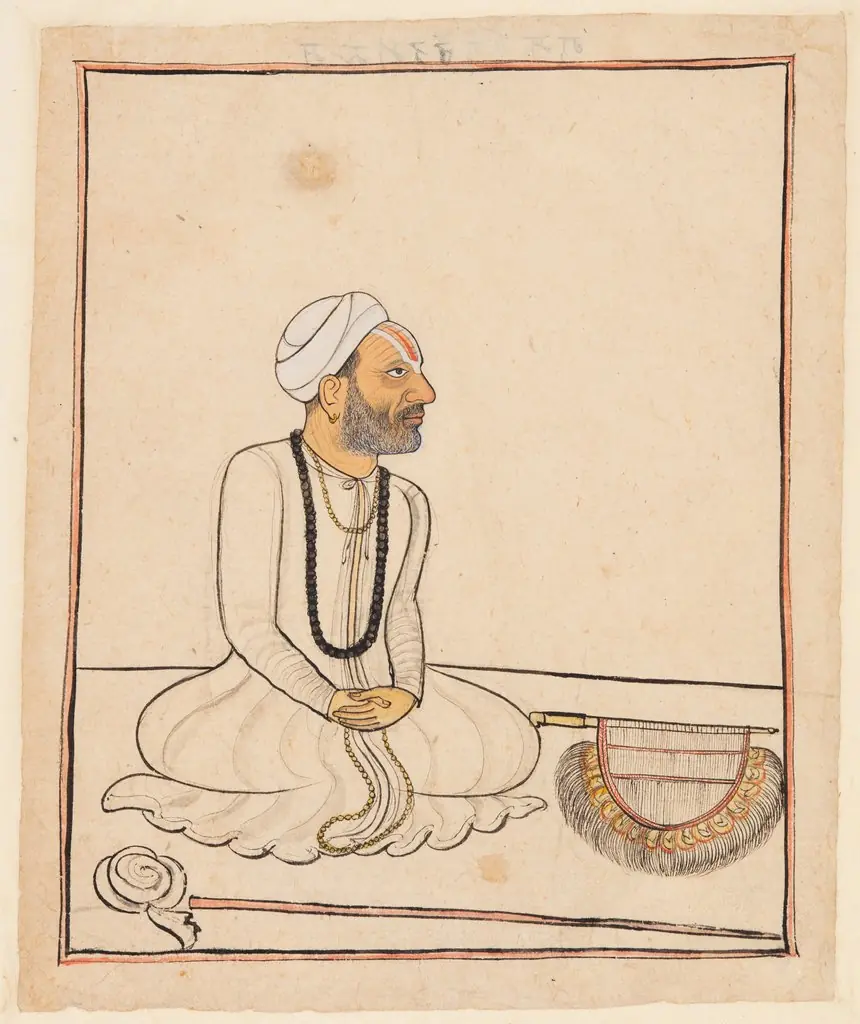
This painting portrays a solitary figure in contemplative repose, rendered with quiet precision. The subject is seated on a soft, cloud-like cushion, dressed in white robes and a turban, with a red forehead mark and a beaded necklace. The background is minimal, emphasizing the figure’s stillness.
Though stylistic elements suggest a connection to Baroque traditions, the work’s origins lie in a distinct regional tradition of Indian devotional portraiture.
Subject & Meaning
The figure is identified as Gosain Narottam Das, a revered 18th-century Vaishnava saint and poet. His seated posture, clasped hands, and sacred markings indicate devotion and spiritual focus. The absence of elaborate surroundings underscores his renunciant life.
The object beside him, a ceremonial fan or fly-whisk, symbolizes service and spiritual authority, common in depictions of Hindu ascetics.
Technique & Style
The painting employs fine brushwork and muted tones, with careful attention to textile textures and facial expression. While the modeling of light and form recalls Baroque naturalism, the flat background and symbolic composition align more closely with Indian miniature traditions. The stylized cloud cushion and decorative fan reflect regional iconographic conventions rather than European artistic norms.
History & Provenance
Created in the late 18th century, likely in the Braj region of North India, the painting was produced within a devotional context, possibly for use in a temple or private shrine. It was commissioned to honor the saint’s teachings and presence. The work remained within religious circles until the 19th century, when it entered private collections, eventually finding its way into institutional holdings.
Context
Gosain Narottam Das was a key figure in the Gaudiya Vaishnava tradition, known for spreading devotion to Krishna through poetry and pilgrimage. Paintings like this served as visual aids for worship and remembrance, especially among followers who could not access textual teachings. The style reflects a synthesis of local miniature practices with emerging influences from Mughal and early colonial visual culture.
Legacy
The painting preserves the visual language of 18th-century Hindu devotional portraiture, offering insight into how saints were commemorated in material form. It stands as a testament to the continuity of regional artistic practices amid broader cultural exchanges. Today, it contributes to scholarly understanding of religious imagery in pre-colonial India, valued for its historical and spiritual resonance.
Artist & collection