Artwork
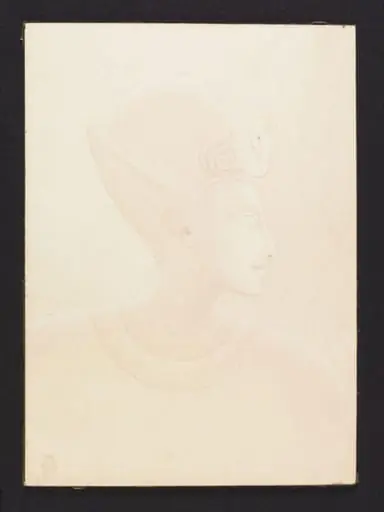
Head of Queen Makare Hatshepsut: copy of a painted low relief in the Mortuary Temple of Hatshepsut, Deir al-Bahri
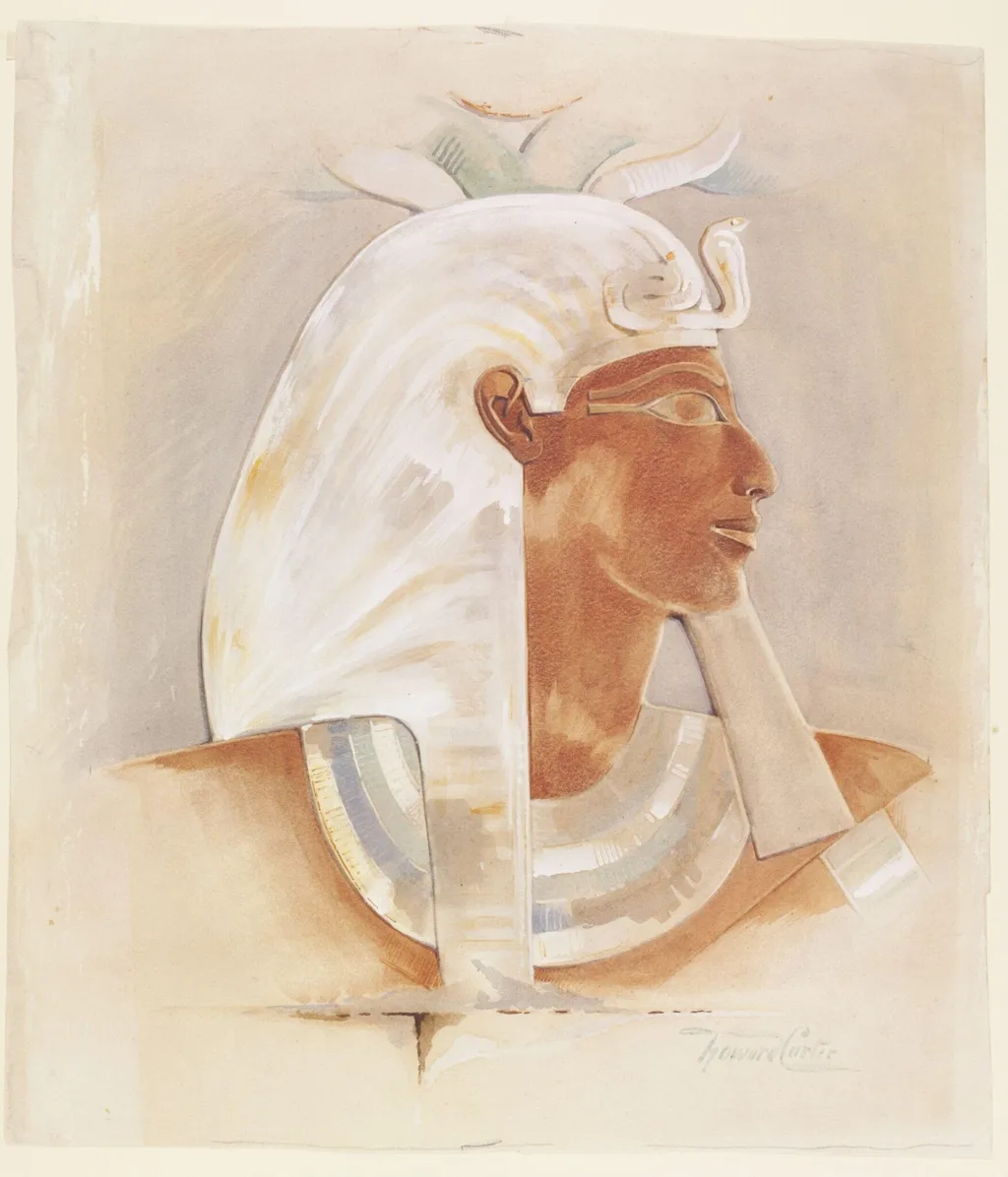
Head of Queen Makare Hatshepsut: copy of a painted low relief in the Mortuary Temple of Hatshepsut, Deir al-Bahri is a watercolor work on paper by the Impressionist artist Howard Carter. It dates from 1894 and is held in the collection of the Victoria and Albert Museum.
About this work
Overview
Howard Carter, then in his early twenties, produced this watercolour as part of a systematic documentation project at Deir al-Bahri between 1893 and 1899.
Howard Carter, then in his early twenties, produced this watercolour as part of a systematic documentation project at Deir al-Bahri between 1893 and 1899. Commissioned as a draughtsman for Henri Naville’s excavation of Hatshepsut’s mortuary temple, he meticulously recorded surviving reliefs before they deteriorated further. This copy captures a rare intact portrait of Queen Hatshepsut, whose imagery had been deliberately altered by later rulers.
Subject & Meaning
The portrait depicts Hatshepsut, one of ancient Egypt’s few female pharaohs, rendered in the formal style of the Eighteenth Dynasty. Though her reign was later contested and her images defaced, this fragment survived because it was obscured or overlooked. The image is part of a larger ritual scene showing offerings to the god Amun, affirming her divine legitimacy as ruler despite gender norms of the time.
Technique & Style
Carter employed watercolour to replicate the original painted relief’s subtle tonal gradations and fine linework. His technique prioritized accuracy over artistic interpretation, using light washes to suggest the original pigments and careful outlines to preserve the hieratic proportions. The medium allowed for precise reproduction of details that photography of the era could not reliably capture.
History & Provenance
The watercolour was created during Naville’s multi-year survey of the temple, later published in six folio volumes. Carter’s copies formed the primary visual record of the temple’s wall art before significant erosion and damage occurred. This particular sheet was derived from Plate CXXXI of Part V, ensuring its place in scholarly archives and later archaeological studies.
Context
In the 1890s, archaeological documentation relied heavily on hand-drawn records, especially in environments where photography was impractical. Carter’s work exemplified the era’s emphasis on preservation through replication. His attention to detail at Deir al-Bahri established his reputation, laying groundwork for his later discovery of Tutankhamun’s tomb and reinforcing the value of meticulous recording in Egyptology.
Legacy
Carter’s watercolours remain vital references for Egyptologists, offering insight into the temple’s condition before modern conservation efforts. This portrait of Hatshepsut, preserved through his hand, stands as both a historical document and a testament to early archaeological practice. It underscores how fragile cultural heritage survives only through careful, deliberate recording.
Own this work as a print
Artist & collection
Artist
Howard Carter’s watercolours capture the sun-bleached walls of Deir al-Bahri, copying 3,500-year-old painted reliefs of queens and royal symbols.

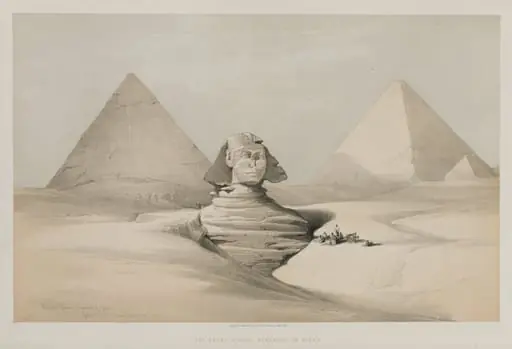 Egypt and Nubia, Volume I: The Great Sphinx, Pyramids of Gezeeh
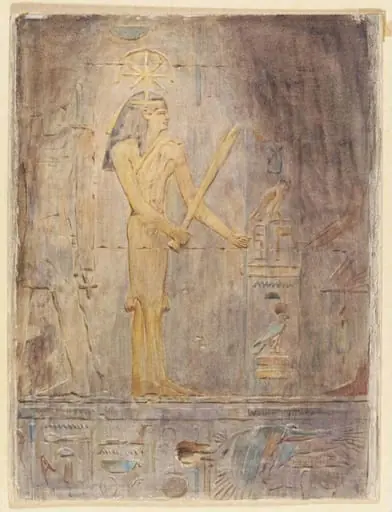 Amada Nubia
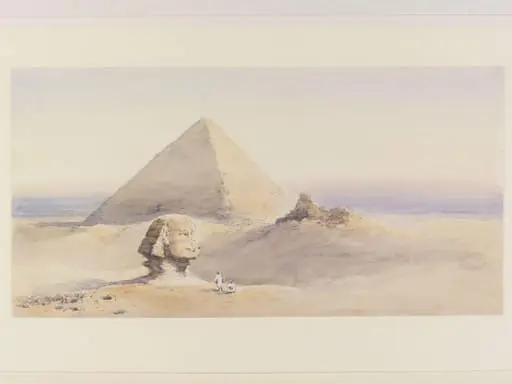 Sphinx & Great Pyramid
 Head of Menmare Seti I: copy of a low relief in the Great Temple of Seti I, Abydos
 Studies of Mummy cases and Mummies
 Egypt and Nubia, Volume I: Thebes
 Plates Illustrative Of The Researches And Operations Of G. Belzoni In Egypt And Nubia