Artwork
'Ophélie'
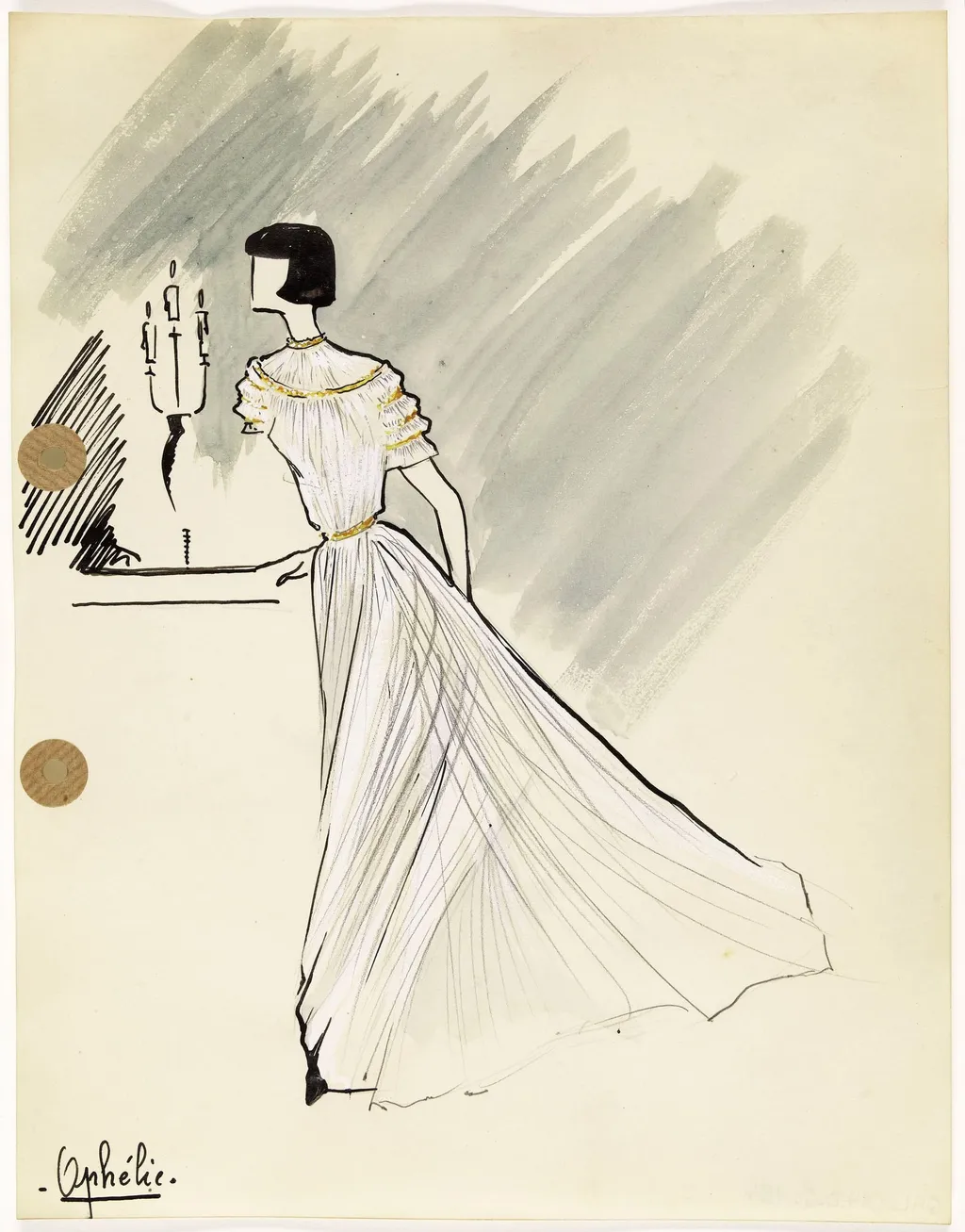
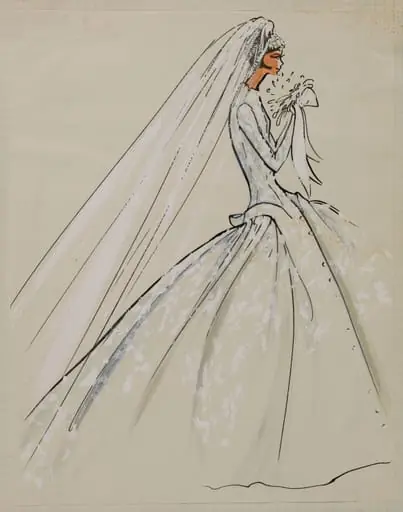
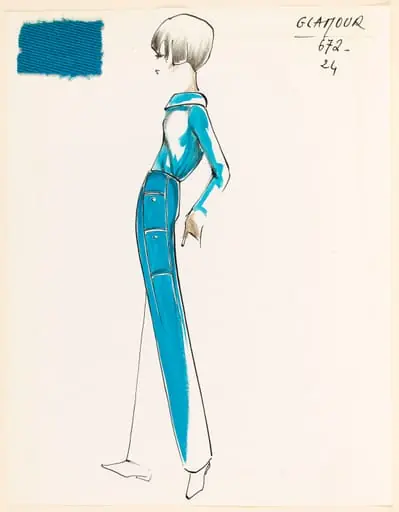
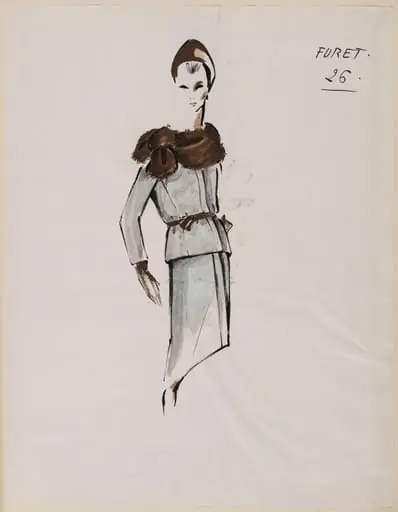
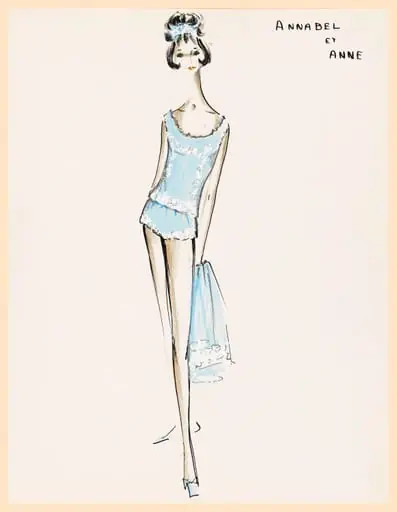
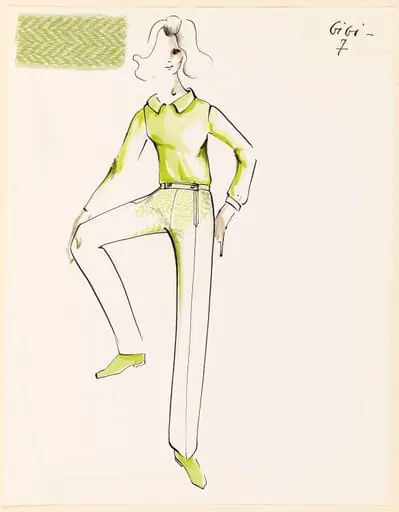
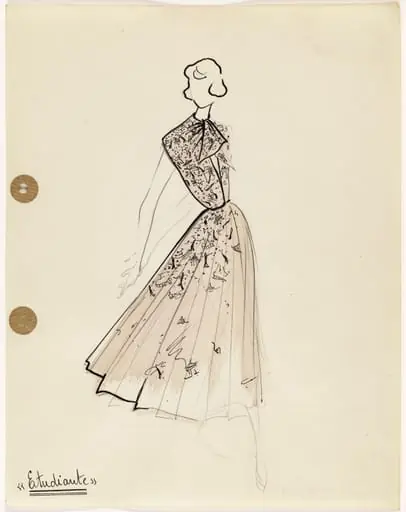
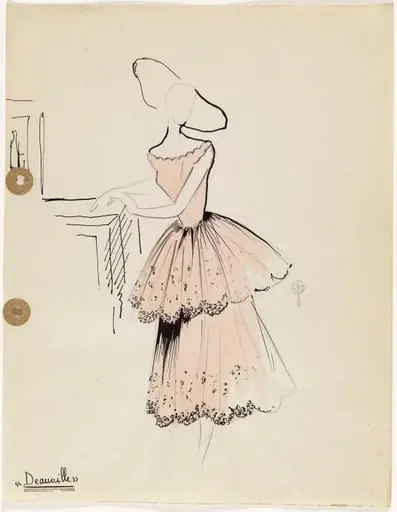
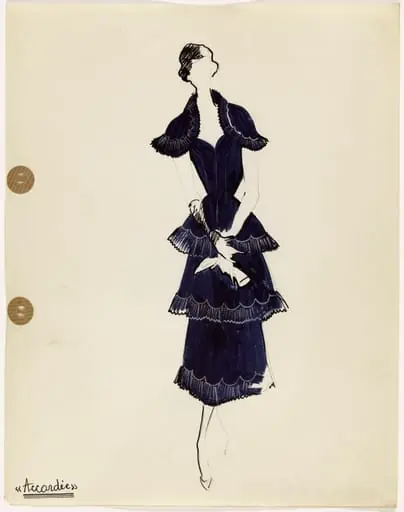
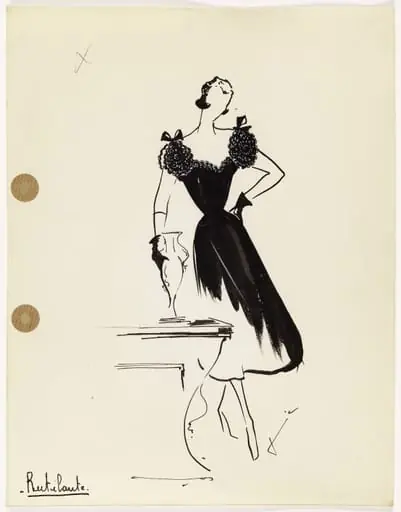
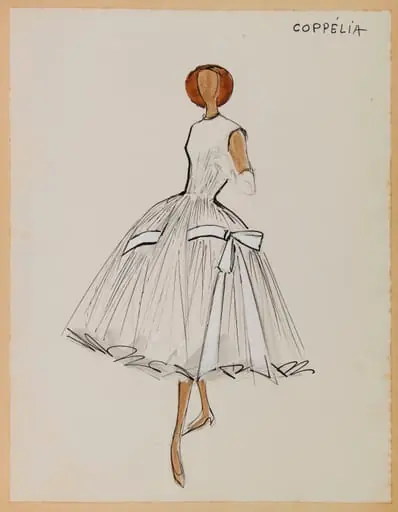
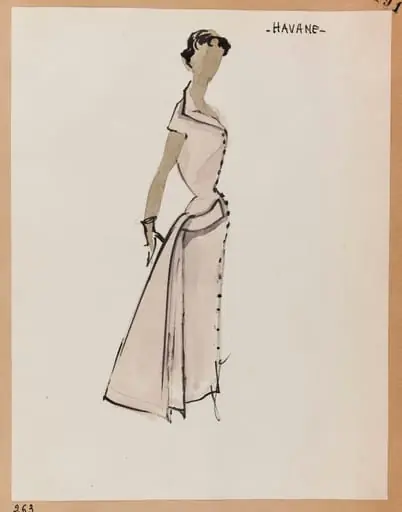
'Ophélie' is a drawing by Carven. It dates from 1949 and is held in the collection of the Palais Galliera - Musée de la Mode de la Ville de Paris.
About this work
Overview
The background remains largely empty, emphasizing the figure’s form and the suggestion of movement through fluid drapery and sparse shading.
Created around 1949, 'Ophélie' is a pencil and ink sketch attributed to the artist Carven. It resides in the collection of the Museum of Ethnography. The work captures a solitary female figure in motion, rendered with minimal detail and loose, expressive lines.
The background remains largely empty, emphasizing the figure’s form and the suggestion of movement through fluid drapery and sparse shading.
Subject & Meaning
The figure resembles Ophelia from Shakespeare’s Hamlet, evoking themes of melancholy and transition. Her flowing dress, high collar, and belted waist suggest a period costume, though the sketch lacks narrative context. A faint, rough outline to the left may represent another figure, possibly hinting at absence or loss.
The ambiguity of the scene invites interpretation without anchoring it to a specific moment in the literary tale.
Technique & Style
Carven employs swift, economical lines and light cross-hatching to suggest volume and motion, particularly in the swirling skirt. Shading is minimal, relying on directional strokes to imply fabric movement rather than solid form. The background is left largely untouched, with a few gestural marks that suggest atmosphere without definition. The signature 'Carven' in the corner confirms authorship but offers no further biographical clues.
History & Provenance
The sketch entered the Museum of Ethnography’s collection in the mid-20th century, though its acquisition history remains undocumented. No exhibition records or correspondence from the artist are known to exist. Its presence in an ethnographic institution, rather than a fine arts collection, suggests it was acquired as an example of modern figurative drawing rather than as a significant artistic statement.
Context
Created in postwar France, the sketch reflects a broader interest in literary and mythic female figures among artists exploring emotional states through simplified forms. While not part of a known series, its loose style aligns with informal sketching practices common among illustrators and designers of the period. The choice of Ophelia may indicate a personal or cultural resonance with themes of fragility and silence.
Legacy
Though not widely published or exhibited, 'Ophélie' remains a quiet example of mid-century figurative drawing. It offers insight into how literary imagery was absorbed into private artistic practice, stripped of grandeur and rendered in intimate, spontaneous lines. Its preservation in an ethnographic context underscores its value as a cultural artifact of personal expression rather than public art.
Artist & collection
Artist
These delicate ink-on-paper drawings capture the quiet poetry of everyday things: pinecones, reeds, apples.
Museum
Palais Galliera - Musée de la Mode de la Ville de Paris
Continue through works from the same source collection.