Artwork
Grassy Bluffs, Upper Missouri
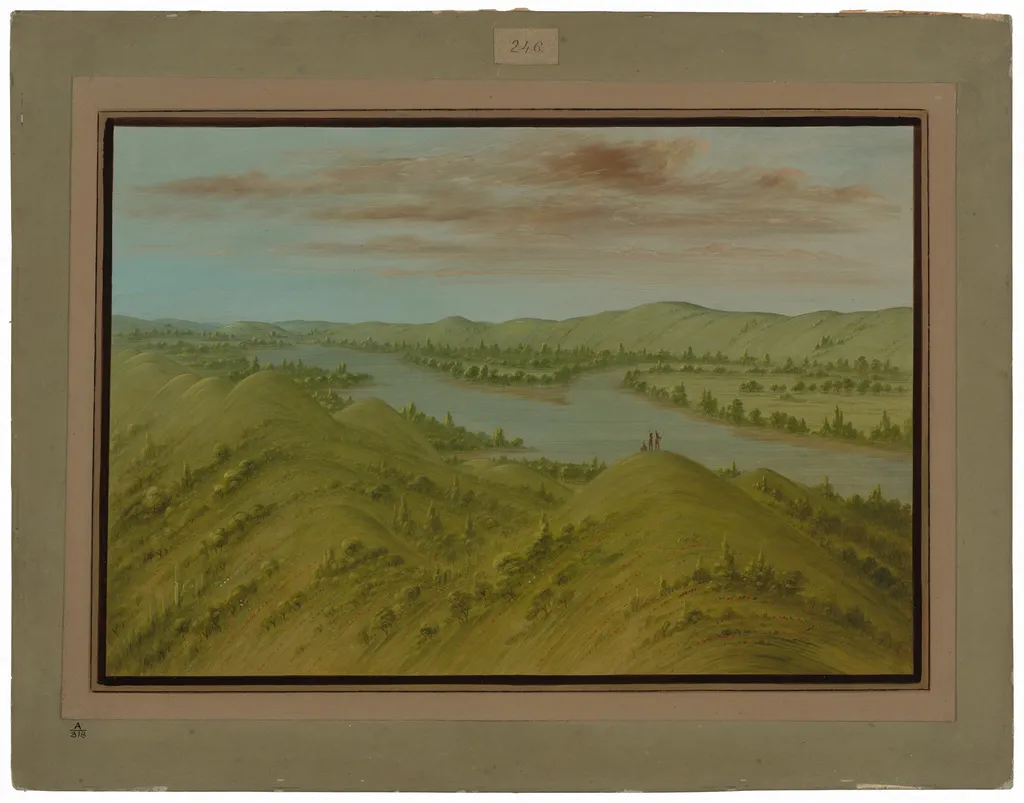
Grassy Bluffs, Upper Missouri is an oil painting by the Impressionist artist George Catlin. It dates from 1865 and is held in the collection of the National Gallery of Art.
About this work
Technique & Style
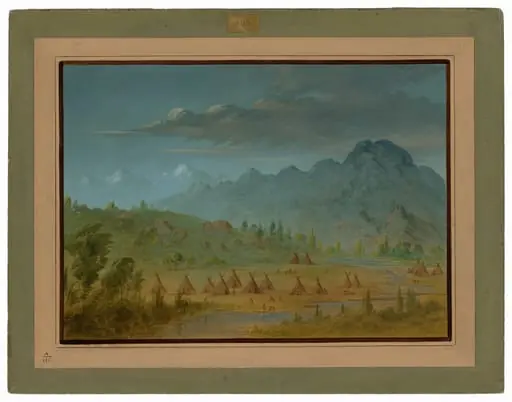
The composition features a mountainous landscape, consistent with its title referencing the Upper Missouri region.
Executed in 1865, this work is an oil painting applied on card that has been mounted onto a paperboard support. The composition features a mountainous landscape, consistent with its title referencing the Upper Missouri region. The physical dimensions of the piece are recorded as 45 cm in height and 62.5 cm in width.
As a painted work on a rigid, non-canvas support, the material construction distinguishes it from traditional stretched canvas oils, utilizing a thinner card substrate backed by board for stability.
History & Provenance
Created in 1865 by George Catlin, this oil painting on card mounted to paperboard depicts a mountainous landscape. Following the artist's death in 1872, the work passed by descent to his three daughters: Clara Gregory Catlin, Louise Catlin Kinney, and Elizabeth Wing Catlin. In 1912, the American Museum of Natural History purchased the piece directly from Elizabeth Wing Catlin.
The museum retained the work until 1959, when it was sold through Kennedy Galleries of New York to Paul Mellon of Upperville, Virginia. Mellon subsequently donated the painting to the National Gallery of Art in Washington, D.C., in 1965, where it is held, an oil on card mounted on paperboard measuring 45 by 62.5 cm.
Overview
Created in 1865, Grassy Bluffs, Upper Missouri is an oil painting executed on card that has been mounted to a paperboard support. The work presents a quiet western scene dominated by a series of grassy bluffs that rise before a distant mountain range, rendered without any visible signs of settlement or human presence.
Subject & Meaning
The composition emphasizes the natural topography of the Upper Missouri region, highlighting the contrast between the verdant slopes of the bluffs and the more austere, rocky mountain backdrop. By omitting figures or structures, the painting invites contemplation of the landscape’s inherent character and the untouched quality that defined much of the American frontier in the mid‑nineteenth century.
Context
The piece belongs to a broader phase of Catlin’s career in which he shifted focus from ethnographic portraiture to the depiction of natural scenery. By the 1860s, the western territories were undergoing rapid change, and Catlin’s landscapes serve as visual records of a region that was increasingly being altered by settlement and development.
Own this work as a print
Artist & collection

Artist
George Catlin ( KAT-lin; July 26, 1796 – December 23, 1872) was an American lawyer, painter, author, and traveler, who specialized in portraits of Native Americans in the American frontier.

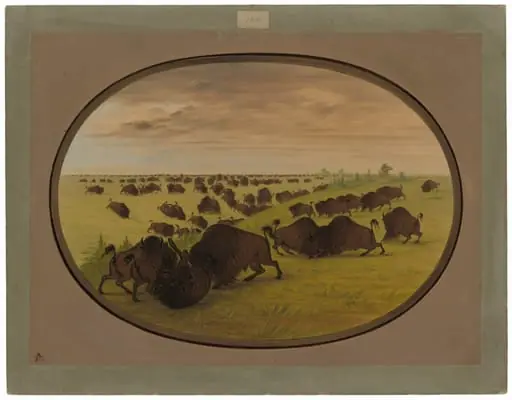 Bulls Fighting
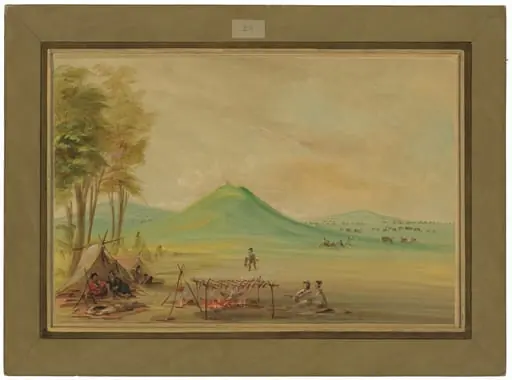 Expedition Encamped on a Texas Prairie. April 1686
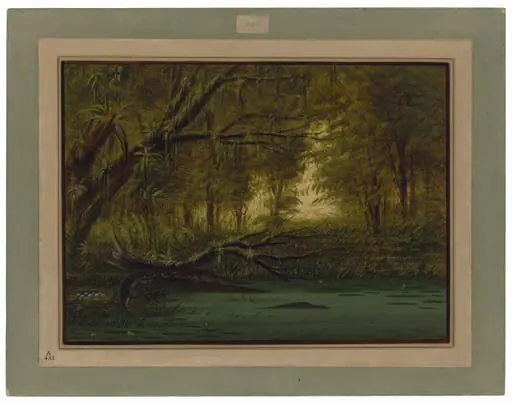 An Alligator's Nest
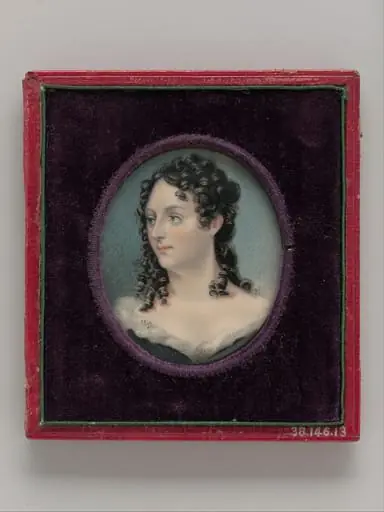 Mrs. George Catlin (Clara Bartlet Gregory)
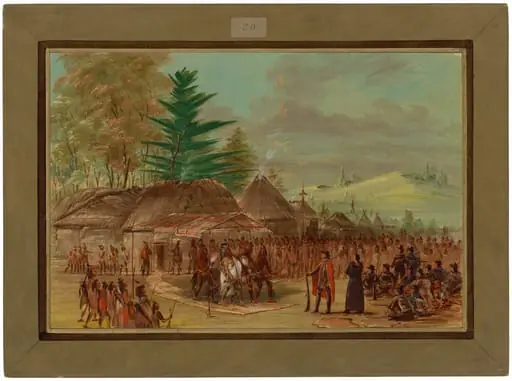 Chief of the Taensa Indians Receiving La Salle. March 20, 1682
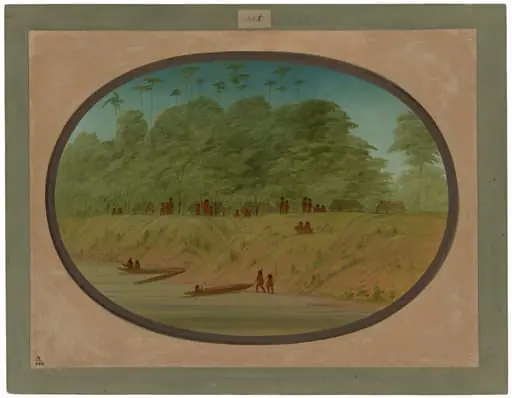 A Small Village - Payaguas Indians
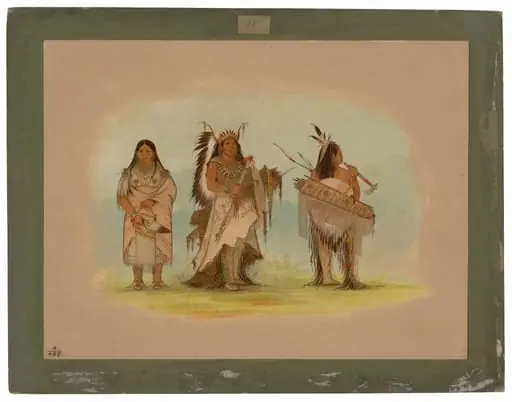 Omaha Chief, His Wife, and a Warrior
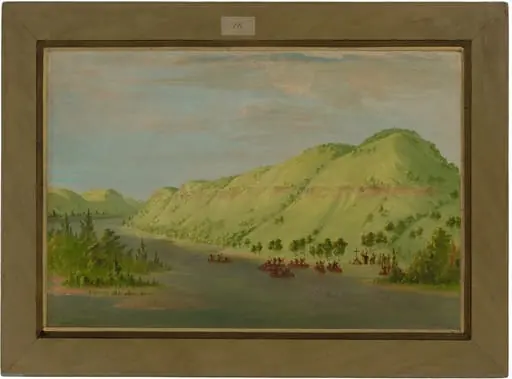 Father Hennepin Leaving the Mississippi to Join La Salle. May 8, 1680