Artwork
Omaha Chief, His Wife, and a Warrior
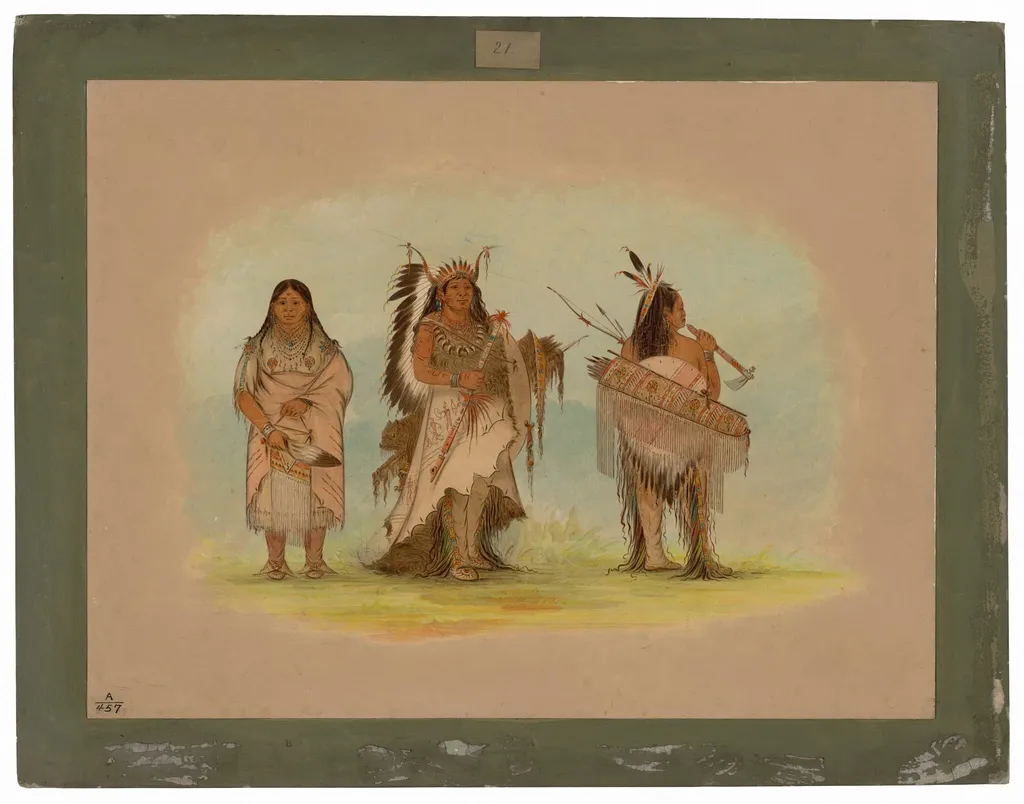
Omaha Chief, His Wife, and a Warrior is an oil painting by the American Folk Art artist George Catlin. It dates from 1861 and is held in the collection of the National Gallery of Art.
- Inscription
- Inscribed:lower center: [Catl]in 1861.
About this work
Three Omaha figures: a chief in a beaded shirt, his wife beside him, and a warrior holding a bow and arrow. George Catlin painted them in 1861 after years traveling the American West to document tribes, mixing portrait detail with a scene of daily life.
Subject & Meaning
The composition centers on Native American identity, reinforced visually by the inclusion of a bow and arrow among the depicted elements.
George Catlin's painting portrays three Omaha figures: a chief, his wife, and a warrior. The composition centers on Native American identity, reinforced visually by the inclusion of a bow and arrow among the depicted elements. Catlin, known for documenting Indigenous peoples of the Americas, presents the subjects in a formal portrait arrangement that emphasizes their individual roles within the community.
The presence of the warrior alongside the chief and his wife signals a hierarchy of leadership, family, and martial life characteristic of Plains Indian societies. Together, the figures and the bow and arrow function as iconographic markers of Omaha cultural identity, status, and the artist's broader project of recording Indigenous life in the United States.
Technique & Style
Executed in 1861, this portrait utilizes oil paint applied to a card support, which is subsequently mounted onto paperboard. The work measures approximately 45.1 by 60 centimeters. Stylistically, the composition functions as a genre portrait depicting three Native American figures: a chief, his wife, and a warrior.
The visual narrative incorporates specific cultural elements, notably the inclusion of a bow and arrow within the scene. The piece is classified formally as a painting, reflecting Catlin's approach to documenting indigenous subjects during this period through a combined support structure of card and board.
History & Provenance
George Catlin executed this oil on card portrait in 1861. Following the artist's death in 1872, the work passed by descent to his daughters: Clara Gregory Catlin, Louise Catlin Kinney, and Elizabeth Wing Catlin. In 1912, the American Museum of Natural History purchased the painting directly from Elizabeth Wing Catlin.
The museum retained ownership until 1959, when it sold the piece through Kennedy Galleries of New York to Paul Mellon of Upperville, Virginia. Mellon subsequently donated the work to the National Gallery of Art in Washington, D.C., in 1965, where it remains in the collection.
The painting Omaha Chief, His Wife, and a Warrior is currently held in the collection of the National Gallery of Art in Washington, D.C., where it was accessioned in 1965 as a gift. Prior to this transfer, the work was part of the collection of the American Museum of Natural History, having been purchased from the artist's daughter, Elizabeth Wing Catlin, in 1912. Before entering the museum, the piece descended through George Catlin's daughters.
In 1959, the American Museum of Natural History sold the painting through Kennedy Galleries in New York to Paul Mellon of Upperville, Virginia. The artwork, created in 1861, remained in the Mellon collection until his gift to the National Gallery of Art six years later. No specific exhibition history is detailed in the provided records.
Overview
Created by American artist George Catlin in 1861, "Omaha Chief, His Wife, and a Warrior" is an oil painting on card, affixed to paperboard. This work functions as a group portrait, presenting three distinct figures. It reflects Catlin's long-standing dedication to documenting Indigenous cultures of North America, particularly those from the Plains region, through direct observation and artistic representation.
Context
George Catlin, originally trained in law, dedicated his career to visually recording the Indigenous peoples of the American West. He undertook five extensive journeys across the frontier during the 1830s, immersing himself in various tribal cultures. His artistic project aimed to create a comprehensive visual record of Native American life, which he believed was rapidly changing due to westward expansion.
Own this work as a print
Artist & collection

Artist
George Catlin ( KAT-lin; July 26, 1796 – December 23, 1872) was an American lawyer, painter, author, and traveler, who specialized in portraits of Native Americans in the American frontier.

 Bulls Fighting
 Expedition Encamped on a Texas Prairie. April 1686
 An Alligator's Nest
 Mrs. George Catlin (Clara Bartlet Gregory)
 Chief of the Taensa Indians Receiving La Salle. March 20, 1682
 A Small Village - Payaguas Indians
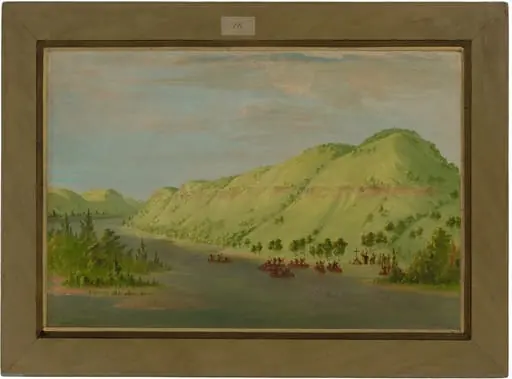 Father Hennepin Leaving the Mississippi to Join La Salle. May 8, 1680
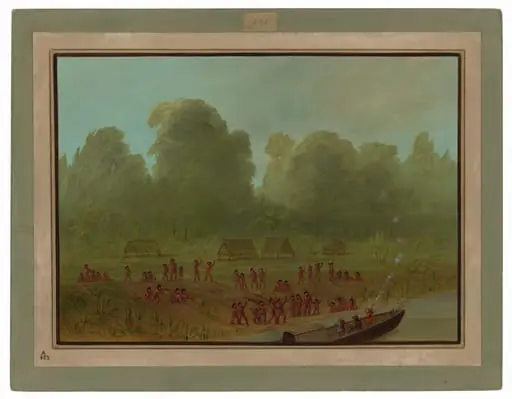 A Mayoruna Village
- Camanchee Chief, His Wife, and a Warrior
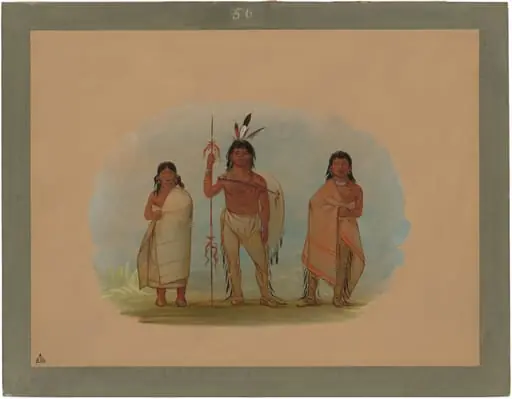 Ottowa Chief, His Wife, and a Warrior
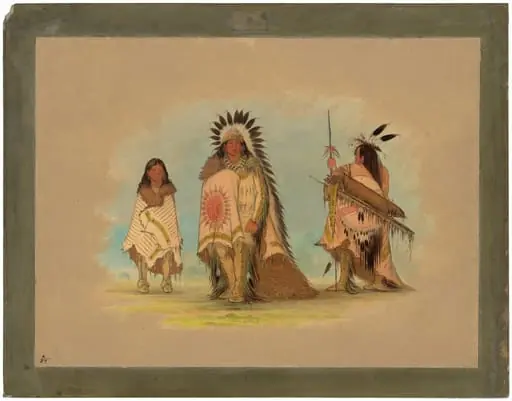 A Sioux Chief, His Daughter, and a Warrior
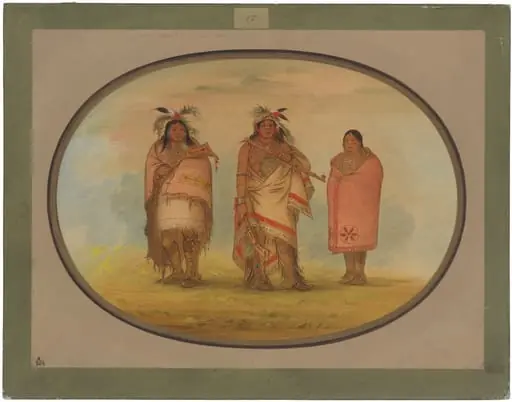 Menomonie Chief, His Wife, and Son
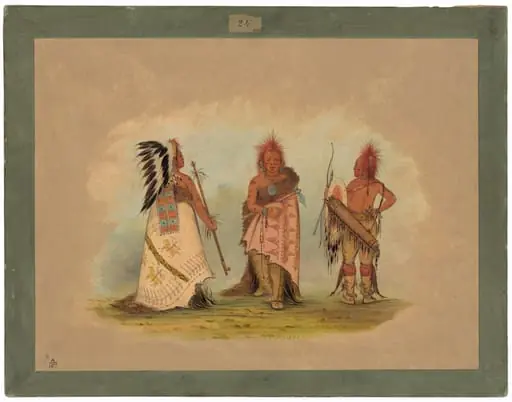 A Pawnee Chief with Two Warriors
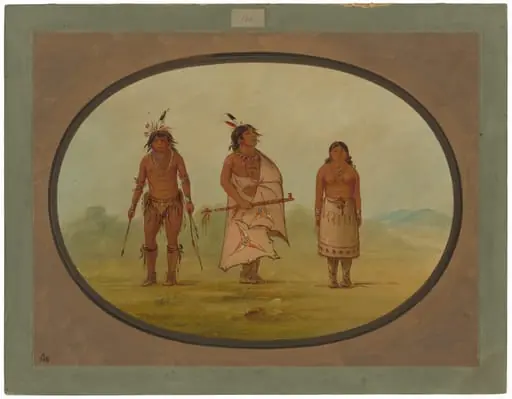 Mohave Chief, a Warrior, and His Wife
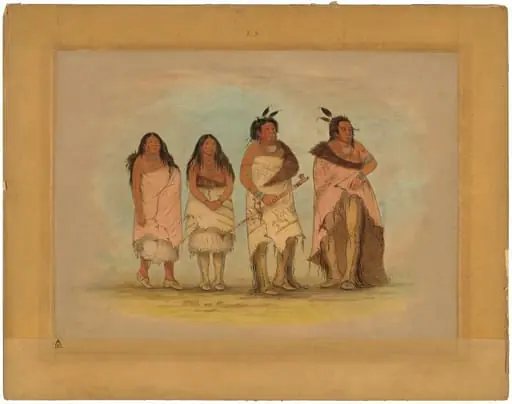 Pawneepict Chief, Two Daughters, and a Warrior
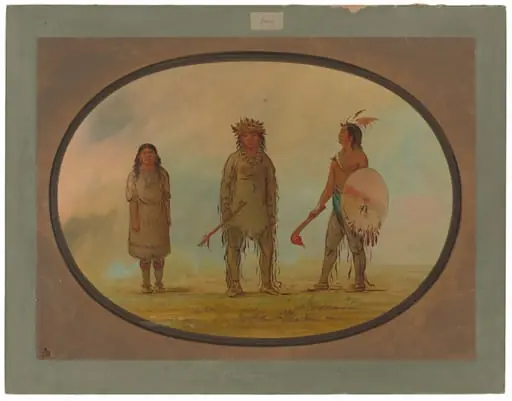 Athapasca Chief, His Wife, and a Warrior
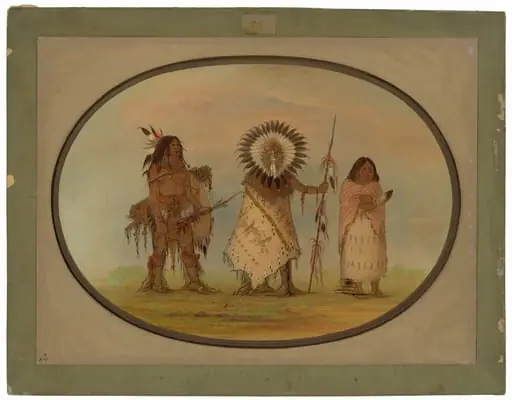 Crow Chief, His Wife, and a Warrior