Artwork
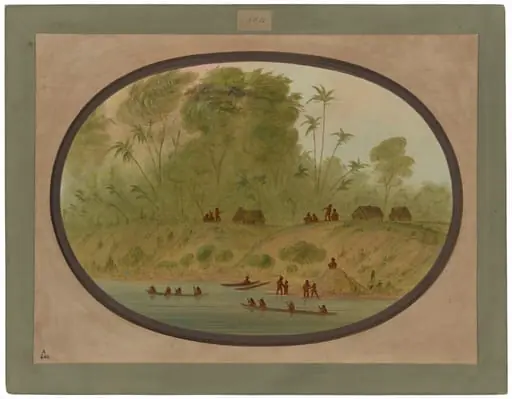
A Small Village - Payaguas Indians
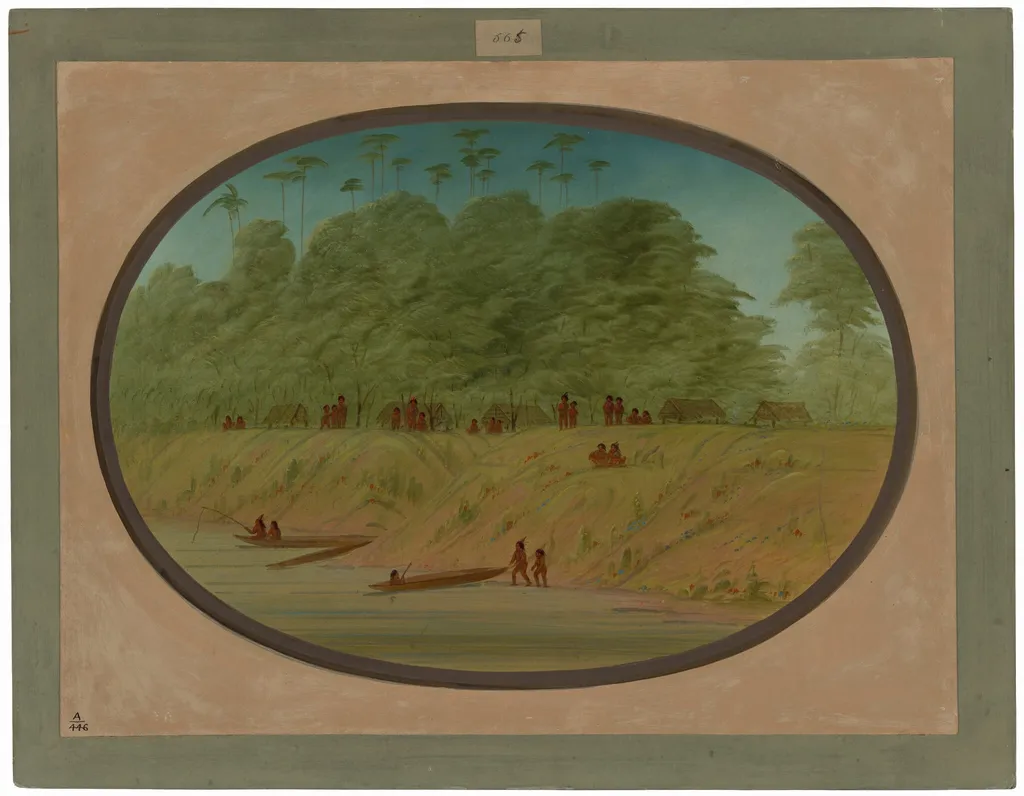
A Small Village - Payaguas Indians is an oil painting by the American Folk Art artist George Catlin. It dates from 1862 and is held in the collection of the National Gallery of Art.
About this work
Technique & Style
The composition depicts a genre scene featuring a boat and trees, elements characteristic of George Catlin's documentation of indigenous life in South America.
Executed in 1862, this work is an oil painting applied to a card support that has been mounted onto paperboard. The composition depicts a genre scene featuring a boat and trees, elements characteristic of George Catlin's documentation of indigenous life in South America. The piece measures approximately 47.6 by 63.3 centimeters, presenting a horizontal format that accommodates the village setting.
The medium of oil on card is consistent with the artist's portable field practices, though the specific handling techniques employed remain undocumented in the available sources.
History & Provenance
George Catlin painted A Small Village - Payaguas Indians in 1862. The painting originated in Catlin's personal collection and passed by descent to his daughters Clara Gregory Catlin, Louise Catlin Kinney, and Elizabeth Wing Catlin after his death in 1872. In 1912 Elizabeth Wing Catlin sold the work to the American Museum of Natural History, where it remained until 1959.
That year it was acquired by collector Paul Mellon of Upperville, Virginia, through Kennedy Galleries, New York, and Mellon gifted it to the National Gallery of Art, Washington, in 1965. The work is catalogued as an oil on card mounted on paperboard.
Overview
George Catlin's 1862 painting, A Small Village - Payaguas Indians, offers a glimpse into indigenous life. Rendered in oil on card mounted on paperboard, this piece is recognized as American folk art. It portrays a serene village scene, complete with a boat and surrounding trees, underscoring Catlin's consistent artistic focus on documenting Native American cultures throughout his career.
Subject & Meaning
The artwork meticulously depicts a Payaguas village, providing a visual account of its inhabitants and their environment. A boat is visible, suggesting the community's relationship with water, possibly for travel or sustenance. This detailed portrayal serves to record aspects of daily life and cultural practices, aligning with Catlin's broader objective to preserve images of indigenous societies.
Context
Initially a lawyer, George Catlin redirected his career to painting, becoming known for his extensive documentation of Native American cultures. While his most significant travels through the American West in the 1830s yielded numerous depictions of Plains Indians, this 1862 work confirms his sustained interest in indigenous subjects, demonstrating a lifelong commitment to their portrayal.
Own this work as a print
Artist & collection

Artist
George Catlin ( KAT-lin; July 26, 1796 – December 23, 1872) was an American lawyer, painter, author, and traveler, who specialized in portraits of Native Americans in the American frontier.

 Bulls Fighting
 Expedition Encamped on a Texas Prairie. April 1686
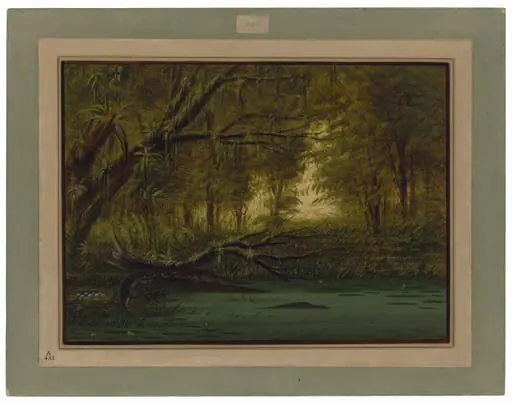 An Alligator's Nest
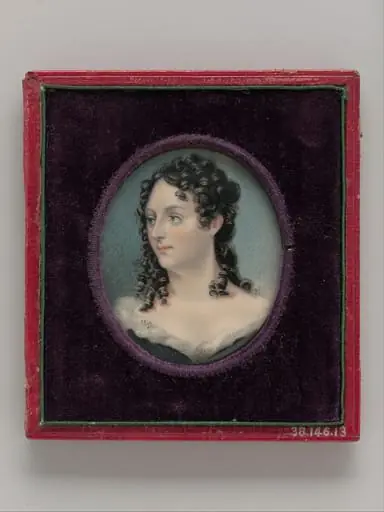 Mrs. George Catlin (Clara Bartlet Gregory)
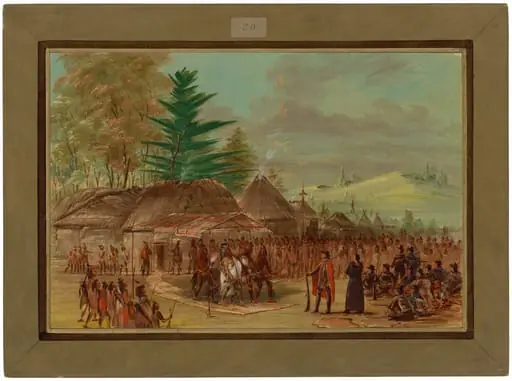 Chief of the Taensa Indians Receiving La Salle. March 20, 1682
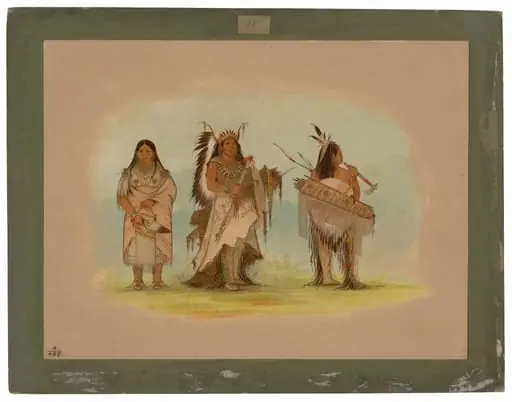 Omaha Chief, His Wife, and a Warrior
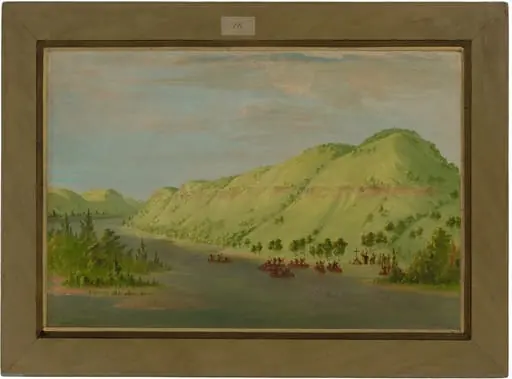 Father Hennepin Leaving the Mississippi to Join La Salle. May 8, 1680
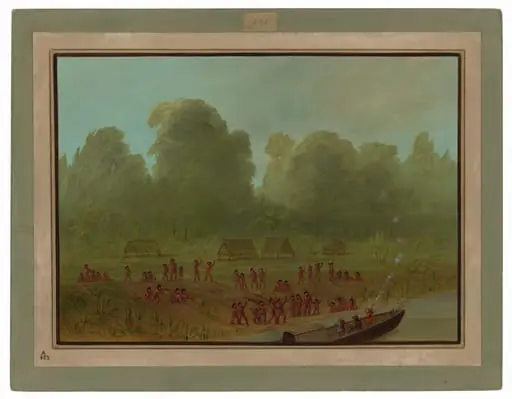 A Mayoruna Village