Artwork
Fort Pierre
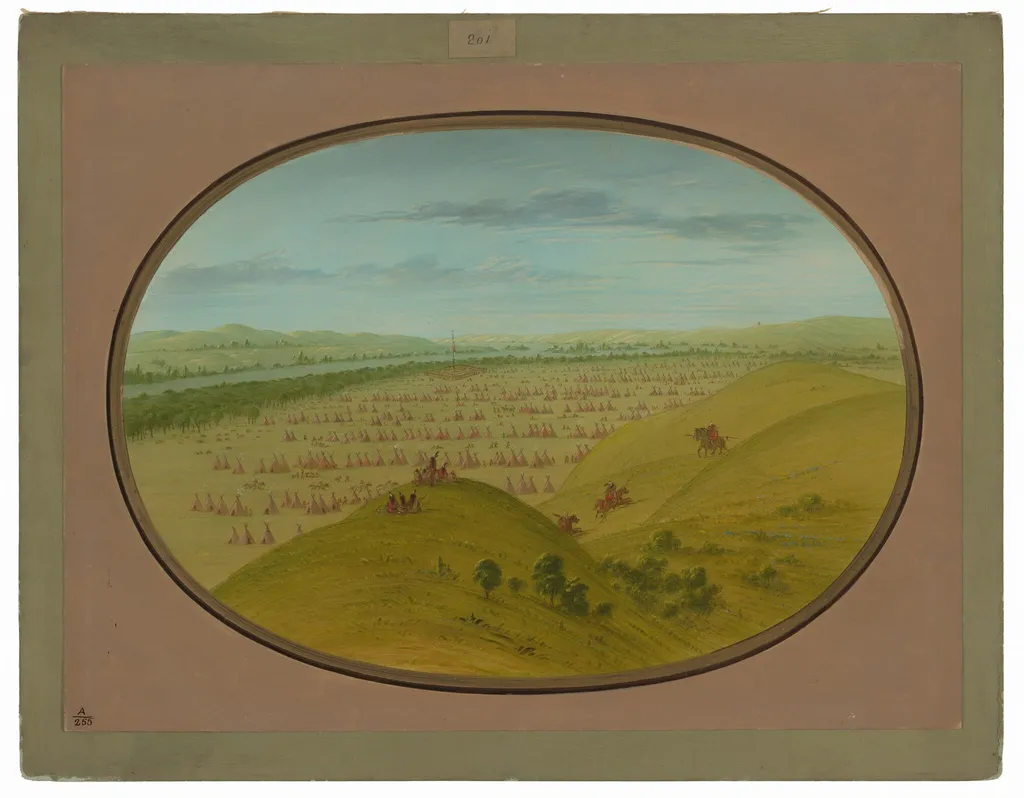
Fort Pierre is an oil painting by the Impressionist artist George Catlin. It dates from 1865 and is held in the collection of the National Gallery of Art.
About this work
Subject & Meaning
The title identifies the location as Fort Pierre, yet the visual subject matter remains strictly limited to the physical features of the terrain.
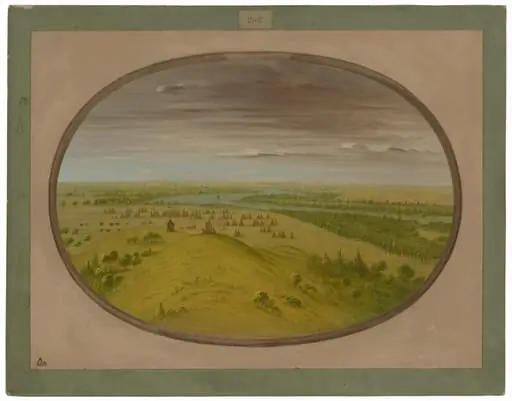
The painting depicts a natural landscape scene centered on a mountain and a tree. As a work classified within the landscape genre, the composition focuses on these specific geological and botanical elements without including human figures, structures, or explicit narrative events. The title identifies the location as Fort Pierre, yet the visual subject matter remains strictly limited to the physical features of the terrain.
The work represents a direct observation of the American West's topography, emphasizing the enduring presence of the mountain and the solitary tree within the setting.
History & Provenance
The work titled Fort Pierre was painted by George Catlin in 1861 as an oil on card mounted on paperboard landscape. It entered the Catlin family collection and passed by descent to his daughters Clara Gregory Catlin, Louise Catlin Kinney, and Elizabeth Wing Catlin. In 1912 the painting was sold to the American Museum of Natural History, then in 1959 it was sold through Kennedy Galleries, New York, to Paul Mellon, and finally gifted to the National Gallery of Art in 1965. Dimensions are 47.5 cm by 64 cm. The painting depicts a mountain and a tree.
Overview
George Catlin's Fort Pierre, painted in 1865, is an oil on card landscape. The work depicts a solitary tree against a backdrop of distant mountains under a pale sky, presenting a tranquil natural scene. While Catlin is widely known for his portrayals of Native American life, this piece exemplifies his concurrent interest in documenting the American frontier's natural environment during his later career.
Technique & Style
Executed in oil on card mounted on paperboard, Fort Pierre employs a palette of soft, muted colors. The artist avoids vibrant hues or dramatic contrasts, instead rendering the scene with a gentle touch that emphasizes its serene atmosphere. This stylistic choice contributes to the painting's quietude, reflecting a direct and unembellished observation of the natural world.
Context
As an American lawyer turned painter, George Catlin dedicated much of his career to chronicling the American frontier. While celebrated for his portraits of Plains Indians, he also meticulously recorded natural landscapes. His artistic practice extended to detailed engravings of the Erie Canal in his earlier years and later included lithographic illustrations for books, demonstrating a broad engagement with visual documentation.
Own this work as a print
Artist & collection

Artist
George Catlin ( KAT-lin; July 26, 1796 – December 23, 1872) was an American lawyer, painter, author, and traveler, who specialized in portraits of Native Americans in the American frontier.

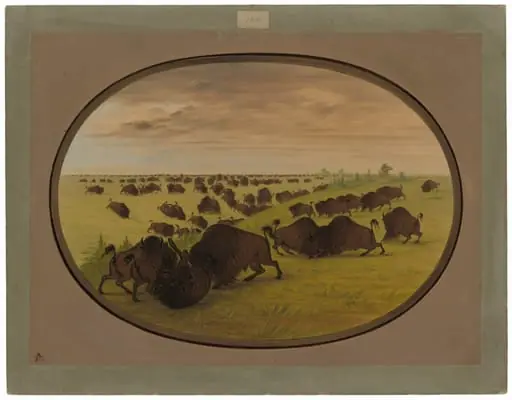 Bulls Fighting
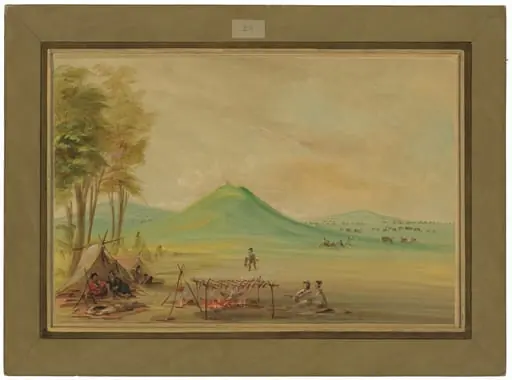 Expedition Encamped on a Texas Prairie. April 1686
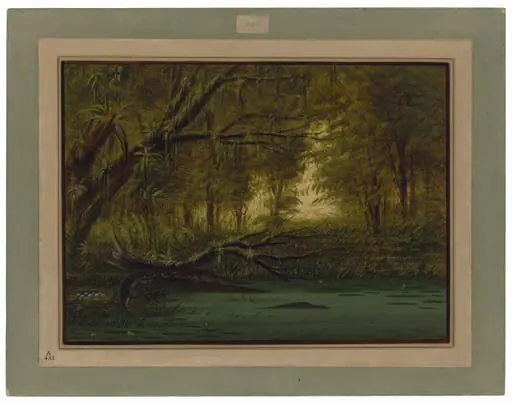 An Alligator's Nest
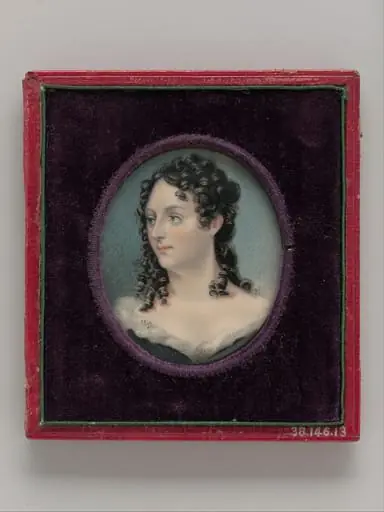 Mrs. George Catlin (Clara Bartlet Gregory)
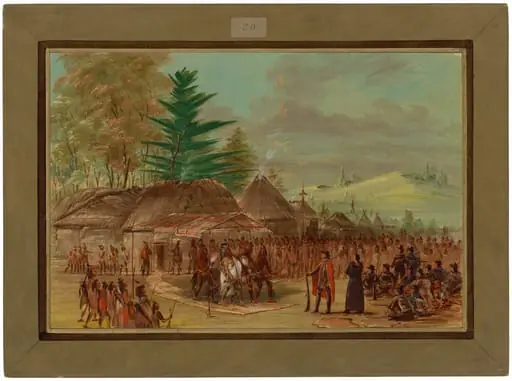 Chief of the Taensa Indians Receiving La Salle. March 20, 1682
 A Small Village - Payaguas Indians
 Omaha Chief, His Wife, and a Warrior
 Father Hennepin Leaving the Mississippi to Join La Salle. May 8, 1680