Artwork
A Crow Village and the Salmon River Mountains
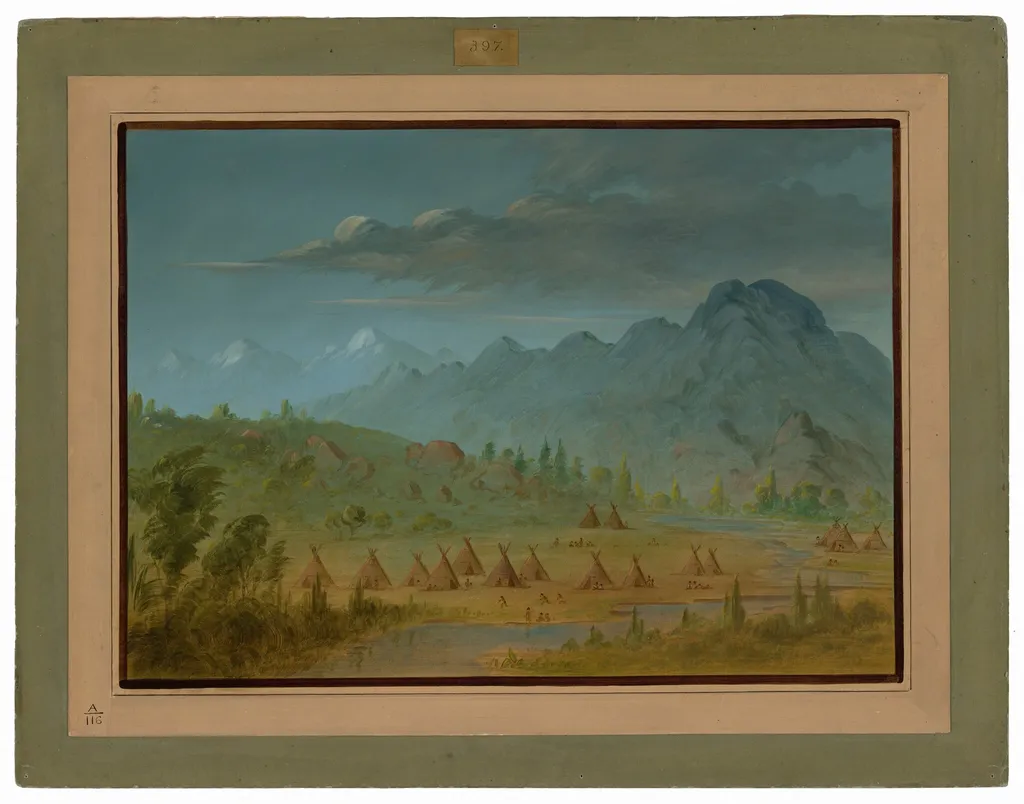
A Crow Village and the Salmon River Mountains is an oil painting by the Impressionist artist George Catlin. It dates from 1862 and is held in the collection of the National Gallery of Art.
About this work
Here’s a fresh take that meets all your rules:
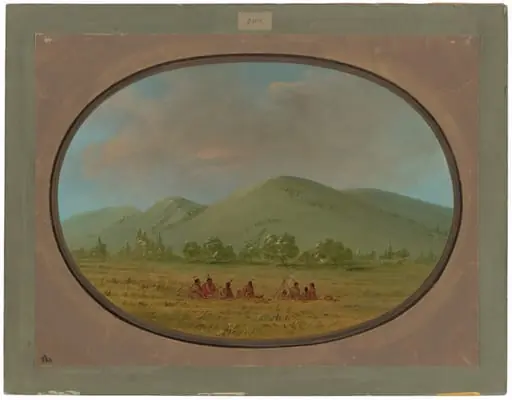
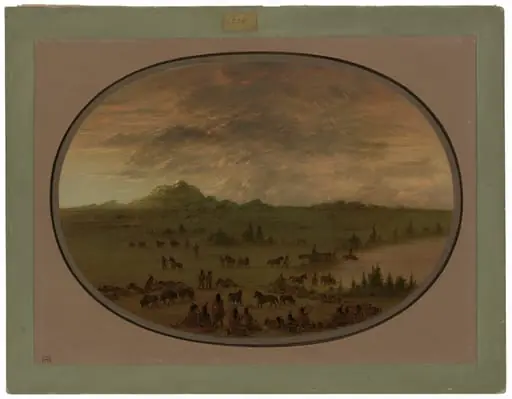
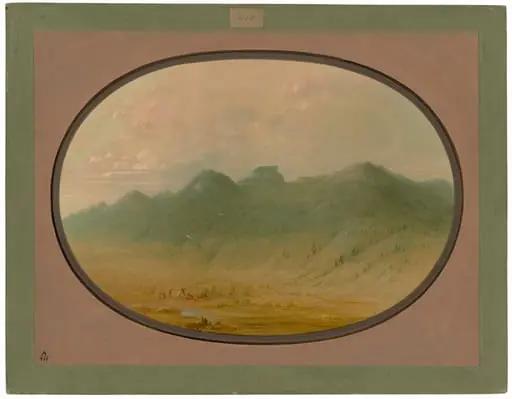
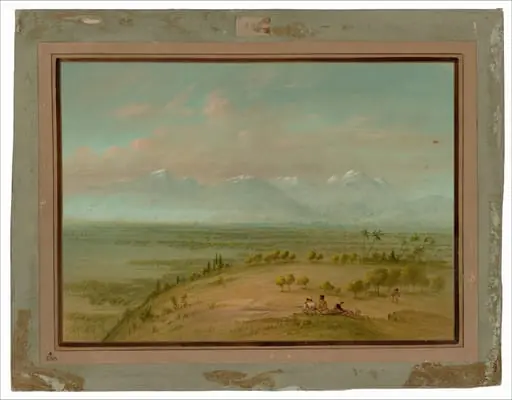
This painting shows a Native village by a wide river, with mountains rising behind. Pines dot the bank. Smoke rises from a few fires.
George Catlin painted this in 1855 but finished it in 1869. He spent years traveling the West to record tribes and landscapes before photography was common.
If you like this, check out George Catlin’s other work.
Subject & Meaning
The dense foliage and distant peaks serve as a symbolic backdrop, suggesting the land’s enduring presence and spiritual significance to the community depicted.
The painting depicts a Crow settlement set within a rugged mountain landscape, emphasizing the Salmon River Mountains in the background. Catlin portrays the village as a cluster of conical lodges arranged along a river, framed by dense forest and towering peaks, capturing the interplay between Indigenous habitation and the natural environment. The composition foregrounds the adaptability of the Crow people to their mountainous territory, using the verticality of the mountains to convey both grandeur and isolation.
The dense foliage and distant peaks serve as a symbolic backdrop, suggesting the land’s enduring presence and spiritual significance to the community depicted.
History & Provenance
The painting was created by George Catlin in 1866, as recorded in both institutional and Wikidata sources.
Its ownership chain began with the artist himself. By descent, it passed to his daughters, Clara Gregory Catlin, Louise Catlin Kinney, and Elizabeth Wing Catlin, before being purchased in 1912 by the American Museum of Natural History from Elizabeth Wing Catlin. In 1959, the work was sold through Kennedy Galleries in New York to Paul Mellon, who later gifted it to the National Gallery of Art in Washington, D.C., in 1965, where it remains in the collection.
The painting’s dimensions are 46.8 cm in height and 62.5 cm in width, as documented by Wikidata.
The painting A Crow Village and the Salmon River Mountains is currently held by the National Gallery of Art in Washington, D.C. Its provenance traces from the artist George Catlin to his daughters, with Elizabeth Wing Catlin selling the work to the American Museum of Natural History in 1912. The museum retained the piece until 1959, when it was sold through Kennedy Galleries in New York to collector Paul Mellon of Upperville, Virginia. The work entered the National Gallery of Art's collection in 1965 as a gift from Paul Mellon.
Overview
George Catlin's A Crow Village and the Salmon River Mountains is an oil painting on card, completed between 1855 and 1869. This landscape depicts a Native American settlement nestled beside a broad river, with towering mountains in the background. Scattered pines line the riverbank, and faint plumes of smoke suggest activity within the village. The work reflects Catlin's extensive efforts to document the Indigenous cultures and environments of the American West.
Technique & Style
Executed in oil on card mounted on paperboard, this painting demonstrates Catlin's approach to rendering the American West. While specific stylistic details are not extensively described, the choice of medium allowed for a direct and relatively portable method of capturing scenes. This work exemplifies Catlin's consistent artistic practice of creating visual records of the frontier, often characterized by a straightforward, documentary style.
Context
Catlin's artistic output, including this landscape, emerged from a period when visual documentation of the American West was still nascent. His extensive travels and painting efforts served a crucial role in recording Indigenous communities and their environments before the widespread adoption of photography. Earlier in his career, Catlin also contributed to early lithographic publications, illustrating sites along the Erie Canal, underscoring his commitment to visual record-keeping.
Own this work as a print
Artist & collection

Artist
George Catlin ( KAT-lin; July 26, 1796 – December 23, 1872) was an American lawyer, painter, author, and traveler, who specialized in portraits of Native Americans in the American frontier.

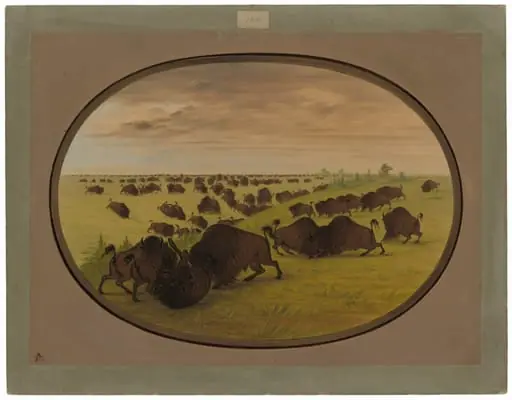 Bulls Fighting
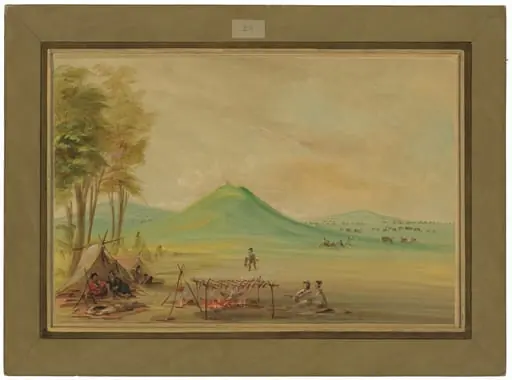 Expedition Encamped on a Texas Prairie. April 1686
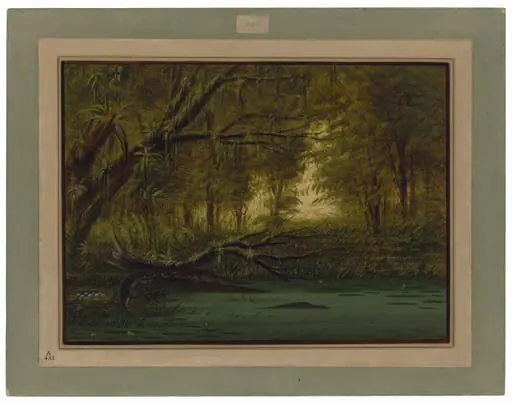 An Alligator's Nest
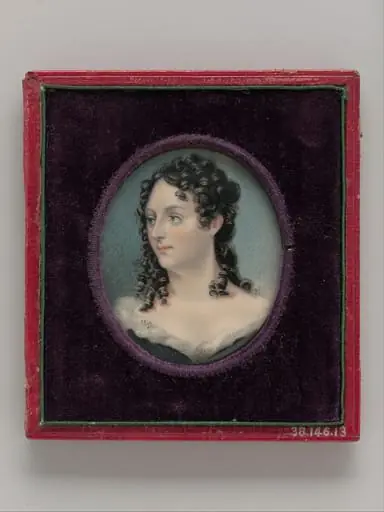 Mrs. George Catlin (Clara Bartlet Gregory)
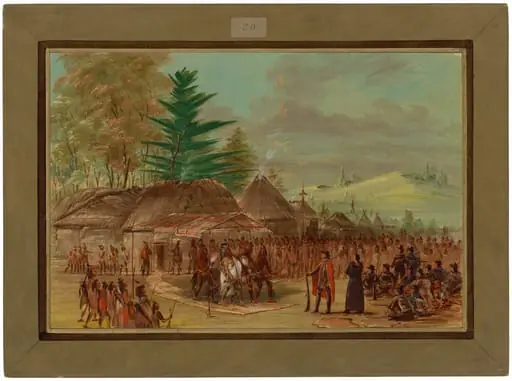 Chief of the Taensa Indians Receiving La Salle. March 20, 1682
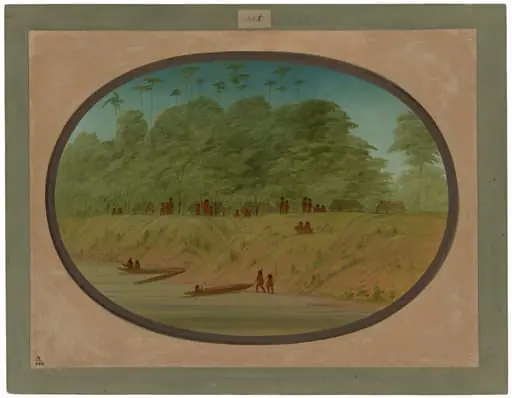 A Small Village - Payaguas Indians
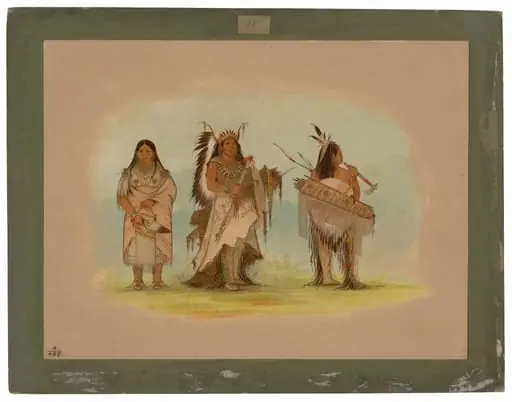 Omaha Chief, His Wife, and a Warrior
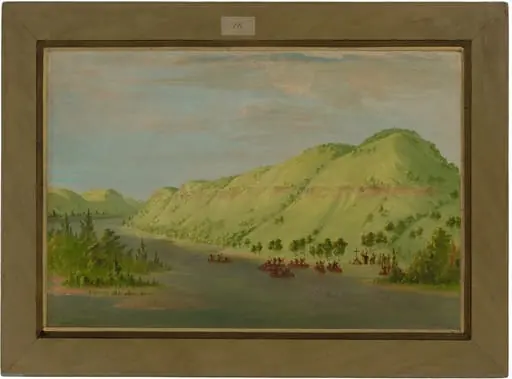 Father Hennepin Leaving the Mississippi to Join La Salle. May 8, 1680