Artwork
Ignis Fatuus - Zurumati
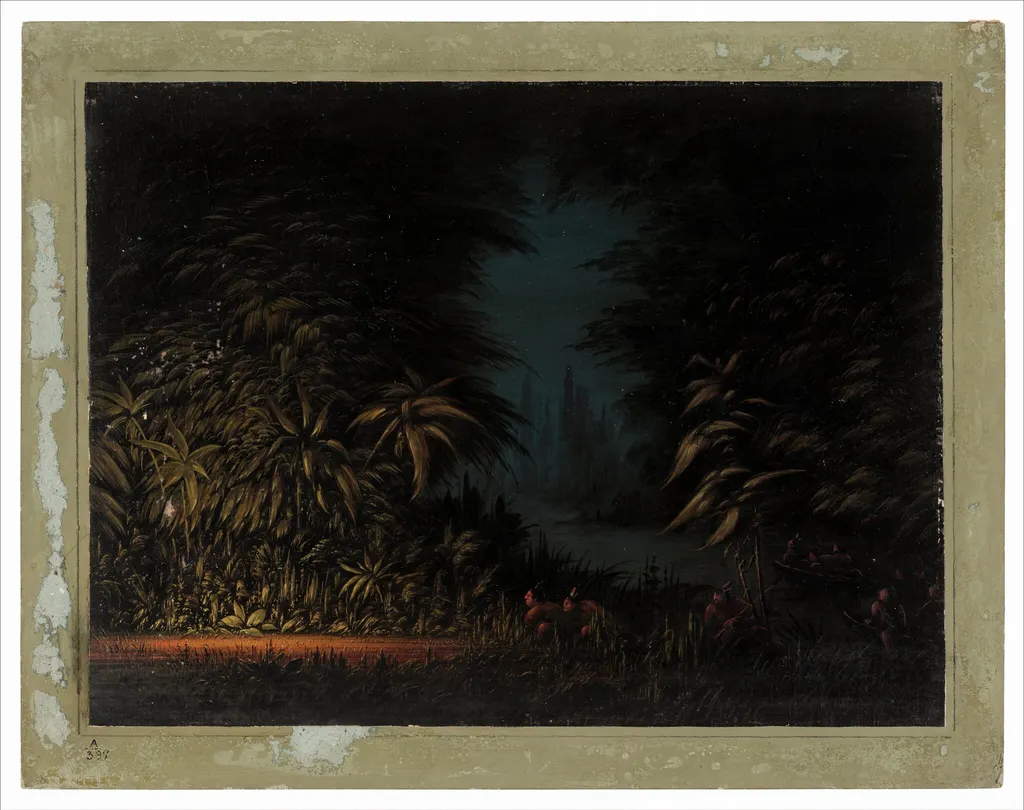
Ignis Fatuus - Zurumati is an oil painting by the American Folk Art artist George Catlin. It dates from 1862 and is held in the collection of the National Gallery of Art.
About this work
He called it "Ignis Fatuus," which means "foolish fire" in Latin.
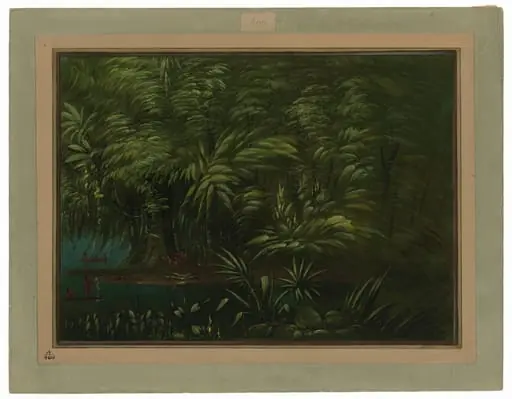
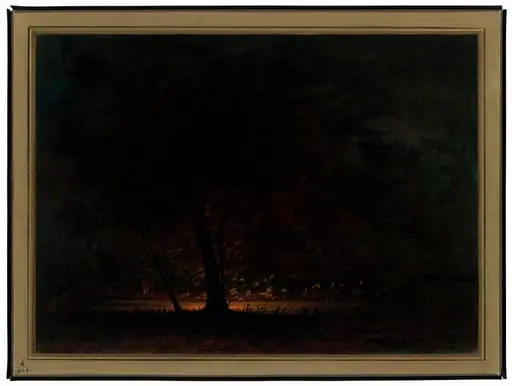
This painting shows a lone tree in a dark swamp. Fire floats in the air around it like ghostly bubbles. The water below reflects the flames in eerie green ripples.
The artist painted it twice, first in 1854, then again in 1869. The second version adds more fire and a creepier glow. He called it "Ignis Fatuus," which means "foolish fire" in Latin. It’s the kind of light that lures people into danger.
See this in person at the National Gallery of Art, Washington.
History & Provenance
Ignis Fatuus - Zurumati was painted by George Catlin in 1865 in oil on canvas. The work descended from the artist to his daughters Clara Gregory Catlin, Louise Catlin Kinney, and Elizabeth Wing Catlin. In 1912 the American Museum of Natural History purchased the painting from Elizabeth Wing Catlin.
The museum sold it in 1959 through Kennedy Galleries in New York to Paul Mellon of Upperville, Virginia. Mellon gave the painting to the National Gallery of Art in 1965, where it remains in the collection.
Following its creation in 1865, this landscape remained in the artist's family until 1912, when the American Museum of Natural History acquired it from Elizabeth Wing Catlin. The institution deaccessioned the work in 1959, selling it through Kennedy Galleries to collector Paul Mellon. Mellon subsequently gifted the painting to the National Gallery of Art in Washington, D.C., in 1965, where it currently resides in the permanent collection.
The provided documentation details the work's ownership lineage and final donation but does not list specific public exhibitions or assign a formal accession number.
Overview
George Catlin, an American painter recognized for his depictions of Indigenous life, created Ignis Fatuus - Zurumati in 1862. This oil-on-canvas work presents a dark, swampy landscape dominated by a single tree. The painting is characterized by its eerie atmosphere, with spectral lights floating around the tree and reflecting in the water below, rendered in a style reminiscent of American folk art.
Subject & Meaning
The painting portrays a solitary tree standing amidst a dark marsh, illuminated by mysterious, glowing orbs. These lights, which appear like ghostly bubbles and cast green ripples on the water, are referenced in the title "Ignis Fatuus," Latin for "foolish fire." This term denotes a deceptive light that misleads travelers, imbuing the scene with a sense of danger and the unknown.
Technique & Style
Executed in oil on canvas, Ignis Fatuus - Zurumati employs a visual language associated with American folk art. Catlin's approach to the landscape emphasizes a distinct, almost naive rendering of the lone tree and its surroundings. The artist skillfully uses light and reflection to create an unsettling ambiance, where the glowing "foolish fires" become the central, haunting visual element.
Context
Before focusing on Indigenous cultures in the American West during the 1830s, George Catlin's artistic endeavors included detailed engravings and lithographic illustrations. While Ignis Fatuus diverges from his ethnographic portraits, it reflects his broader engagement with American landscapes. The painting's theme of deceptive natural phenomena aligns with a fascination for the mysterious and untamed aspects of the American frontier.
Own this work as a print
Artist & collection

Artist
George Catlin ( KAT-lin; July 26, 1796 – December 23, 1872) was an American lawyer, painter, author, and traveler, who specialized in portraits of Native Americans in the American frontier.

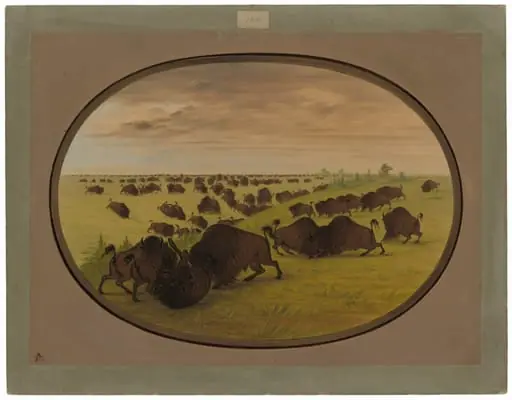 Bulls Fighting
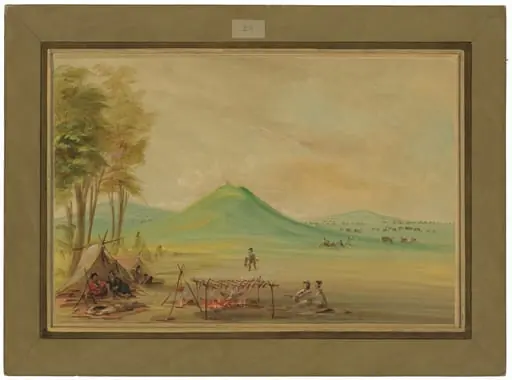 Expedition Encamped on a Texas Prairie. April 1686
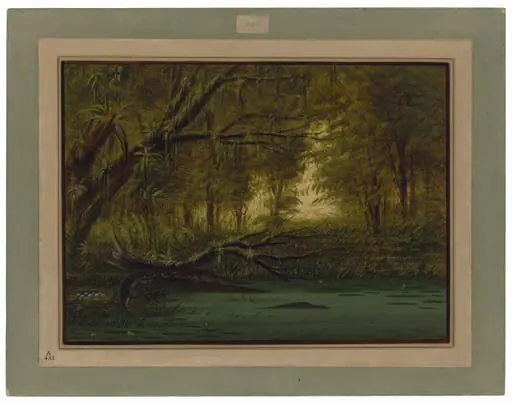 An Alligator's Nest
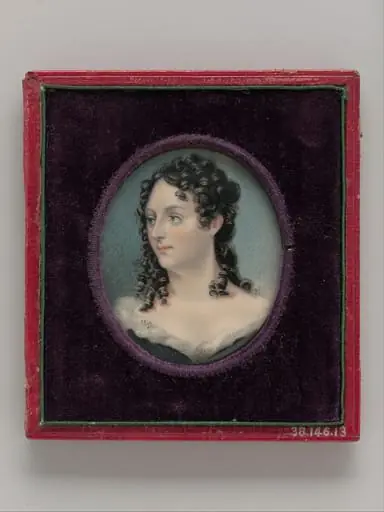 Mrs. George Catlin (Clara Bartlet Gregory)
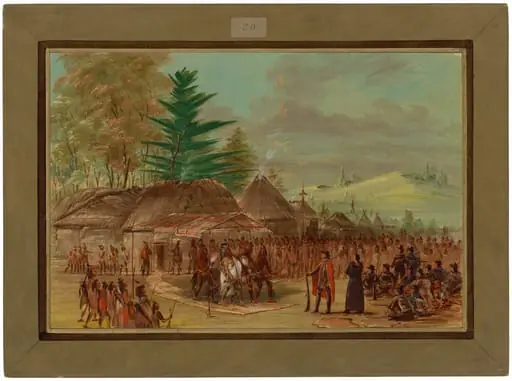 Chief of the Taensa Indians Receiving La Salle. March 20, 1682
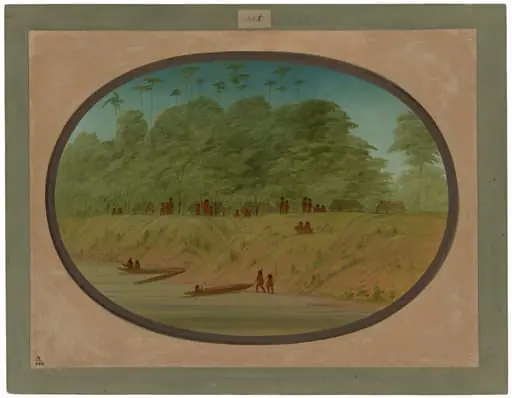 A Small Village - Payaguas Indians
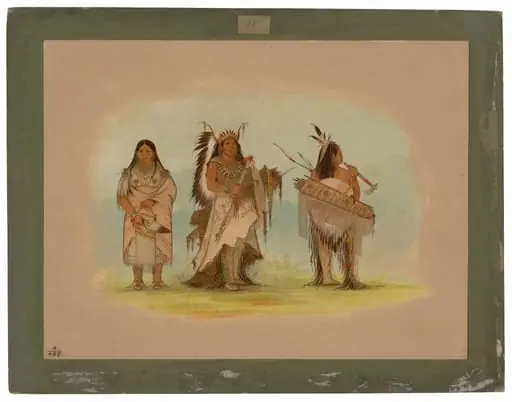 Omaha Chief, His Wife, and a Warrior
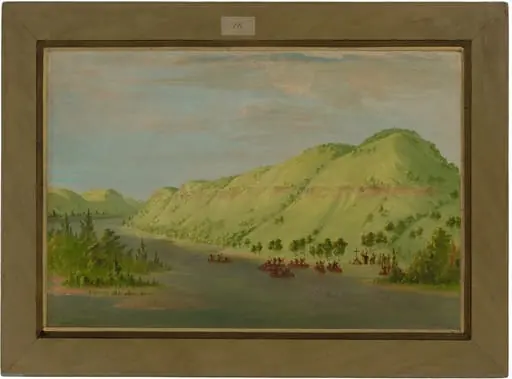 Father Hennepin Leaving the Mississippi to Join La Salle. May 8, 1680