Artwork
Ignis Fatuus, Rio Uruguay
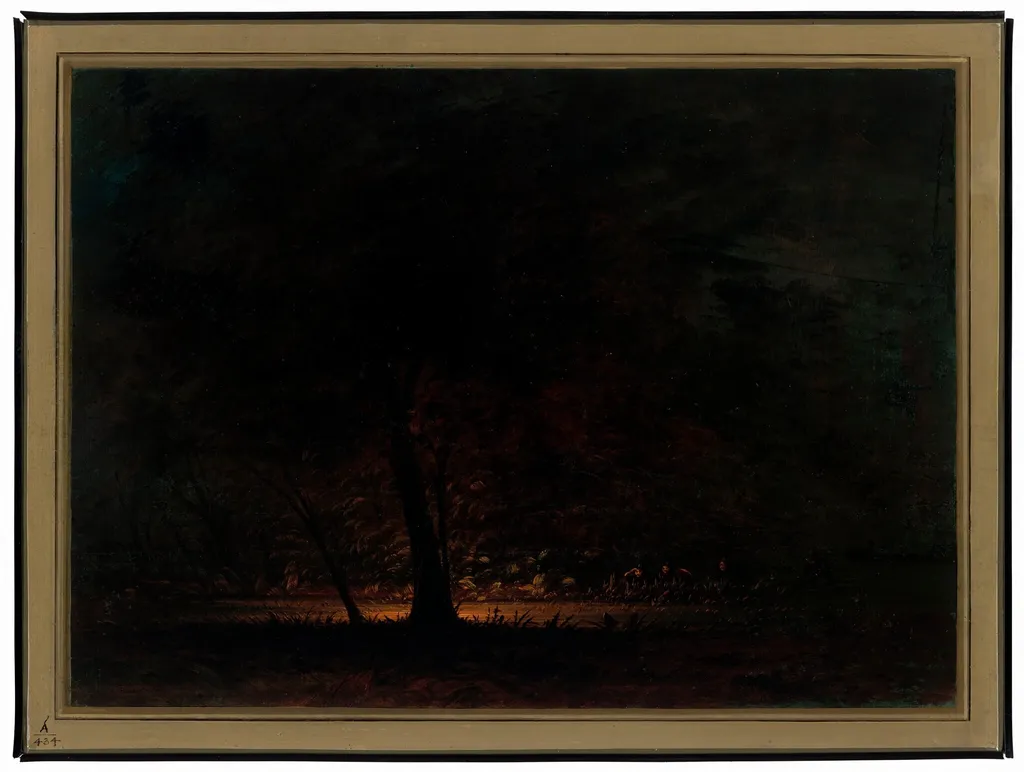
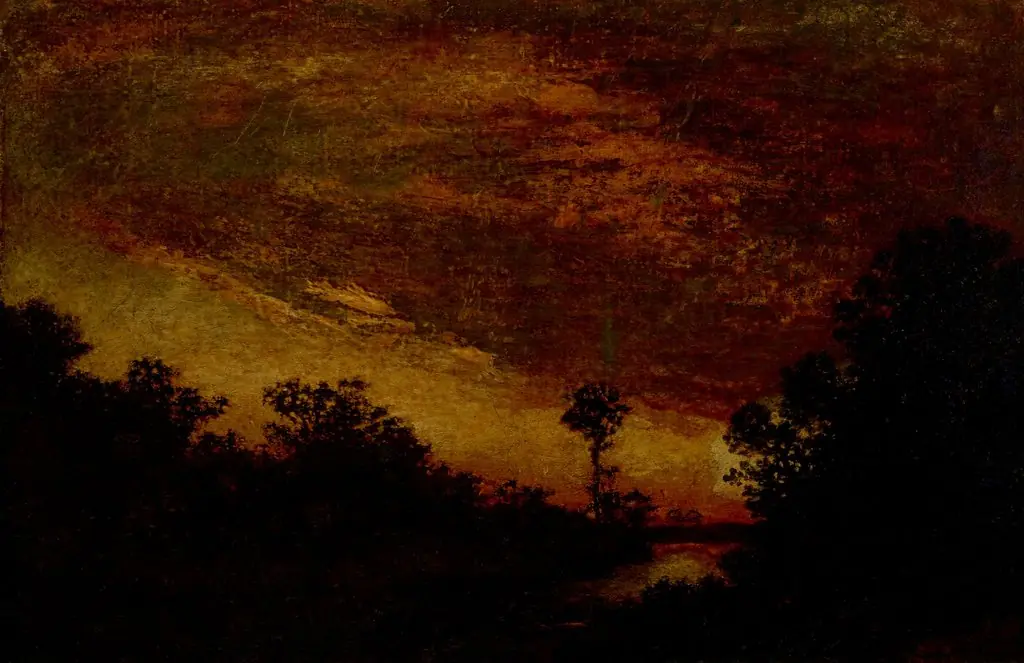
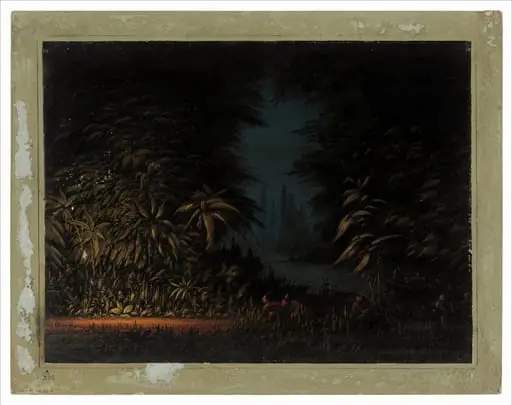
Ignis Fatuus, Rio Uruguay is an oil painting by the Impressionist artist George Catlin. It dates from 1862 and is held in the collection of the National Gallery of Art.
About this work
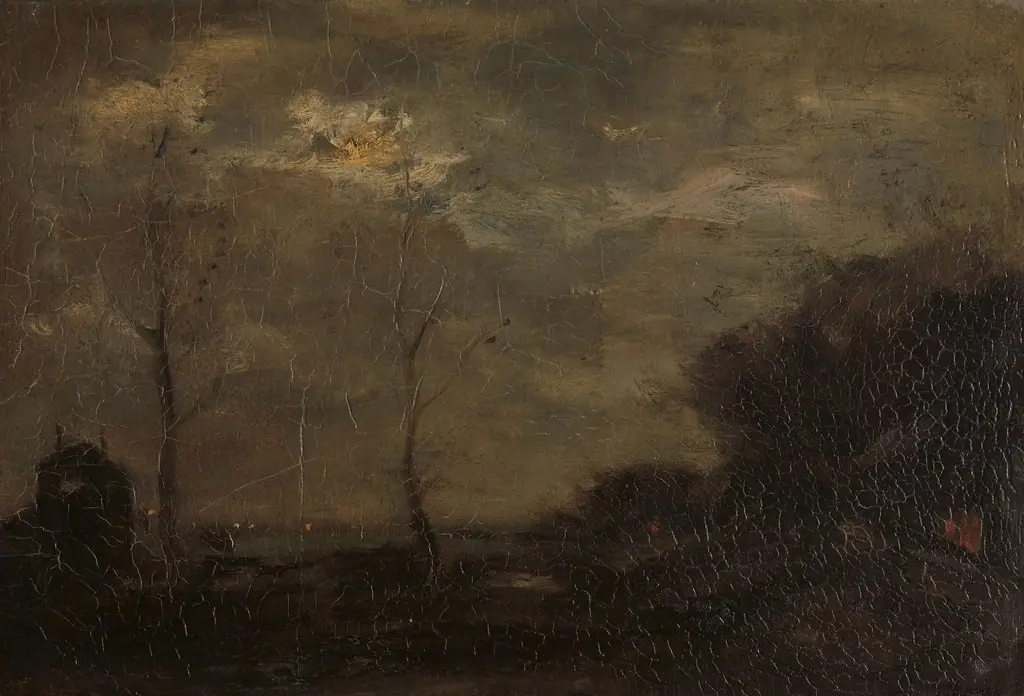
This painting shows a single tree rising from dark water under a stormy sky.
This painting shows a single tree rising from dark water under a stormy sky. George Catlin painted this in 1854 but changed it in 1869. The tree’s twisted trunk glows against the gloom.
Catlin often painted Native American life but this scene is different. He called it Ignis Fatuus, Latin for "foolish fire." Dark swirls suggest danger lurking beneath.
Look for the glow in the trunk. If you like this, check out Catlin, George.
Subject & Meaning
George Catlin's 1865 painting, Ignis Fatuus, Rio Uruguay, is a landscape work that depicts a tree situated along the Rio Uruguay. The title references the phenomenon of ignis fatuus, or "foolish fire," a natural optical illusion often associated with swamps or marshes that historically symbolized deception or misleading guidance. While the visual composition centers on the solitary tree within its environment, the title imbues the scene with a layer of symbolic meaning regarding illusion and the elusive nature of truth in the landscape.
The work serves as a visual meditation on this specific natural occurrence, merging the observed reality of the tree with the metaphorical weight of the title.
Technique & Style
The work is executed in oil on card mounted on paperboard, a modest support typical of Catlin’s portable field practice. Handling is fluid, with loose, descriptive brushwork that defines foliage and river reflections without tight delineation. The composition emphasizes a lone tree silhouetted against a luminous sky, its slender trunk and spreading branches rendered in broad, rhythmic strokes to convey atmosphere rather than botanical precision.
Warm ochres and greens dominate the palette, modulated by cooler blues in the water and sky, creating a shimmering effect consistent with Catlin’s observations of South American light.
History & Provenance
George Catlin painted Ignis Fatuus, Rio Uruguay in 1865; the work passed by descent to his daughters Clara Gregory Catlin, Louise Catlin Kinney, and Elizabeth Wing Catlin, was purchased in 1912 from Elizabeth Wing Catlin by the American Museum of Natural History, sold in 1959 through Kennedy Galleries in New York to Paul Mellon, and was gifted to the National Gallery of Art in 1965.
The painting measures 46.6 cm in height and 62.2 cm in width and is housed in the National Gallery of Art in Washington, D.C.
The painting Ignis Fatuus, Rio Uruguay is part of the National Gallery of Art's collection in Washington, D.C. It was acquired in 1965 as a gift to the institution. Prior to its donation, the work passed through several owners: it descended within George Catlin's family to his daughters Clara Gregory Catlin, Louise Catlin Kinney, and Elizabeth Wing Catlin, was purchased from Elizabeth Wing Catlin in 1912, and then sold in 1959 through Kennedy Galleries in New York to Paul Mellon of Upperville, Virginia.
Context
George Catlin painted Ignis Fatuus, Rio Uruguay in 1865, an oil on card mounted on paperboard classified as a landscape depicting a tree. The work entered the National Gallery of Art collection through a documented chain of descent from the artist to his daughters and subsequent sale to Paul Mellon in 1959, culminating in a 1965 gift to the institution.
Scholarly attention to the painting remains limited, though its inclusion in the National Gallery of Art's holdings underscores its significance within Catlin's landscape output. The work is situated within the artist's broader exploration of natural subjects, particularly arboreal forms rendered in the tradition of 19th-century American landscape painting.
Overview
Ignis Fatuus, Rio Uruguay is an oil painting executed on card that has been mounted on paperboard. The composition presents a solitary, twisted tree emerging from dark water beneath a storm‑filled sky, its trunk illuminated with an inner glow that contrasts with the surrounding gloom.
Own this work as a print
Artist & collection

Artist
George Catlin ( KAT-lin; July 26, 1796 – December 23, 1872) was an American lawyer, painter, author, and traveler, who specialized in portraits of Native Americans in the American frontier.

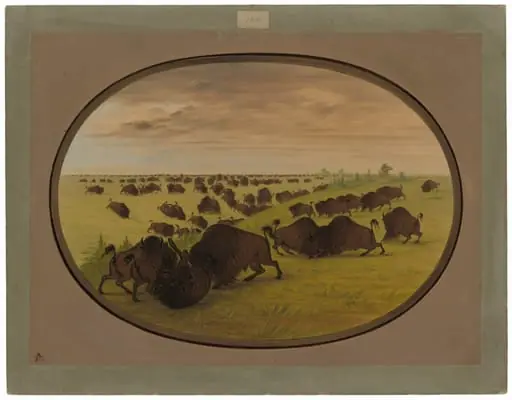 Bulls Fighting
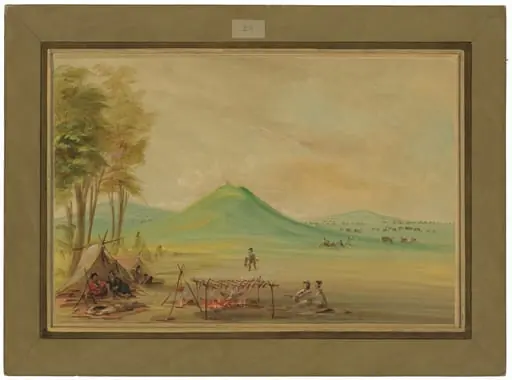 Expedition Encamped on a Texas Prairie. April 1686
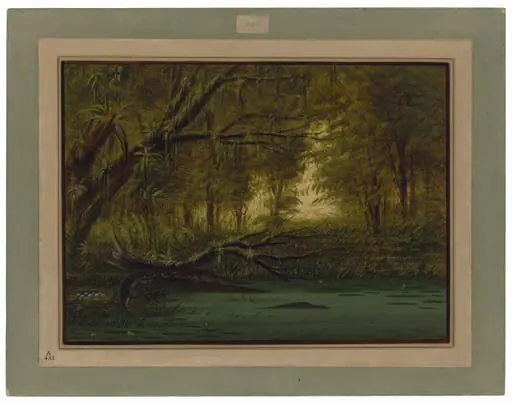 An Alligator's Nest
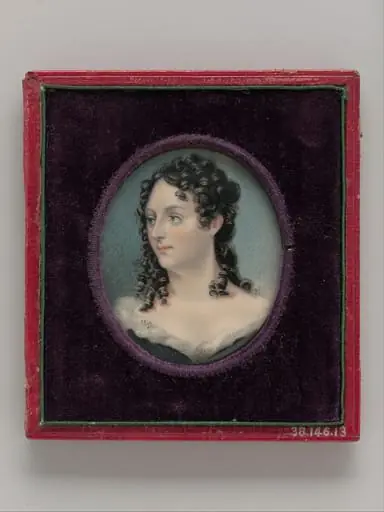 Mrs. George Catlin (Clara Bartlet Gregory)
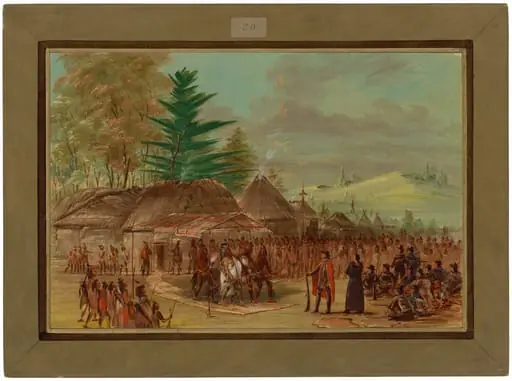 Chief of the Taensa Indians Receiving La Salle. March 20, 1682
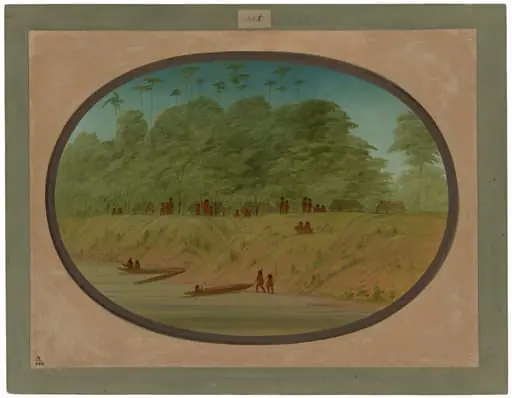 A Small Village - Payaguas Indians
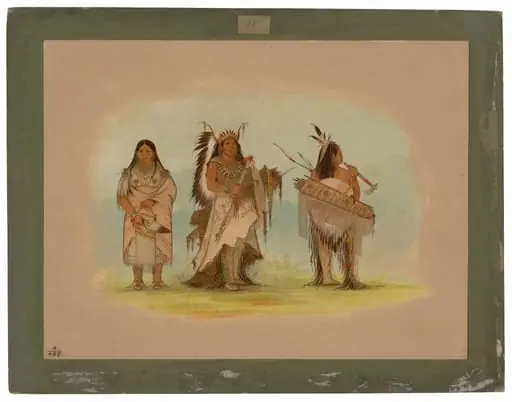 Omaha Chief, His Wife, and a Warrior
 Father Hennepin Leaving the Mississippi to Join La Salle. May 8, 1680