Artwork
鳥文斎栄之画 「柳貝」|The Willow Shell (Yanagi-kai), from an Untitled Set of Beauty Prints on the Theme of Shells
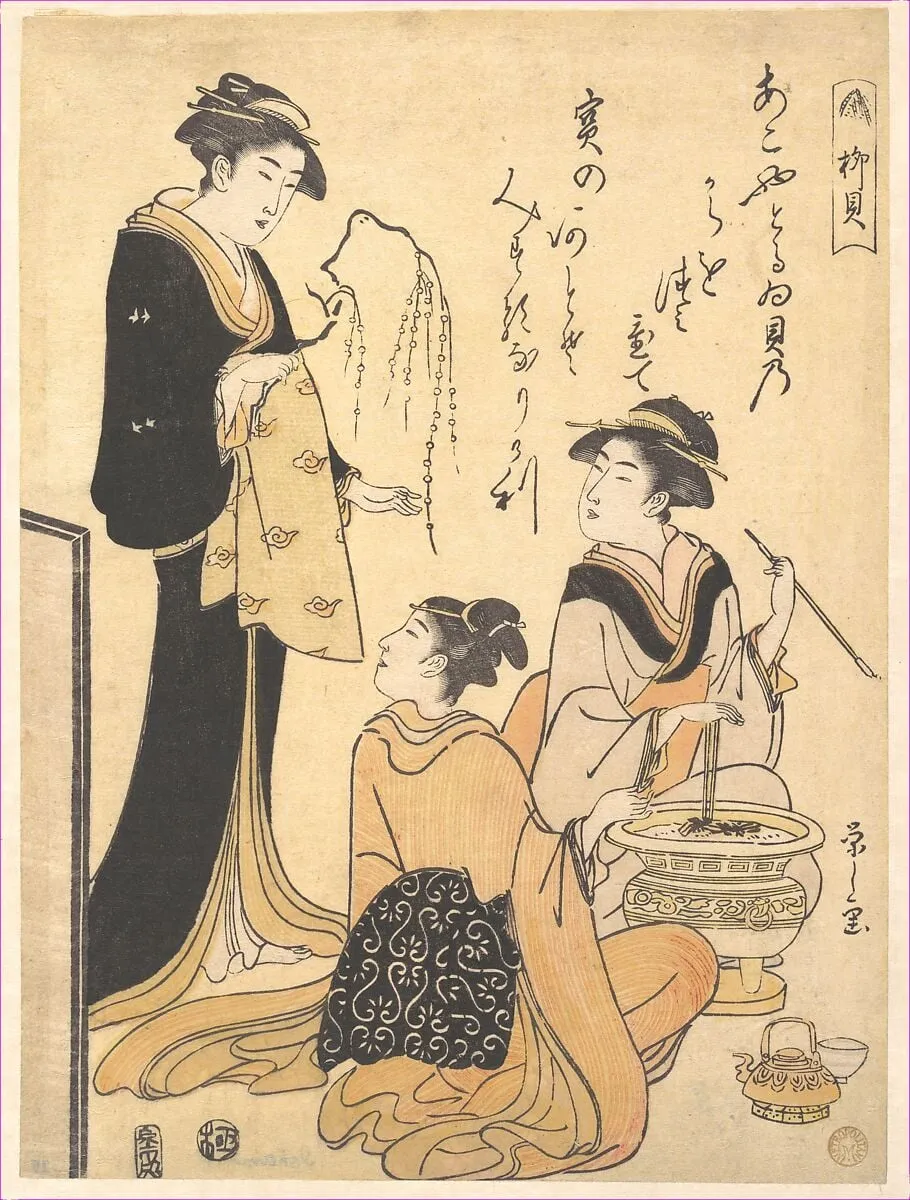
鳥文斎栄之画 「柳貝」|The Willow Shell (Yanagi-kai), from an Untitled Set of Beauty Prints on the Theme of Shells is an ink print by the Romanticist artist Chôbunsai Eishi. It dates from 1791 and is held in the collection of the Metropolitan Museum of Art.
About this work
Overview
Around 1791, he created a series of bijin-ga prints centered on shells, one of which is titled The Willow Shell.
Chōbunsai Eishi, originally a samurai retainer with a stipend from the Tokugawa shogunate, abandoned his official role to dedicate himself to painting and printmaking. Around 1791, he created a series of bijin-ga prints centered on shells, one of which is titled The Willow Shell. This woodblock print, rendered in ink and color on paper, reflects his transition from Kano-school training to a distinctive ukiyo-e style marked by elegance and restraint.
Subject & Meaning
The scene depicts three women engaged in quiet, intimate activities within a domestic space. One offers a necklace resembling a shell, another holds a patterned pouch, and the third prepares tea while holding a brush. The shell motif connects the figures to natural forms and seasonal associations, suggesting a poetic contemplation of beauty, transience, and refined leisure, common themes in late 18th-century Japanese aesthetic culture.
Technique & Style
Eishi employed delicate linework and muted, layered pigments to convey texture and movement in the figures’ garments. His figures are elongated and poised, with subtle facial expressions and minimal background detail, emphasizing stillness and grace. The composition avoids dramatic action, instead focusing on the quiet rhythm of daily ritual, a hallmark of his mature bijin-ga style that diverged from the more theatrical conventions of earlier ukiyo-e.
History & Provenance
Created during Eishi’s early career as a professional artist, the print was part of an unpublished series on shells, likely intended for a limited audience. It entered the collection of The Metropolitan Museum of Art through documented acquisitions in the 20th century, preserving its original state. Its survival as a single print from an otherwise unrecorded set underscores its rarity and the fragmented nature of many ukiyo-e series from the period.
Context
In the 1790s, ukiyo-e artists increasingly turned to refined, introspective subjects as Edo’s urban culture matured. Shell-themed bijin-ga reflected a broader literary and artistic trend of associating women with natural elements, drawing from classical poetry and courtly aesthetics. Eishi’s work, though rooted in popular print culture, carried the gravitas of aristocratic training, bridging samurai sensibility with merchant-class tastes.
Legacy
Eishi’s influence extended through his emphasis on quiet dignity in female portraiture, inspiring later artists to prioritize subtlety over spectacle. While his shell series remains obscure compared to his more famous works, The Willow Shell exemplifies his unique synthesis of Kano discipline and ukiyo-e accessibility. Today, it stands as a quiet testament to the evolving sophistication of late Edo-period printmaking.
Artist & collection

Artist
Chōbunsai Eishi (鳥文斎 栄之; 1756–1829) was a Japanese ukiyo-e artist. His last name was Hosoda (細田). His first name was Tokitomi (時富). His common name was Taminosuke (民之丞) and later Yasaburo (弥三郎). Pupil of Kano Eisen'in…

 Three Gods of Good Fortune Visit the Yoshiwara; or “Scenes of Pleasure at the Height of Spring”
 蜀山人(大田 南畝)賛 雪・月・花図 |Snow, Moon, and Cherry Blossoms (Yoshiwara in Three Seasons)
 Untitled
 Untitled
 Untitled
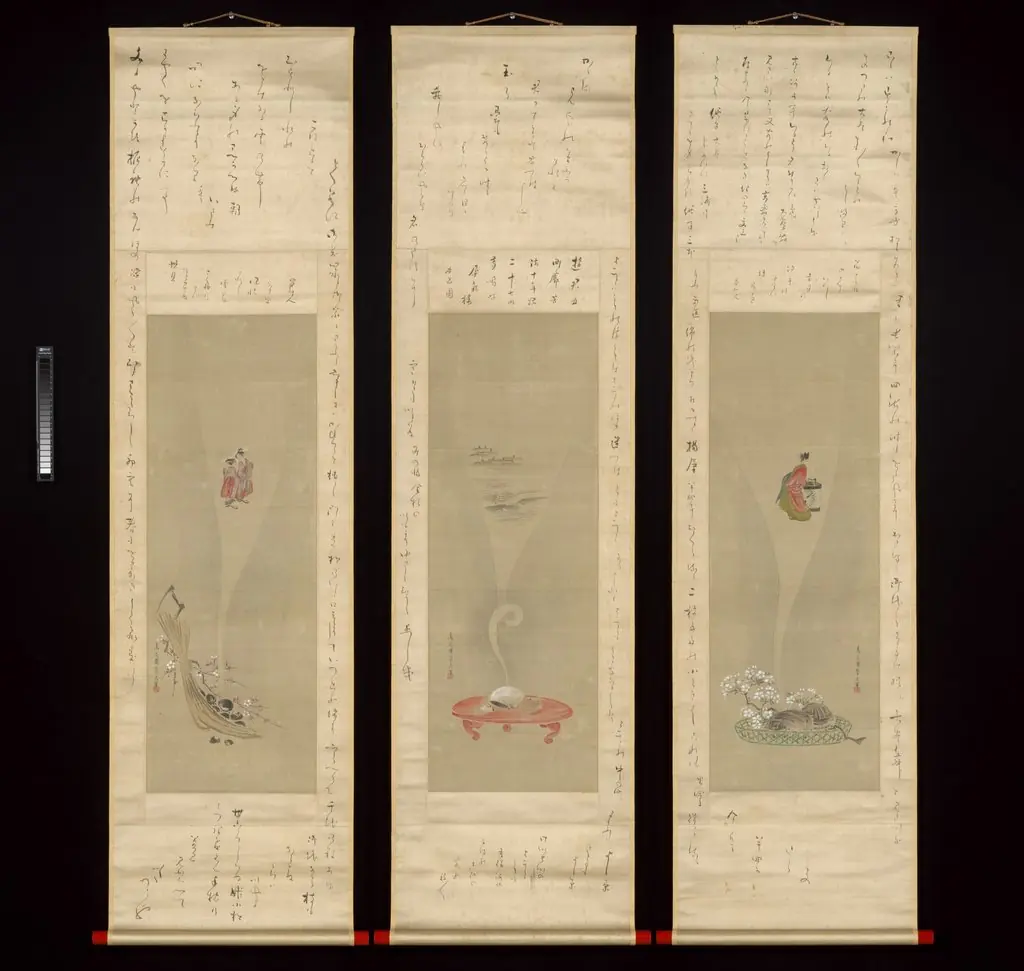 Shellfish and Apparitions of the Yoshiwara Pleasure Quarter
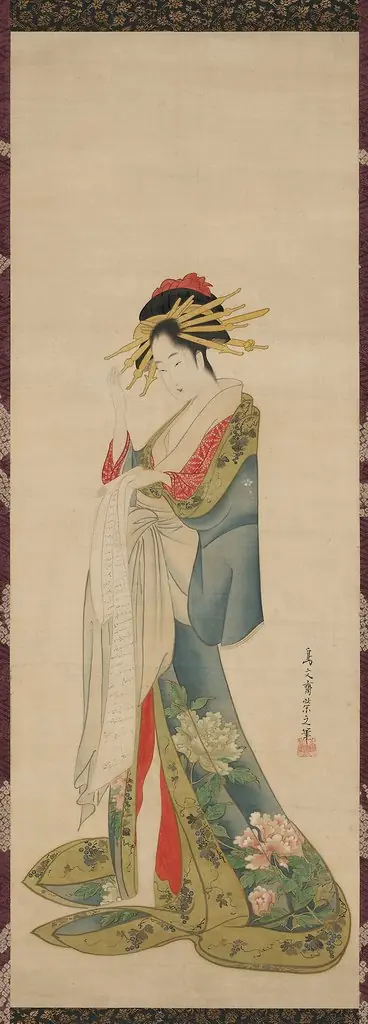 A Courtesan Reading a Letter
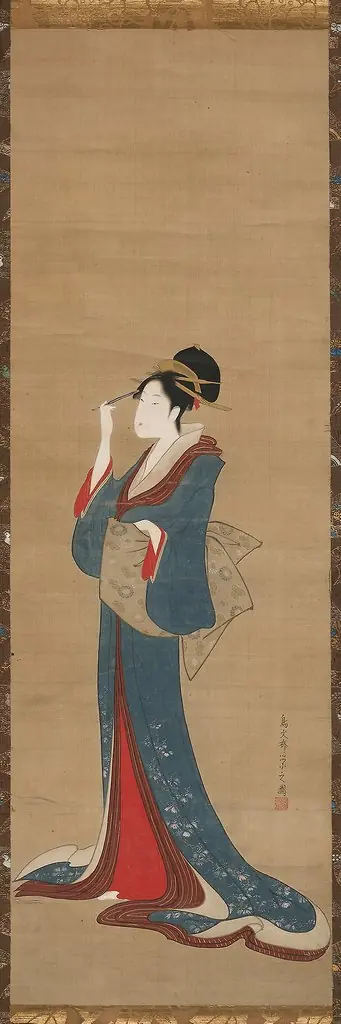 Beauty Replacing Her Hairpin
- Untitled
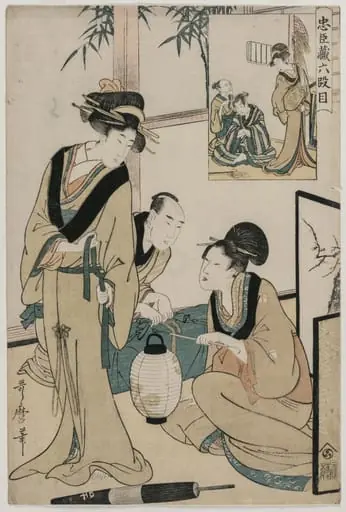 Chushingura: Act VI of The Storehouse of Loyalty
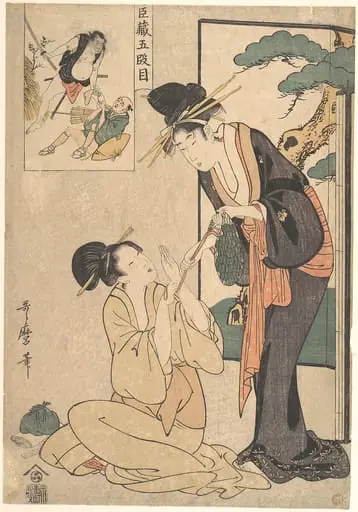 忠臣蔵五段目|A Woman Snatching a Bag of Sweetmeats from Her MotHer
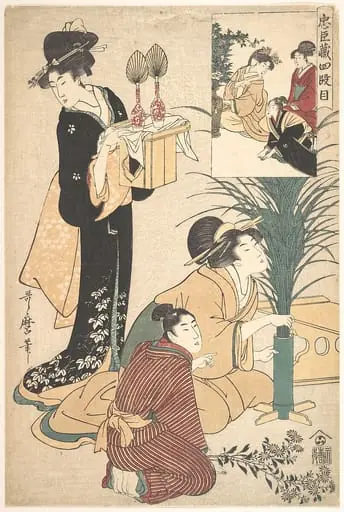 忠臣蔵四段目|A Woman and a Man Arranging Flowers for the Tsukimi (Moon Festival)
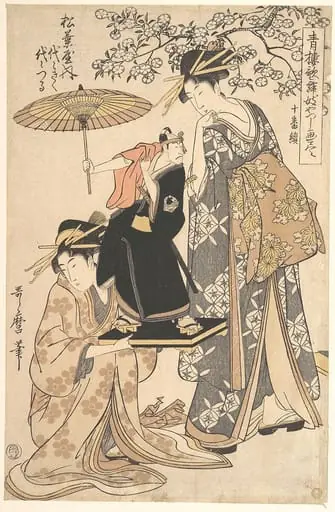 青楼歌舞妓やつし画尽 十番続|The Oiran Yoyogiku of Matsubaya Standing under a Cherry Tree
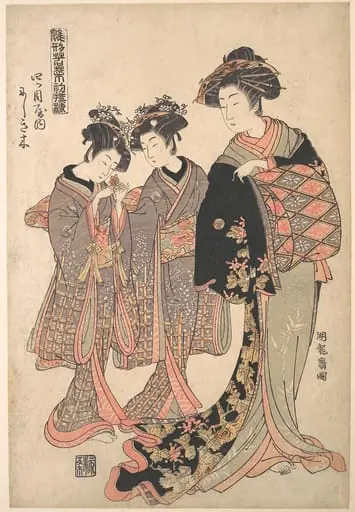 『雛形若菜初模様 四ツ目屋内 にしき木』|The Courtesan Nishikigi of the Yotsumeya Brothel, from the series “A Pattern Book of the Year’s First Designs, Fresh as Spring Herbs” (“Hinagata wakana hatsu moyō”)
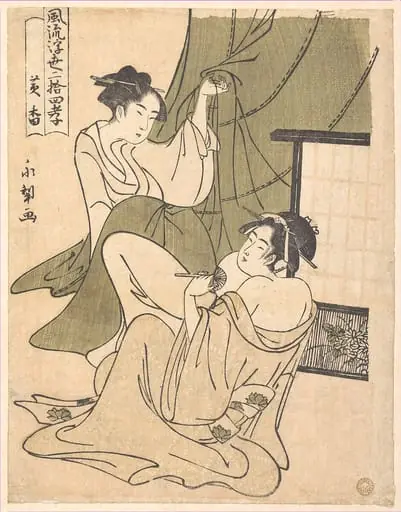 Untitled
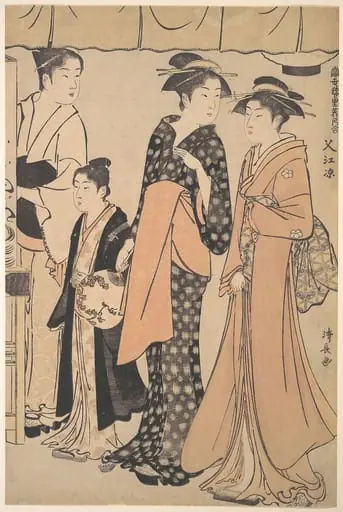 Sako no Suzumi|Cooling Off at Nakazu
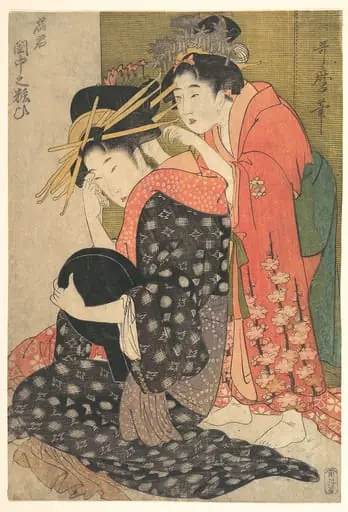 名君 閨中の粧ひ|The Oiran Yoso-oi Seated at Her Toilet
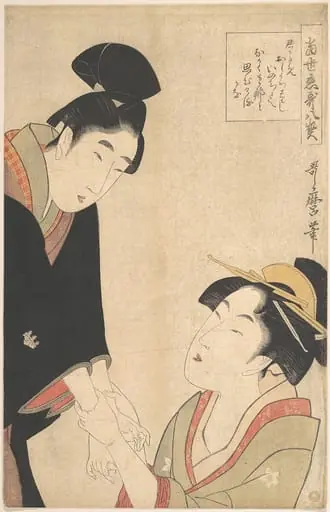 当世恋歌八契 お七と吉三郎|The Lovers Oshichi and Kichisaburo
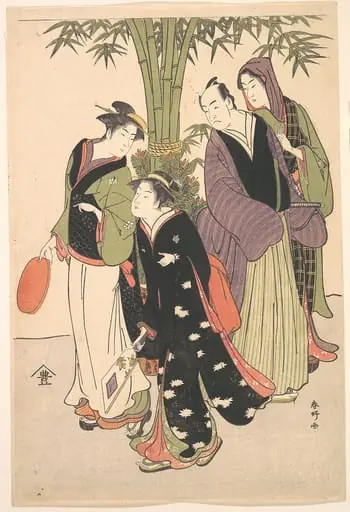 勝川春好画 三代目瀬川菊之丞・二代目市川門之助|Kabuki Actors Segawa Kikunojō III and Ichikawa Monnosuke II and Two Courtesans Celebrating the New Year
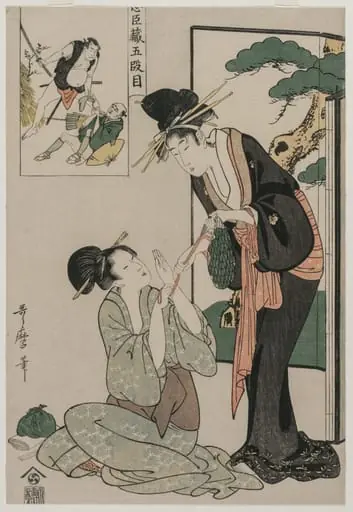 Chushingura: Act V of The Storehouse of Loyalty