Artwork
名君 閨中の粧ひ|The Oiran Yoso-oi Seated at Her Toilet
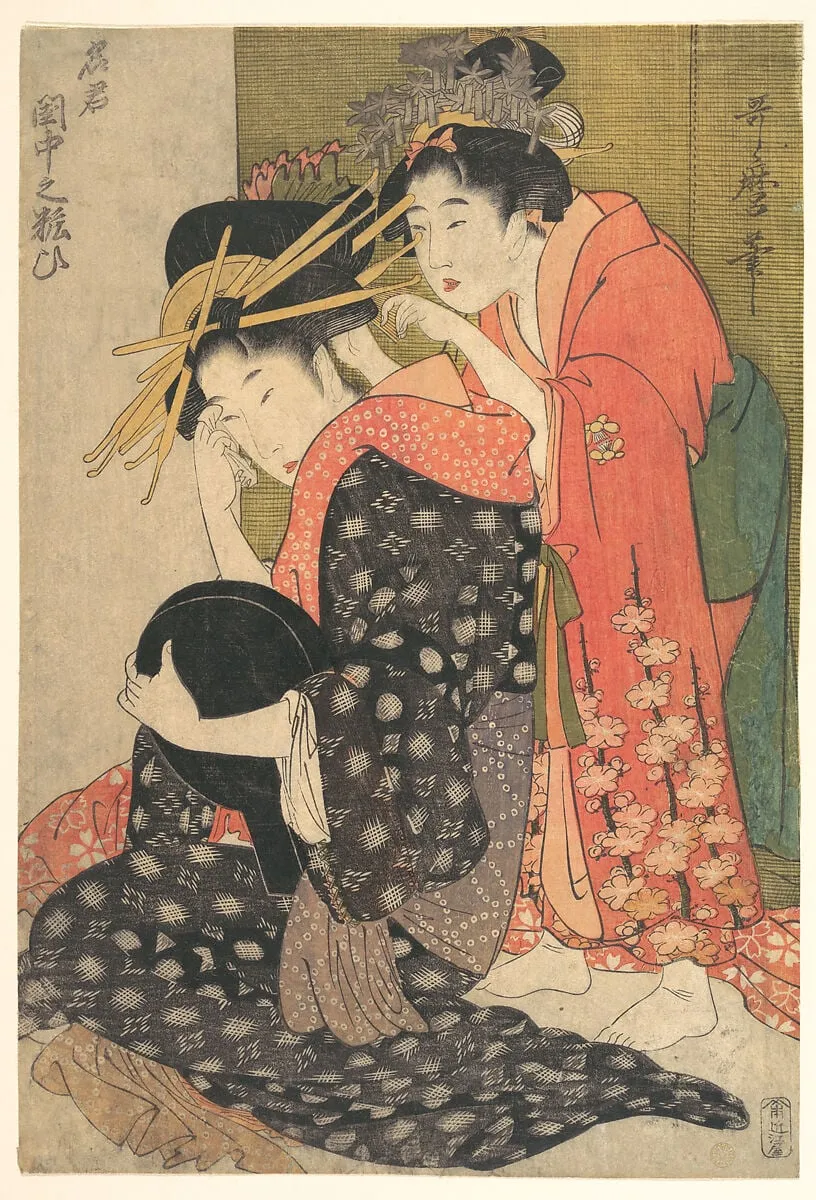
名君 閨中の粧ひ|The Oiran Yoso-oi Seated at Her Toilet is an ink print by the Romanticist artist Kitagawa Utamaro. It dates from 1799 and is held in the collection of the Metropolitan Museum of Art. Kitagawa Utamaru’s woodblock print, dated around 1799, portrays a courtesan seated at a low table while attending to her hair.
About this work
Subject & Meaning
Yoso-oi is depicted holding a hand mirror and adorned with kanzashi hair ornaments, emphasizing the meticulous grooming practices of high-ranking courtesans.
The work portrays the oiran Yoso-oi engaged in her toilet rituals within a bedroom setting. As a bijin-ga (picture of a beautiful woman), the print focuses on the subject's appearance and the intimate act of applying makeup. Yoso-oi is depicted holding a hand mirror and adorned with kanzashi hair ornaments, emphasizing the meticulous grooming practices of high-ranking courtesans.
The inclusion of a kamuro, or young attendant, alongside the oiran highlights the hierarchical structure and daily life within the pleasure quarters. Through these specific iconographic elements, the image represents the idealized beauty and refined elegance associated with the ukiyo-e tradition.
Technique & Style
The print was produced using woodblock technique with ink and color on paper. Utamaro renders the figure in a bijin-ga style, emphasizing delicate line work and flat areas of color to convey the intimate setting of a woman arranging her hair with a hand mirror, kanzashi hairpin, and subtle makeup. The composition balances decorative detail with a restrained palette, highlighting the sitter’s poised posture and the reflective surface of the mirror.
History & Provenance
The work was created in 1799 as a woodblock print by Kitagawa Utamaro, depicting the courtesan Yoso-oi seated at her toilet with a hand mirror, kanzashi, and make-up accessories. Belonging to the ukiyo-e bijin-ga genre, it measures 37.1 cm in height by 25.2 cm in width and is held in the collection of the Metropolitan Museum of Art. No exhibition history is recorded in the available sources.
Overview
Kitagawa Utamaru’s woodblock print, dated around 1799, portrays a courtesan seated at a low table while attending to her hair. Rendered in ink and color on paper, the composition captures a moment of private preparation, emphasizing the elegance of the figure’s attire and the intimacy of the setting.
Context
During the late eighteenth century, ukiyo-e prints frequently depicted scenes of urban life in Edo, with bijin-ga, images of beautiful women, being a popular genre. Utamara’s work stands out for its psychological depth, employing visual devices such as mirrors to explore themes of identity and perception within the pleasure quarters.
Artist & collection


 Untitled
 Untitled
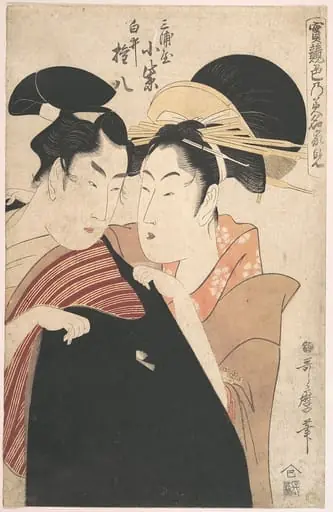 実競色乃美名家見 三浦屋小紫 白井権八|The Lovers Miura-ya Komurasaki and Shirai Gonpachi.
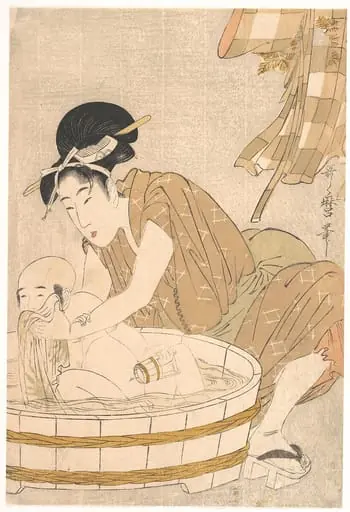 行水|Bathtime (Gyōzui)
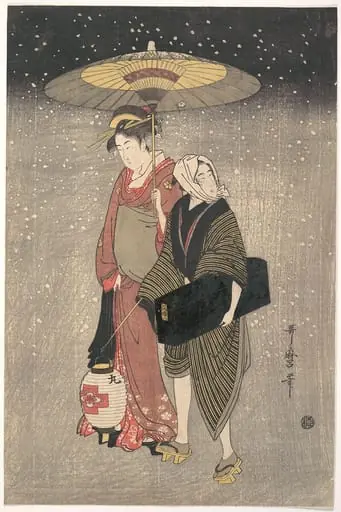 Untitled
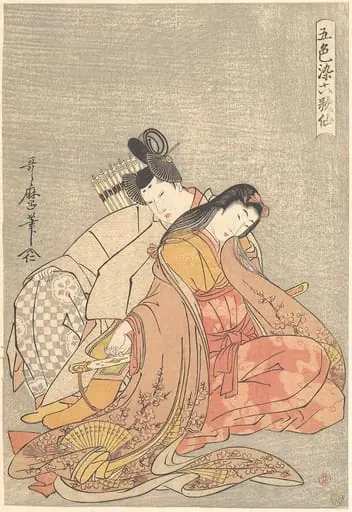 『五色染六歌仙』 在原業平と小野小町|“The Poet Ariwara no Narihira (825–880) and Ono no Komachi,” from the series Five Colors of Love for the Six Poetic Immortals (Goshiki-zome rokkasen)
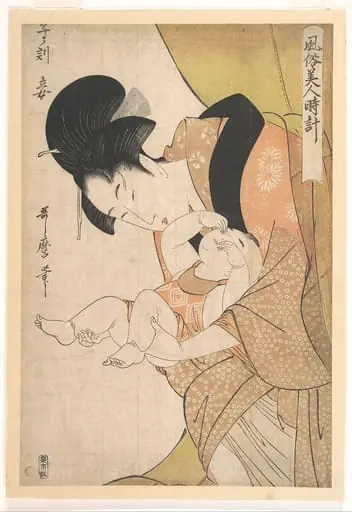 風俗美人時計 子ノ刻 妾|Midnight: Mother and Sleepy Child
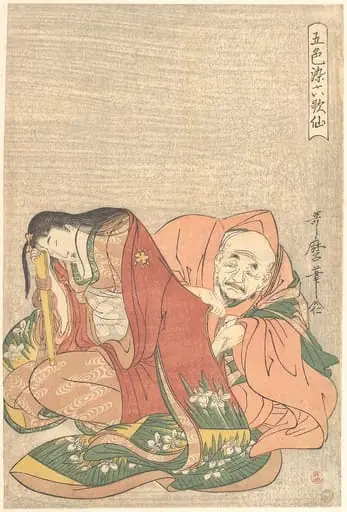 『五色染六歌仙』 僧正遍昭|“The Poet Sōjō Henjō (816–890) Slipping a Letter into a Woman’s Sleeve,” from the series Five Colors of Love for the Six Poetic Immortals (Goshiki-zome rokkasen)
- Untitled
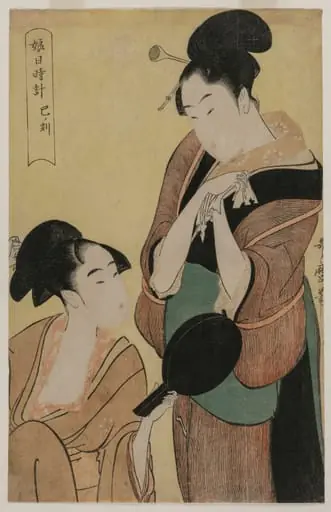 The Hour of the Snake (from the series A Clock for Young Women)
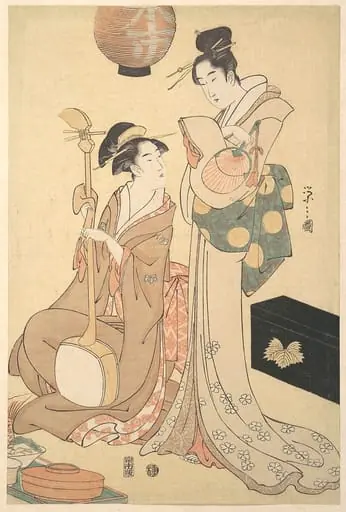 Untitled
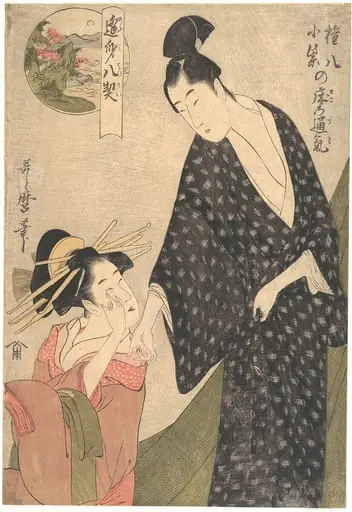 Gompachi Komurasaki no Toko no Tsuki|逢身八契 権八小紫の床の通気|Shared Feelings in the Bedchamber of Komurasaki and Gompachi
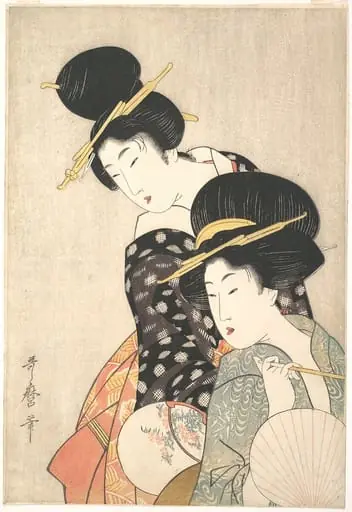 Untitled
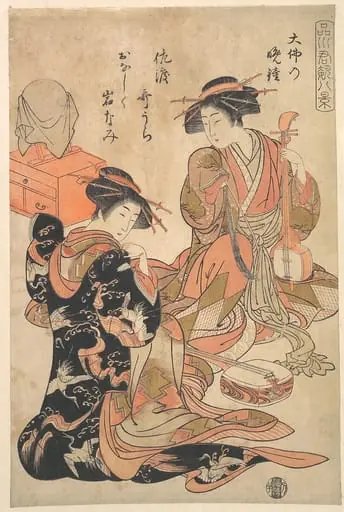 Daibutsu no bansho|Vesper Bell of the Temple of Great Buddha
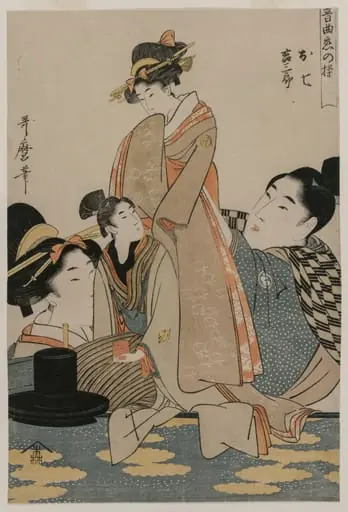 Oshichi and Kichisaburo (from the series Music on the Theme of Constancy in Love)
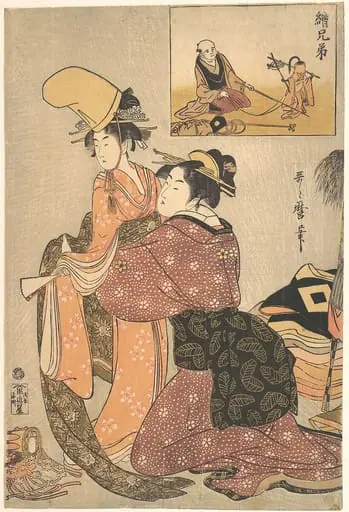 喜多川歌麿画 絵兄弟娘道成寺 見立猿廻し 「絵兄弟」|A Woman Dressing a Girl for a the Kabuki Dance “Musume Dojōji,” with “Brother Picture” (E-kyōdai) of a Monkey Trainer
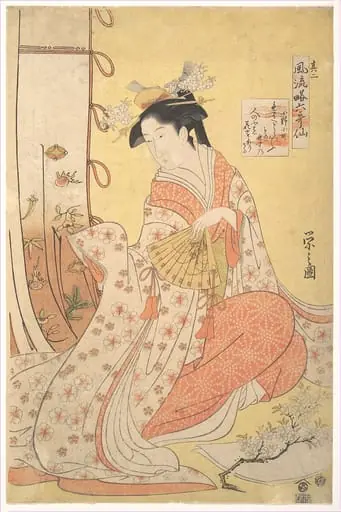 鳥文斎栄之画 「風流略六哥仙 其の二」小野小町|Ono no Komachi: Number Two (Sono ni), from the series Stylish Parodies of the Six Poetic Immortals (Fūryū yatsushi rokkasen)
 Untitled
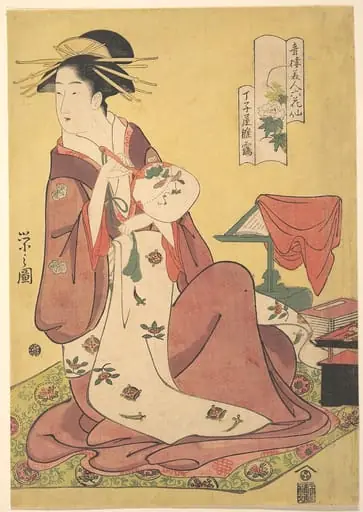 鳥文斎栄之画 「青楼美人六花仙 丁子屋雛鶴鸖」|The Courtesan Hinazuru of the Chōjiya Brothel (Chōjiya Hinazuru), from the series Beauties of the Pleasure Quarters as Six Floral Immortals (Seirō bijin rokkasen)
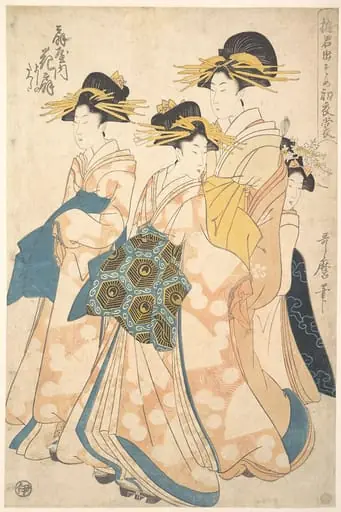 遊君出そめ初衣裳 扇屋内花扇|The Oiran Hanaogi of Ogiya attended by Two Shinzo and Her Kamuro Yoshino
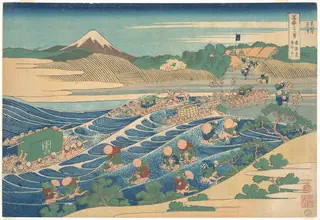 Studied in the Edo/Japonisme course