Artwork
The Flower Girl
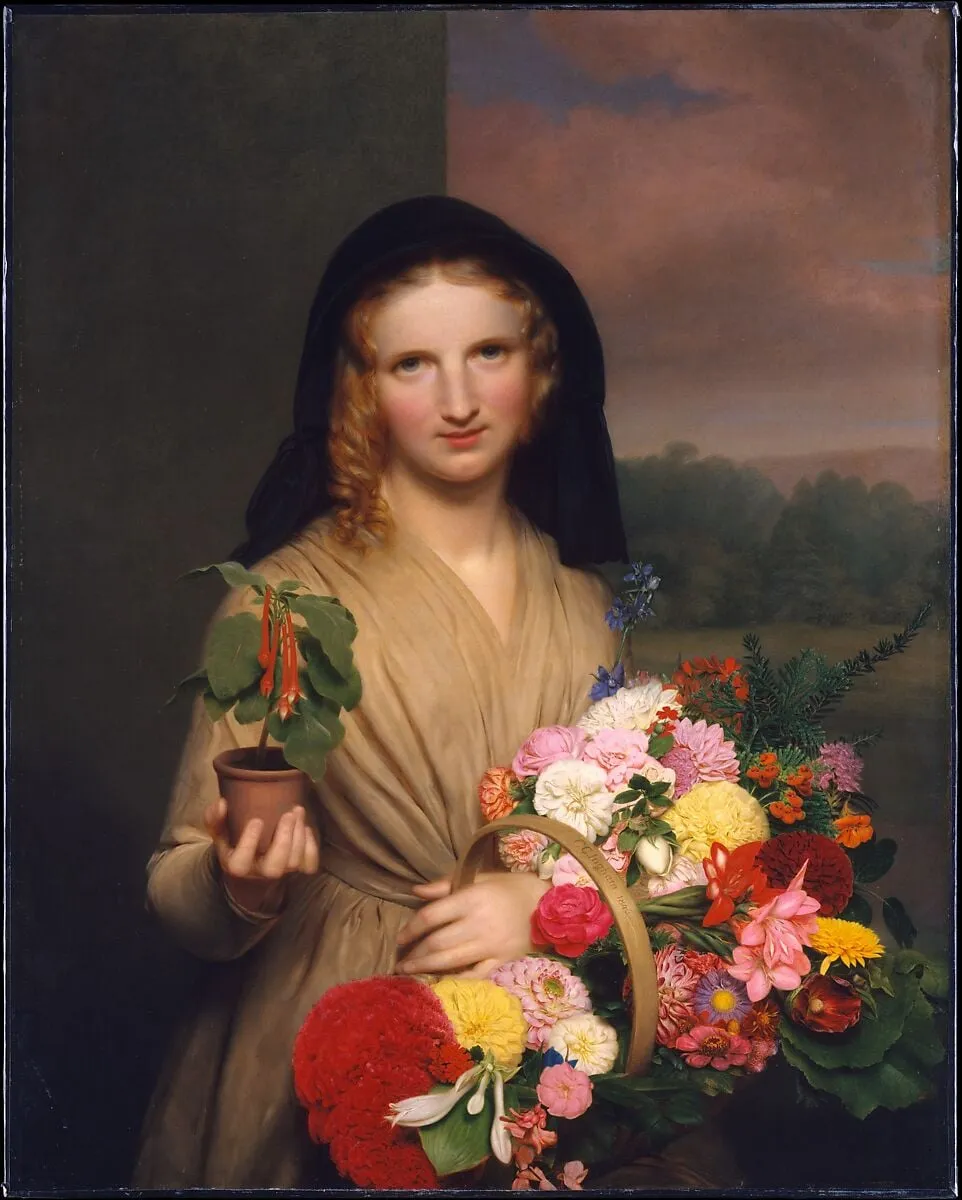
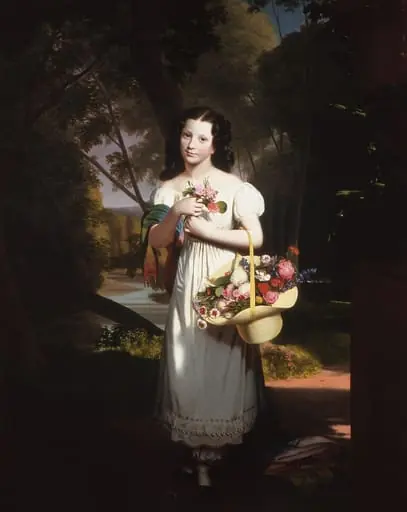
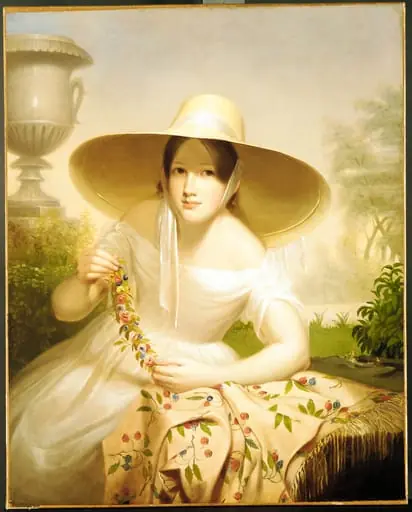
The Flower Girl is an oil painting by the American Folk Art artist Charles Cromwell Ingham. It dates from 1846 and is held in the collection of the Metropolitan Museum of Art.
About this work
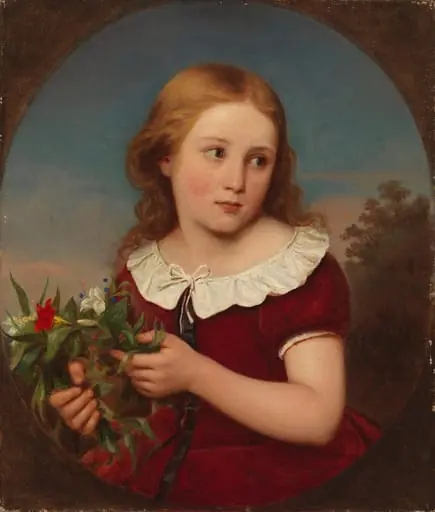
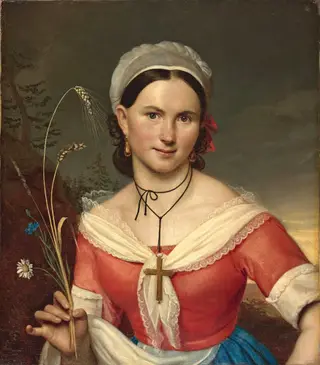
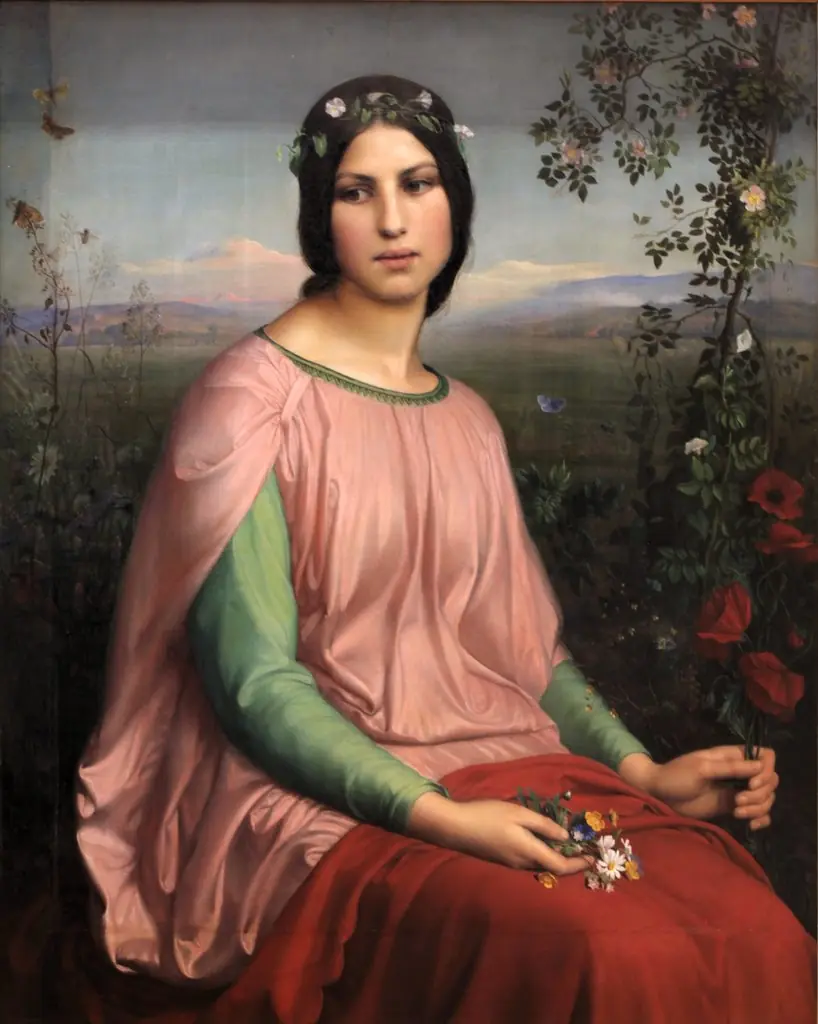
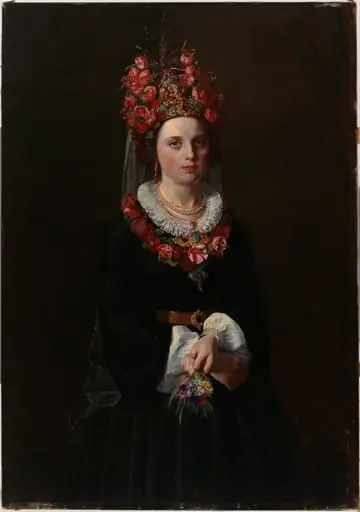
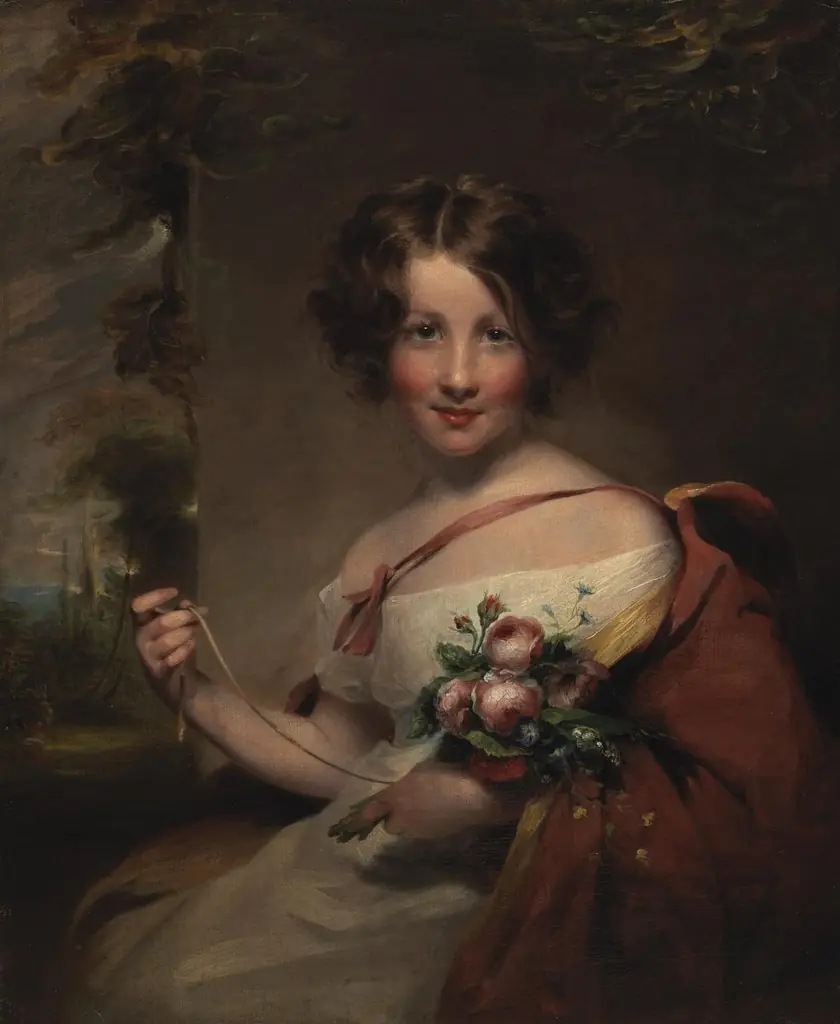
A young girl in a white dress holds a small bouquet of red flowers, her face serious rather than smiling, against a plain dark ground. Ingham's strength is her eyes, alive and thoughtful instead of stiff, the red blooms almost too bright behind her. Oil on canvas, 1846.
Subject & Meaning
The subject is a young street vendor holding a bouquet, a common motif in mid-nineteenth-century genre painting.
The subject is a young street vendor holding a bouquet, a common motif in mid-nineteenth-century genre painting. The bouquet includes a potted fuchsia, which carries iconographic weight as a traditional emblem of the Roman goddess Flora and, by extension, of frustrated love. The direct gaze toward the viewer invites engagement and underscores the figure's presence as a market seller.
The work may also reflect Charles Cromwell Ingham's awareness of Bartolomé Esteban Murillo's earlier seventeenth-century painting of the same title, indicating a deliberate invocation of a long-standing iconographic tradition.
Technique & Style
Executed in 1846, The Flower Girl is an oil painting on canvas support by Charles Cromwell Ingham. The work measures 91.4 cm in height and 72.1 cm in width. Stylistically, the portrait depicts a young female street vendor holding a diverse bouquet and a potted fuchsia, a botanical symbol associated with the Roman goddess Flora and frustrated love.
Ingham employs a direct compositional approach, with the subject's gaze fixed squarely on the viewer. The artist's signature is located on the handle of the flower basket. While the painting shares thematic ground with Ingham's other depictions of street vendors, it is distinguished by its portrayal of a girl rather than a boy, potentially inspired by a 17th-century work of the same name by Bartolomé Esteban Murillo. The medium and handling reflect mid-19th-century portraiture traditions focused on realistic color and directional focus.
History & Provenance
The Flower Girl was painted by Charles Cromwell Ingham in 1846 in oil on canvas. It was first exhibited in 1847 while in the possession of Jonathan Sturges, who may have commissioned it, though the original patron remains unattributed. The painting entered the Metropolitan Museum of Art in 1902 as a gift from William Church Osborn, who later served as the museum's president from 1941 to 1947; it is recorded under accession number 02.18.1. The work has not been recorded in major traveling exhibitions in the sources provided.
Overview
Charles Cromwell Ingham, an Irish-American painter, created The Flower Girl in the mid-19th century. This oil on canvas work depicts a young woman holding a small bouquet. The painting is part of the collection at the Metropolitan Museum of Art, representing a period when Ingham was active in American art circles.
Artist & collection

Artist
Charles Cromwell Ingham (1796 or 1797 – 10 December 1863) was an Irish-American portrait painter and later a founder of the New York National Academy of Design.