Artwork
Cattle on a Riverbank
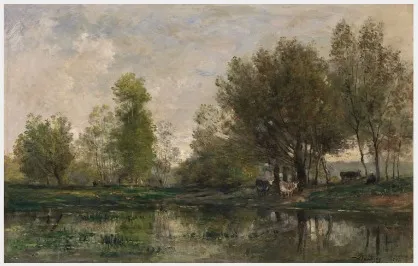
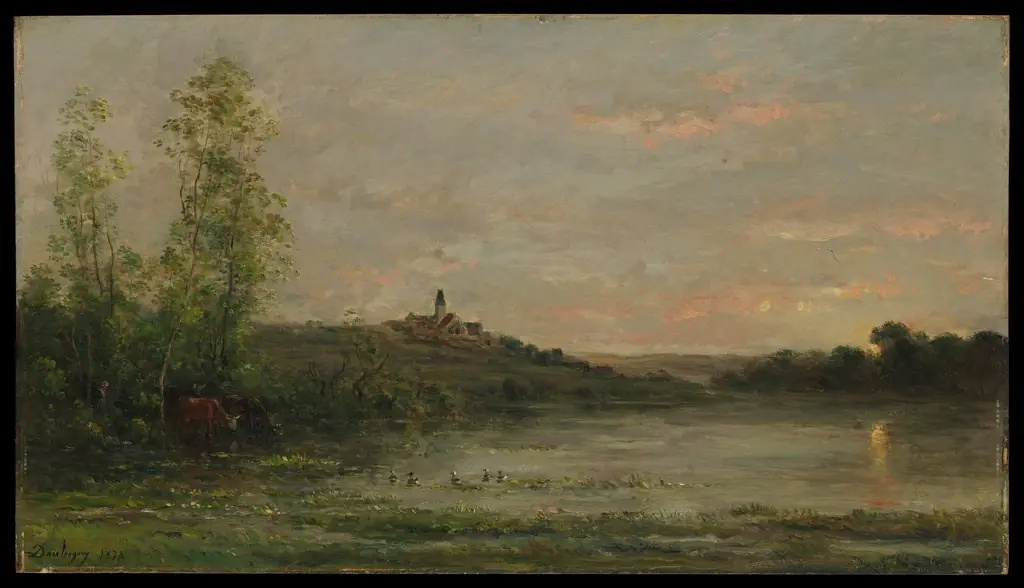
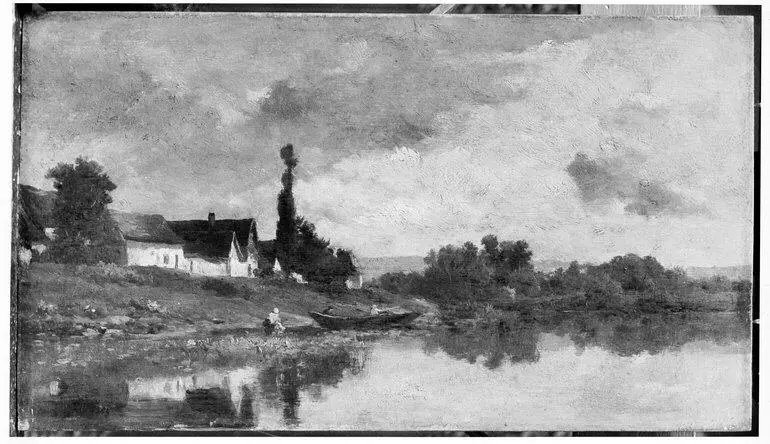
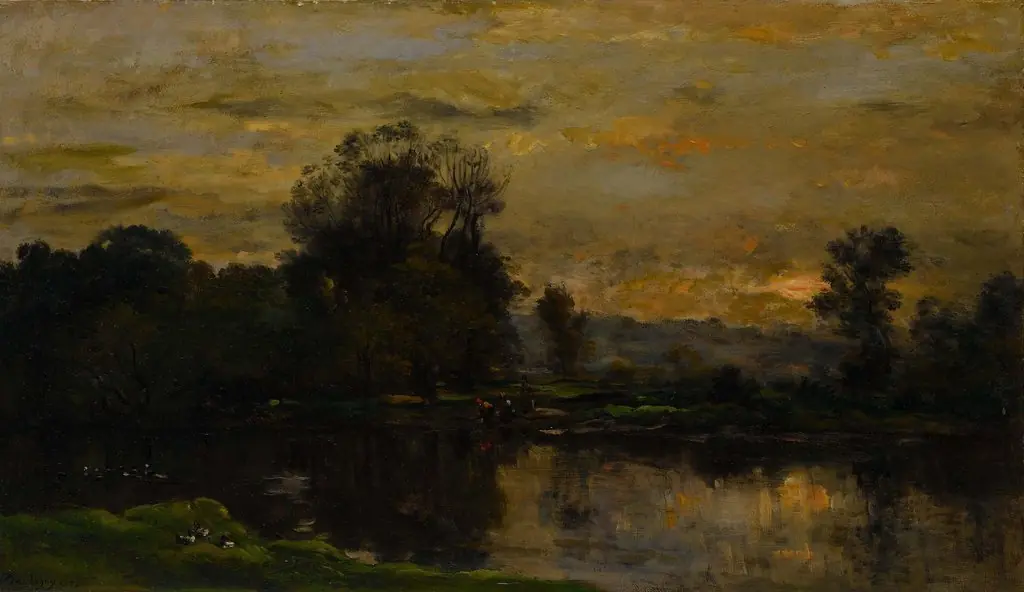
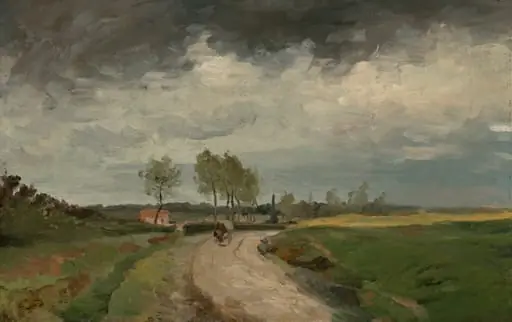
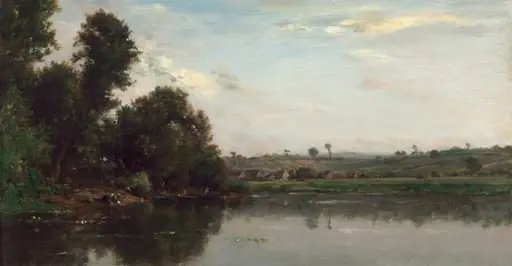
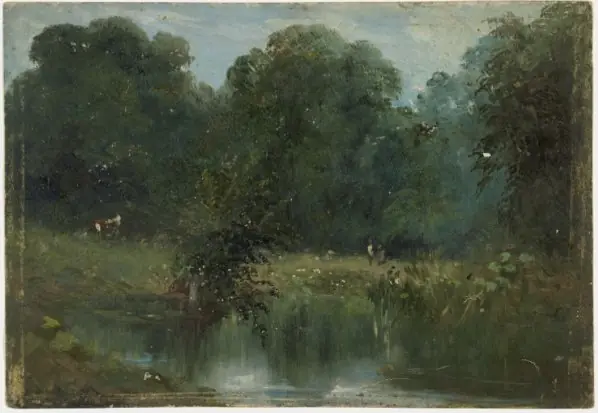
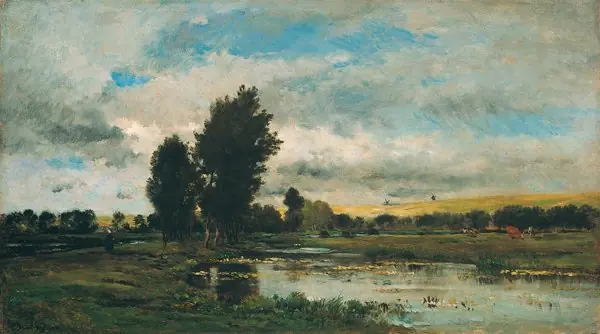
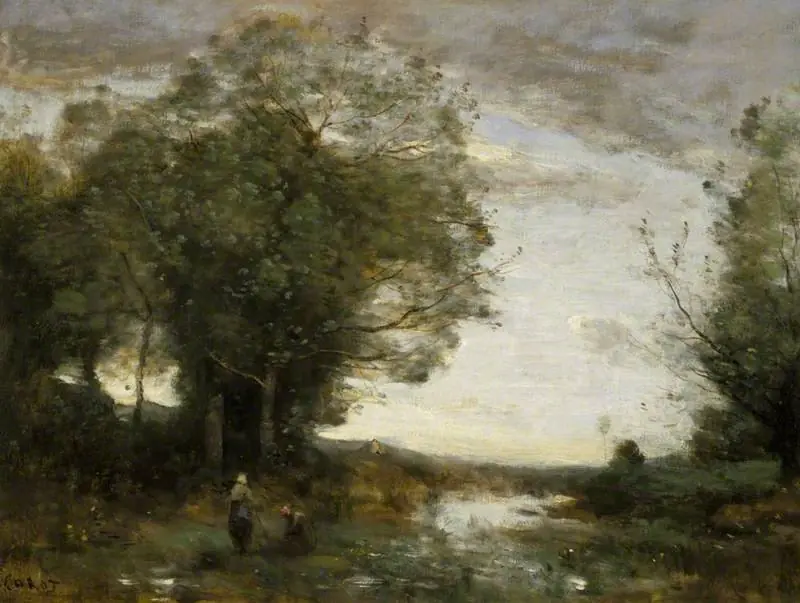
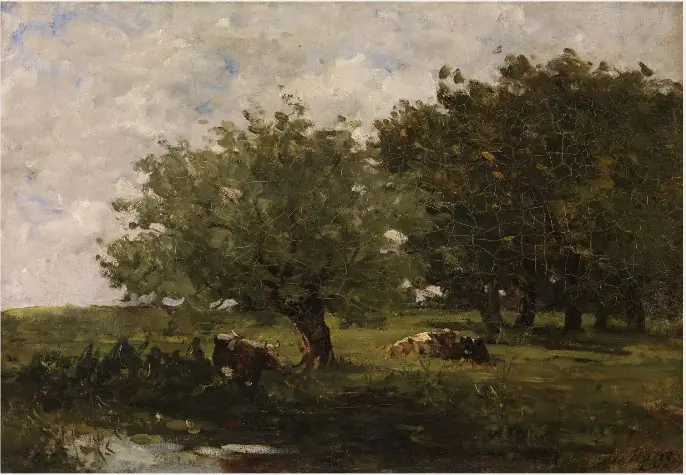
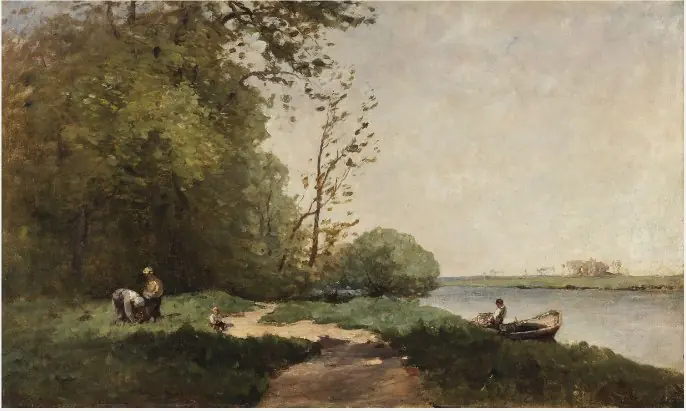
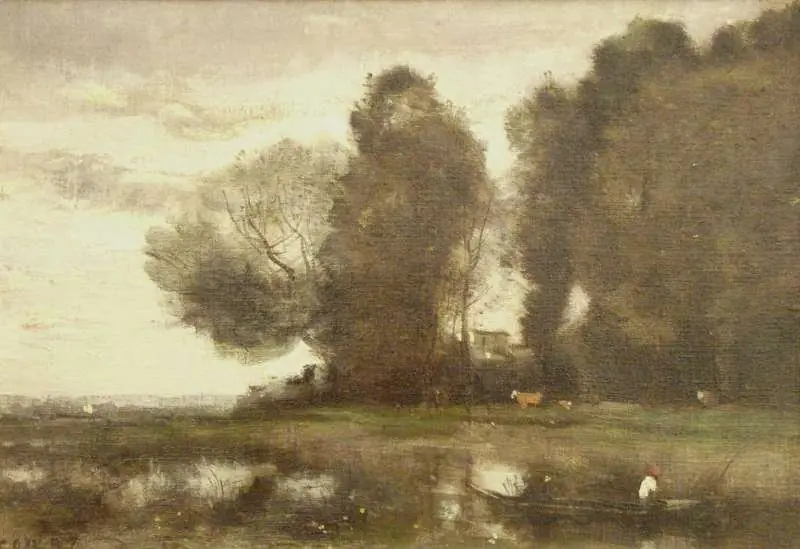
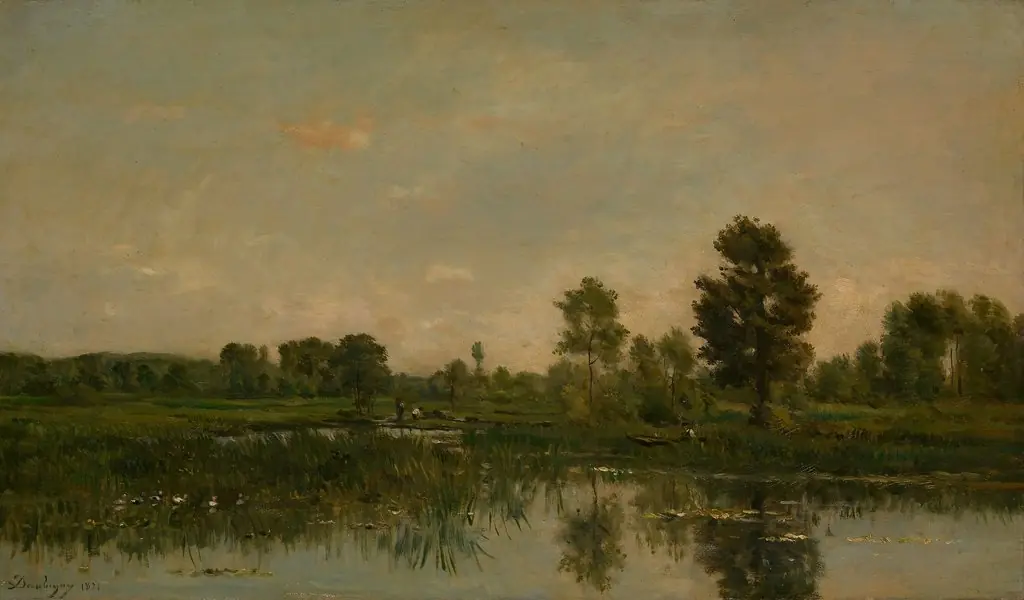
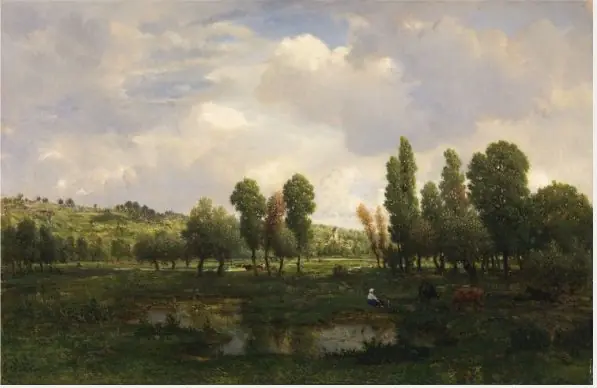
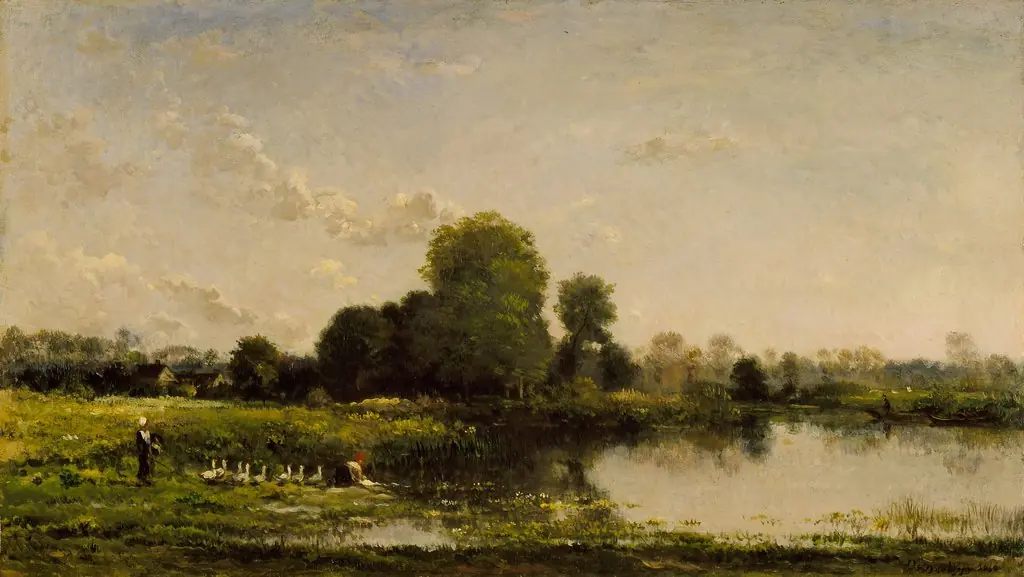
Cattle on a Riverbank is an unspecified painting by the Plein Air artist Charles François Daubigny. It dates from 1874 and is held in the collection of the National Gallery of Ireland. Painted in 1874 by Charles-François Daubigny, this landscape depicts a quiet riverside scene with grazing cattle.
About this work
Overview
Painted in 1874 by Charles-François Daubigny, this landscape depicts a quiet riverside scene with grazing cattle. Executed outdoors using direct observation, the work reflects Daubigny’s commitment to capturing nature as experienced in real time. His approach, rooted in the Barbizon tradition, emphasized naturalism over idealization, paving the way for later plein air practices.
Subject & Meaning
The painting presents cattle at rest along a gentle riverbank, their presence unobtrusive and integrated into the environment. Rather than dramatizing rural life, Daubigny focuses on its quiet rhythms, grazing animals, still water, and shifting light. The absence of human figures reinforces a sense of solitude, suggesting harmony between livestock and landscape rather than human dominion over it.
Technique & Style
The reflections in the river are suggested rather than meticulously detailed, enhancing the impression of natural movement.
Daubigny employed loose, fluid brushwork to render foliage, water, and sky with immediacy. His palette favors muted greens, soft grays, and pale blues, harmonizing to evoke atmospheric depth. The reflections in the river are suggested rather than meticulously detailed, enhancing the impression of natural movement. This method prioritizes sensory experience over precise definition, aligning with emerging trends in landscape painting.
History & Provenance
The painting entered the collection of the National Gallery of Ireland in the 20th century, though its earlier ownership remains undocumented. It was created during the final phase of Daubigny’s career, after he had gained recognition for his river scenes and etchings. Its preservation in a public institution reflects its status as a representative example of his mature style and the Barbizon legacy.
Context
In the 1870s, French landscape painting was shifting from romanticized depictions toward direct observation. Daubigny, working alongside artists like Corot and Millet, helped redefine the genre by painting en plein air with minimal studio intervention. His focus on ordinary rural settings, devoid of narrative or symbolism, aligned with broader cultural interests in authenticity and the everyday.
Legacy
Daubigny’s emphasis on light, atmosphere, and outdoor execution influenced the Impressionists, particularly Monet, who admired his technique. While not as widely known today, his work contributed to the legitimization of landscape as a serious subject. Cattle on a Riverbank exemplifies his quiet, persistent vision, one that valued observation over ornamentation, and stillness over spectacle.
Artist & collection
Artist
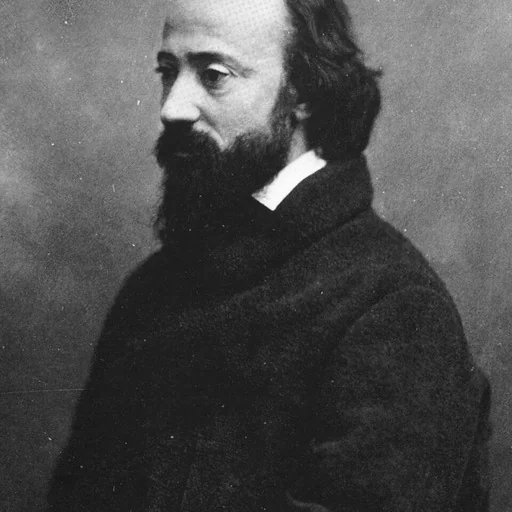
Charles-François Daubigny ( DOH-bin-yee, US: DOH-been-YEE, doh-BEEN-yee, French:; 15 February 1817 – 19 February 1878) was a French painter, one of the members of the Barbizon school, and is considered an important precursor of…