Artwork
Landscape with Ducks
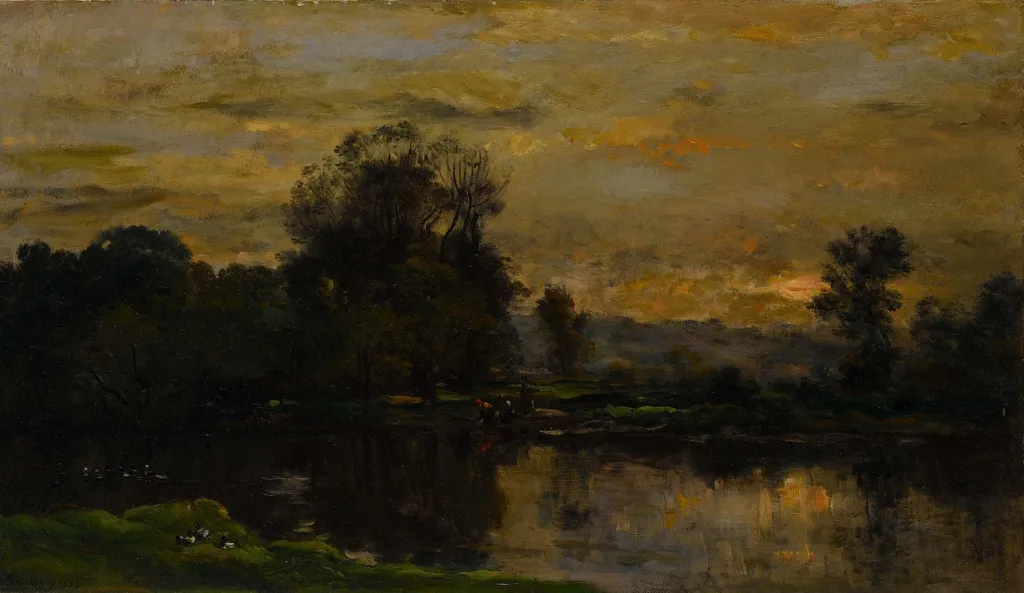
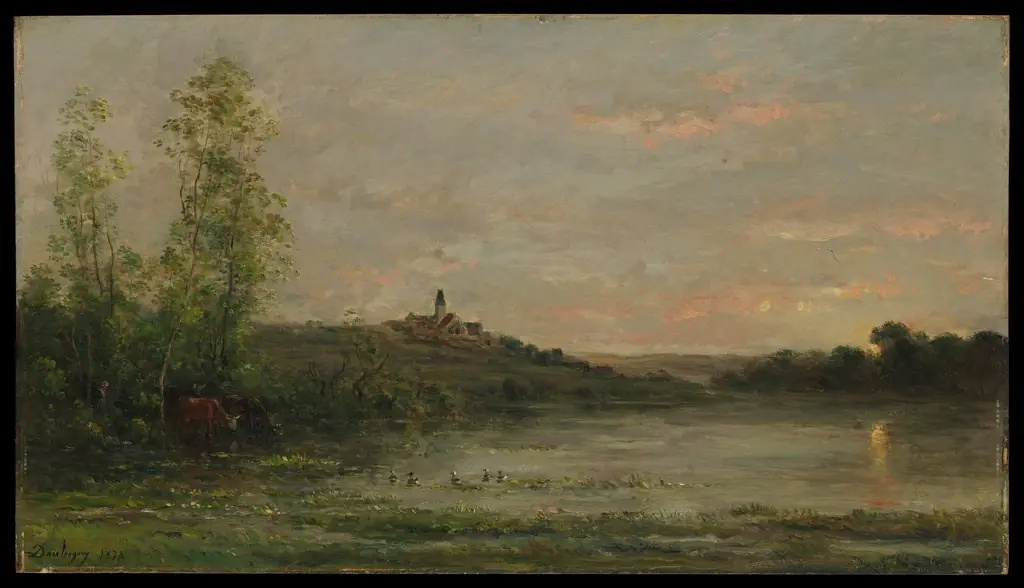
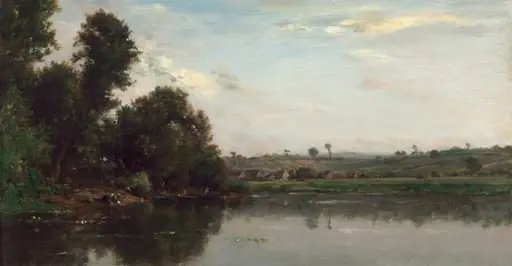
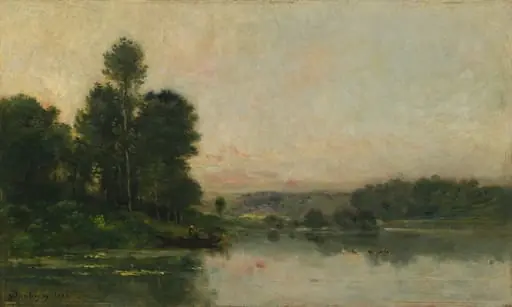
Landscape with Ducks is an oil painting by the Impressionist artist Charles François Daubigny. It dates from 1872 and is held in the collection of the Metropolitan Museum of Art.
About this work
Technique & Style
As an oil-on-panel piece from the late 19th century, the medium allows for the specific textural qualities characteristic of Daubigny's landscape style.
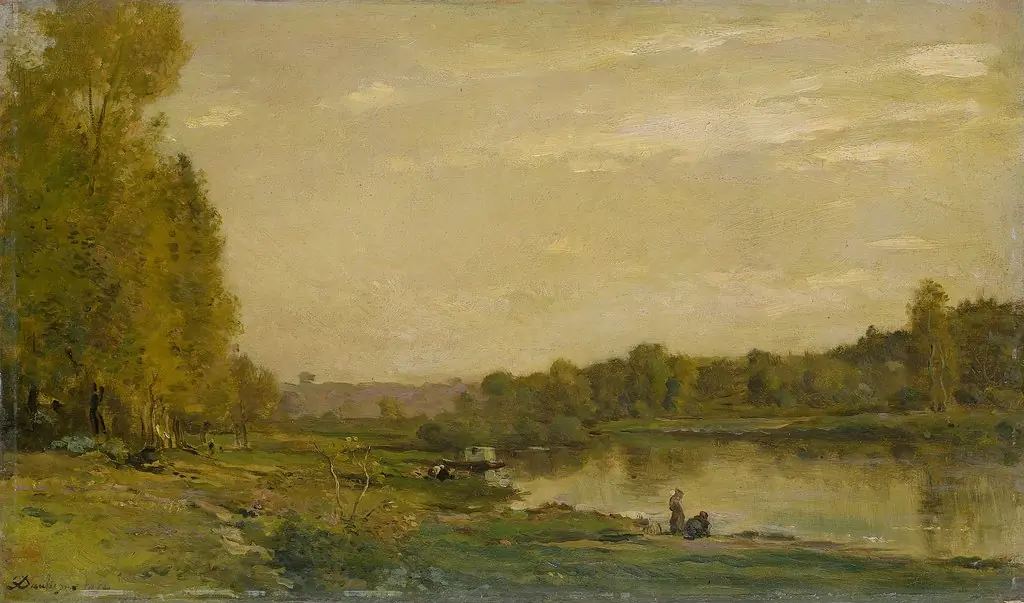
Landscape with Ducks, executed in 1872 by Charles-François Daubigny, is an oil painting on a wooden panel support. The work measures 38.1 cm in height and 67.3 cm in width, presenting a landscape genre scene that depicts ducks within a natural setting. As an oil-on-panel piece from the late 19th century, the medium allows for the specific textural qualities characteristic of Daubigny's landscape style.
The painting is currently held in the collection of the Metropolitan Museum of Art, having been part of the Robert Lehman collection. The composition focuses on the interplay between the waterfowl and their environment, rendered through the traditional oil technique on a rigid panel rather than canvas.
History & Provenance
Created in 1872 by Charles-François Daubigny, Landscape with Ducks is an oil painting executed on a wooden panel. The work measures 38.1 by 67.3 centimeters and depicts a landscape scene featuring ducks. Historically, the painting entered the collection of Robert Lehman, who held ownership prior to its current status.
The piece is presently housed within the Metropolitan Museum of Art, where it remains part of the institution's permanent holdings. While specific details regarding the original commission or the precise circumstances of its creation are not detailed in the available records, the work's inception is firmly established as occurring in 1872.
Landscape with Ducks (1872) is an oil on panel painting by Charles-François Daubigny, classified as a landscape work. The painting is held by the Metropolitan Museum of Art, where it is part of the Robert Lehman collection. Its dimensions are 38.1 cm by 67.3 cm, and it is catalogued as a landscape painting in the museum’s records. The available documentation does not mention any specific accession number or notable exhibition history for the work.
Overview
Charles-François Daubigny's Landscape with Ducks, painted in oil in 1872, exemplifies his contribution to landscape painting. This work, now part of The Metropolitan Museum of Art's collection, showcases the artist's evolving style, bridging the naturalistic approach of the Barbizon school with the emerging tenets of Impressionism. It presents a serene natural vista, characteristic of his later career.
Subject & Meaning
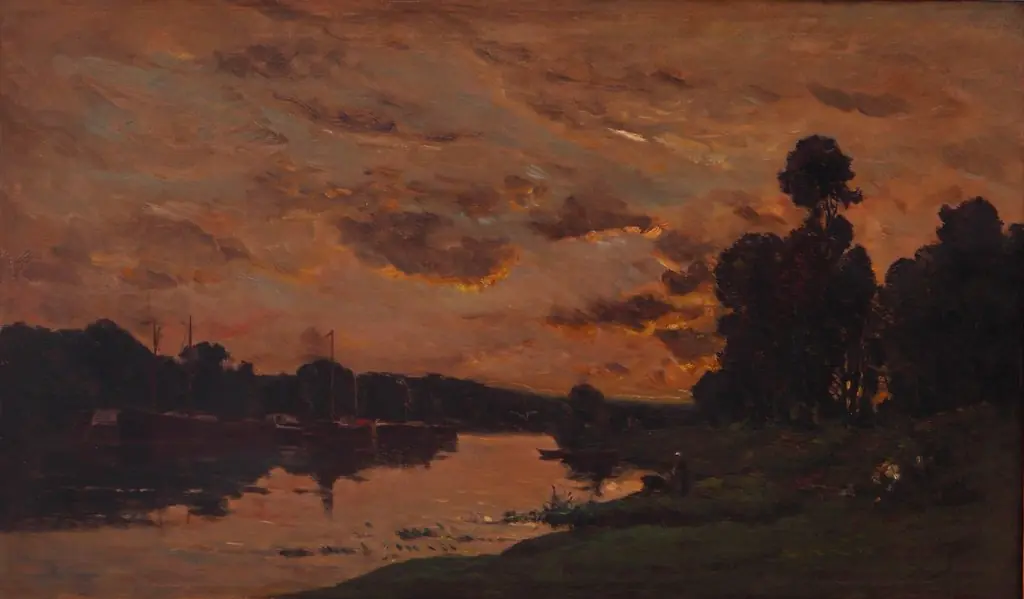
The painting depicts a tranquil river scene as dusk settles, with the dark water mirroring the fading light of the sky. Tall, slender trees, stripped of their leaves, stand silhouetted against a soft, warm horizon. In the distance, indistinct figures, possibly human or animal, can be discerned near the water's edge, contributing to the quiet, contemplative atmosphere of the natural setting.
Context
As a prominent figure of the Barbizon school, Daubigny initially focused on rendering realistic landscapes. However, by 1872, his practice had begun to incorporate elements that foreshadowed Impressionism. His emphasis on capturing transient light effects and his freer application of paint positioned him as a crucial transitional artist, influencing younger painters who would fully embrace the Impressionist movement.
Artist & collection
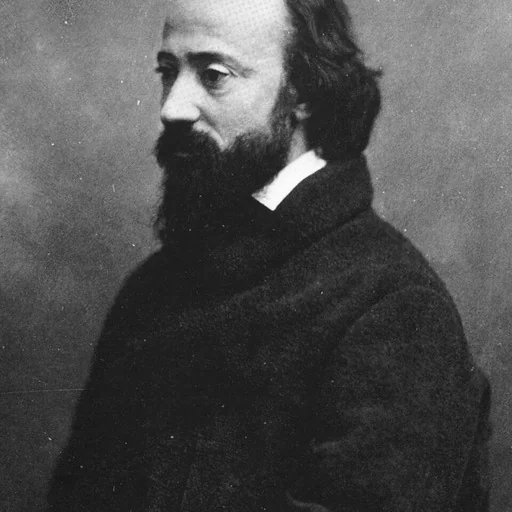
Artist
Charles-François Daubigny ( DOH-bin-yee, US: DOH-been-YEE, doh-BEEN-yee, French:; 15 February 1817 – 19 February 1878) was a French painter, one of the members of the Barbizon school, and is considered an important precursor of…