Artwork
Landscape, Distant Village
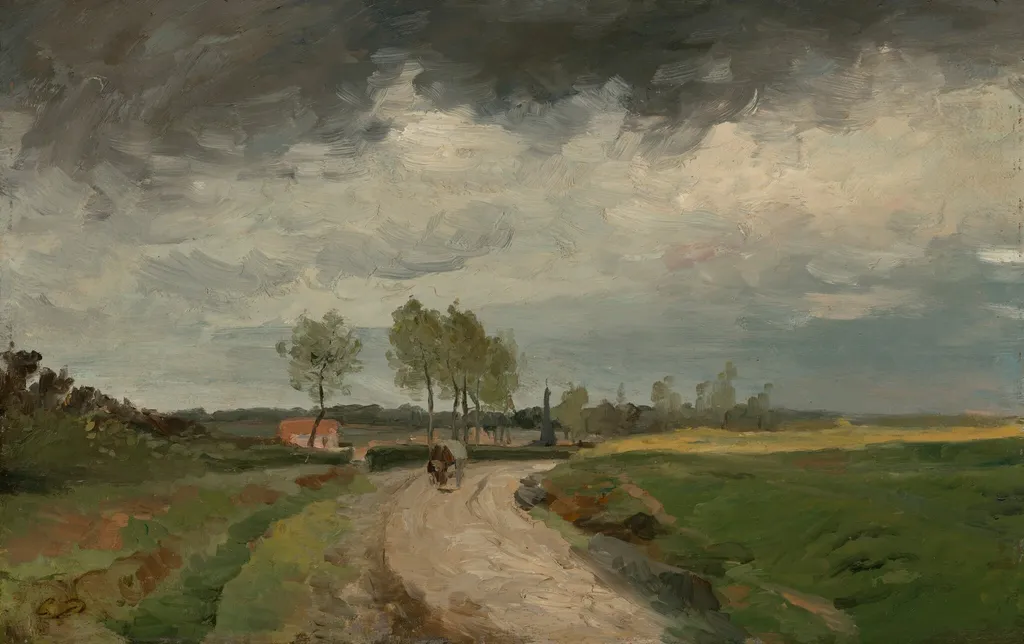
Landscape, Distant Village is an oil painting by the Barbizon school artist Charles François Daubigny. It dates from 1872 and is held in the collection of the National Gallery of Art.
- Inscription
- Inscribed:lower left: C. D.
About this work
Technique & Style
Charles-François Daubigny executed Landscape, Distant Village in 1872 using oil paint applied to a wooden support.
Charles-François Daubigny executed Landscape, Distant Village in 1872 using oil paint applied to a wooden support. The work measures 27.94 cm in height and 42.86 cm in width, classifying it as a landscape painting. As an oil-on-wood piece from the late 19th century, the medium and support reflect the artist's continued engagement with traditional materials while capturing the atmospheric qualities of the genre.
History & Provenance
Charles-François Daubigny created the oil-on-wood painting Landscape, Distant Village in 1872. The work entered the collection of George Lothrop Bradley and Helen McHenry Chambers Bradley of Washington. Upon Helen's death on 10 May 1919, the painting was bequeathed to the Corcoran Gallery of Art in Washington.
The National Gallery of Art subsequently acquired the piece in 2015, adding it to its holdings as accession 2015.19.4 after its transfer from the Corcoran Gallery of Art.
Overview
Charles-François Daubigny's Landscape, Distant Village, painted around 1872, is an oil on wood panel. This work exemplifies the artist's dedication to naturalistic landscape painting, a hallmark of the Barbizon school with which he was associated. The composition presents a serene rural vista, capturing a moment of everyday tranquility through its depiction of a road leading toward a settlement under a soft, cloudy sky.
Subject & Meaning
The painting features a dirt path winding through a verdant countryside, flanked by trees and low-lying bushes. This road guides the viewer's eye towards a cluster of buildings in the distance, suggesting a remote village. Fields stretch out on either side, while a dense line of trees forms the horizon beneath an expansive, overcast sky. This focus on unidealized, everyday rural scenery was central to the Barbizon painters' artistic concerns.
Context
As a prominent figure of the Barbizon school, Charles-François Daubigny dedicated his career to depicting the French countryside directly from nature. His emphasis on capturing transient atmospheric effects and his increasingly free brushwork positioned him as a significant precursor to Impressionism. Beyond painting, Daubigny also explored printmaking, utilizing techniques such as etching and cliché verre to further his landscape studies.
Own this work as a print
Artist & collection
Artist
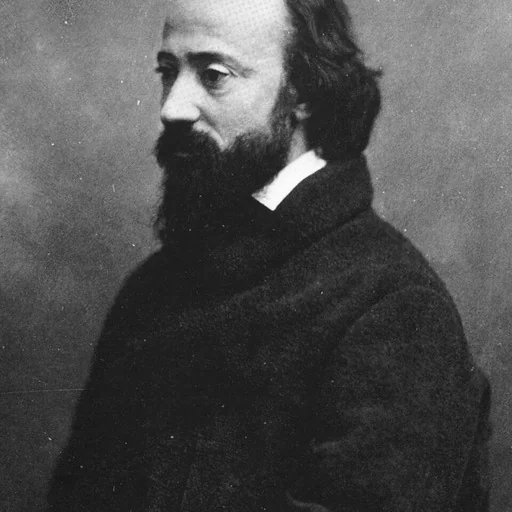
Charles-François Daubigny ( DOH-bin-yee, US: DOH-been-YEE, doh-BEEN-yee, French:; 15 February 1817 – 19 February 1878) was a French painter, one of the members of the Barbizon school, and is considered an important precursor of…

- Landscape – Cottages at waterside
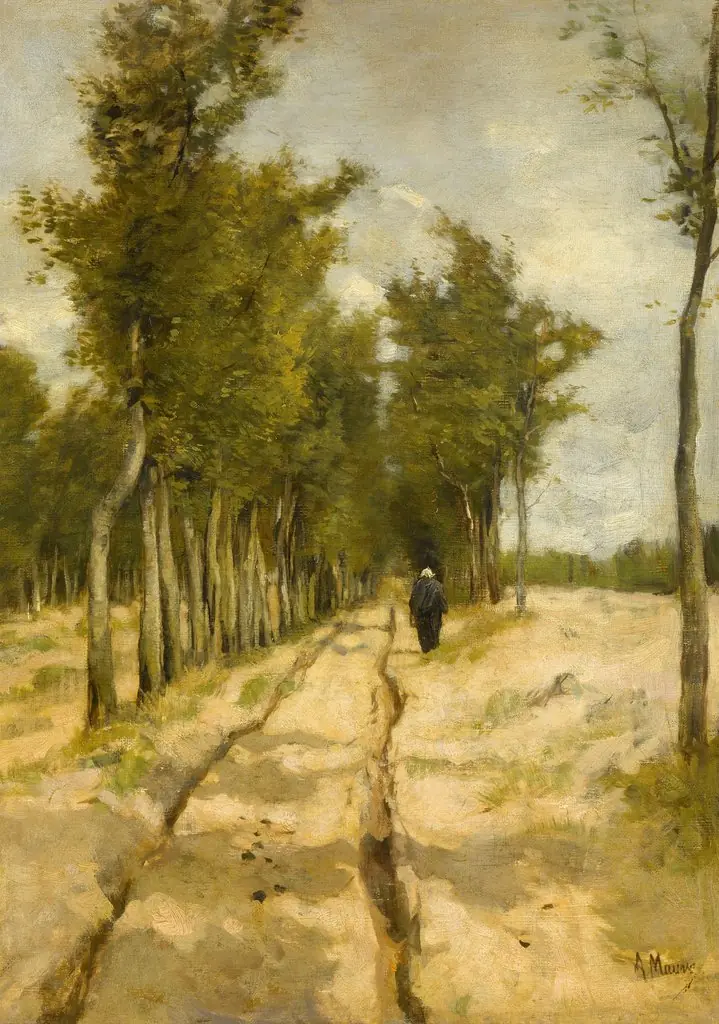 The Torenlaan at Laren.
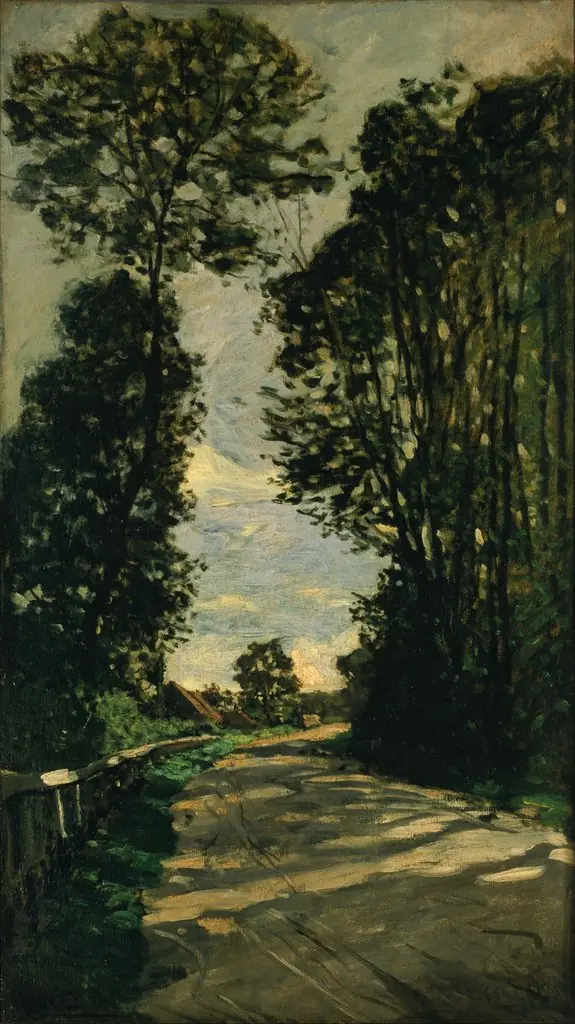 Walk
Walk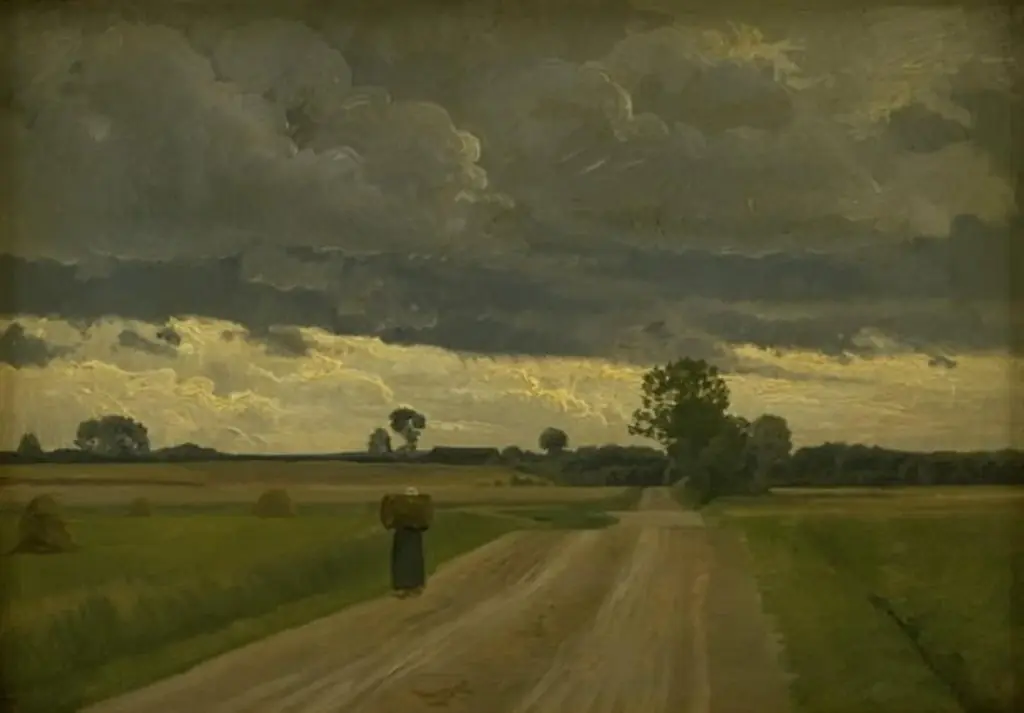 Landskab i gråvejr
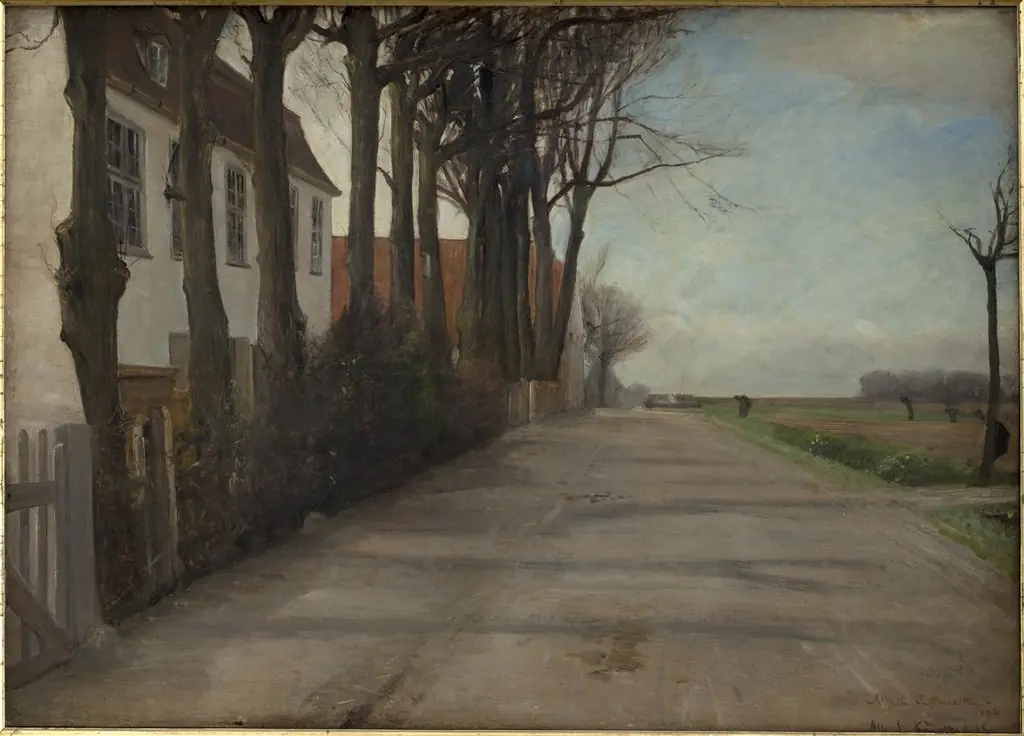 The Road Leading past "Store Godthaab", a Country House near Copenhagen
 Landskab i gråvejr
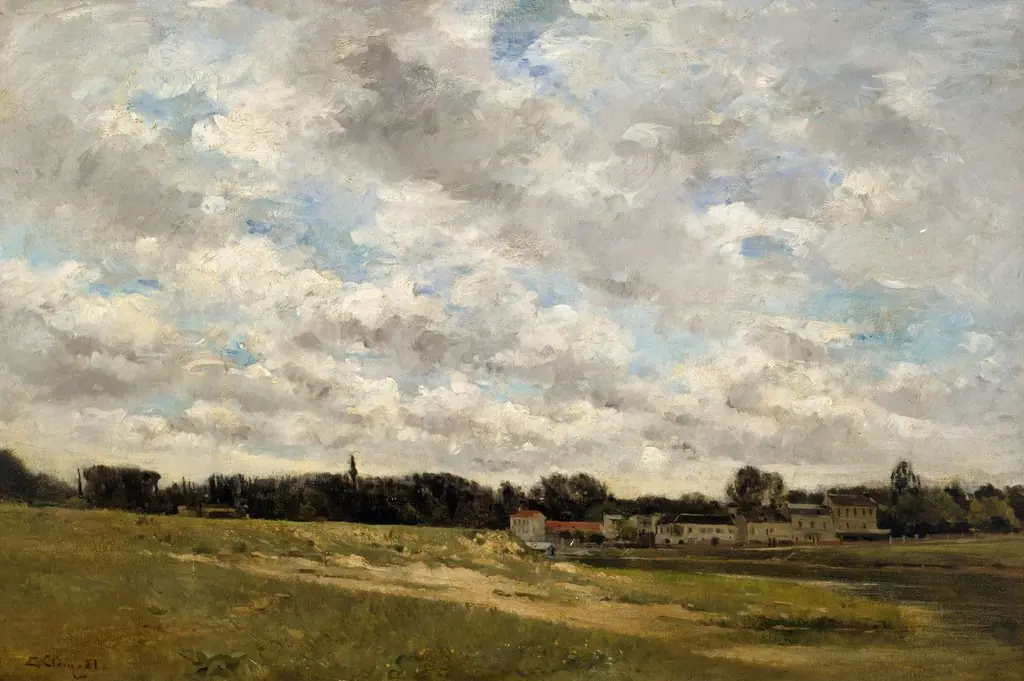 Landscape
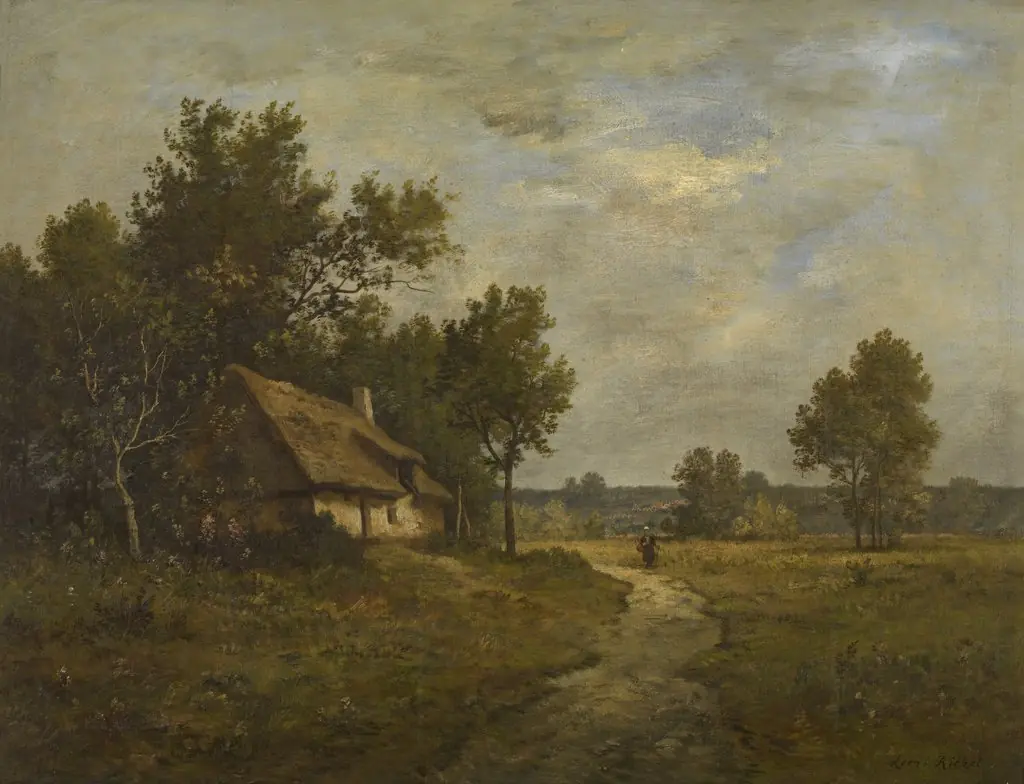 Landscape
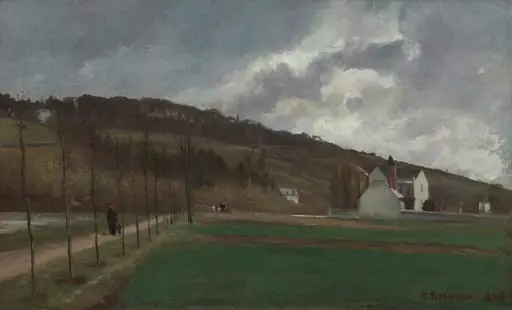 The Banks of the Marne in Winter
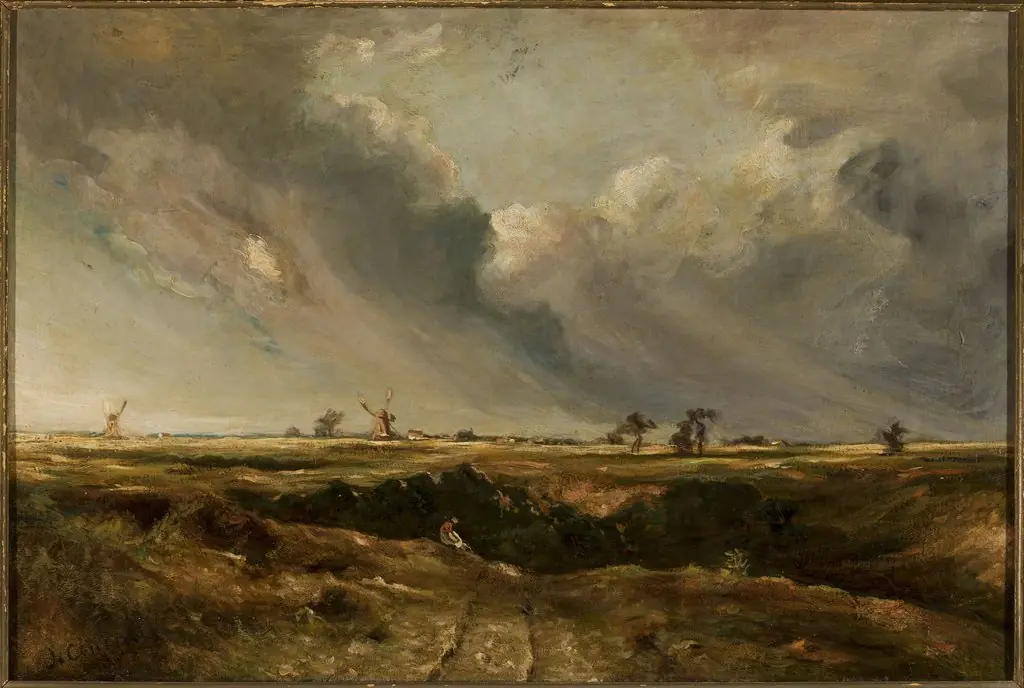 Landscape with windmills
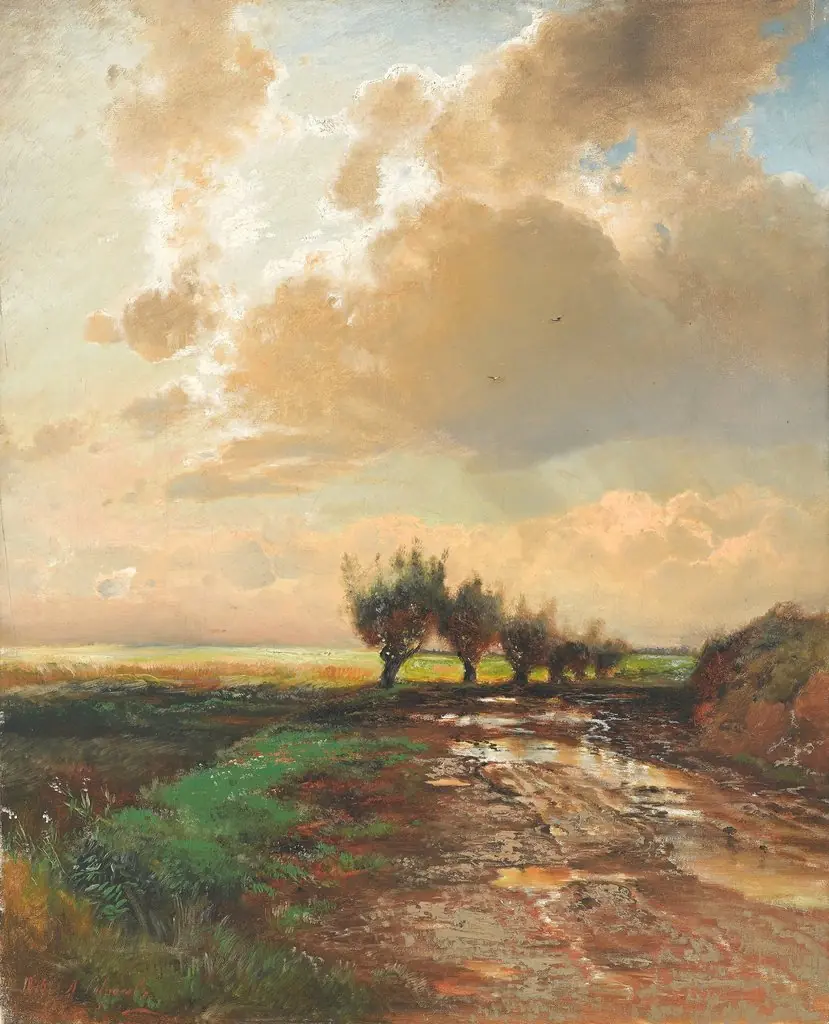 Country road
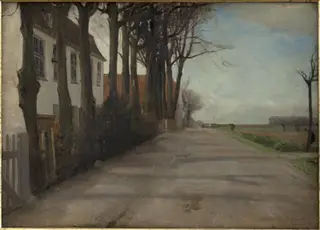 The Road Leading past "Store Godthaab", a Country House near Copenhagen