Artwork
Chickens
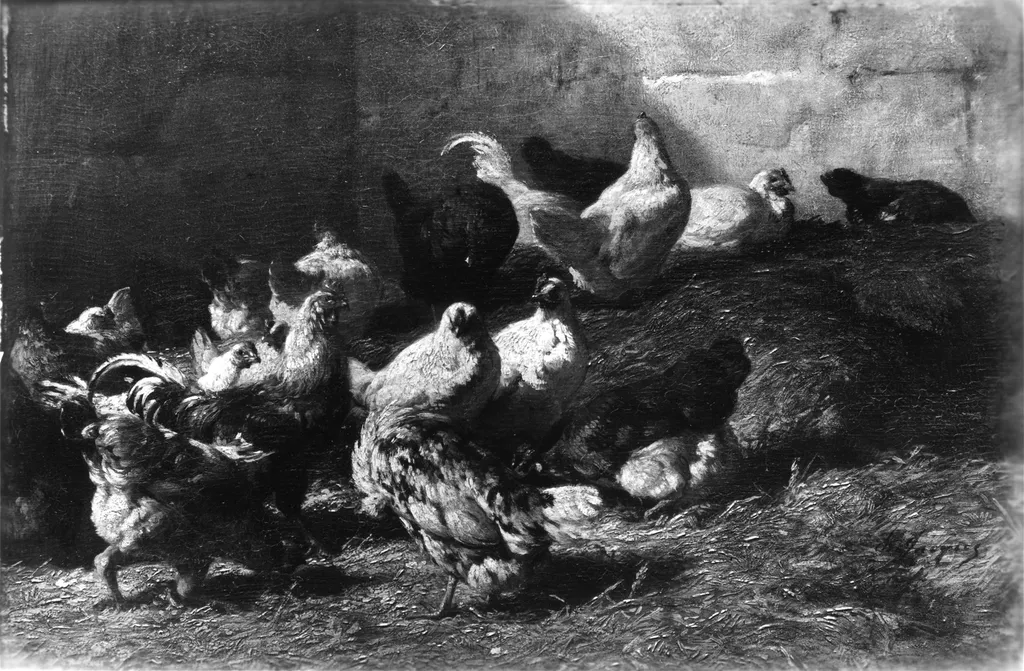
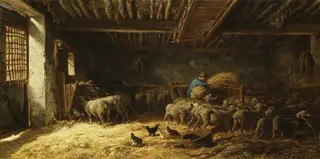
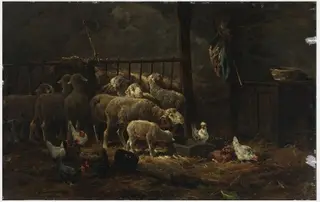
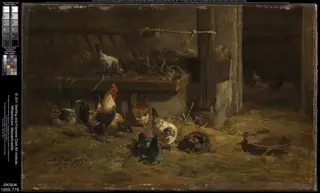
Chickens is an oil painting by the Realist artist Charles-Émile Jacque. It dates from 1850 and is held in the collection of the Walters Art Museum.
About this work
Overview
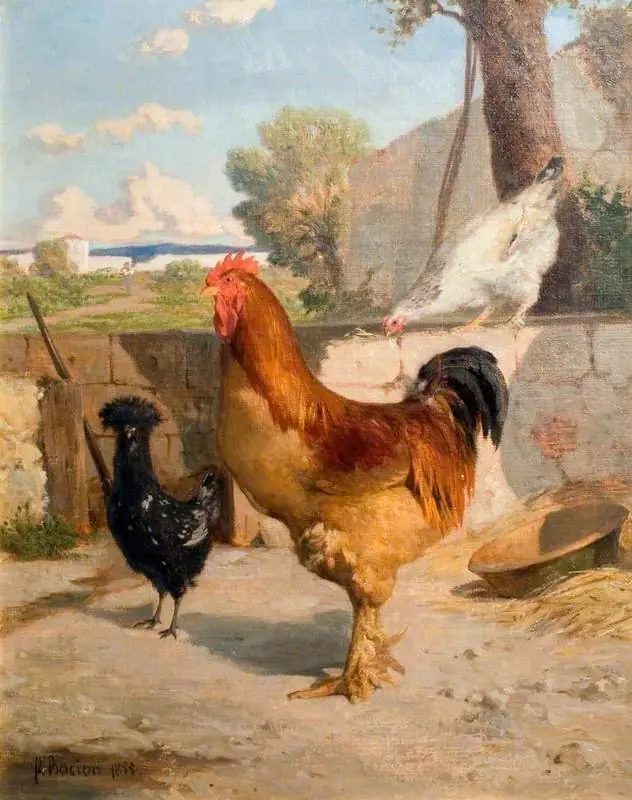
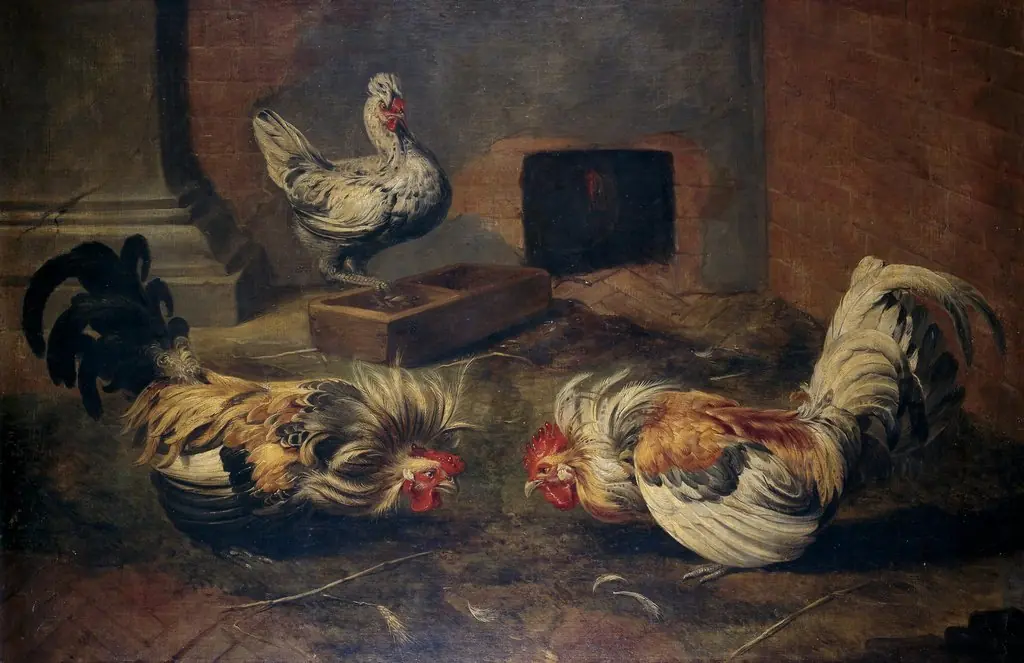
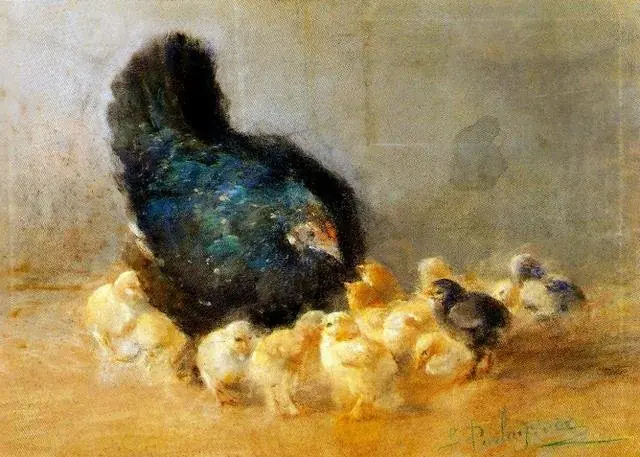
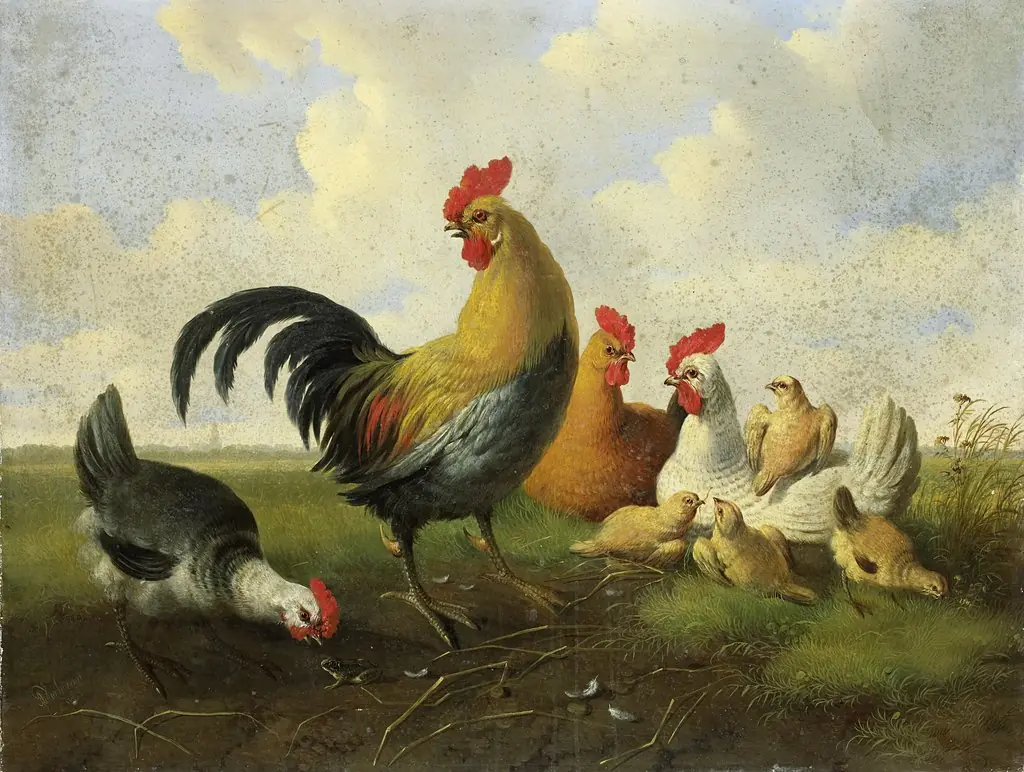
Created circa 1850, Chickens is an oil painting by French artist Charles Jacque, a member of the Barbizon School. The work presents a domestic scene of poultry, primarily a hen, a rooster, and several smaller birds, clustered amid straw and earth. Its modest scale and focus on ordinary farm life align it with the Realist interest in everyday subjects.
Subject & Meaning
The composition centers on a disordered flock of chickens, their bodies rendered in muted black‑and‑white tones that emphasize texture over color. The birds appear huddled together, suggesting a moment of quiet activity within a rural setting, while the sparse background reinforces their isolation from human presence.
Technique & Style
Jacque employed a pronounced impasto, applying thick layers of paint to convey the softness of feathered plumage and the roughness of the ground. The limited lighting, simple highlights against a dark backdrop, creates a modest contrast that makes the birds stand out, while the overall palette remains restrained, reflecting the artist’s realist approach.
History & Provenance
Before turning to painting, Jacque spent seven years in the French army, where he learned map engraving, a skill that informed his later attention to detail. After his military service, he joined the Barbizon circle, focusing on pastoral subjects. Chickens emerged during this period of his career, illustrating his shift from engraving to oil painting.
Context
The mid‑nineteenth century saw a growing interest among French artists in depicting rural labor and domestic animals, moving away from idealized historical or mythological themes. Jacque’s work fits within this broader Realist movement, sharing concerns with contemporaries who sought to portray the unembellished truth of countryside life.
Artist & collection

Artist
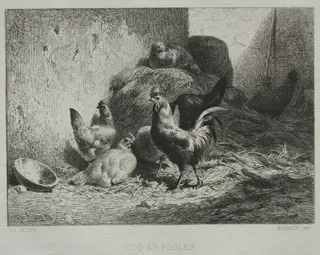
Charles-Émile Jacque (23 May 1813 – 7 May 1894) was a French painter of Pastoralism and engraver who was, with Jean-François Millet, part of the Barbizon School. He first learned to engrave maps when he spent seven years in the French Army.