Artwork
Leaving the Sheep Pen
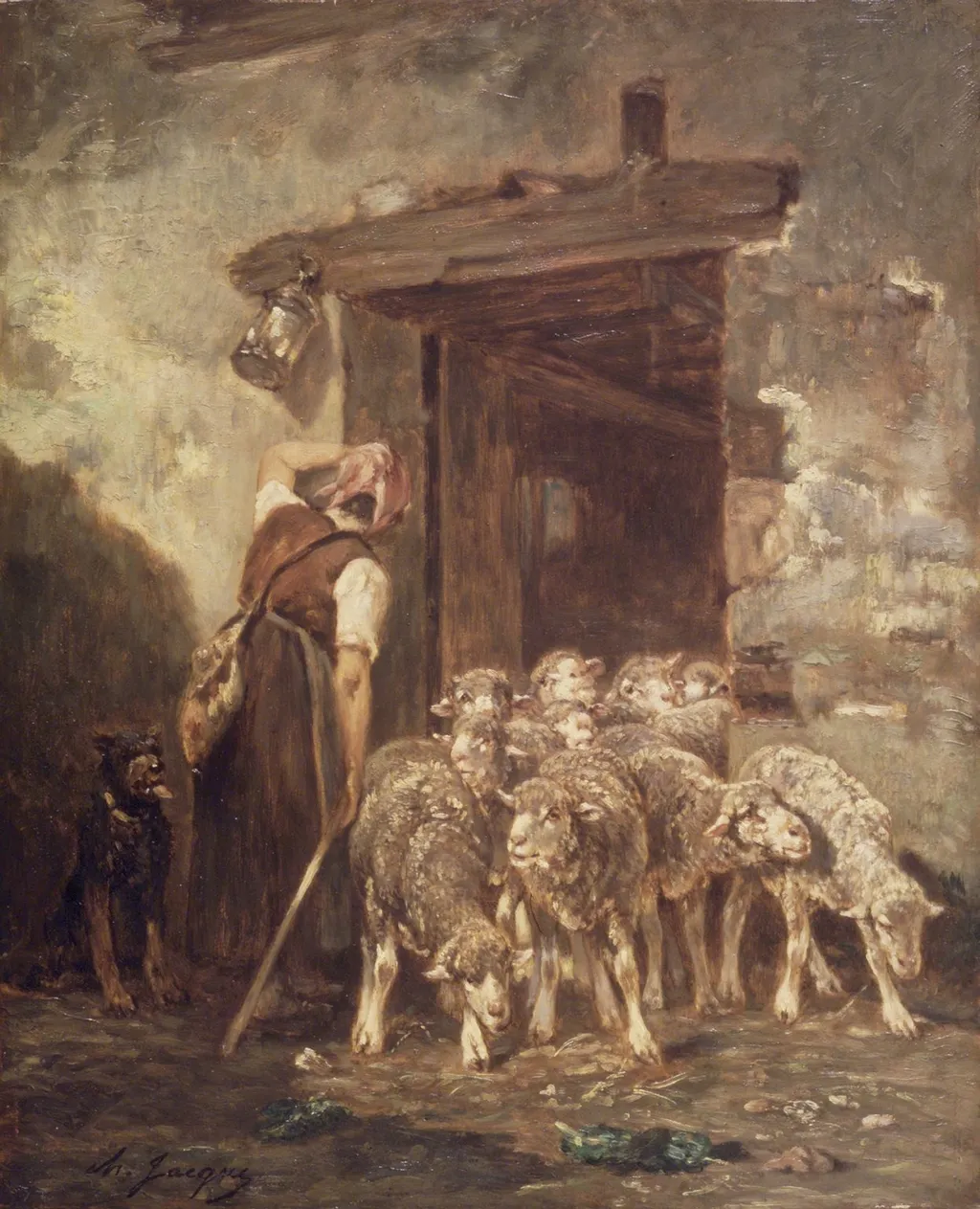
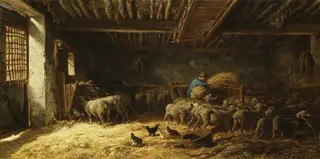
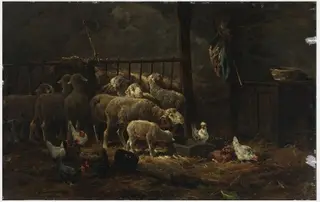
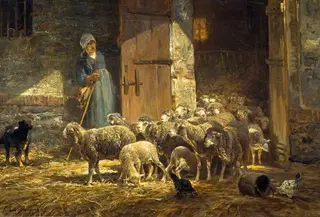
Leaving the Sheep Pen is an oil painting by the Impressionist artist Charles-Émile Jacque. It dates from 1890 and is held in the collection of the Brooklyn Museum.
About this work
Subject & Meaning
The sheep, rendered with characteristic realism, represent domesticity and economic reliance on pastoral labor, while the man’s posture conveys quiet authority.
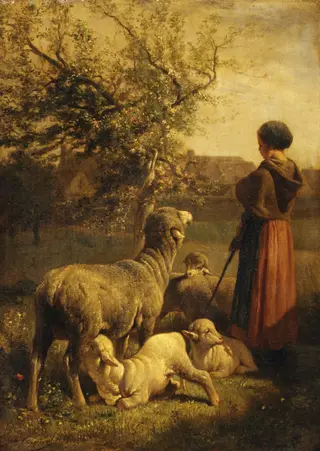
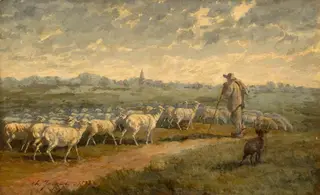
Leaving the Sheep Pen depicts a shepherd guiding his flock through a doorway, symbolizing the transition from rural simplicity to urban life. The sheep, rendered with characteristic realism, represent domesticity and economic reliance on pastoral labor, while the man’s posture conveys quiet authority. Jacque’s focus on animal husbandry reflects 19th-century French agrarian values, framing rural labor as both essential and idealized.
The composition emphasizes the tension between confinement and freedom, with the pen’s wooden gate framing the scene’s narrative of departure. This thematic focus aligns with genre painting’s interest in documenting contemporary social realities, particularly the dignity of agricultural work.
Technique & Style
Leaving the Sheep Pen is an oil painting executed on a wooden panel. Created in 1880, the work measures 45.7 cm in height and 37 cm in width. The composition depicts a genre scene centered on animal husbandry, featuring a shepherd, a flock of sheep, and a herding dog near a pen door. Stylistically, the piece functions as both animal art and a genre scene, focusing on rural life subjects.
History & Provenance
Charles Jacque created the oil painting Leaving the Sheep Pen in 1880. Executed on a panel support, the work measures 45.7 cm in height and 37 cm in width. The piece depicts a shepherd, a dog, and sheep near a pen door, falling within the genres of animal art and genre scenes. It is currently held in the collection of the Brooklyn Museum.
Leaving the Sheep Pen is held in the collection of the Brooklyn Museum, where it is catalogued under the accession number 1985.155.167. The work was created in 1880 by Charles Jacque and is recorded as an oil painting on panel. Its exhibition history includes a display in the museum's European Paintings galleries as part of the 1995 exhibition "European Paintings: 19th Century Highlights," a presentation that was revisited in the 2008 reinstallation of the permanent collection.
Overview
Created in 1890 by French painter and engraver Charles‑Émile Jacque, Leaving the Sheep Pen is an oil work that portrays a quiet moment of rural labor. The composition centers on a shepherd, dressed in a long coat and hat, who watches his flock as the animals move toward a dark, weathered doorway. The piece belongs to the permanent collection of the Brooklyn Museum.
Context
Jacque was a contemporary of Jean‑François Millet and shared the Barbizon School’s interest in depicting everyday peasant life. While many of his peers emphasized the dignity of labor, Jacque’s attention to the tactile qualities of wool and wood distinguishes his approach. Leaving the Sheep Pen thus sits within a larger movement that sought to record the authenticity of the French countryside before industrial transformation.
Own this work as a print
Artist & collection

Artist
Charles-Émile Jacque (23 May 1813 – 7 May 1894) was a French painter of Pastoralism and engraver who was, with Jean-François Millet, part of the Barbizon School. He first learned to engrave maps when he spent seven years in the French Army.