Artwork
Landscape
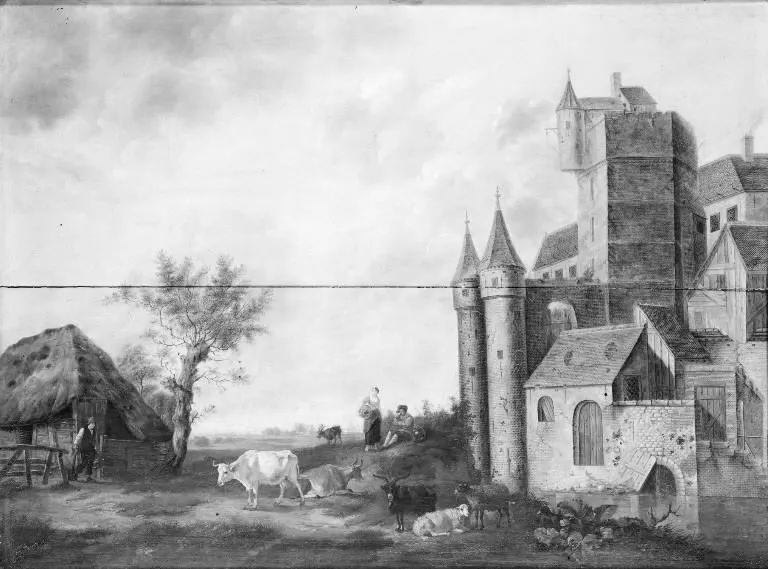
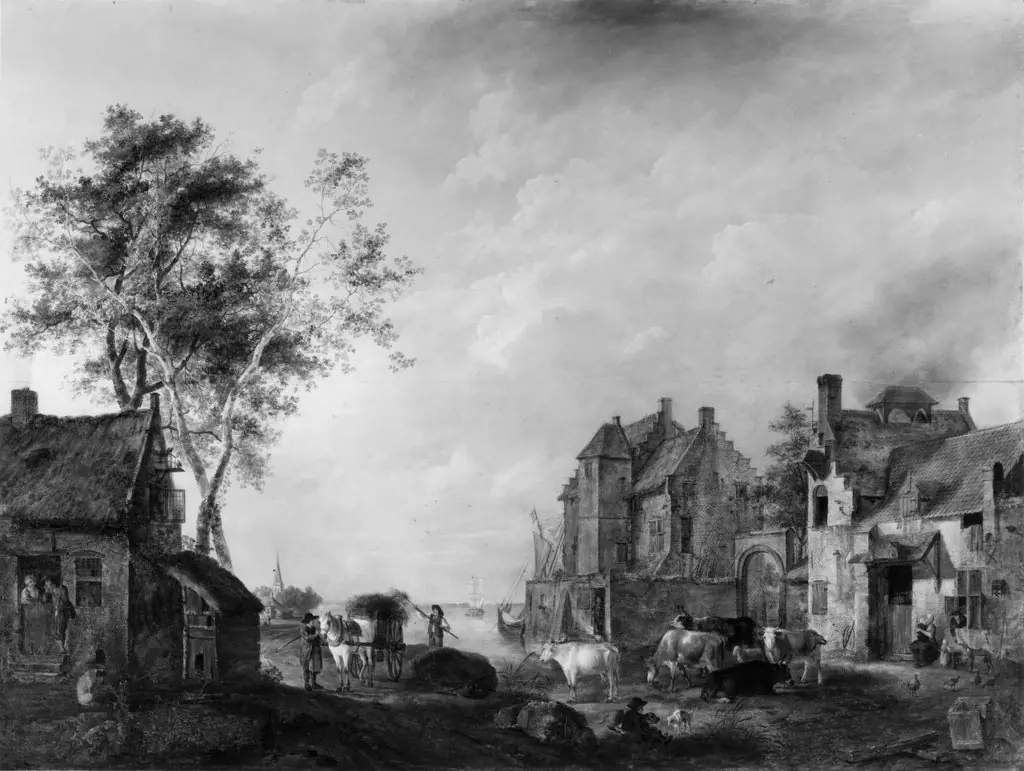
Landscape is an oil painting by Charles Le Brun. It is held in the collection of the Statens Museum for Kunst.
About this work
Subject & Meaning
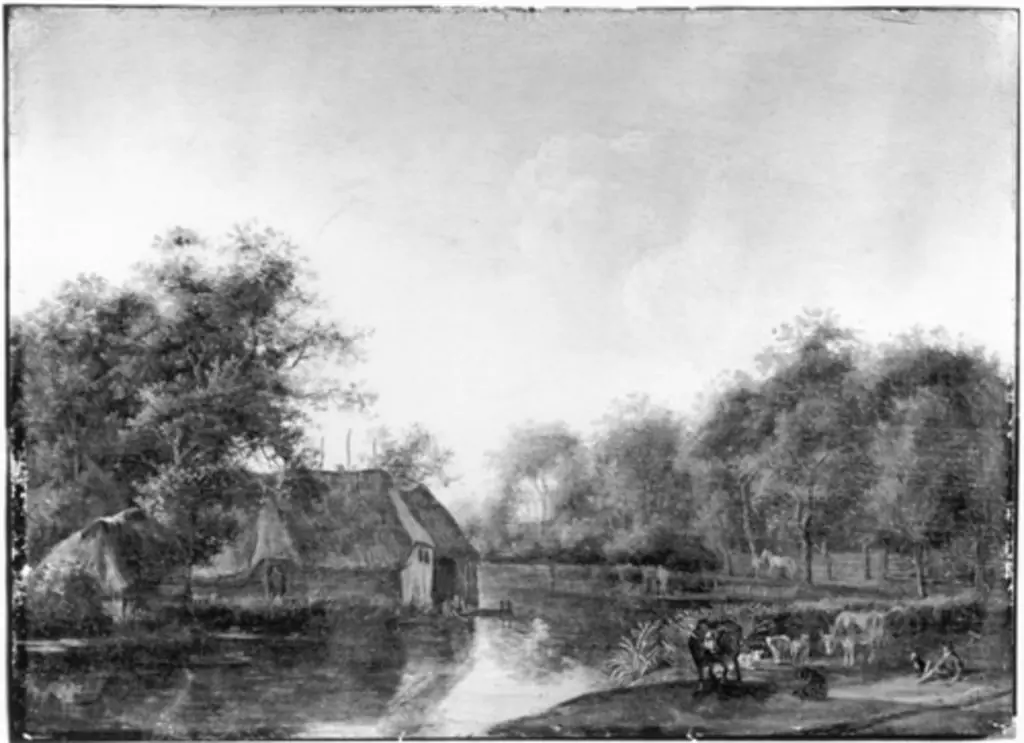
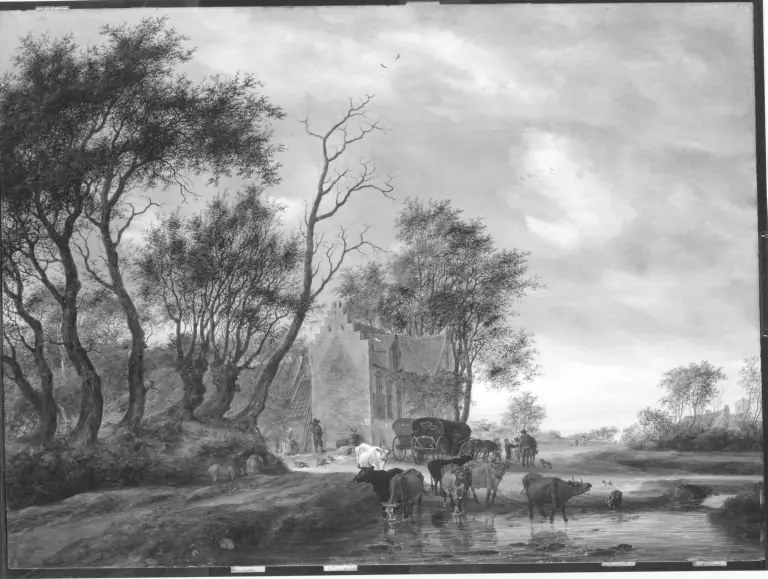
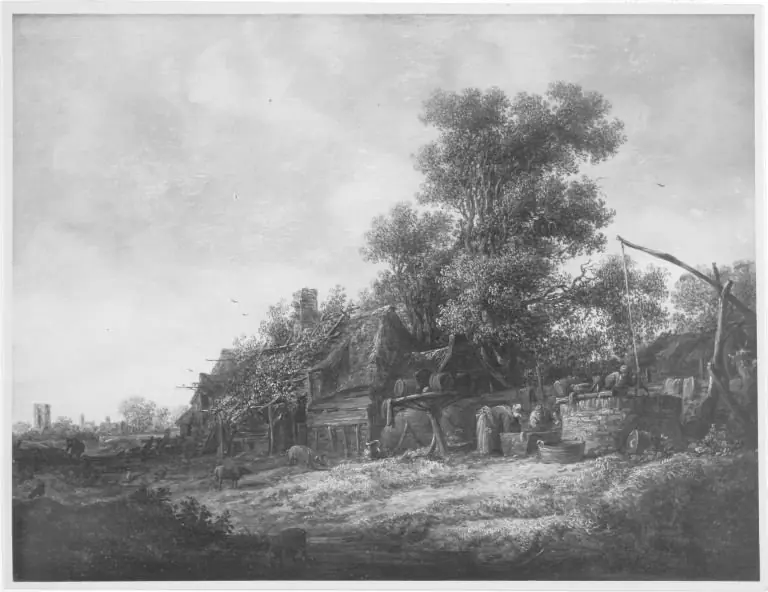
The painting portrays a rural scene featuring cattle and a solitary figure near a building, embodying the classical ideal of pastoral harmony.
The painting portrays a rural scene featuring cattle and a solitary figure near a building, embodying the classical ideal of pastoral harmony. This composition reflects Enlightenment-era symbolism of order and the relationship between humanity and nature.
As a work by Charles Le Brun created in 1784, it exemplifies the grand landscape genre popular in late 18th-century European art.
The depicted elements function symbolically to convey themes of abundance and the moral virtues associated with agrarian life, aligning with contemporary philosophical interpretations of the natural world.
Technique & Style
The work is an oil painting executed on a wooden panel, reflecting the academic approach of its creator through precise brushwork and balanced compositional structure. The depiction of a pastoral scene with cattle, a solitary figure, and a building demonstrates a classical rendering of the landscape genre, emphasizing clarity of form and atmospheric depth characteristic of late 18th-century French art.
History & Provenance
Charles Le Brun painted Landscape in 1784 as an oil on panel work. The painting measures 47 cm in height and 62 cm in width. The painting’s recorded provenance begins with its acquisition by the Statens Museum for Kunst, where it is now housed; earlier ownership details are not provided in the sources.
No specific commission is mentioned in the available records, and the work’s creation history is limited to its date of execution and medium.
The work is held by the Statens Museum for Kunst in Copenhagen, where it is recorded as inventory number KMS3614.
It was exhibited at the Statens Museum for Kunst in 2013 as part of the display "Charles Le Brun, Pathos und Dramatik."
Overview
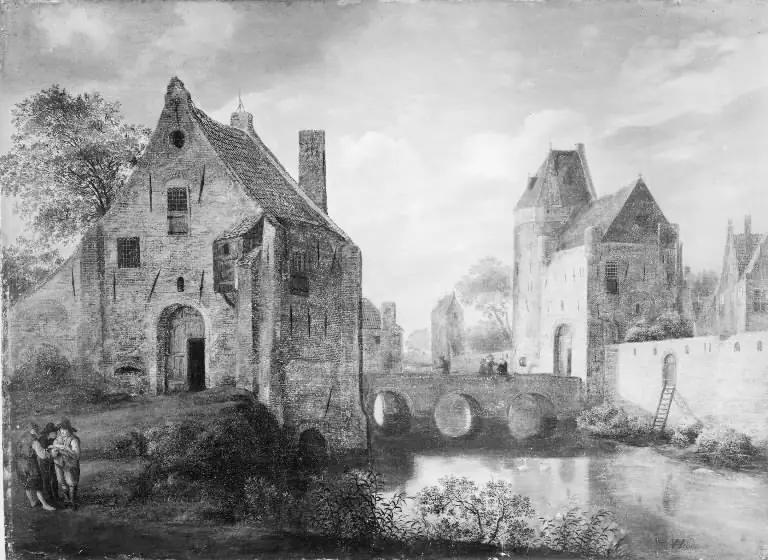
The oil painting titled Landscape presents a tranquil rural tableau, foregrounded by a grazing cow and a resting dog, with laborers attending to haystacks beside a modest stone building. Beyond them rises a massive, rough‑hewn castle with towers, set against a softly clouded sky that imparts a calm atmosphere.
Context
Le Brun, known for his role as court painter to Louis XIV and his advocacy of classical principles derived from Nicolas Poussin, applied those ideals to a landscape genre that traditionally emphasized idealized nature. This work reflects the period’s tendency to integrate architectural grandeur within pastoral scenes, aligning with the academic hierarchy of subjects.
Artist & collection
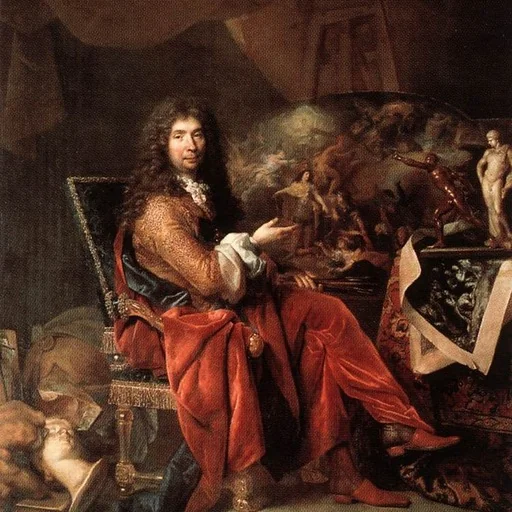
Artist
Charles Le Brun (French pronunciation:; baptised 24 February 1619 – 12 February 1690) was a French painter, physiognomist, art theorist, and a director of several art schools of his time.