Artwork
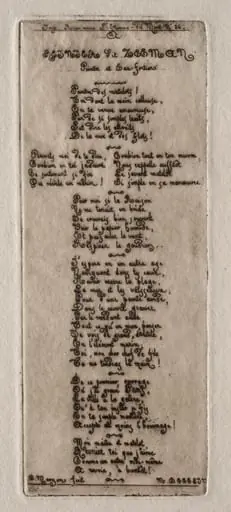
Etchings of Paris: Molière's Tomb in Père Lachaise Cemetery
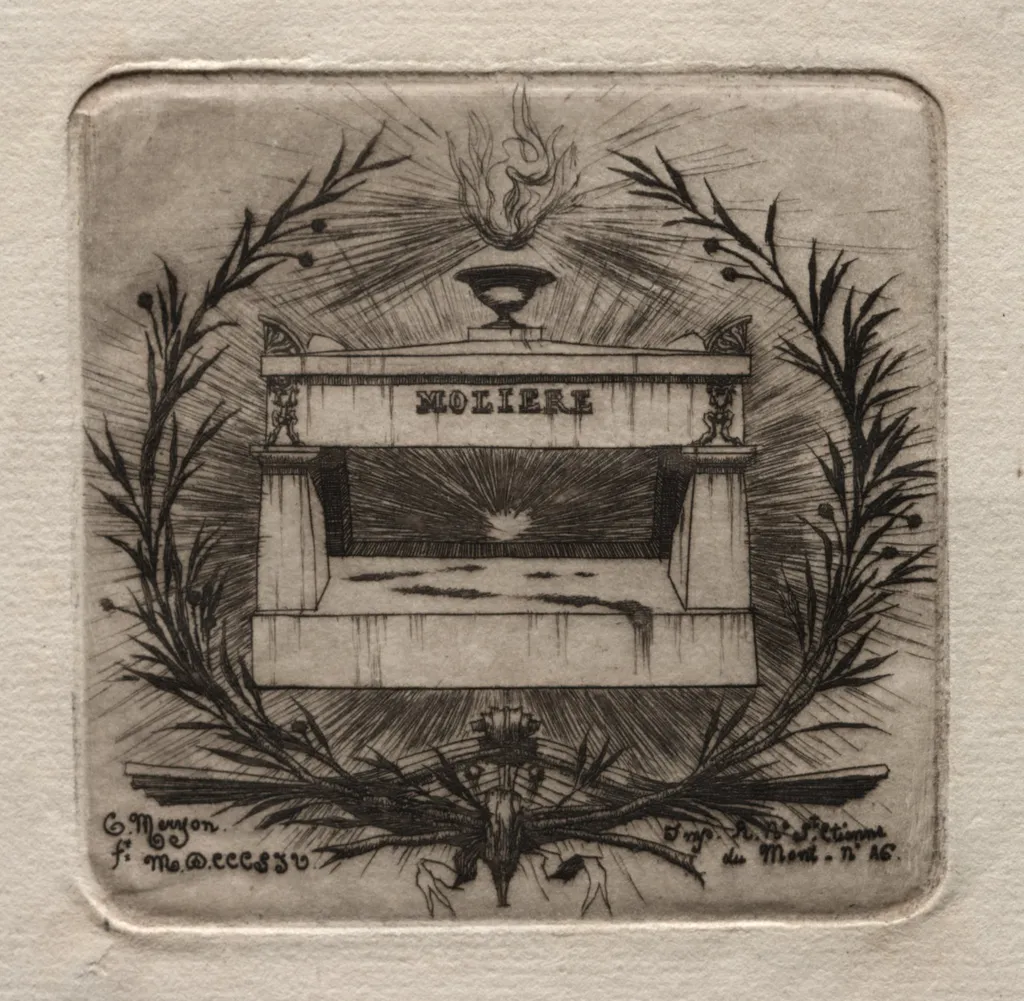
Etchings of Paris: Molière's Tomb in Père Lachaise Cemetery is a print by the Impressionist artist Charles Meryon. It dates from 1854 and is held in the collection of the Cleveland Museum of Art.
- Accession no.
- 1954.896
- Credit line
- The Milton Curtiss Rose Collection in memory of Evelyn Curtiss Rose
About this work
Overview
This 1854 etching by Charles Meryon depicts Molière's tomb in Père Lachaise Cemetery. Created in black and white, it showcases the artist's skillful use of line and value to convey texture and depth.
Subject & Meaning
The etching is part of a series of Parisian views that reflect Meryon's fascination with the city's Gothic character. Molière's tomb, with its simple rectangular form and flame motif, is rendered with attention to detail and surrounded by foliage.
Technique & Style
Meryon's work is characterized by a high level of detail and a range of values that create contrast. Working primarily in etching due to colour blindness, he achieved a distinctive visual style that emphasizes texture and depth.
History & Provenance
Meryon, a significant figure in 19th-century French etching, created this work during a career marked by mental illness. He died in an asylum in 1868.
Own this work as a print
Artist & collection
Artist
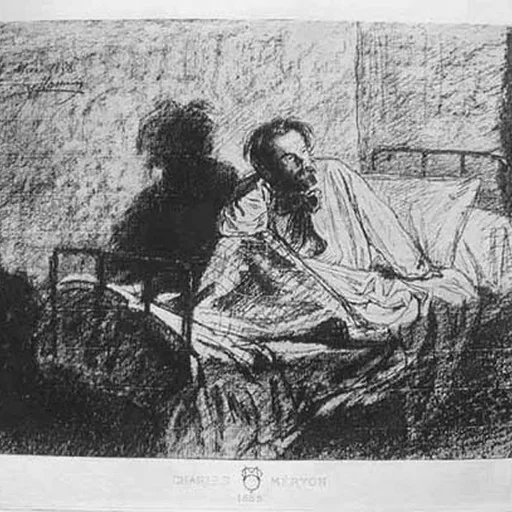
Charles Meryon (sometimes Méryon, 23 November 1821 – 14 February 1868) was a French artist who worked almost entirely in etching, as he had colour blindness.

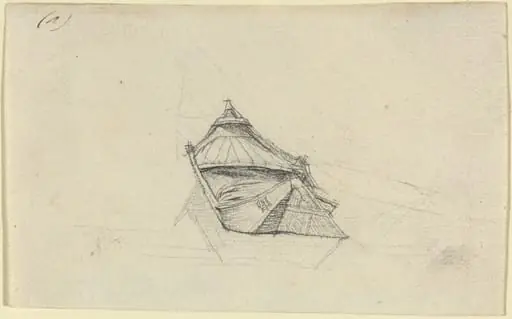
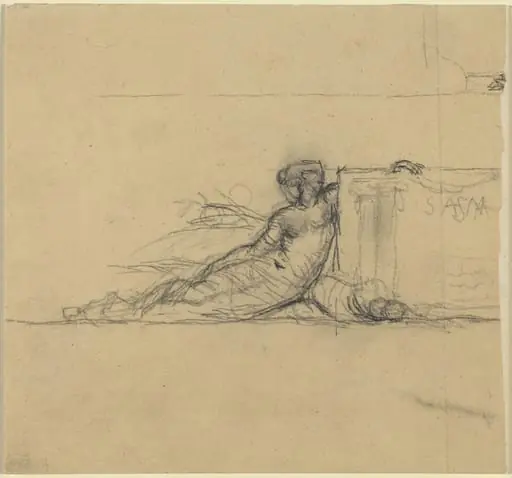
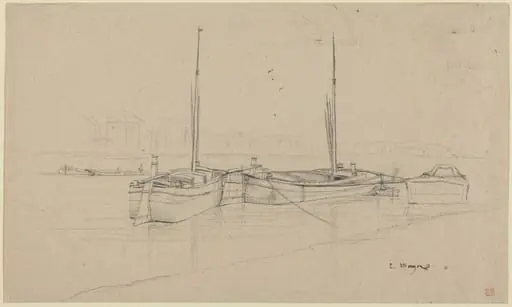
- Le tombeau de Molière, au Père-Lachaise, Paris (Moliere's Tomb, in Père-Lachaise Cemetary, Paris)
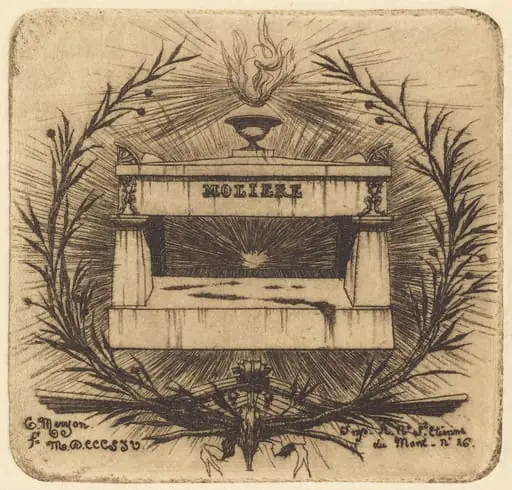 Le tombeau de Molière, au Père-Lachaise, Paris (Moliere's Tomb, in Père-Lachaise Cemetary, Paris)
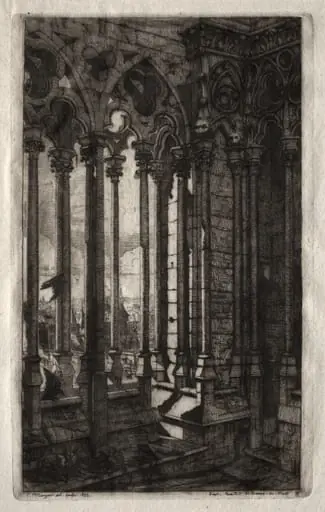 Etchings of Paris: The Gallery of Notre Dame
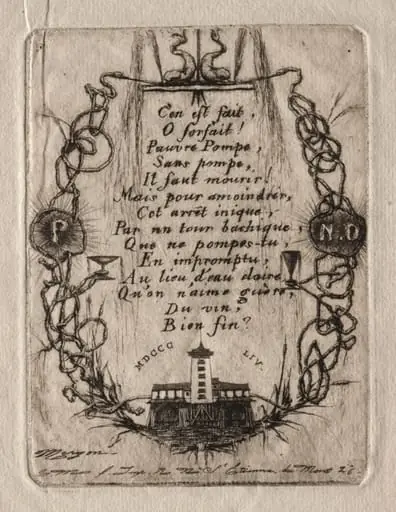 Etchings of Paris: The Notre Dame Pump, Small Plate
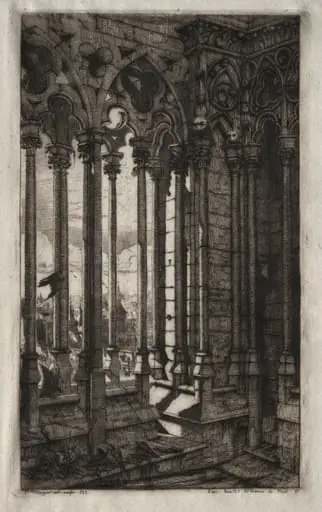 The Etchings of Paris: The Gallery of Notre Dame
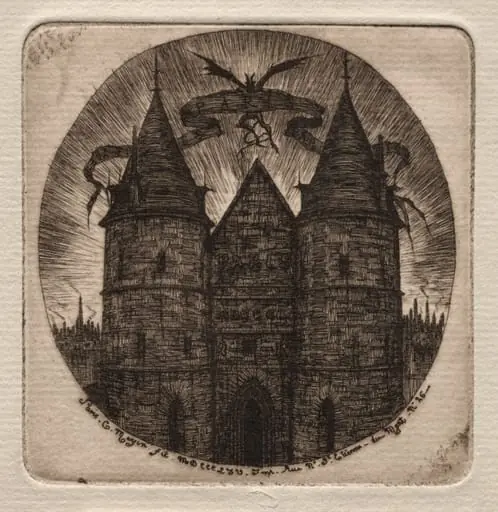 Etchings of Paris: Old Gate of the Palace of Justice
 Etchings of Paris: Dedication to Reynier Nooms, called Zeeman