Artwork
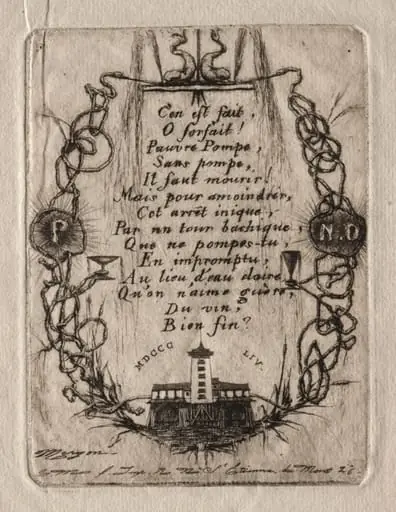
Le tombeau de Molière, au Père-Lachaise, Paris (Moliere's Tomb, in Père-Lachaise Cemetary, Paris)
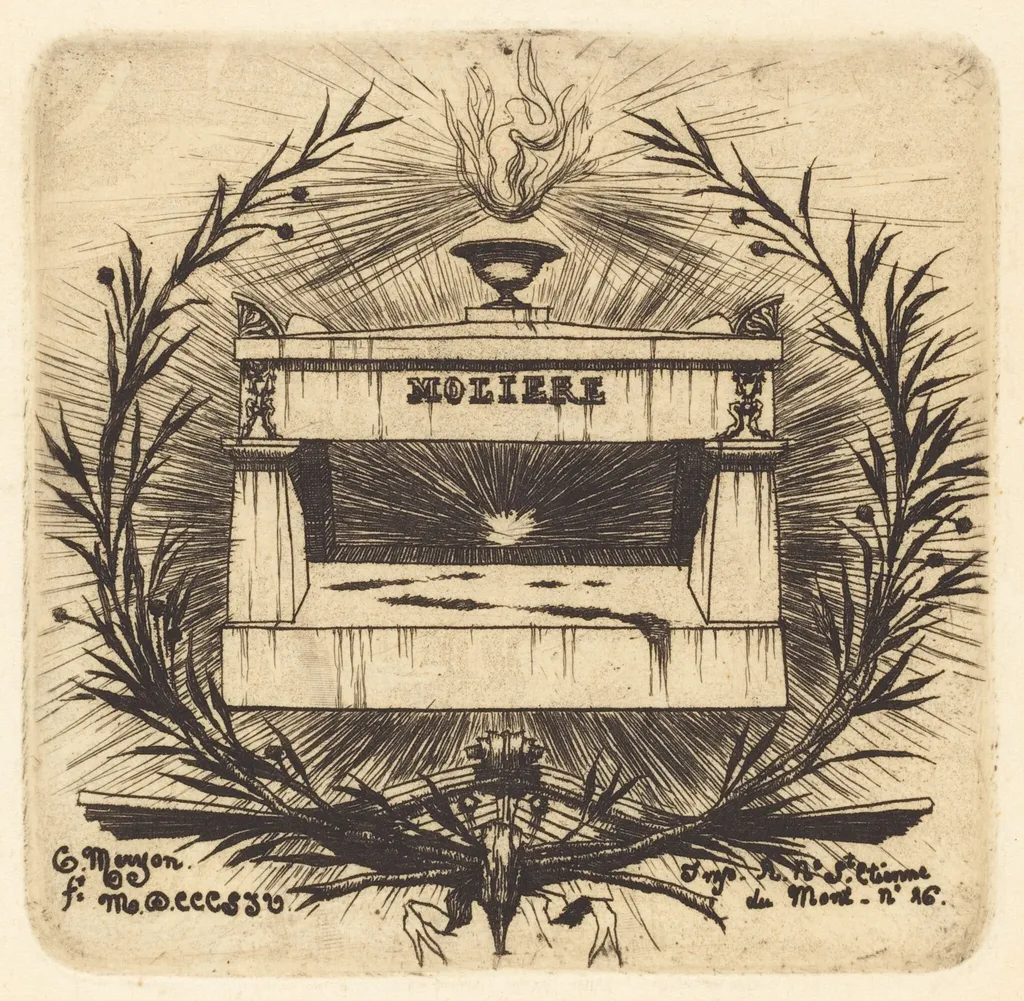
Le tombeau de Molière, au Père-Lachaise, Paris (Moliere's Tomb, in Père-Lachaise Cemetary, Paris) is an ink print by the Impressionist artist Charles Meryon. It dates from 1854 and is held in the collection of the National Gallery of Art.
- Inscription
- Inscribed:"C. Meryon. / ft. MDCCCLIV." lower left composition, in plate, artist's hand. "Imp. R. Ne St. Etienne / du Mont. No26." lower right composition, in plate, artist's hand. "MOLIERE" upper center composition, in plate, artist's hand. "No: 15 - "Le Tombeau de Molière" lower left margin, graphite, unknown hand. "LD 40" upper left margin, graphite, unknown hand. "333" lower left margin, graphite, unknown hand. "L.D. 40 / 2e Etat" lower right margin, graphite, unknown hand. Verso: none.
- Markings
- Marked:"AB" (Alfred Barrion collector's stamp) lower right margin, purple stamped ink, (Lugt 76). (Cortland F. Bishop collector's stamp) verso, purple stamped ink, (Lugt 2770b). "LRJ" verso, black stamped ink, stamped twice, (Lugt 1760b). "National Gallery of Art" verso, black stamped ink, (Lugt 1932d).
About this work
Overview
Created in 1854, this print by Charles Meryon presents a view of Molière’s tomb within Paris’s Père‑Lachaise Cemetery. Executed as an etching on smooth wove paper, the image centers on a rectangular monument bearing the playwright’s name, topped by a small urn that seems to emit flame. Radiating light from behind the structure adds a solemn, reverent atmosphere to the composition.
Subject & Meaning
The work focuses on the resting place of the 17th‑century dramatist Molière, highlighting his enduring cultural stature. The illuminated background and the flame‑like motif atop the urn suggest a symbolic fire of artistic inspiration or memorial reverence, while the surrounding foliage frames the tomb as a quiet, contemplative space within the larger cemetery.
Technique & Style
Meryon employed traditional intaglio methods, primarily etching, to render fine lines and tonal variations on the paper. The artist’s reliance on monochrome media, partly due to his colour‑blindness, produces a stark, Gothic‑tinged atmosphere characteristic of his Parisian cityscapes. Subtle cross‑hatching and delicate drypoint accents convey texture in the stone and foliage.
History & Provenance
The print emerged during a prolific period when Meryon concentrated on etchings of Parisian landmarks, a series that solidified his reputation. Though the original plate’s whereabouts are unclear, the work has circulated in museum collections and private holdings, often cited as a representative example of mid‑19th‑century French printmaking.
Context
Meryon’s fascination with the city’s historic and melancholic sites aligns with the broader Romantic interest in memory and decay. By choosing Molière’s tomb, a site of literary pilgrimage, he links the visual representation of Paris’s physical heritage with its cultural legacy, reflecting the era’s preoccupation with honoring national icons through art.
Own this work as a print
Artist & collection
Artist
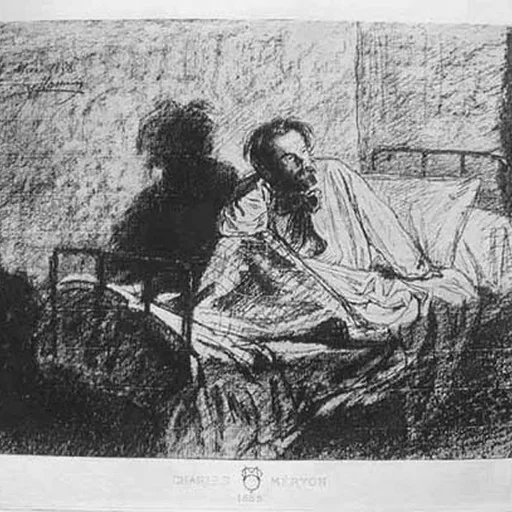
Charles Meryon (sometimes Méryon, 23 November 1821 – 14 February 1868) was a French artist who worked almost entirely in etching, as he had colour blindness.