Artwork
Broadway and 42nd Street
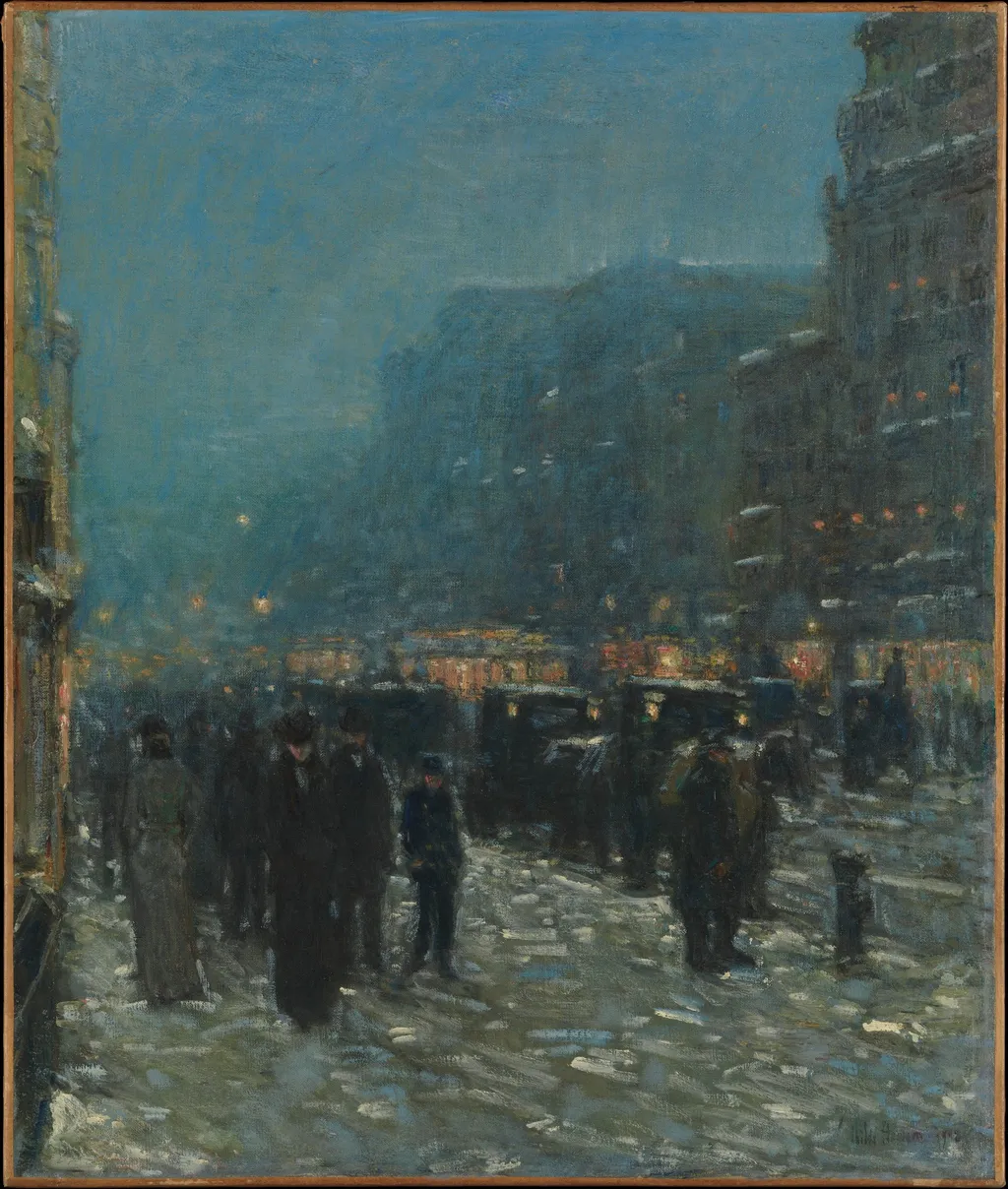
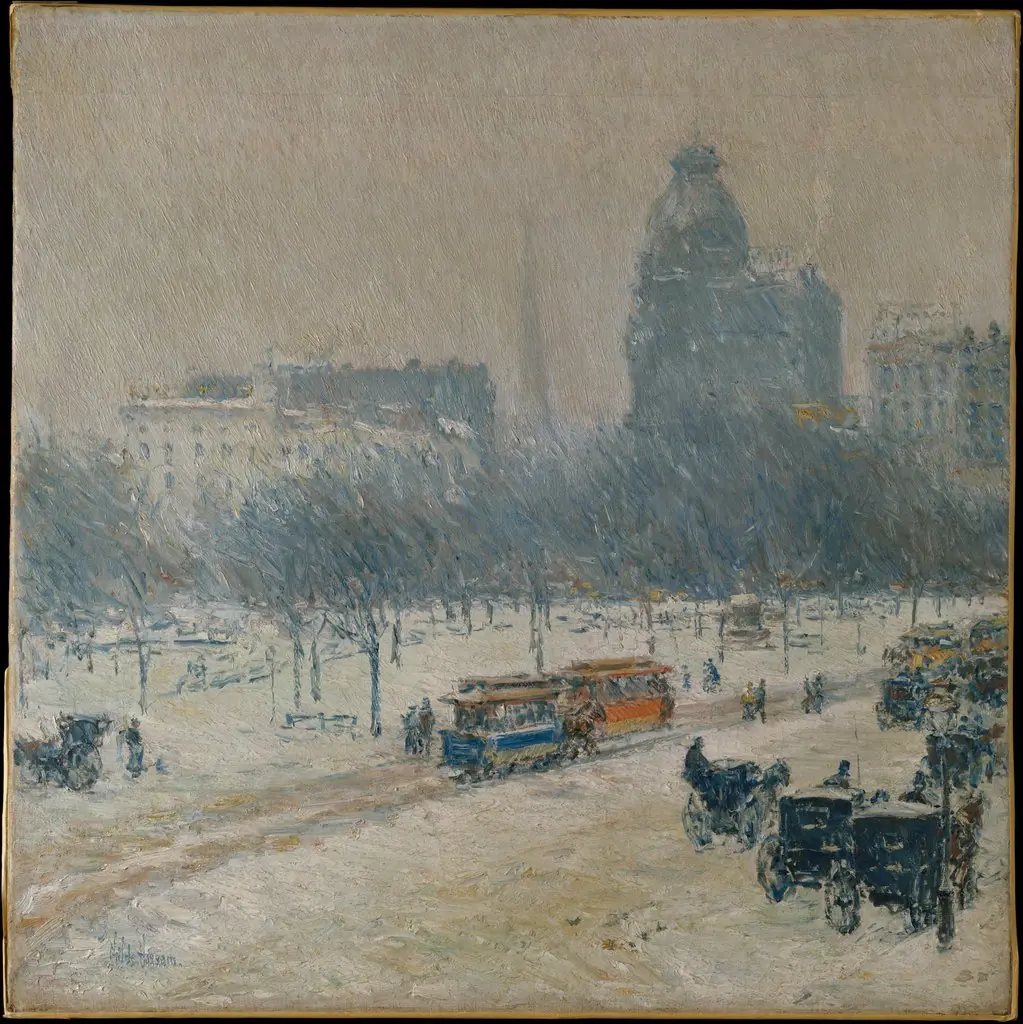
Broadway and 42nd Street is an oil painting by the American Impressionist artist Childe Hassam. It dates from 1902 and is held in the collection of the Metropolitan Museum of Art.
About this work
Subject & Meaning
Central to the painting's symbolism is the glow of electric light emanating from newly introduced trolley cars, which illuminates the snowy streets.
Childe Hassam's 1902 painting captures the intersection of Broadway and 42nd Street in New York City, an area then known as Longacre Square before its renaming to Times Square. The work depicts a bustling winter evening scene characterized by atmospheric gloom and the busy movement of carriages, men, and women. Central to the painting's symbolism is the glow of electric light emanating from newly introduced trolley cars, which illuminates the snowy streets.
This interplay of artificial light against the evening darkness represents the modernization and dynamic energy of early 20th-century urban life. Through this cityscape, Hassam portrays the transition of the American metropolis, highlighting the vibrant activity and technological advancements that defined the era.
Technique & Style
Broadway and 42nd Street (1902) is an oil on canvas cityscape measuring roughly 66 × 55.9 cm. Childe Hassam applies a loose Impressionist brushwork to capture the winter evening atmosphere of Longacre Square, emphasizing the glow of electric trolley lights that illuminate the bustling intersection. The painting’s handling of light and shadow creates a luminous, almost nocturnal effect, while the composition includes a carriage, pedestrians, and street details that convey the energetic flow of the city. Executed in oil paint on a canvas support, the work exemplifies the American Impressionist approach to rendering urban modernity through atmospheric color modulation and dynamic spatial recession.
History & Provenance
Childe Hassam created Broadway and 42nd Street in 1902. Executed in oil on canvas, the American Impressionist cityscape was painted during a period when the depicted intersection around Times Square, then known as Longacre Square, was illuminated by the new electric lights of trolley cars. The work is currently held in the collection of the Metropolitan Museum of Art, though the sources do not provide details regarding its initial commission or the specific chain of ownership prior to entering the museum's collection.
Overview
Childe Hassam's 1902 oil painting, Broadway and 42nd Street, captures a dynamic urban scene in New York City. This work, now held by the Metropolitan Museum of Art, depicts the bustling intersection then known as Longacre Square. Hassam, an American Impressionist, rendered the city's energy through a winter evening setting, emphasizing the atmospheric effects of light and movement. The painting offers a glimpse into early 20th-century metropolitan life.
Own this work as a print
Artist & collection

Artist
Frederick Childe Hassam (; October 17, 1859 – August 27, 1935) was an American Impressionist painter, noted for his urban and coastal scenes.