Artwork
The Water Garden
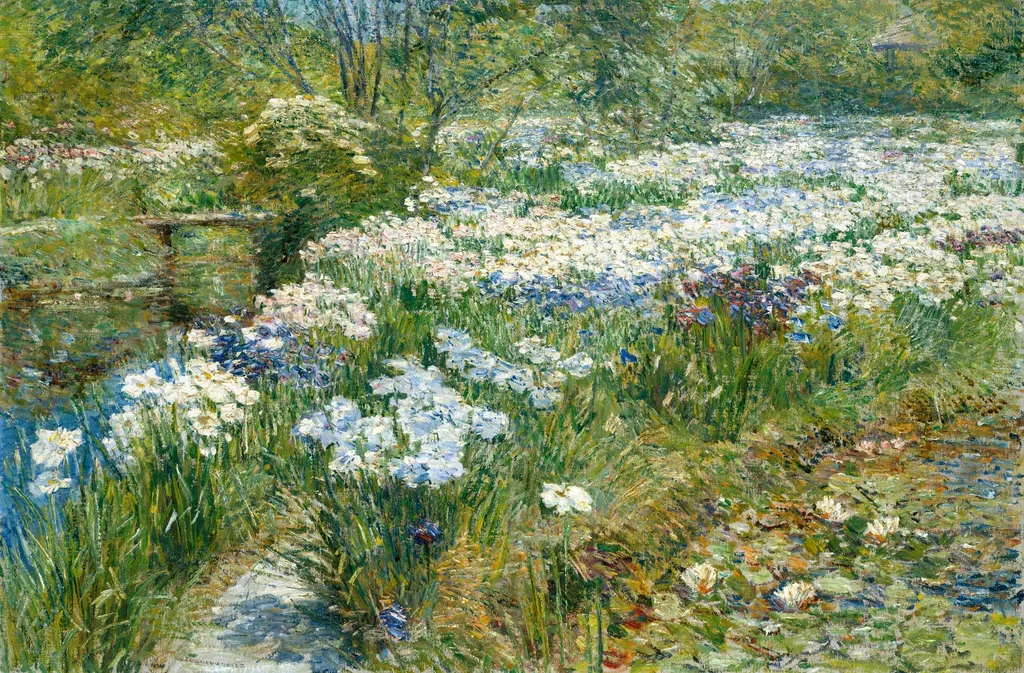
The Water Garden is an oil painting by the American Impressionist artist Childe Hassam. It dates from 1909 and is held in the collection of the Metropolitan Museum of Art.
About this work
Subject & Meaning
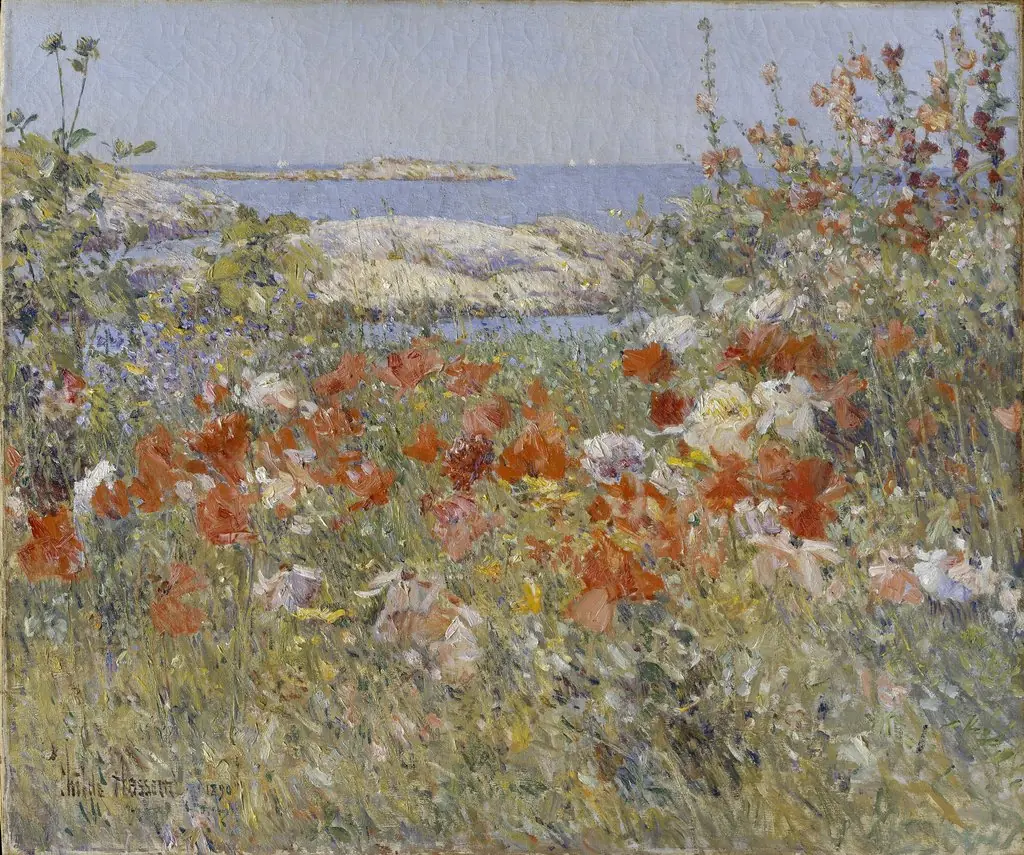
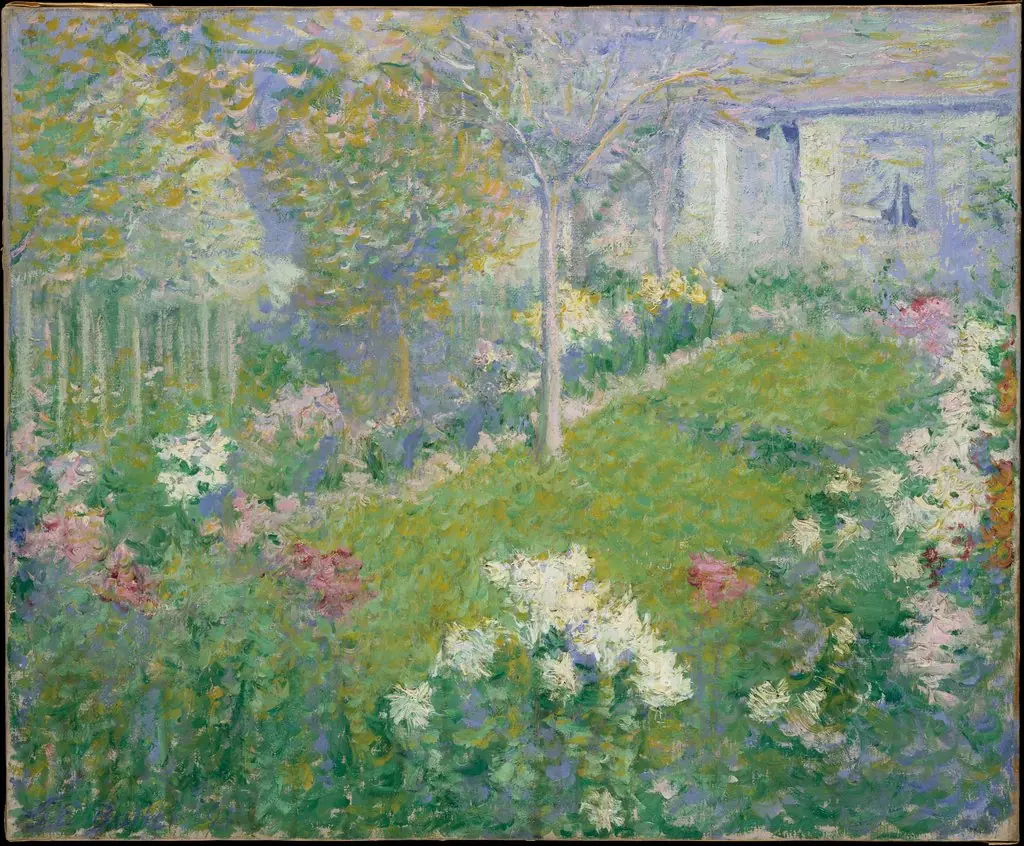
The Water Garden depicts a lively assemblage of flowers and shallow, plant-covered ponds set on a level meadow, a scene that merges naturalistic detail with the leisurely ambience prized by American Impressionists. The composition, recorded in the Metropolitan Museum of Art's catalogue, features a pond edged with aquatic vegetation, emphasizing the play of light reflected on water and the seasonal abundance of bloom. The painting embodies the movement's focus on cultivated outdoor spaces as sites of visual pleasure and transitory atmosphere, suggesting both the ephemerality of nature and the cultivated beauty of a garden setting.
Technique & Style
The composition depicts a flat grassy field punctuated by shallow ponds covered with aquatic vegetation.
The Water Garden is an oil-on-canvas work measuring approximately 61 by 91.4 cm, painted in 1909 by Childe Hassam. The composition depicts a flat grassy field punctuated by shallow ponds covered with aquatic vegetation. Executed in oil paint on canvas, the piece belongs to the landscape genre and reflects the American Impressionism movement, showing the influence of Post-Impressionist color and composition. It is housed in the Metropolitan Museum of Art in New York.
History & Provenance
The Water Garden, an oil on canvas painted in 1909 by Childe Hassam, measures roughly 61 by 91.4 cm and depicts a vibrant flower-filled field with shallow, plant-covered ponds in the American Impressionist manner. It is held by the Metropolitan Museum of Art in New York; its accession number is not listed in the available records. No record of a specific commission or exhibition history is documented in the provided sources.
Context
The Water Garden (1909) occupies a notable position within American Impressionism, reflecting Childe Hassam's engagement with Post-Impressionist color and composition. The work exemplifies his landscape style through its depiction of aquatic plants and flowers set against shallow ponds, combining a flat grassy field with vibrant floral elements. Housed in the Metropolitan Museum of Art, the piece serves as an example of early twentieth-century American landscape painting, bridging traditional Impressionist technique with emerging modernist sensibilities, and its place in a major institutional collection underscores its standing in the broader narrative of American art.
Overview
Childe Hassam's 1909 oil painting, The Water Garden, exemplifies American Impressionism. This vibrant canvas, now housed at the Metropolitan Museum of Art in New York, captures a sun-drenched garden scene. It showcases the artist's characteristic approach to light and color, depicting a lush landscape filled with blossoms and reflective water, reflecting a common theme in Hassam's work from this period.
Own this work as a print
Artist & collection

Artist
Frederick Childe Hassam (; October 17, 1859 – August 27, 1935) was an American Impressionist painter, noted for his urban and coastal scenes.

![Phlox [a corner of a country garden], by Ernest Albert Chadwick](https://artifactworldgallery.com/img/ernest-albert-chadwick--phlox-a-corner-of-a-country-garden--692a6ad859748433-w320.webp)