Artwork
New York
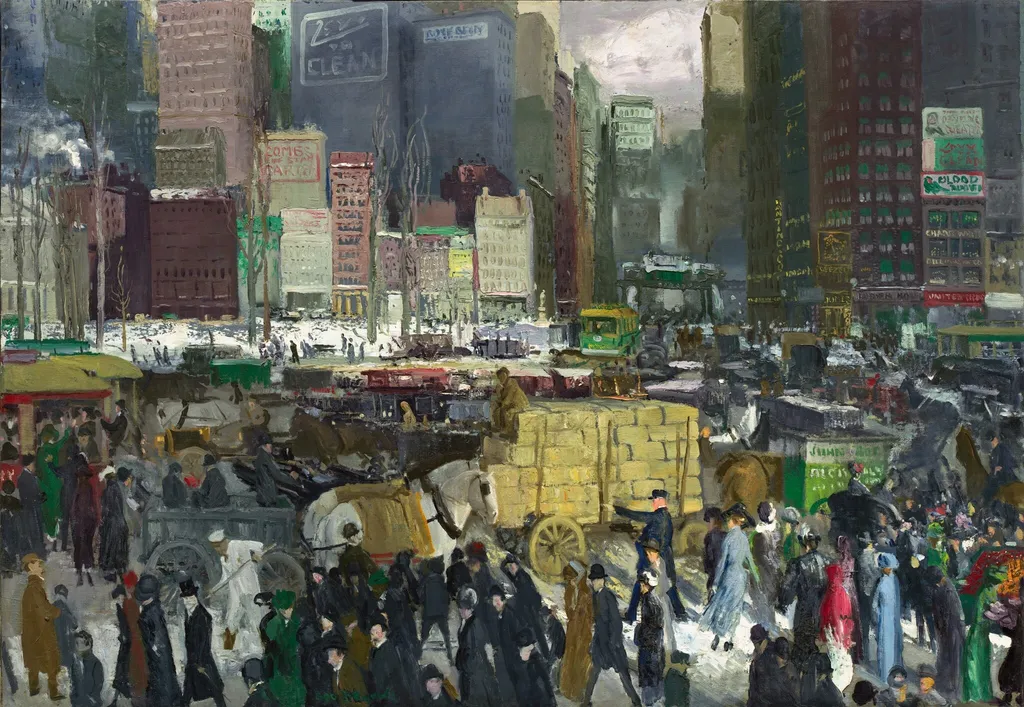
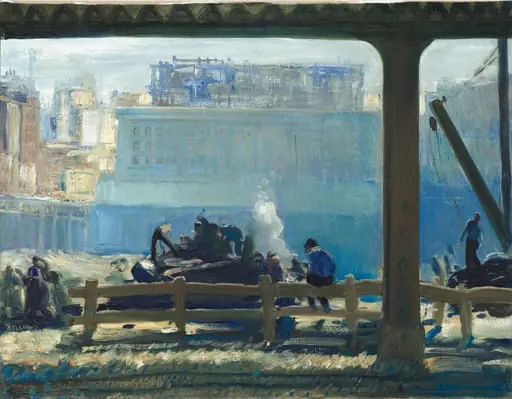
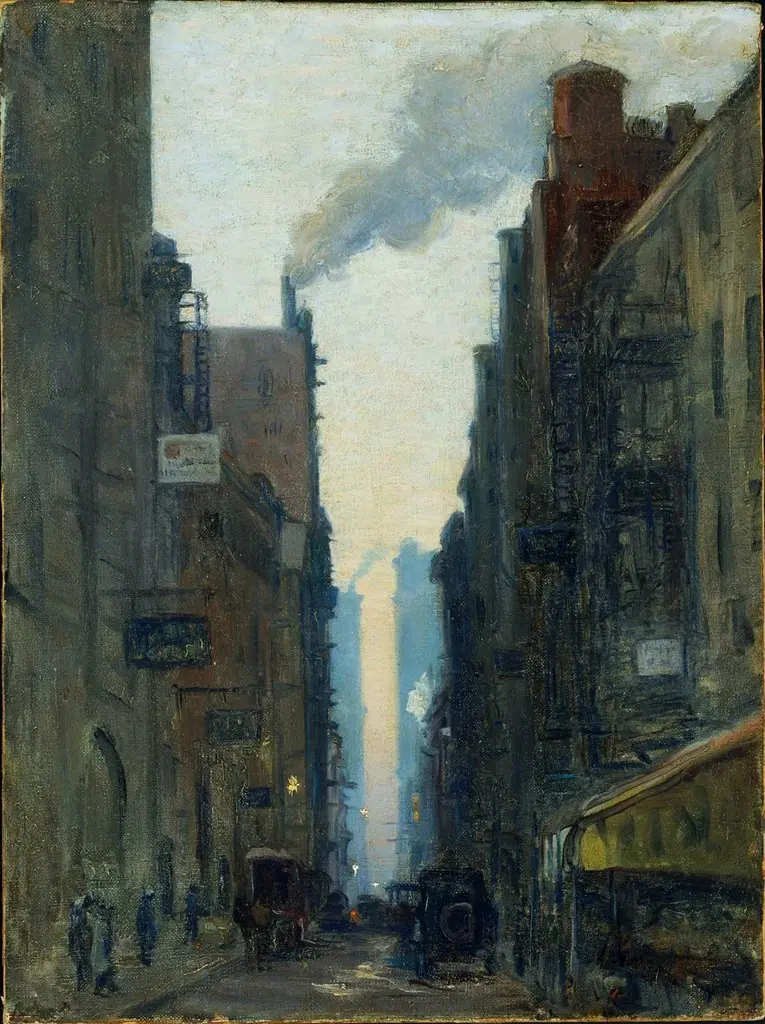
New York is an oil painting by the Ashcan School artist George Bellows. It dates from 1911 and is held in the collection of the National Gallery of Art.
- Inscription
- Inscribed:across bottom: Geo Bellows; upper left reverse: "NEW YORK" / GEO BELLOWS / 146 E 19 / N.Y.
About this work
Subject & Meaning
The painting depicts a bustling urban landscape of New York City, capturing the energetic atmosphere of early 20th-century metropolitan life.
The painting depicts a bustling urban landscape of New York City, capturing the energetic atmosphere of early 20th-century metropolitan life. Bellows portrays the dynamic interplay of light and movement along a city street, emphasizing the vibrancy and motion characteristic of modern urban environments. The work symbolizes the pulse of city existence through its depiction of architecture and human activity, reflecting themes of progress and the rhythm of urbanization.
The painting is housed in the National Gallery of Art in Washington, D.C., where it has been part of the collection since 1986, donated by Paul Mellon. Its large scale and expressive brushwork highlight Bellows' mastery of realism and his focus on the emotional resonance of everyday scenes.
Technique & Style
New York is an oil on canvas painting executed in 1911 by George Bellows. The work measures 106.7 by 152.4 centimeters, a broad horizontal format suited to its urban subject. Its medium and dimensions are consistent with Bellows's mature practice of working in oil on canvas at a large scale, allowing for vigorous, gestural brushwork and dense layering of pigment.
The painting is held in the collection of the National Gallery of Art in Washington, D.C., where it has been preserved since its 1986 gift.
History & Provenance
George Bellows painted New York in 1911. Following the artist's death in 1925, the work passed by inheritance to his wife, Emma S. Bellows. After her death in 1959, her estate sold the painting in 1961 through the New York dealer H.V. Allison & Co. to collector Paul Mellon of Upperville, Virginia. Mellon subsequently gave the painting to the National Gallery of Art in 1986, where it remains.
The oil painting is held by the National Gallery of Art in Washington, D.C. It entered the collection in 1986 as a gift from Paul Mellon, who had acquired it in 1961 through H.V. Allison & Co. in New York.
Its National Gallery of Art accession number is 1986.40.1.
Overview
George Bellows' 1911 oil on canvas, New York, captures a bustling winter scene on a crowded city street, likely in the Lower East Side or a similar dense urban district. The composition is dominated by towering brick buildings that frame the view, creating a canyon-like effect that emphasizes the verticality of the metropolis. Below, the street teems with activity: pedestrians bundled in heavy coats and hats navigate the snow-covered sidewalks, while horse-drawn wagons and a distinctive green trolley car move through the slush.
Bellows employs his characteristic vigorous brushwork and a palette of earthy browns, grays, and whites to convey the raw energy and atmospheric haze of early 20th-century New York. Visible signage for businesses such as "Comis Star Mark" and "Universal" anchors the scene in a specific commercial reality. Painted during the height of the Ashcan School movement, this work exemplifies Bellows' commitment to depicting the unvarnished vitality of urban life, moving beyond romanticized cityscapes to document the gritty, dynamic interaction between people, architecture, and the elements.
It stands as a significant example of American Realism, reflecting the artist's fascination with the modern city's chaotic yet compelling rhythm.
Own this work as a print
Artist & collection
Artist
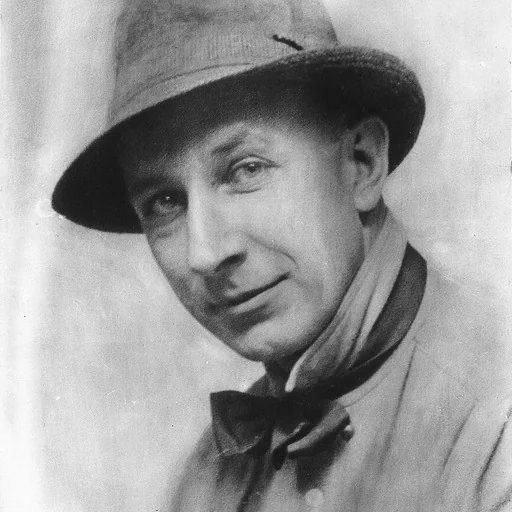
George Wesley Bellows (August 12 or August 19, 1882 – January 8, 1925) was an American realist painter, known for his bold depictions of urban life in New York City.