Artwork
A Village Hut in India [recto]
![A Village Hut in India [recto], by George Chinnery, ink, 1819](https://artifactworldgallery.com/img/george-chinnery--a-village-hut-in-india-recto--cfb8716e81156579-w1024.webp)
A Village Hut in India [recto] is an ink drawing by the Romanticist artist George Chinnery. It dates from 1819 and is held in the collection of the National Gallery of Art.
- Inscription
- Inscribed:the artist's inscriptions are in Gurney shorthand; upper left in pen and black ink: (this is very ... similar to the original as it was when I sketched it); lower left in pen and black ink: (figures the right size); lower center in pen and black ink: (earth and grass, repeated twice); lower right in pen and black ink: (road); by later hand, upper left faintly in graphite: Chinnery; by later hand, lower left in graphite: 27; the artist's inscriptions are in Gurney shorthand; lower left verso in pen and black ink: (the head of the figure looking down and not at the child would be better)
About this work
Overview
Created in 1819, this drawing by George Chinnery records a modest rural dwelling in India. Executed with pen and black ink layered over graphite on wove paper, the work measures the everyday architecture of a village setting, rendered in a quick, observational style typical of the artist’s travel sketches.
Subject & Meaning
The composition centers on a simple hut with a sloping roof, flanked by a few trees and shrubs. Two human figures are present: one standing near the entrance, holding an object, and another seated on the ground. The scene offers a straightforward glimpse into daily life and the built environment of an Indian village.
Technique & Style
Chinnery employed dense cross‑hatching to model shadows and suggest volume, a common ink technique of the early nineteenth century. The graphite underdrawing provides a structural framework, while the ink lines are rendered with a loose, sketchy quality that conveys immediacy and movement without reliance on color.
History & Provenance
George Chinnery, an English artist who spent much of his career in Asia, produced this work during his early years in India before relocating to southern China. The drawing reflects his practice of documenting local landscapes and architecture as part of his broader visual record of the regions he visited.
Context
In the early 1800s, European artists in colonial settings often produced detailed sketches of indigenous architecture and daily scenes to satisfy both personal curiosity and the demand for visual information back home. Chinnery’s focus on a humble hut aligns with this tradition of ethnographic observation through art.
![A Village Scene in India [verso]](https://artifactworldgallery.com/img/george-chinnery--a-village-scene-in-india-verso--a3b8d6327e2fa0d5-w320.webp)
Own this work as a print
Artist & collection
Artist
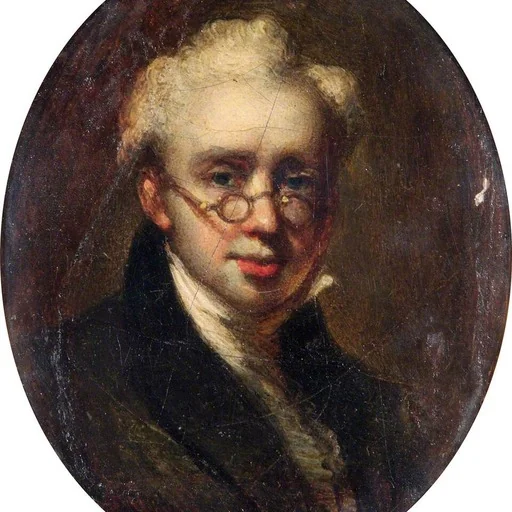
George Chinnery (Chinese: 錢納利; 5 January 1774 – 30 May 1852) was an English painter who spent most of his life in Asia, especially India and southern China.

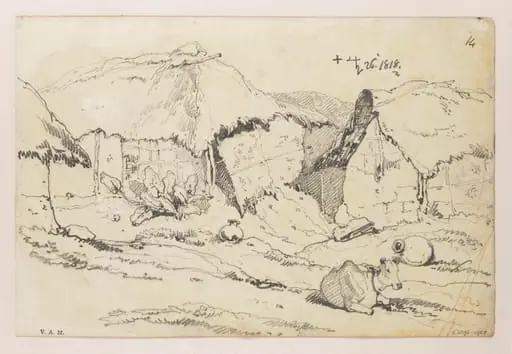 Indian village dwellings with a humped ox
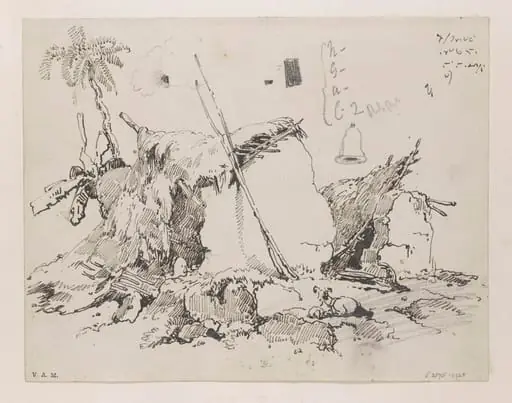 Ruinous village dwellings, Bengal
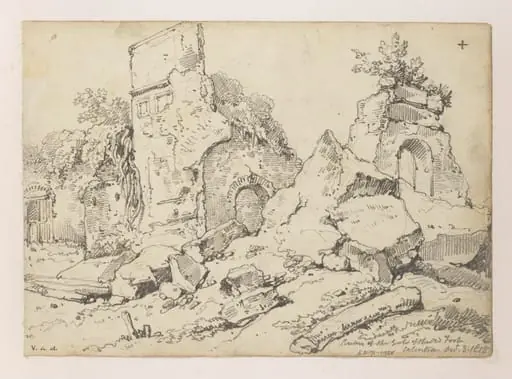 Ruins of the Old Fort, Calcutta
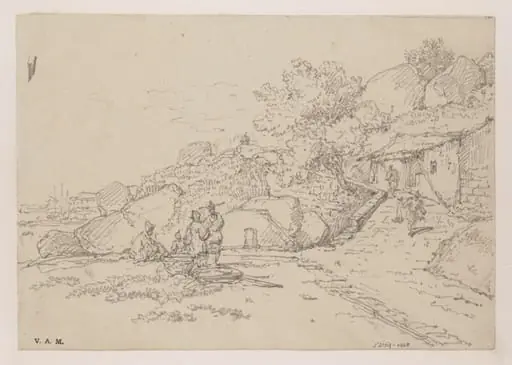 A small building on a rocky hillside, with a group of figures and the bay at left
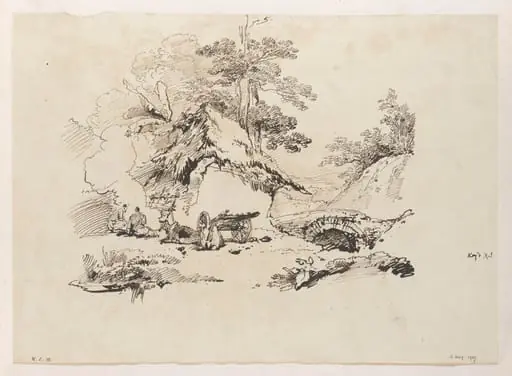 A Bengal landscape with a village dwelling
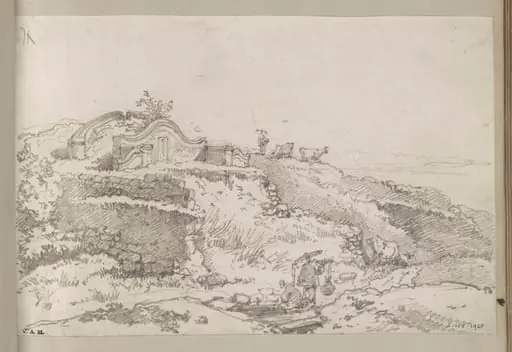 A Chinese tomb on a hillside, Macau
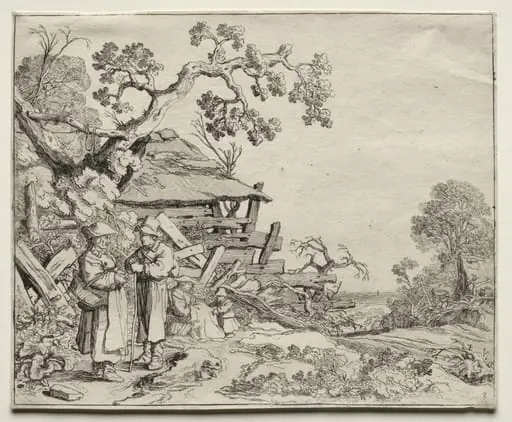 Landscape with Two Peasants Conversing
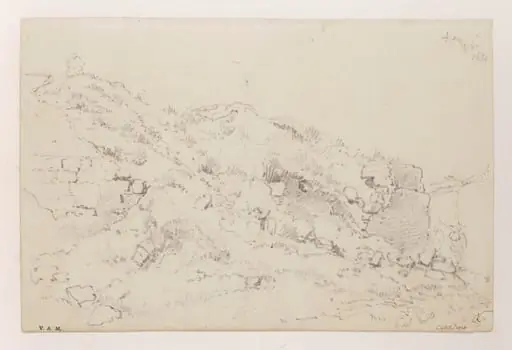 A hillside with ruined masonry
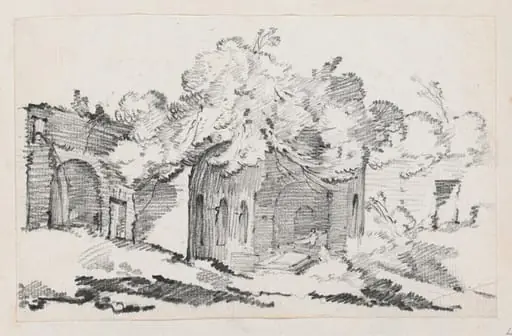 The Grotto of the Nymph Egeria