Artwork
Ancient Teutons
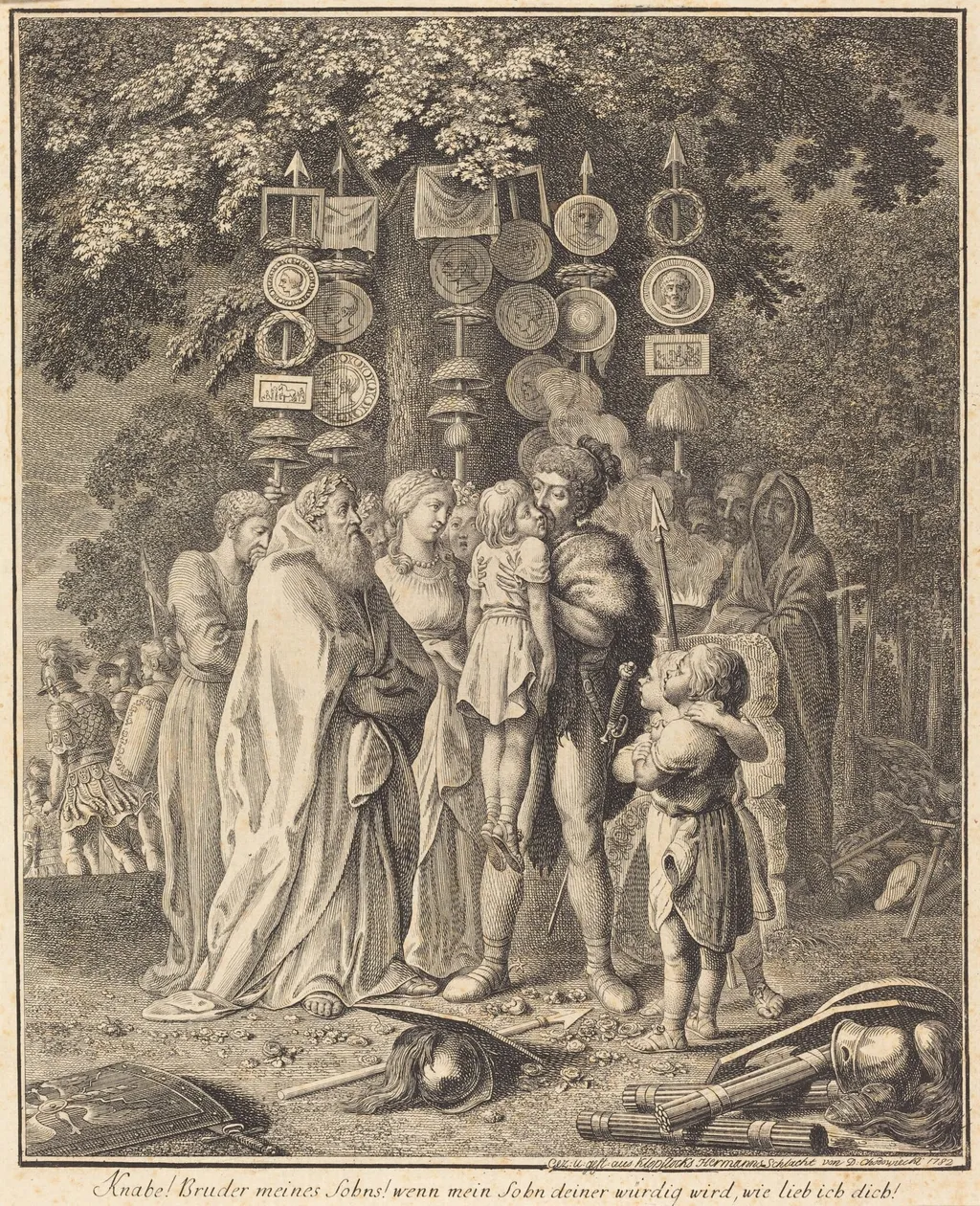
Ancient Teutons is an ink print by the Romanticist artist Daniel Nikolaus Chodowiecki. It dates from 1782 and is held in the collection of the National Gallery of Art.
About this work
Overview
Daniel Nikolaus Chodowiecki created this 1782 etching during his tenure in Berlin, where he was active as both an artist and director of the Academy of Art.
Daniel Nikolaus Chodowiecki created this 1782 etching during his tenure in Berlin, where he was active as both an artist and director of the Academy of Art. The work is part of a broader trend in late 18th-century German art that turned to historical and mythological subjects to explore cultural identity. Unlike literal historical reconstructions, this piece uses symbolic imagery to evoke a sense of collective heritage through stylized figures and arranged objects.
Subject & Meaning
The image depicts seven figures, adults holding hands with two children, in a forest clearing, forming a circular grouping. The arrangement suggests unity and continuity across generations. A central tree, adorned with tools such as hammers, saws, and wheels, implies a connection between labor, craftsmanship, and communal life.
The title 'Ancient Teutons' evokes a mythic Germanic past, but the scene functions more as an allegory than a documented historical moment.
Technique & Style
Chodowiecki employed etching, a printmaking method involving acid-bitten lines on a metal plate, to achieve fine detail and tonal variation. The black-and-white composition relies on delicate hatching and cross-hatching to model form and texture. The figures are rendered with soft, flowing contours, while the tools and foliage are defined with sharper, more linear precision, creating a contrast between human warmth and the rigidity of crafted objects.
History & Provenance
The etching was produced during Chodowiecki’s mature period, when he was deeply engaged with Enlightenment-era interests in national character and cultural origins. It was likely made for a private or academic audience rather than public display. While its early ownership is undocumented, it entered institutional collections in the 19th century as interest grew in German graphic arts and historical symbolism.
Context
In the decades before German unification, artists and intellectuals sought visual forms to articulate a shared cultural past. Chodowiecki’s work responded to this impulse, drawing on Romantic-era fascination with pre-Christian Germanic tribes. Yet his approach was restrained, avoiding overt nationalism; instead, he emphasized quiet cohesion, craftsmanship, and the natural setting as markers of identity.
Legacy
Chodowiecki’s etching contributed to a visual language that linked labor, nature, and community as foundational to national identity. Though not widely exhibited in his lifetime, it became a reference point for later 19th-century artists exploring folk traditions. Its symbolic rather than literal treatment of history influenced how German graphic artists approached mythic subjects without romantic exaggeration.
Own this work as a print
Artist & collection
Artist
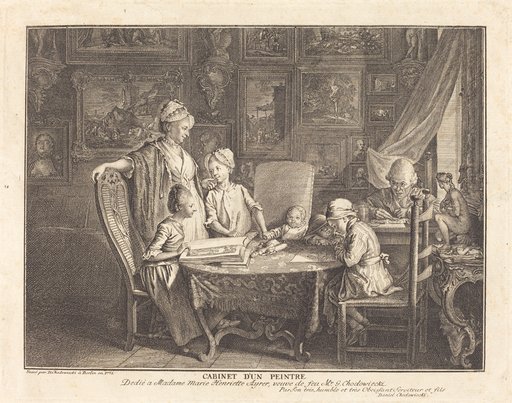
Daniel Niklaus Chodowiecki (16 October 1726 – 7 February 1801) was a German painter and printmaker of Huguenot and Polish ancestry, who is most famous as an etcher.

- David with the Head of Goliath
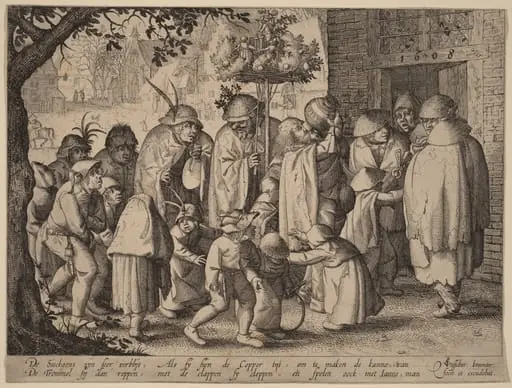 Procession of Feasting Lepers
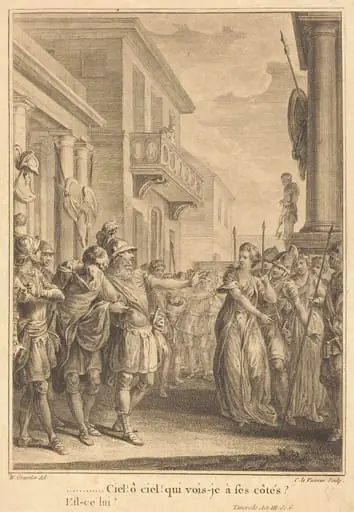 Ciel! ô ciel! qui vois-je à ses côtés?
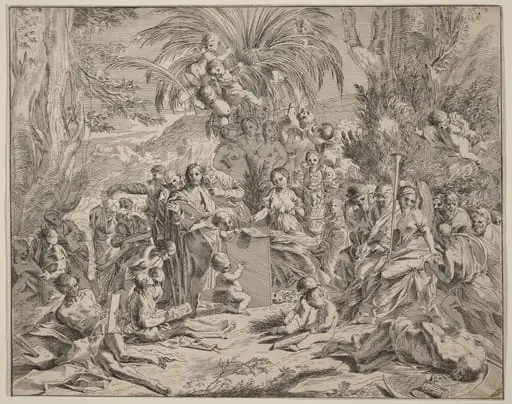 Allegory of Painting
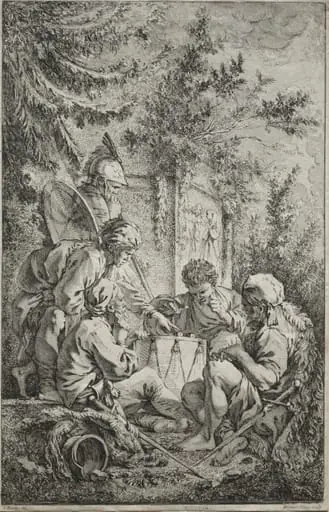 The First Guard
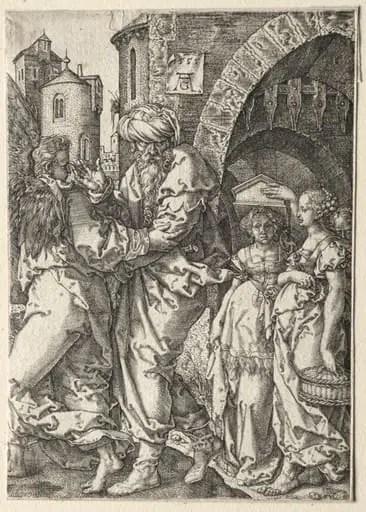 The Story of Lot: Lot and His Family Fleeing Sodom
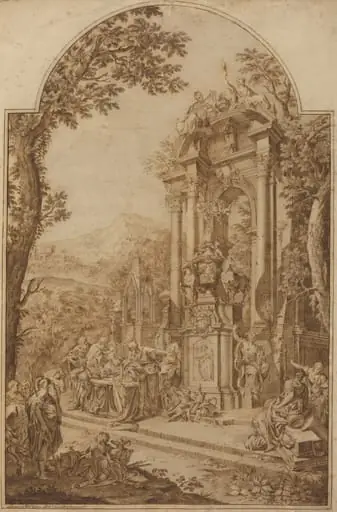 Monument to William Chancellor Cowper
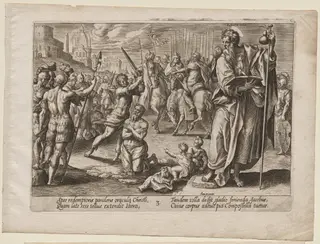 St. James the Great
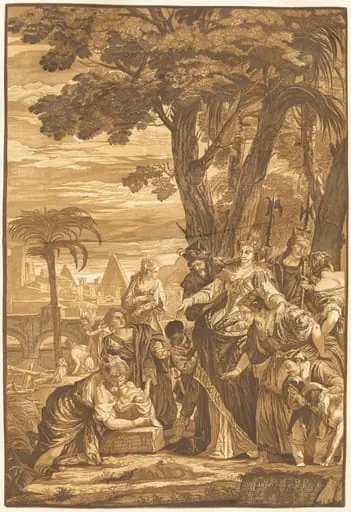 The Finding of Moses
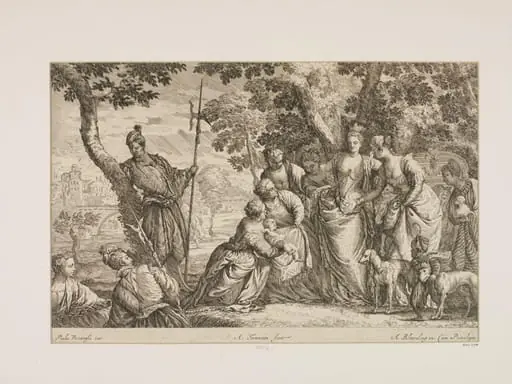 Infant Moses
 The Seed finding Good Earth
 The Sacrifice of Polyxena