Artwork
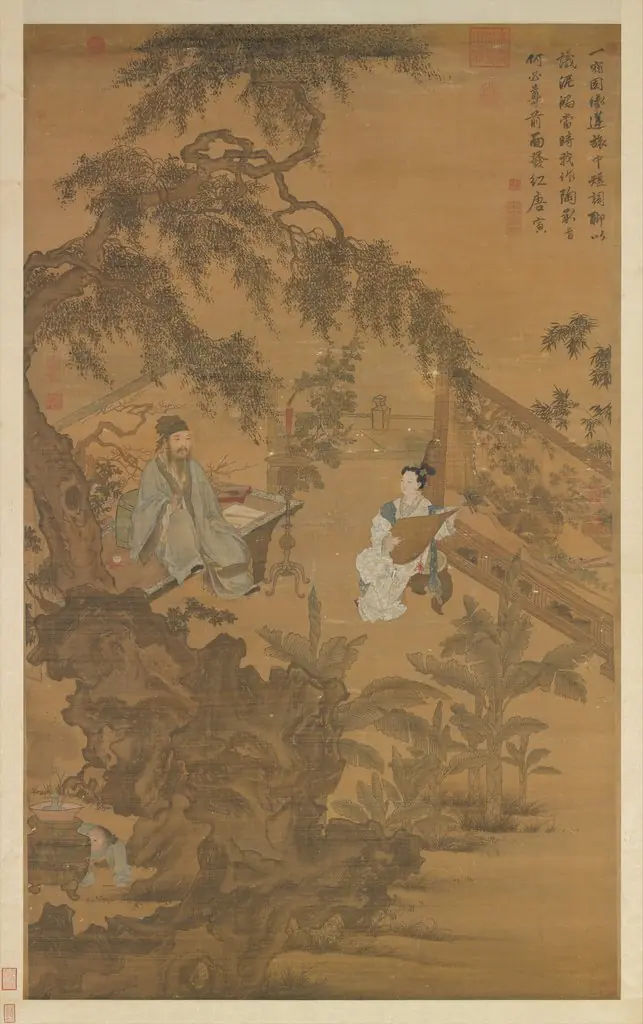
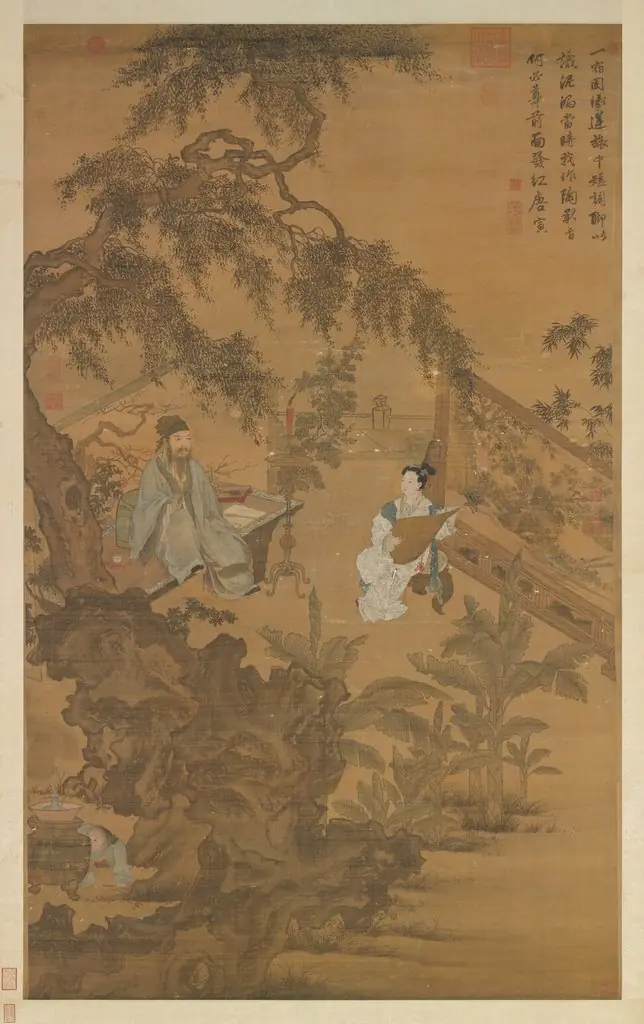
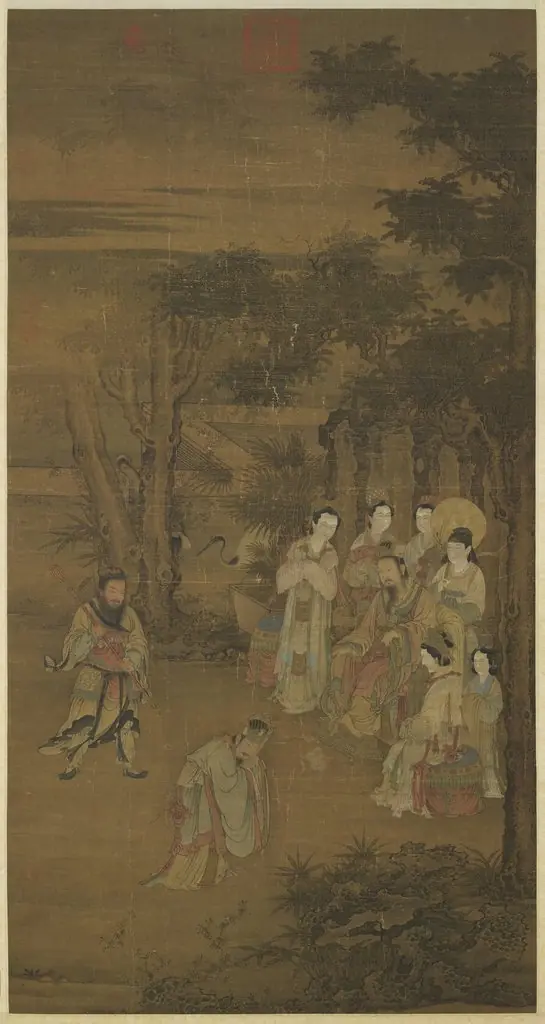
Emperor Minghuang Teaching Yang Gueifei to Play the Flute
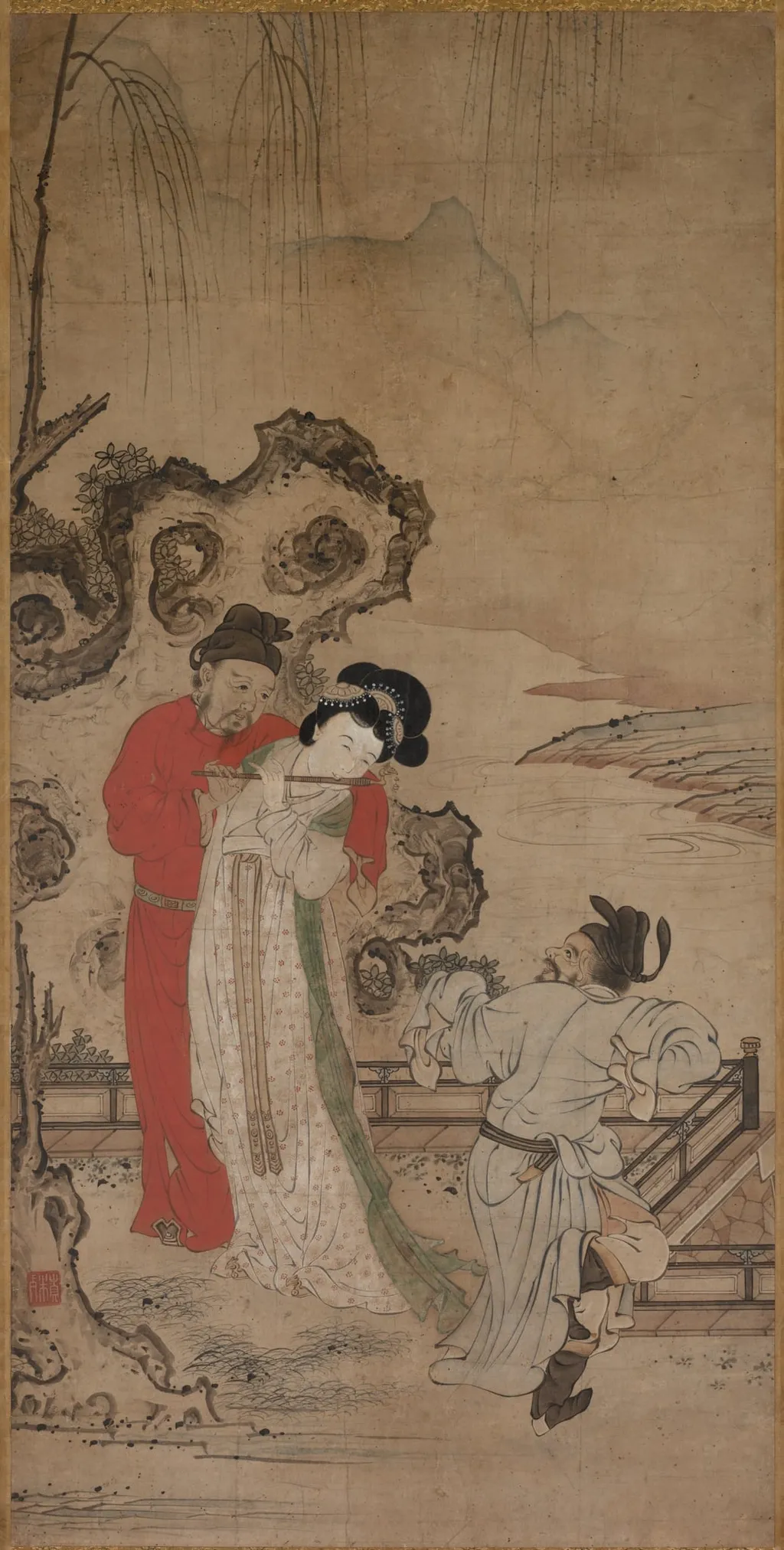
Emperor Minghuang Teaching Yang Gueifei to Play the Flute is an unspecified painting by the Joseon dynasty painting artist Choryusai. It dates from 1500 and is held in the collection of the Cleveland Museum of Art.
- Accession no.
- 1987.36
- Credit line
- John L. Severance Fund
About this work
Overview
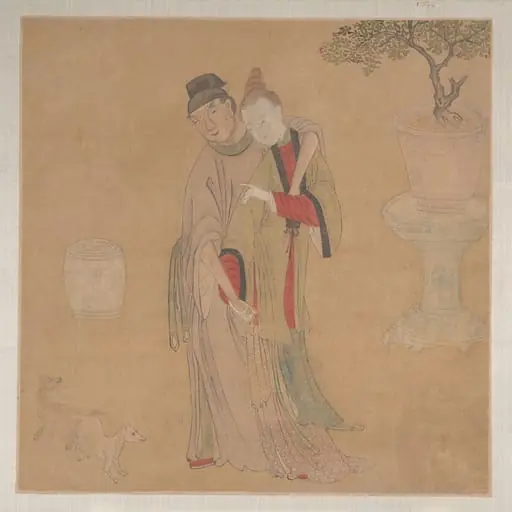
The work portrays Emperor Minghuang of the Tang dynasty seated beside his favored consort, Yang Guifei, as he demonstrates how to hold a bamboo flute. Both figures are positioned on a modest floor mat, the emperor gesturing toward the instrument while the lady gently grasps it, capturing an intimate moment of instruction within a domestic setting.
Subject & Meaning
Beyond the literal scene of musical tutoring, the painting alludes to the celebrated romance between Minghuang and Yang Guifei that has resonated through Chinese literature. Their depiction in a private, instructional pose underscores themes of harmony, cultural refinement, and the idealized bond between ruler and beloved, reflecting the enduring allure of their legendary partnership.
Technique & Style
Executed in the Muromachi period of Japan, the piece employs a palette of vivid hues combined with softened, flowing outlines characteristic of the era’s aesthetic. The brushwork renders the figures with gentle contours, while the bright coloration accentuates the ceremonial yet intimate atmosphere, illustrating the Japanese artists’ fascination with Chinese narrative subjects.
History & Provenance
Created by a Japanese hand during the 14th–16th centuries, the painting entered the collection of the Cleveland Museum of Art, where it is presently displayed. Its provenance traces the transmission of Tang dynasty stories to Japan, where they were embraced by collectors and scholars of Chinese art and literature.
Context
During the Muromachi period, Japanese painters frequently adapted Chinese historical and literary motifs, especially those from the Tang dynasty, which were esteemed for their cultural sophistication. This work exemplifies that cross‑cultural exchange, illustrating how Chinese imperial narratives were reinterpreted within Japanese visual conventions.
Artist & collection