Artwork
Yang Guifei Leaving the Bath
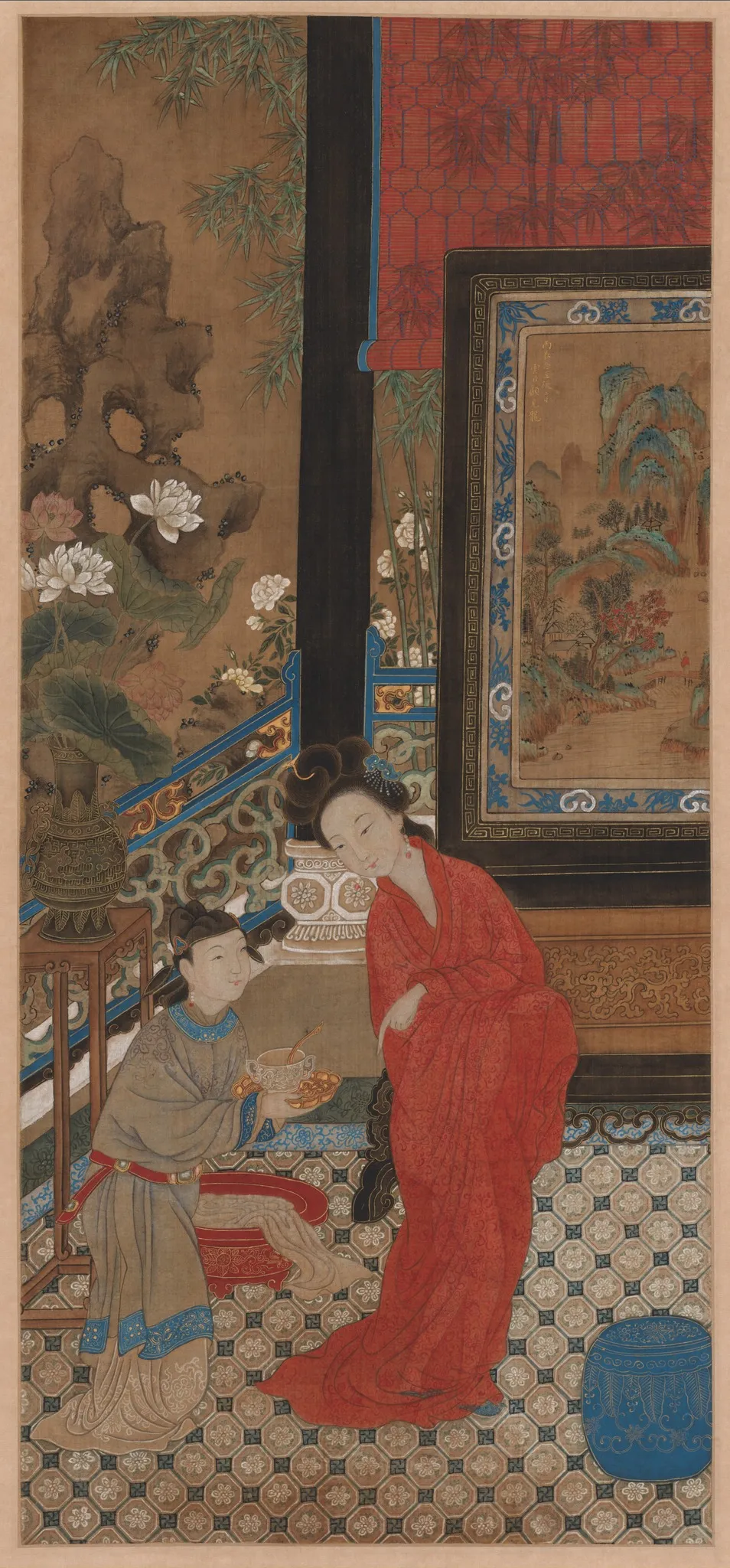
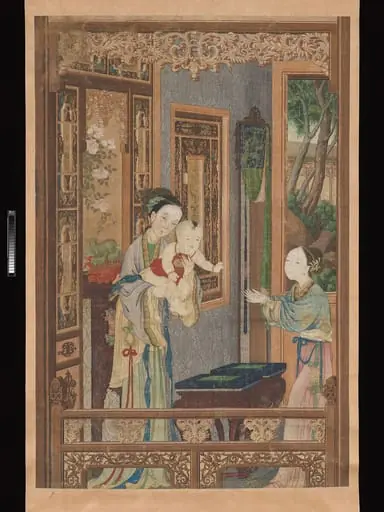
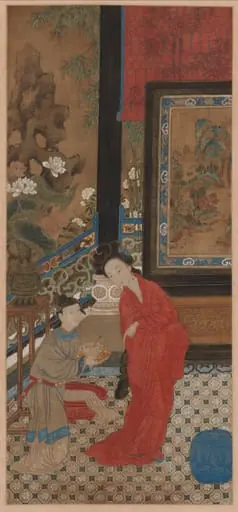
Yang Guifei Leaving the Bath is an unspecified painting. It dates from 1749 and is held in the collection of the Cleveland Museum of Art. The work depicts an interior scene in which two women occupy a richly adorned space.
About this work
History & Provenance
The work is a nude painting that entered the Cleveland Museum of Art's collection in 2017, where it is registered under accession number 2017.
Yang Guifei Leaving the Bath was painted in 1749 by an unknown artist in China. The work is a nude painting that entered the Cleveland Museum of Art's collection in 2017, where it is registered under accession number 2017.65 and remains on view. No earlier ownership or commission details are documented in the available sources.
The painting Yang Guifei Leaving the Bath, created in 1749, is held in the collection of the Cleveland Museum of Art. The institution assigns the work the accession number 2017.65. While the piece is identified as a Chinese painting from the mid-18th century, the provided records do not list specific past exhibitions or loan history for this object.
Context
Yang Guifei Leaving the Bath (1749) depicts the beloved consort of Emperor Xuanzong of Tang in a moment of departure from a bath, a subject drawn from historical narratives of imperial favor and poetic romance. The painting's creation in China during the Qing dynasty places it within a broader tradition of courtly figurative art that often explored themes of transience and desire. Its composition and treatment of the nude form reflect Qing artistic sensibilities, blending classical Chinese aesthetics with subtle European influences introduced through Jesuit exchanges.
The work is held in the Cleveland Museum of Art, where it is recognized as part of their collection of early Chinese paintings.
Scholarly attention has focused on the painting's role in illustrating Qing imperial aesthetics and its narrative connection to Tang dynasty court life, though its attribution to an anonymous artist complicates definitive analysis of stylistic influence. The artwork's presence in a Western museum highlights its significance as a representative example of Chinese art collected during periods of cultural exchange.
Overview
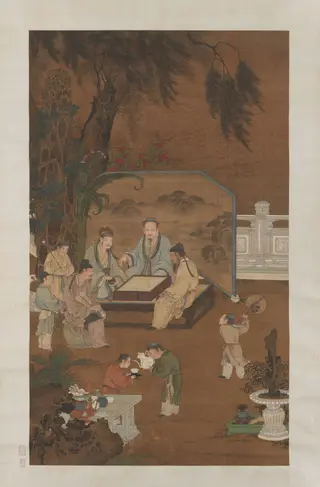
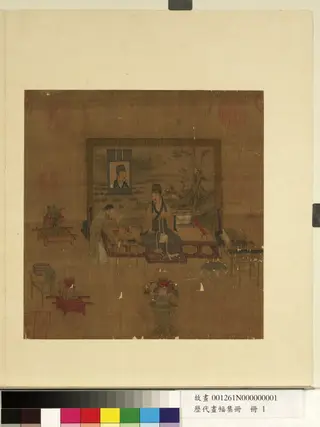
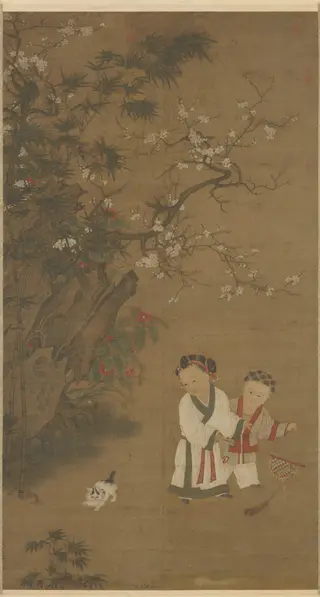
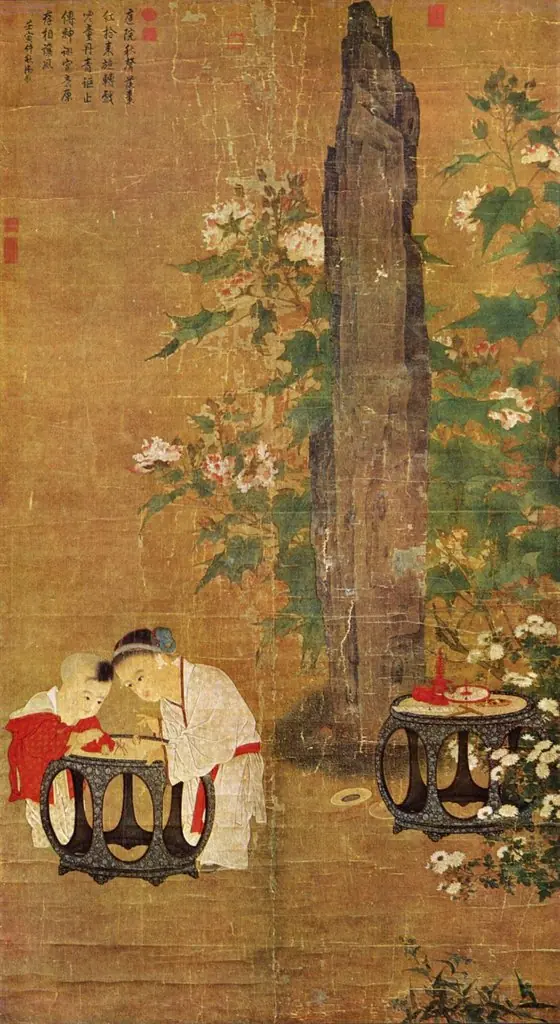
The work depicts an interior scene in which two women occupy a richly adorned space. A figure dressed in a red robe stands near a blue vase, her hand placed on her sleeve, while a second woman seated on a low stool pours tea from a small cup. Beyond them a balcony opens onto a garden populated with lotus blossoms and bamboo, rendered in warm, muted tones.
Subject & Meaning
The composition suggests a moment of quiet domestic ritual, the act of tea‑pouring conveying calm and attentiveness. The posture of the red‑robed figure, poised as if listening or awaiting, adds a subtle narrative tension, hinting at an unspoken exchange between the participants and the broader garden view beyond the interior.
Technique & Style
The painter employs a restrained palette of soft, warm colors to unify interior and exterior elements. Delicate brushwork defines the textiles, vase, and foliage, while the use of light creates a gentle atmospheric transition from the interior space to the garden, emphasizing depth without harsh contrasts.
Artist & collection