Artwork
Poet and Recluse Hanshan
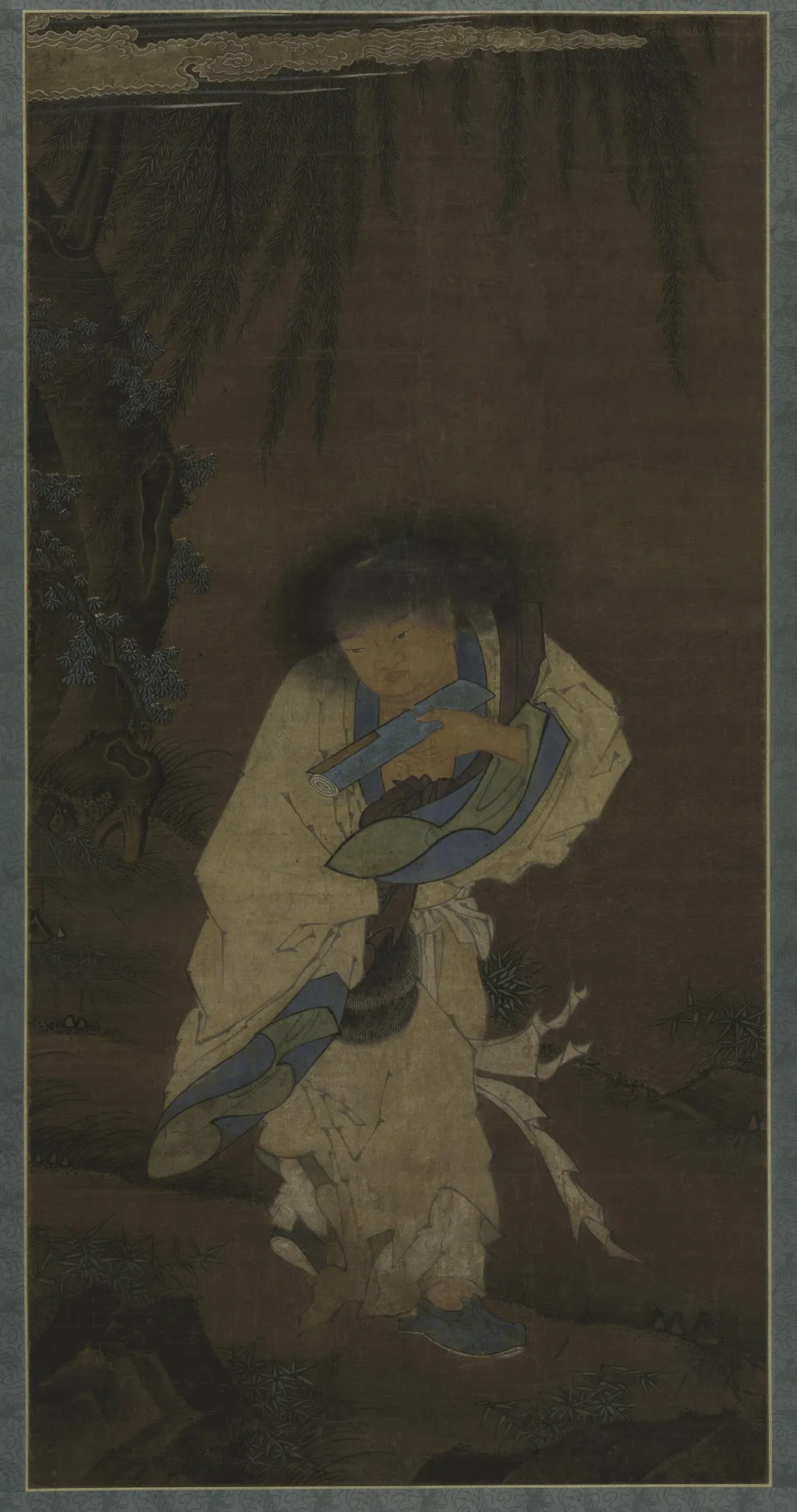
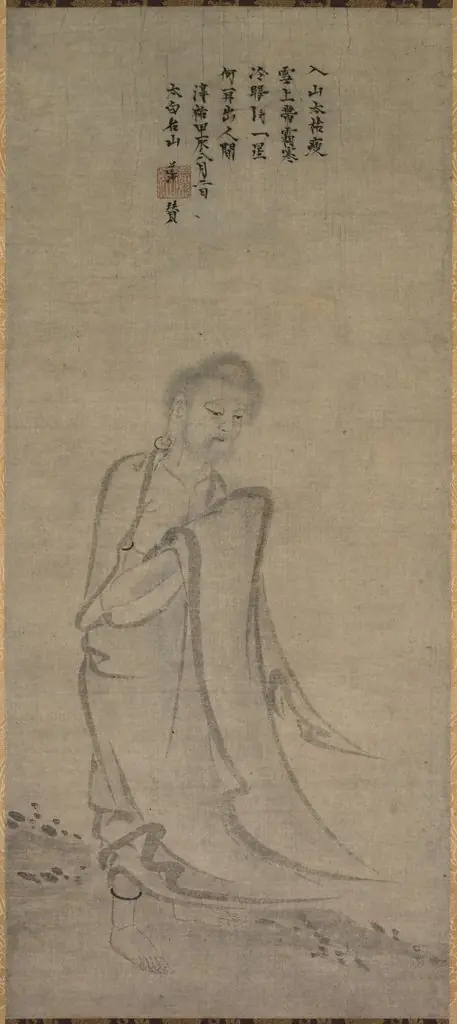
Poet and Recluse Hanshan is an unspecified painting. It dates from 1449 and is held in the collection of the Cleveland Museum of Art.
About this work
Subject & Meaning
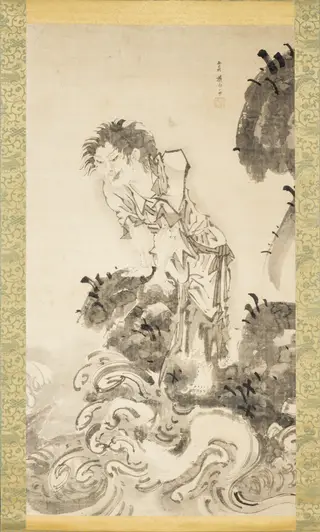
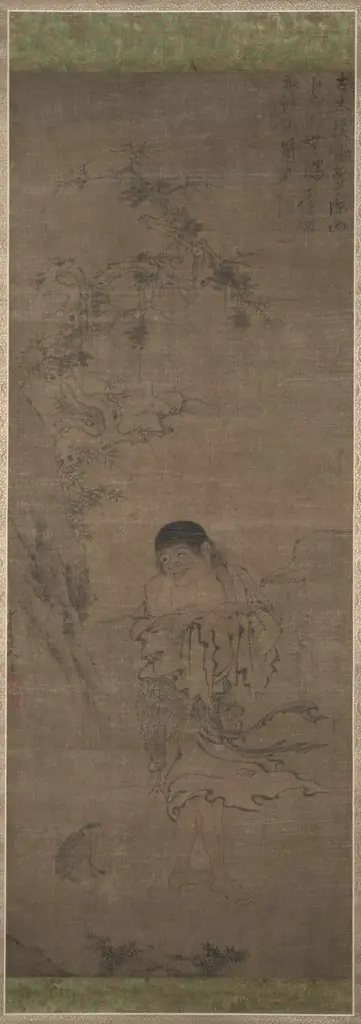
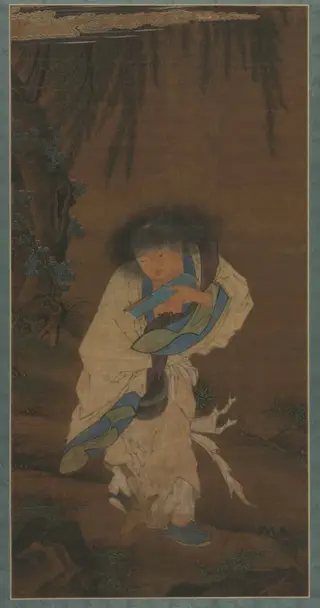
The painting depicts the legendary Tang dynasty poet and recluse Hanshan, a figure celebrated in Chinese culture for his eccentricity and spiritual wisdom.
The painting depicts the legendary Tang dynasty poet and recluse Hanshan, a figure celebrated in Chinese culture for his eccentricity and spiritual wisdom. Created in 1449, the work presents Hanshan as a hermit, aligning with his historical and literary identity as a wanderer who rejected conventional society. The subject embodies the ideal of the reclusive scholar-artist, symbolizing a life of poetic introspection and detachment from worldly affairs.
As a representation of this iconic figure, the artwork serves as a visual meditation on the virtues of solitude and spiritual freedom.
History & Provenance
The painting Poet and Recluse Hanshan, dated to 1449, is held in the collection of the Cleveland Museum of Art in Cleveland. The work is cataloged under the accession number 1991.117. It is attributed to an unknown artist and was created in China.
The provided sources do not contain any information regarding specific exhibitions where this artwork has been displayed.
Context
Poet and Recluse Hanshan (1449) is classified as a painting originating from China, housed in the Cleveland Museum of Art collection. The work emerged during a period when poetic themes intertwined with visual art, reflecting broader cultural currents in Chinese artistic traditions. Its attribution to an unnamed artist underscores the anonymity often associated with works from this historical moment, while its presence in a Western museum highlights evolving patterns of global art exchange.
Scholarly attention to the piece remains limited, with minimal documentation in major art historical literature. The painting's significance lies primarily in its material context and provenance rather than critical discourse, positioning it as an example of anonymous craftsmanship from 15th-century China.
The work's placement within art history reflects shifting curatorial practices toward preserving fragments of early artistic production, particularly those demonstrating cross-cultural transmission. Its dating to 1449 situates it within the Ming dynasty's flourishing of literati culture, though the work itself diverges from mainstream scholarly traditions through its vernacular subject matter.
Legacy
Hanshan's legacy endures through its presence in major collections and scholarly attention to its historical context. The painting's inclusion in the Cleveland Museum of Art's holdings, documented since its acquisition of the 1991.117 work, underscores its recognized significance. Its creation in China during the 15th century provides key provenance for understanding its cultural origins and artistic lineage.
Overview
The work titled Poet and Recluse Hanshan depicts a solitary figure cloaked in a flowing robe within a dense, mist‑filled forest. The individual holds a fan or scroll in one hand and a staff in the other, gazing downward with a contemplative demeanor. Dark trees dominate the interior, while a subtle golden edge frames the composition, suggesting a transition from shadow to light.
Technique & Style
The artist employs chiaroscuro, contrasting deep, velvety shadows with soft, luminous highlights to model the figure and foliage. This manipulation of light creates a three‑dimensional effect, making the recluse appear to emerge from the darkness. The faint golden border functions as a visual cue, gently separating the interior scene from the surrounding space.
Artist & collection